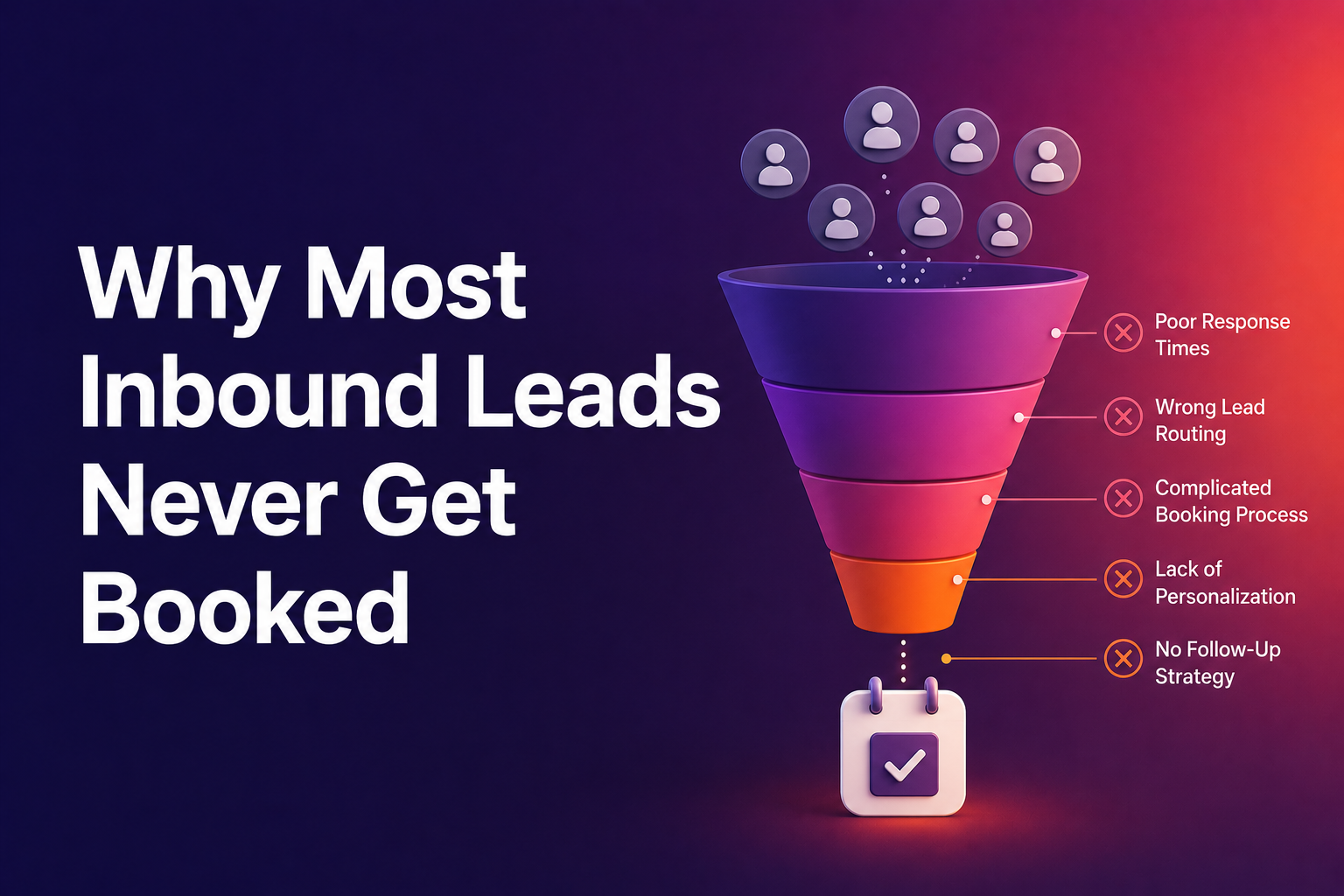
Your marketing team spent real budget driving traffic to your site. Someone clicked through, filled out a form, and raised their hand. They wanted to talk. And then nothing happened: at least, not fast enough. That form submission landed in a queue. An SDR got around to reviewing it hours later. Maybe the next day. By then, your prospect had already booked a call with a competitor who showed them a calendar instantly. This is the story playing out across thousands of B2B SaaS funnels right now, and it's the core reason why most inbound leads never get booked into meetings. Data from over one million inbound form submissions analyzed across 12 months of RevenueHero customer activity tells a clear story. The median qualified-to-booked rate sits at 62%. The top 10% of companies hit 78% or higher. The best performer reached 88%. If your team is converting at 30-40% and assuming that's normal, you're leaving enormous pipeline on the table. The gap isn't about lead quality or ad spend. It's about what happens in the seconds after someone clicks submit.
The 30-Second Gap: Why High Intent Leads Die in the Inbox
The traditional inbound process has a fatal flaw baked into its design. A lead fills out a form. That form goes to a queue. Someone manually reviews it. Maybe they route it to the right rep. Maybe they email the lead back. Maybe the lead responds. Days pass. Intent decays. The meeting that should have happened simply doesn't.
This isn't a hypothetical. It's the default workflow in most B2B organizations, and it's destroying conversion rates that the marketing team worked hard to earn.
The Decay of Intent and the Manual Review Trap
Intent has a half-life, and it's shorter than most teams realize. A prospect who fills out a demo form has roughly an 80% probability of booking if you engage them within the first minute. By the next day, that probability drops to around 40%. The old "five-minute rule" for lead response is already obsolete in 2026: buyers evaluating multiple solutions simultaneously expect sub-minute engagement.
The manual review trap makes this worse. Even well-staffed SDR teams introduce delays through timezone mismatches, lunch breaks, and prioritization decisions. The lead sits in a queue while a human decides whether it's worth pursuing. Every minute of that review cycle is a minute your competitor could be booking the meeting instead.
Benchmarking the Leak: From 40% Norms to 78% Elite Performance
If your qualified-to-booked rate is under 58%, you're in the bottom quartile according to the benchmark data. At 76% or above, you're outperforming most peers. The difference between 40% and 78% on the same traffic, same spend, and same leads comes down to what happens in the 30 seconds after the form fill.
That gap translates to real numbers. If you're at 40% today and you get to 62%, that's 22 more meetings for every 100 qualified leads. Reach 78%, and you've nearly doubled your pipeline from the same demand generation investment. No additional budget required.
Permission vs. Commitment Language on Your Site
The words on your buttons matter more than most teams think. CTA language shapes how prospects perceive the next step and whether they follow through on it.
Why 'Request a Demo' is Killing Your Conversion Rate
Among top-performing companies in the benchmark data, only 12% use "Request a Demo" as their primary CTA. The word "request" implies uncertainty. It tells the visitor they're asking for permission, and someone else will decide whether to grant it. That framing introduces doubt at exactly the moment you need confidence.
"Submit," "Contact Sales," and "Get in Touch" carry the same problem. They position the prospect as a supplicant waiting for a response rather than an active participant scheduling a conversation. The psychological distance between "I requested something" and "I booked something" is enormous.
The Psychology of 'Book' and 'Schedule' Call-to-Actions
The data is clear on what works. Among top performers, 29% use "Book a Demo," 21% use "Get a Demo," and 12% use "Schedule a Demo." Commitment language outperforms permission language consistently. Words like "book," "schedule," and "reserve" create a mental shift. The visitor crosses the threshold from considering to doing while they're still on your page.
This is a five-minute fix with measurable impact. Search your site for every instance of "Request" and "Submit." Replace them with commitment language. Check your buttons, headers, meta descriptions, and email templates. Then watch what happens to your conversion numbers over 30 days.
Optimizing the Intake: Form Fields and Qualification Friction
The conventional wisdom says fewer form fields mean higher conversion. The data tells a more nuanced story.
Evaluating Field Purpose Over Field Count
Top performers in the benchmark data converted at 77% with 2-field forms and at 76% with 13-field forms. The number of fields doesn't matter nearly as much as whether each field serves a purpose. A 13-field form can work brilliantly when each field helps route the lead to the right rep or helps that rep tailor the conversation. Medical software buyers, for instance, expect detailed intake. They're used to credentialing processes.
The question to ask about your form isn't "how many fields?" but "what does each field enable?" If a field doesn't change who gets the lead or how the rep opens the call, it's costing you conversions without delivering value. Fields like "How did you hear about us?" that no one actions on are pure friction. Fields like "Company size" or "Current solution" that drive routing or personalization earn their place.
Vertical Positioning and Industry-Specific Personalization
The benchmark data reveals a consistent pattern: vertical positioning wins. Construction Tech converts at 69.1%. Ecommerce at 68.8%. Travel Tech at 68.3%. Generic Sales Tech sits at 62.8%. Companies that tailor their intake experience to specific industries outperform those running a one-size-fits-all approach.
Pick your best-performing industry or use case. Build a dedicated landing page with an industry-specific headline, relevant customer logos, and form fields that make sense for that buyer. "How many locations?" for multi-site businesses. "Current ATS?" for HR buyers. Run traffic to it for 30 days and compare against your generic page. The lift is real and repeatable.
Eliminating Manual Queues with Real-Time Routing
The biggest conversion killer in most funnels isn't the form or the CTA. It's the gap between form submission and calendar access. Manual routing queues are where inbound leads go to die.
Automating Qualification via Enrichment and CRM Data
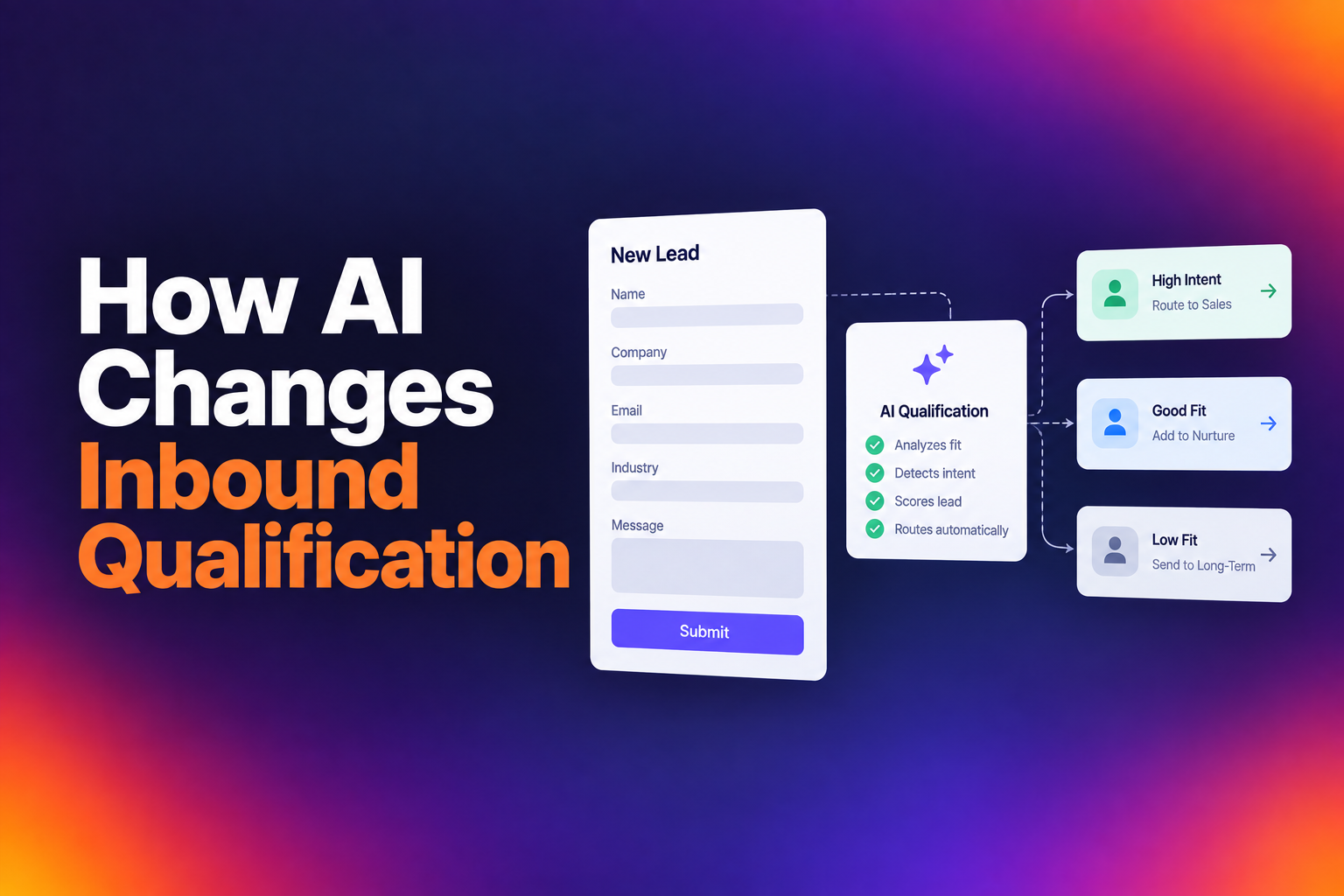
Real-time qualification means the moment someone submits a form, their data is enriched with firmographic information and matched against your CRM. Does this person already have an account owner in Salesforce? Are they from a target account? Do they meet your ICP criteria based on company size, industry, and role?
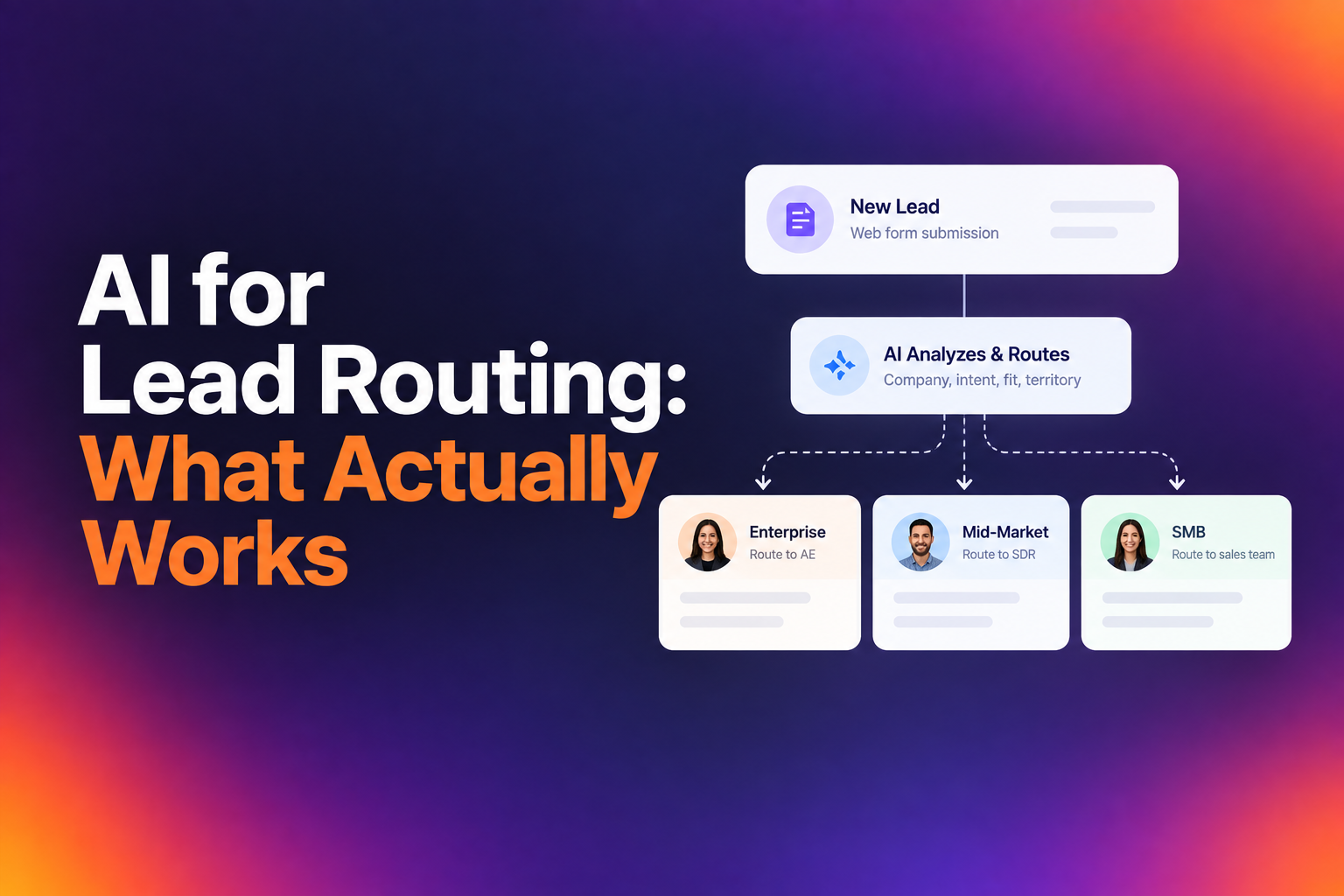
These decisions can happen in milliseconds using enrichment data and CRM history. No manual review queue. No delays. The lead knows immediately whether they qualify, and qualified leads see a calendar on the spot. For enterprise teams, this means nested routing rules that respect territory ownership, product interest, and account hierarchies. For SMBs, it means pre-built logic that works without dedicated RevOps headcount.
Replacing 'Thanks, We'll Be In Touch' with Instant Calendars
"Thanks, we'll be in touch" is the most expensive sentence in B2B SaaS. It's a promise that converts intent into waiting, and waiting is where deals go cold. The companies booking 78% or more of their qualified leads replaced that message with an instant calendar. The moment someone qualifies, they pick a time with the right rep. No email chain. No SDR intermediary. No 48-hour lag.
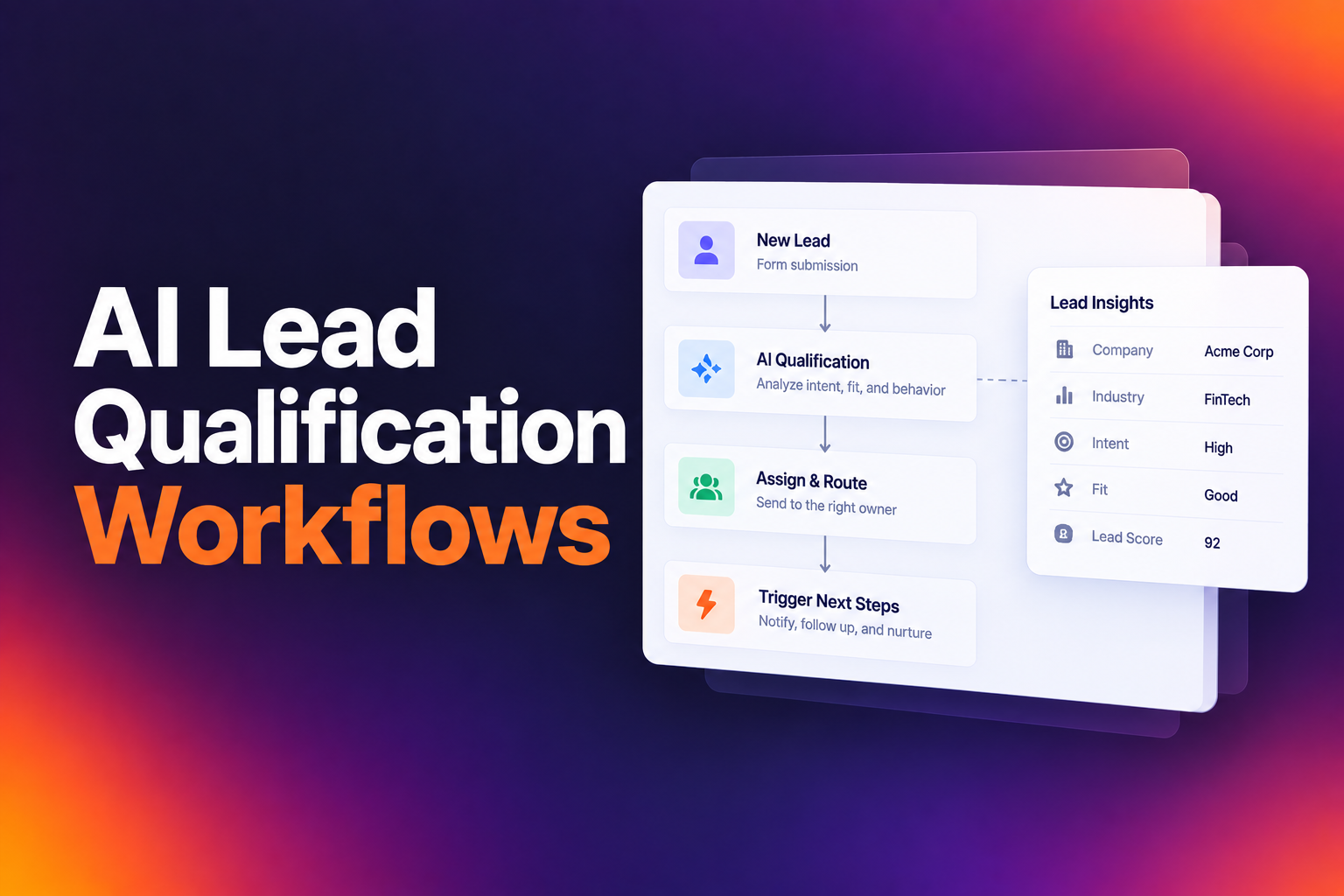
RevenueHero customers skip the manual review entirely. Leads are qualified using form responses, enrichment data, and CRM history in real time. Every CTA, form, or campaign link becomes a 24/7 meeting setter, and meetings sync back to the CRM automatically. The result is a qualified-to-booked rate that's nearly double what most teams consider normal.
Maximizing Pipeline with Automated Post-Submission Workflows
Getting the meeting booked is only part of the equation. Keeping it booked requires its own set of processes.
Solving the No-Show Problem with Instant Reschedule Links
No-shows erode pipeline that you already earned. One of the most effective countermeasures is dead simple: automated reschedule links sent immediately when a meeting is canceled or missed. Instead of the lead disappearing into a black hole, they get a frictionless path back to a new time slot.
Automated workflows can trigger reschedule sequences within minutes of a no-show, keeping the lead warm and the pipeline intact. Teams that run these workflows consistently recover meetings that would otherwise vanish from the funnel entirely.
Seasonal Trends: Adjusting Strategy for the Q3 Dip
The benchmark data shows clear seasonal patterns. Q2 is the strongest quarter for inbound conversion, with April, May, and June all exceeding 60%. Q3 drops to 55.9%, dragged down almost entirely by August at 53.4% and September at 53.7%. July actually performs well at 61.1%.
If your late-summer numbers drop, the pattern is consistent with the broader market. Plan your biggest inbound campaigns for Q2 when conversion rates peak. During Q3, tighten your qualification criteria rather than loosening them. Teams that maintain standards during slow periods instead of chasing volume are the ones that emerge with strong funnels at scale.
Turning the Funnel Into a Booking Engine
The reason most inbound leads never get booked isn't mysterious. It's structural. Manual queues, permission-based CTAs, purposeless form fields, and delayed follow-ups create a funnel that leaks at every stage. The fix doesn't require a bigger budget or better leads. You already have people raising their hands.
Swap "Request" for "Book." Audit every form field for purpose. Kill the manual review queue. Put a calendar in front of qualified leads immediately. Adjust your campaign timing around seasonal patterns. These changes compound, and the data proves it: the difference between 40% and 78% qualified-to-booked is entirely within your control.
If you're a RevOps or demand gen leader staring at conversion numbers that feel stuck, start with the 30-second gap. That's where your pipeline is hiding.
Let RevenueHero help your team turn high-intent users into booked meeting without slowing down your funnel.