Every inbound lead carries a shelf life measured in seconds, not hours. The gap between a 35% meeting rate and a 78% one often comes down to a single decision: what happens in the 30 seconds after someone clicks "Book a Demo." Do they see a calendar, or do they see a "thanks, we'll be in touch" message? For RevOps and demand gen leaders building their 2026 inbound motion, choosing between round robin and territory routing isn't a minor operational detail. It's a structural decision that shapes speed to lead, rep productivity, and pipeline quality. The right model depends on your deal complexity, team size, and how your buyers actually buy. A high-velocity SMB team and an enterprise sales org with named accounts need fundamentally different approaches, and getting this wrong creates friction that compounds across every stage of the funnel. The choice between these two routing models also determines how well your CRM data stays clean, how fairly leads get distributed, and whether your best prospects end up with the right reps. Here's how to think through both approaches and decide which fits your revenue motion.
The Lead Distribution Bottleneck: Why Manual Routing Kills Inbound Conversion
Most inbound funnels still have manual review baked in. A lead fills out a form. The submission goes to a queue. Someone reviews it, maybe routes it, maybe emails the lead back. Days pass. Intent decays. The meeting that should have happened never does.
This bottleneck isn't a technology problem. It's a process design problem. Teams that treat lead routing as an administrative step rather than a conversion event consistently underperform teams that treat it as the most important 30 seconds in their funnel.
The Decay of Intent: Why the 30 Seconds After 'Submit' Matter Most
The old "five-minute rule" for lead response is already obsolete. In 2026, buyers evaluating multiple solutions simultaneously expect sub-minute engagement. Conversion probability sits around 80% in the first minute after a form fill, then drops to roughly 40% by the next day. Every hour of delay erodes the urgency that brought the prospect to your site in the first place.
This decay curve is why the routing decision matters so much. If your routing logic adds even five minutes of manual review, you've already lost a significant portion of the intent that drove the submission.
The Hidden Cost of Manual Review Queues and Friction
Manual queues create two problems beyond speed. First, they introduce inconsistency. Different managers route leads differently, creating uneven rep workloads and unpredictable buyer experiences. Second, they generate invisible data gaps. When leads sit in a queue, the time-to-assignment metric in your CRM doesn't reflect the actual buyer experience, because it only starts tracking once someone picks up the lead.
The median time-to-assignment in manual systems often hides systemic delays that averages would mask. A few fast responses pull the average down while dozens of leads sit untouched for hours. This is why experienced RevOps teams measure median response times instead.
Round Robin Routing: Speed and Fairness for High-Velocity Teams
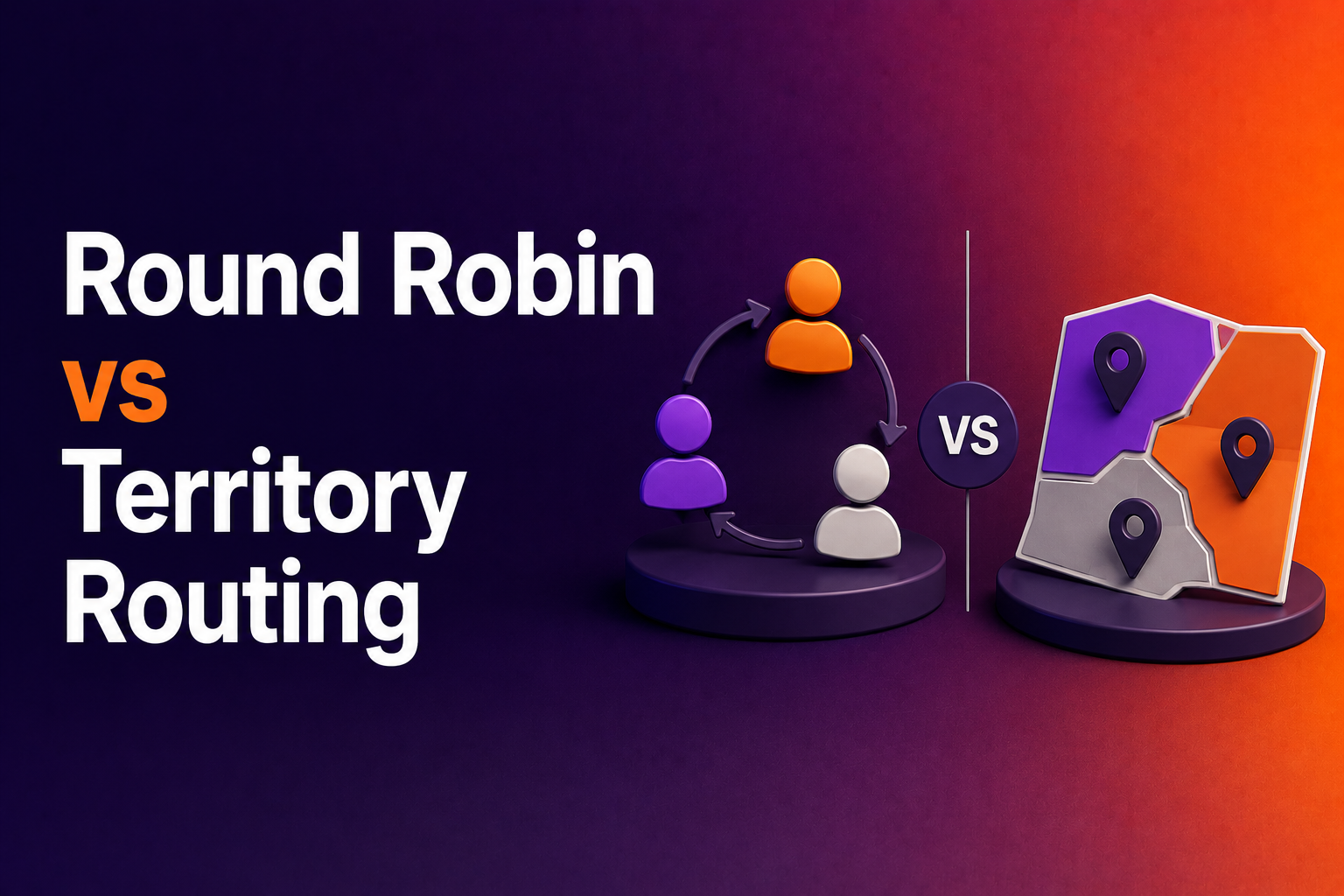
Round robin distributes leads evenly across available reps in a rotating sequence. Rep A gets the first lead, Rep B gets the second, Rep C the third, and the cycle repeats. It's the simplest automated routing model, and for many teams, it's the right one.
The core advantage is speed. There's no decision-making step between form submission and rep assignment. The lead arrives, the system assigns it, and the rep gets notified instantly. For teams running a high-volume inbound motion with relatively homogeneous leads, this eliminates the bottleneck entirely.
Optimizing for SMB and High-Volume Inbound Motions
Round robin works best when demos are fast and the cost of a mismatched meeting is low. If you're selling to SMBs where the average deal cycle is short and qualification criteria are inclusive, you can afford to route broadly. The data supports this: teams running high-velocity motions with lower disqualification rates still convert well because the cost per meeting is minimal.
This model also scales cleanly. Adding a new rep means adding them to the rotation. No territory maps to redraw, no account assignments to update. For teams growing headcount quickly, that simplicity matters.
Preventing Rep Burnout with Automated Lead Distribution
Uneven lead distribution is one of the fastest paths to rep attrition. When top performers get overloaded while newer reps sit idle, both groups suffer. Round robin solves this mechanically by ensuring equal distribution regardless of lead timing or source.
Smart implementations also account for rep availability. If a rep is on PTO or in a meeting, the system skips them and moves to the next available person. This prevents leads from landing in dead queues and keeps response times consistent even during staffing gaps.
Territory Routing: Precision for Complex Enterprise Sales
Territory-based routing assigns leads based on attributes like geography, company size, industry vertical, or product interest. Instead of distributing evenly, the system matches each lead to the rep who owns that segment or account.
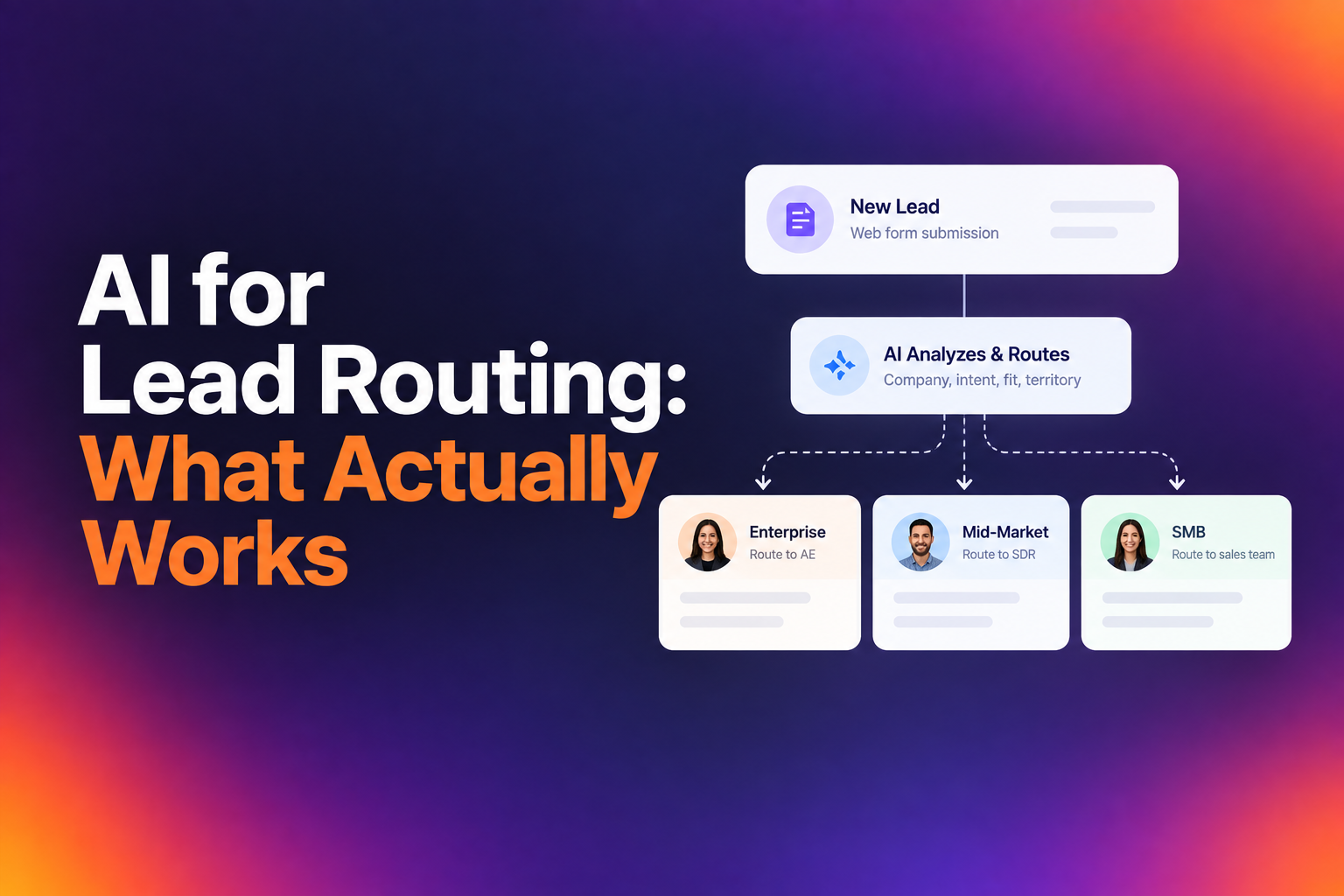
This model trades speed for precision. The routing step requires data enrichment, firmographic matching, and CRM lookups, all of which add milliseconds to seconds of processing time. But for enterprise sales teams where deal sizes justify the complexity, that precision drives significantly better outcomes.
Using Enrichment Data and CRM History to Match Leads to Experts
Territory routing depends on data quality. The system needs to know the lead's company size, industry, location, and sometimes tech stack before it can route accurately. Real-time enrichment fills in gaps that form fields miss, turning a name and email into a complete firmographic profile.
This is where teams selling into specific verticals see outsized returns. Construction tech companies converting at 69.1% and ecommerce platforms at 68.8% outperform horizontal SaaS averages partly because their routing logic matches leads to reps who understand the buyer's specific context. A rep who knows your industry asks better discovery questions and runs a tighter demo.
Account-Based Routing: Maintaining Continuity with Existing Owners
One of the strongest arguments for territory routing is account continuity. When a new contact from an existing customer or prospect submits a form, they should reach the rep who already owns that relationship, not a random person from a round robin queue.
This requires a CRM lookup at the moment of submission. The routing engine checks whether the lead's domain matches an existing account, identifies the owner, and routes accordingly. Without this step, you risk creating duplicate records, confusing the buyer, and undermining your account-based strategy. For organizations with nested routing rules and complex approval workflows, this kind of logic is non-negotiable.
Choosing the Right Model for Your Revenue Motion
The choice between round robin and territory-based routing isn't binary for most organizations. Many teams use both, applying round robin for inbound SMB leads and territory logic for enterprise or named-account submissions. The key is matching your routing model to your deal economics.
If a single bad meeting costs hours of expensive rep time, a higher disqualification rate and more precise routing make sense. If demos are fast and cheap, you can afford to be more inclusive and route broadly.
Qualification Criteria: Balancing Selective Enterprise vs. Inclusive SMB
Your qualification rules should reflect your motion. Enterprise teams that are selective about who gets through to sales end up with higher-quality conversations. Reps aren't wasting time on poor fits. The leads who do make it through are more likely to show up, more engaged, and more likely to convert.
SMB teams benefit from the opposite approach. Lower qualification thresholds mean more meetings, and since each meeting costs less in rep time, the math works. Review your disqualification criteria quarterly. Make sure they're actually filtering out poor fits, not just adding friction that kills conversion.
Seasonal Benchmarking: Adapting Strategy for Peak Periods like Q2
Routing strategy shouldn't be static across the year. Benchmark data from 2025 shows clear seasonal patterns: Q2 is the peak quarter for inbound conversion at 61.0%, with April, May, and June all exceeding 60%. Q3 dips to 55.9%, dragged down almost entirely by August at 53.4% and September at 53.7%.
Plan your biggest inbound campaigns for Q2 and adjust routing capacity accordingly. During peak periods, you may need to expand your round robin pool or loosen territory boundaries to handle volume. During Q3 lulls, tighten qualification criteria and focus reps on higher-value opportunities.
Implementing Instant Scheduling to Bridge the Routing Gap
Even the best routing logic fails if the lead still has to wait for a follow-up email. The real conversion unlock happens when routing and scheduling are a single step: the lead submits, gets qualified, gets routed, and books a meeting on the same page, all within seconds.
From 'Request a Demo' to 'Book Now': The Impact of Commitment Language
Among top-performing teams, 29% use "Book a Demo," 21% use "Get a Demo," and only 12% use "Request a Demo." The pattern is consistent: commitment language outperforms permission language. "Book" and "Schedule" create a mental threshold where the visitor crosses from considering to doing while they're still on your page.
This is a five-minute fix with measurable impact. Search your site for every instance of "Request," "Submit," "Contact Sales," or "Get in Touch." Replace them with "Book," "Schedule," or "Reserve." Pair that language with an instant scheduling experience so the CTA actually delivers on its promise.
Automating Real-Time Qualification with RevenueHero
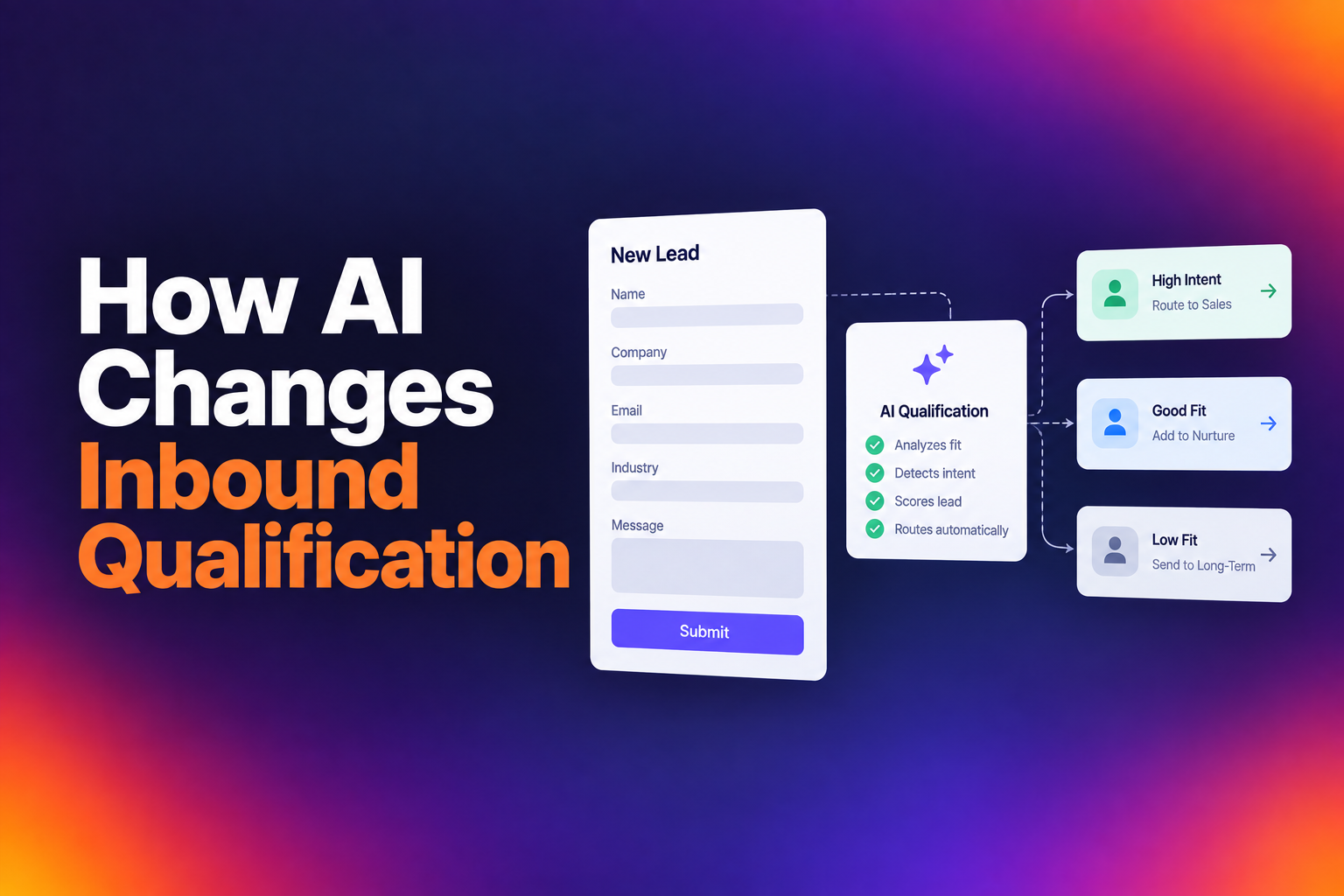
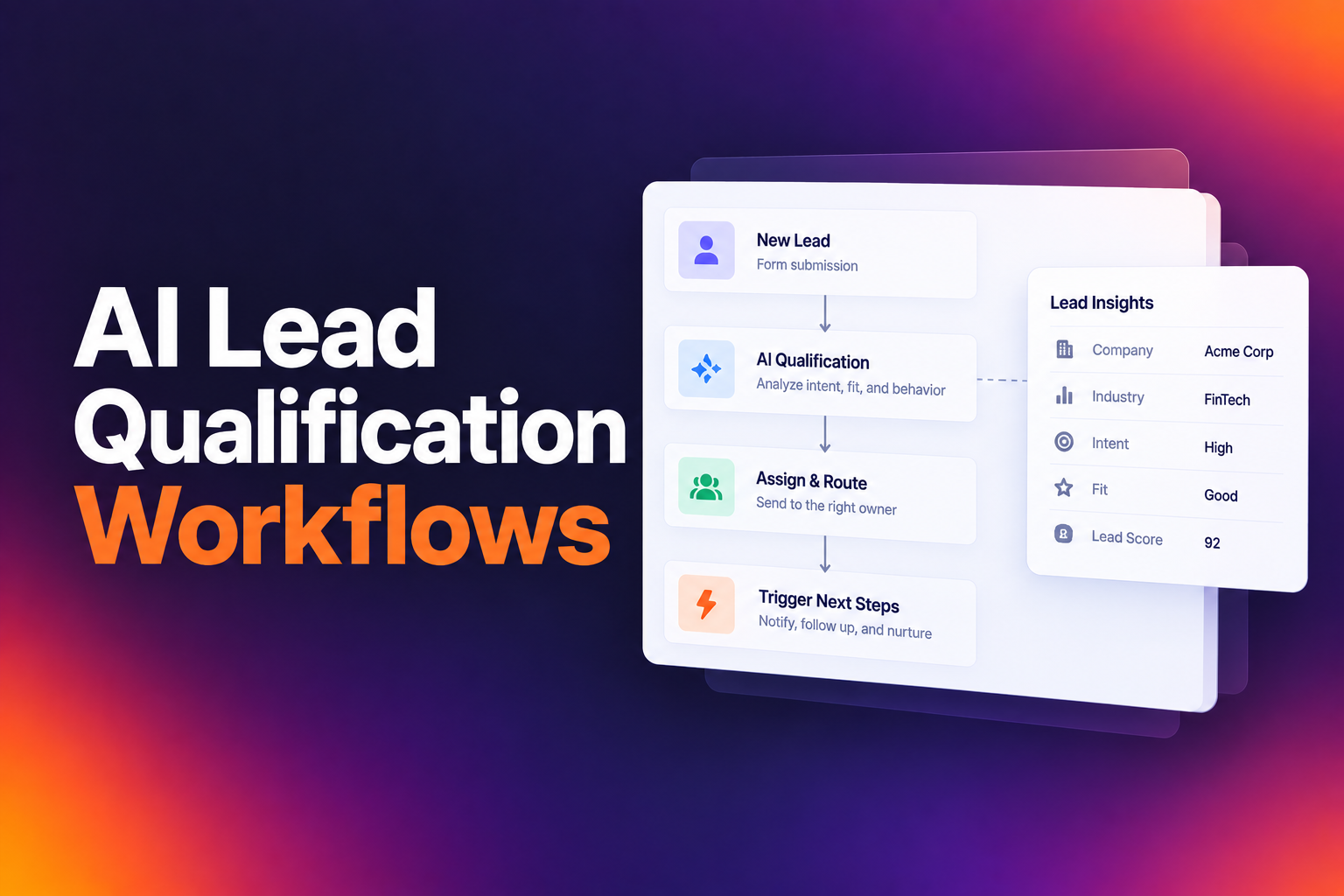
The gap between a 35% meeting rate and a 78% one isn't about better leads or a better product. It's about what happens immediately after submission. RevenueHero collapses the entire sequence of qualification, routing, and scheduling into a single moment. Leads are qualified in real time using form responses, enrichment data, and CRM history. No manual review queue. No delays.
The routing engine handles both round robin and territory logic, checking CRM ownership, applying custom rules based on firmographic data, and presenting the right rep's calendar instantly. Every meeting syncs back to the CRM automatically, giving RevOps real-time pipeline visibility without manual logging. For teams comparing round robin against territory routing, the answer is often both, applied intelligently based on the lead's profile and your sales motion.
The routing model you choose shapes your entire inbound funnel. Round robin gives you speed and fairness for high-volume motions. Territory routing gives you precision and account continuity for complex deals. Most mature organizations need elements of both, triggered by real-time qualification logic that runs before the lead ever sees a calendar. The teams converting at the top of the benchmark range in 2026 aren't debating which model is better in the abstract. They've matched their routing to their revenue motion and eliminated every second of delay between intent and meeting. That's the structural advantage worth building toward.
Let RevenueHero help your team turn high-intent users into booked meeting without slowing down your funnel.