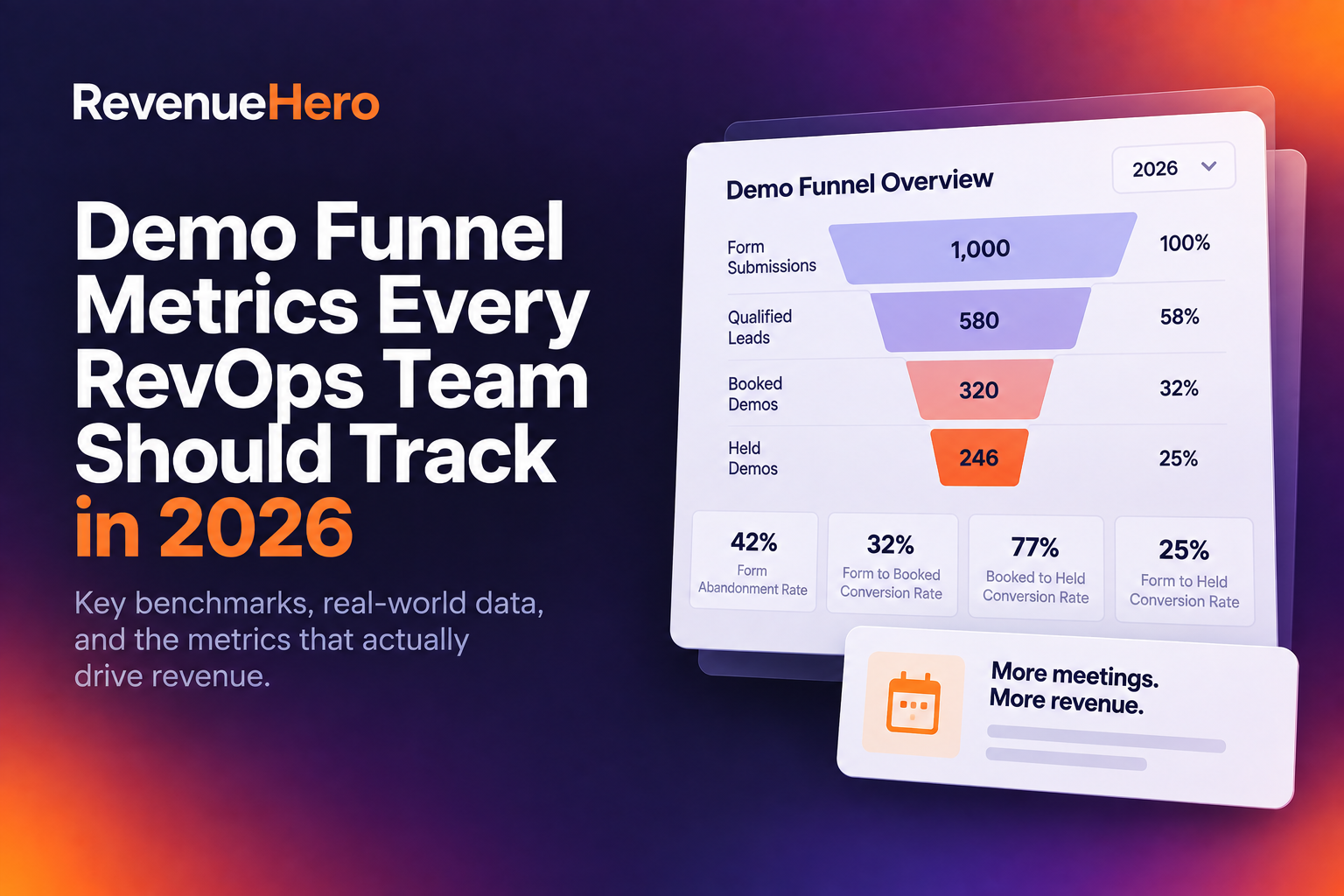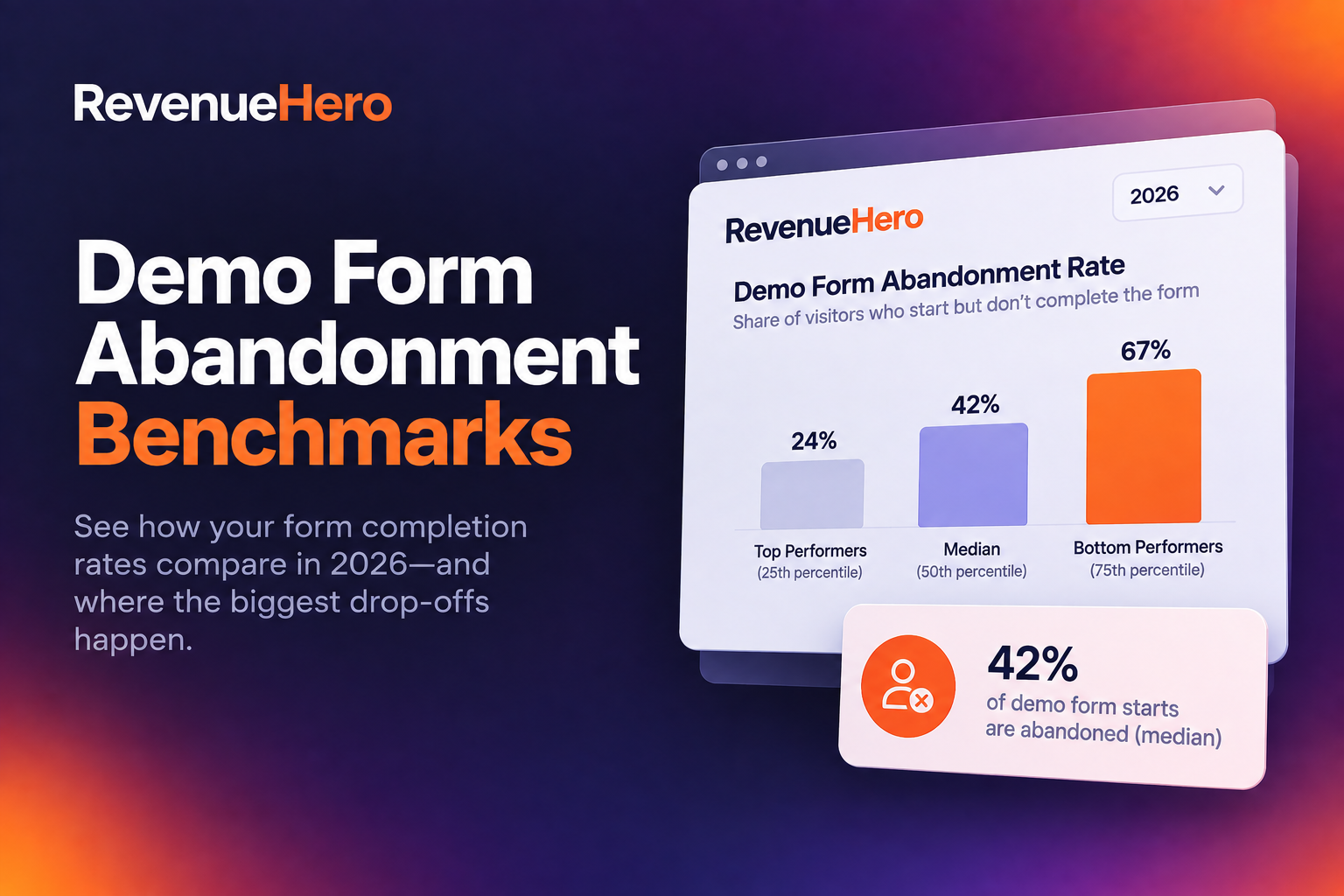
Most B2B SaaS teams pour budget into generating demand, then watch qualified leads decay in a manual review queue. The gap between a 40% qualified-to-booked rate and a 78% rate isn't about better leads or bigger spend. It's about what happens in the 30 seconds after someone clicks a button on your site. This buyer's guide for lead qualification software breaks down what to look for, what to measure, and how to close the conversion gap that's silently draining your pipeline. If your team is converting fewer than six out of ten qualified leads into booked meetings, you're leaving real revenue on the table, and the fix is more operational than strategic.
The Inbound Leak: Why Qualified Leads Fail to Convert
The standard inbound process has a structural flaw baked into it. A lead fills out a form. That form lands in a queue. Someone reviews it manually, maybe routes it, maybe sends a follow-up email. Days pass. The lead has already moved on to evaluating a competitor who put a calendar in front of them immediately. This isn't a lead quality problem. It's a process problem, and it compounds with every hour of delay.
Data from over one million B2B SaaS form submissions shows the median qualified-to-booked rate sits at 62%. The top 10% of performers hit 78% or higher, with the best reaching 88%. That spread exists on the same traffic, same spend, same ICPs. The difference is entirely downstream of the form fill.
The Friction of Manual Review and Intent Decay
Manual lead review introduces two kinds of damage. First, it creates latency. A lead who filled out your form at 2 PM on a Tuesday has high intent right then. By the time an SDR reviews it the next morning, that intent has dropped significantly. Conversion probability can fall from 80% in the first minute to roughly 40% by the following day. The old "five-minute rule" is already obsolete in 2026: buyers evaluating three or four tools simultaneously expect sub-minute engagement.
Second, manual review introduces inconsistency. Different reps apply different judgment calls. One SDR qualifies a lead that another would disqualify. This makes your funnel data unreliable and your forecasting noisy.
Permission vs. Commitment Language in CTAs
A surprisingly high-impact variable is the language on your CTA buttons. Among top-performing companies, 29% use "Book a Demo," 21% use "Get a Demo," and 12% use "Schedule a Demo." Only 12% use "Request a Demo." The pattern is clear: commitment language outperforms permission language.
"Request" and "Submit" create uncertainty. The visitor doesn't know what happens next. "Book" and "Schedule" create commitment. The visitor mentally crosses from considering to doing while they're still on your page. This is a five-minute fix with measurable impact. Search your site for every instance of "Request" and "Submit," replace them with commitment-oriented phrasing, and watch what happens to your numbers.
Core Capabilities of Modern Lead Qualification Software
A good lead qualification tool does three things well: it qualifies instantly, routes intelligently, and books meetings without human intervention. If any of those three steps requires manual work, you're introducing the same latency and inconsistency that the software is supposed to eliminate.
Real-Time Qualification via Enrichment and CRM History
The best qualification systems don't rely solely on what a lead enters in a form. They enrich that data in real time with firmographic information: company size, industry, tech stack, and existing CRM records. This means a returning lead tied to an existing account in Salesforce or HubSpot gets recognized immediately, and the system can apply different rules based on that context.
For enterprise sales motions where a single bad meeting costs hours of expensive rep time, this enrichment layer is essential. For high-velocity SMB motions where demos are fast and low-cost, you can afford lighter qualification. The software should support both modes.
Dynamic Routing Engines for Instant Rep Matching
Simple round-robin assignment breaks down fast. Territory conflicts, existing account ownership, product-line specialization, rep PTO: all of these require routing logic that respects your CRM relationships and org structure. A lead from an existing customer account should go to the account owner, not the next rep in the rotation. A lead expressing interest in a specific product should go to the specialist, not a generalist.
Nested routing rules matter more as your team scales. Enterprise organizations need configurable logic that handles territory, product interest, account match, and fallback scenarios without manual intervention.
Integrated Scheduling and Calendar Handoffs
Qualification without immediate scheduling is a half-measure. The moment someone is qualified, they should see a calendar. Not a "thanks, we'll be in touch" confirmation page. Not a follow-up email three hours later. A calendar, right then.
This is the single biggest differentiator between teams converting at 40% and teams converting at 78%. The top performers treat inbound scheduling as a conversion event, not an afterthought. Every meeting booked should sync back to the CRM automatically, with full attribution data, so RevOps has real-time pipeline visibility without chasing reps for updates.
Defining Your Ideal Qualification Criteria
Choosing the right qualification criteria is where most teams either over-filter or under-filter. Both mistakes are expensive, just in different ways.
Balancing Friction with Purposeful Form Fields
There's a persistent myth that fewer form fields always convert better. The data tells a different story. Top performers convert at 77% with 2 fields and at 76% with 13 fields. The number of fields doesn't determine conversion rates. What matters is whether each field does something useful.
A field that determines routing (company size, region, use case) earns its place. A field that helps the rep tailor the conversation (current tool, team size, specific pain point) earns its place. A field that sits in a CRM column and never gets looked at is costing you conversions without delivering value. The question isn't "how many fields?" but "what does each field enable?"
Medical software buyers, for instance, expect detailed intake forms. A broad SMB audience expects minimal friction. Match your form complexity to your buyer's expectations and your team's operational needs.
Tailoring DQ Rules to Your Sales Motion
Your disqualification criteria should be intentional, not arbitrary. Companies that are selective about who gets through to sales end up with higher-quality conversations. Reps aren't wasting time on poor fits. The leads who make it through are more engaged, more likely to show up, and more likely to convert.
If your DQ rate is under 20% and your meeting rate is struggling, you're probably letting through leads that waste rep time. Consider tightening criteria on company size, industry, or use case fit. If you're running a high-velocity motion where demos are fast and cheap, you can afford to be more inclusive. Review your DQ criteria quarterly. Make sure they're filtering out genuinely poor fits, not just adding friction for its own sake.
Benchmarking Success: What Good Looks Like
Without clear benchmarks, you can't know whether your numbers are good, average, or leaving money on the table. Too many teams assume a 35-40% qualified-to-booked rate is normal. It isn't.
The 78% Rule: Lessons from Top 10% Performers
Across a full calendar year of data from B2B SaaS companies, the top 10% book 78% or more of their qualified leads into meetings. The median is 62%. If you're below 58%, you're in the bottom quartile.
The companies hitting these numbers aren't doing anything exotic. They use commitment language on CTAs. They cut form fields that don't help routing or personalization. They're pickier about who qualifies. And when someone does qualify, they put a calendar in front of them immediately. Not after an SDR reviews the lead. Right then. The gap between 40% and 78% on the same traffic is 38 additional meetings per 100 qualified leads. That's pure pipeline, from the same spend.
Seasonal patterns also matter. Q2 consistently outperforms other quarters, with April, May, and June all exceeding 60% conversion. August and September drag Q3 down to 55.9%. Plan your biggest inbound pushes for Q2, and don't panic if late-summer numbers dip: the pattern is market-wide.
Vertical Positioning and Industry-Specific Filtering
Generic positioning underperforms vertical targeting. Construction Tech converts at 69.1%. Ecommerce at 68.8%. Travel Tech at 68.3%. Generic Sales Tech sits at 62.8%. The pattern holds across segments: industry-specific messaging, landing pages, and form fields outperform horizontal approaches.
If you have a strong vertical, build a dedicated landing page with industry-specific headlines, customer logos, testimonials, and relevant form fields. "How many locations?" for multi-site businesses. "Current ATS?" for HR buyers. Run traffic to it for 30 days and compare against your generic page. The lift is usually significant.
Implementing RevenueHero for Instant Inbound Conversion
RevenueHero is built specifically to close the gap between form fill and booked meeting. It qualifies leads in real time using form responses, enrichment data, and CRM history. No manual review queue. No delays. The moment someone submits, they know if they qualify, and qualified leads see a calendar instantly.
The routing engine respects existing CRM ownership, so leads tied to active accounts go to the right rep automatically. Territory rules, product interest, account match: all configurable without engineering support. Every meeting syncs back to your CRM with full attribution, giving RevOps clean conversion data across the funnel without chasing reps for manual updates.
For teams currently converting at 40-50%, the path to 62% or higher is straightforward. Replace permission language with commitment language. Audit every form field for whether it changes routing or rep preparation. Tighten DQ criteria to match your sales motion. And put a calendar in front of qualified leads the moment they qualify.
You already have the traffic. You already have people raising their hands. The only question is how many of them actually end up talking to your team. If you're ready to close that gap, start with a RevenueHero demo and see what your numbers look like when every qualified lead gets a calendar in under 30 seconds.
Let RevenueHero help your team turn high-intent users into booked meeting without slowing down your funnel.