Someone clicks "Book a Demo" on your website. They fill out your form, hit submit, and see a confirmation message. From their perspective, the interaction is complete. They've done their part.
But what actually happens between form fill and follow-up? That gap, often lasting anywhere from seconds to days, determines whether your inbound investment converts into pipeline or evaporates into missed opportunity. According to recent benchmark data from over one million B2B SaaS form submissions, the top 10% of companies book 78% or more of their qualified leads into meetings. The median sits at 62%. That 16-point spread isn't about traffic quality or ad spend. It's about what happens in the invisible moments after submission.
Most revenue teams have never mapped this journey in detail. They know a form exists, they know leads eventually reach sales, but the mechanics between those points remain opaque. Understanding this process reveals where conversion leaks occur and why speed matters more than most teams realize.
The Instant Journey from Submission to Database
The moment someone submits a form, a cascade of technical processes begins. These happen in milliseconds, yet each step introduces potential failure points that can delay or derail the lead's path to a conversation.
Data Capture and Field Mapping
When a visitor clicks submit, their browser packages the form data and sends it to your form handler. This might be a native CRM form, a marketing automation platform, or a third-party tool. The handler receives raw field values and must map them to the correct database fields. A mismatch here creates dirty data that compounds downstream.
Company name might land in the first name field. Phone numbers get truncated. Custom fields fail to sync entirely. These mapping errors often go unnoticed until a rep opens a lead record and finds gibberish. The fix requires manual cleanup, which introduces delay and friction.
Webhook Triggers and API Handshakes
Most modern stacks don't stop at a single database. Form submissions trigger webhooks that notify other systems: your CRM, enrichment providers, routing tools, and email platforms. Each integration requires an API handshake, a verification that both systems recognize each other and can exchange data.
When these handshakes fail, leads sit in limbo. A webhook timeout might mean your routing system never learns about the submission. An authentication error could prevent enrichment data from appending. These failures happen silently, and without monitoring, teams discover them only when someone asks why a hot lead never got contacted.
The Invisible Sifting: Validation and Enrichment
Not every form submission deserves sales attention. The gap between submission and follow-up includes a filtering layer that separates real prospects from noise.
Filtering Spam and Bot Submissions
Bots submit forms constantly. They use fake email addresses, nonsense company names, and automated patterns that waste rep time if not caught. Basic validation checks email syntax and domain validity. More sophisticated systems analyze submission patterns, comparing timestamps, IP addresses, and behavioral signals to identify non-human activity.
A form submission from a disposable email domain, completed in under two seconds, with a company name of "asdfasdf" should never reach a sales queue. The filtering logic that catches these submissions protects rep productivity but must balance sensitivity with coverage. Too aggressive, and real leads get blocked. Too lenient, and spam floods the pipeline.
Third-Party Data Appending
Enrichment happens in the background, pulling firmographic and contact data from providers like Clearbit, ZoomInfo, or Apollo. A visitor submits their work email, and within seconds, your system knows their company size, industry, funding status, and tech stack.
This appended data transforms a sparse form submission into a qualified lead profile. It enables routing decisions, prioritization logic, and personalized outreach. Without enrichment, reps work with incomplete information, often spending the first minutes of a call gathering context they could have had instantly.
Lead Scoring and Prioritization Logic
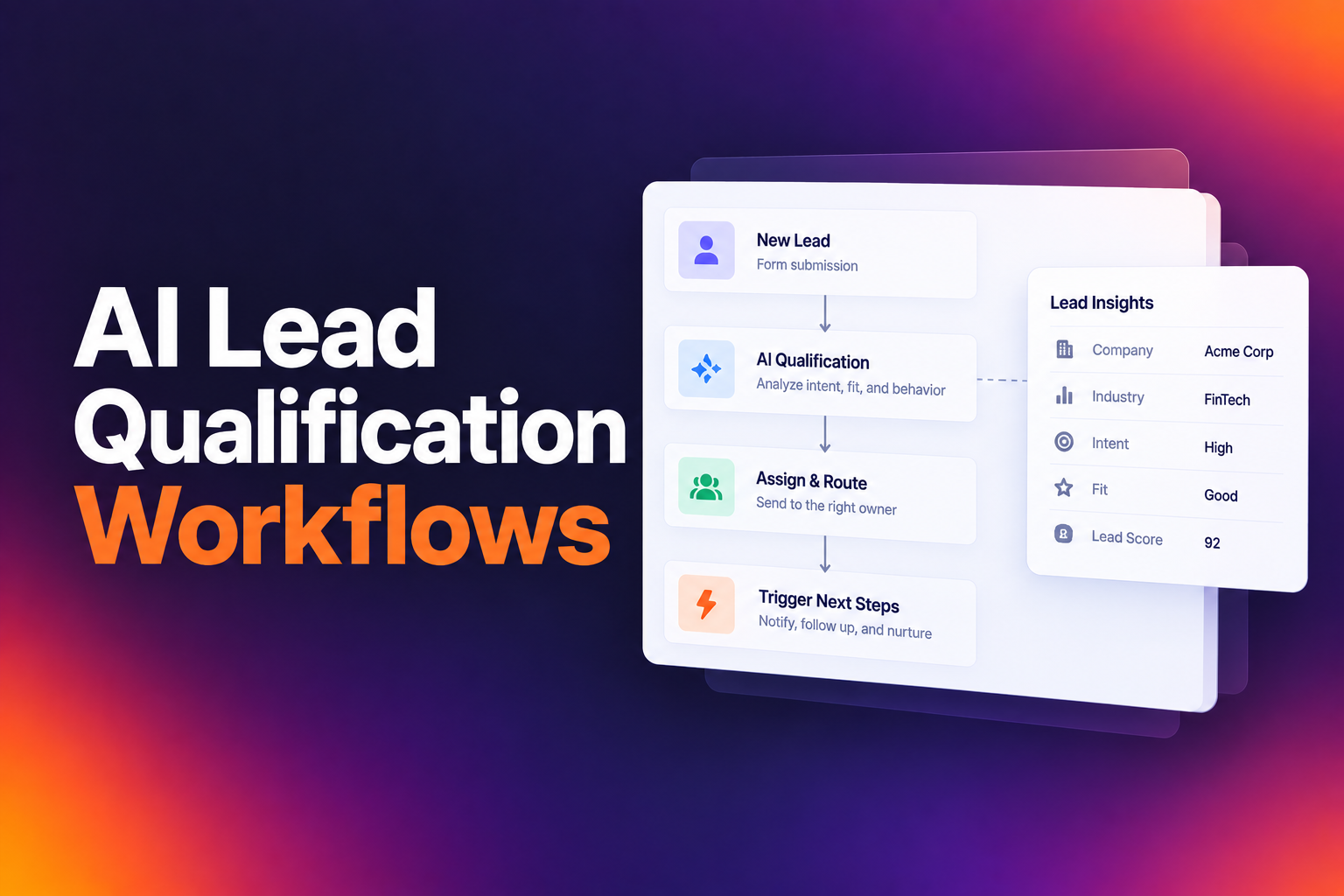
Every qualified lead isn't equally valuable. The gap between form fill and follow-up includes a scoring layer that ranks leads and determines response urgency.
Matching Ideal Customer Profiles (ICP)
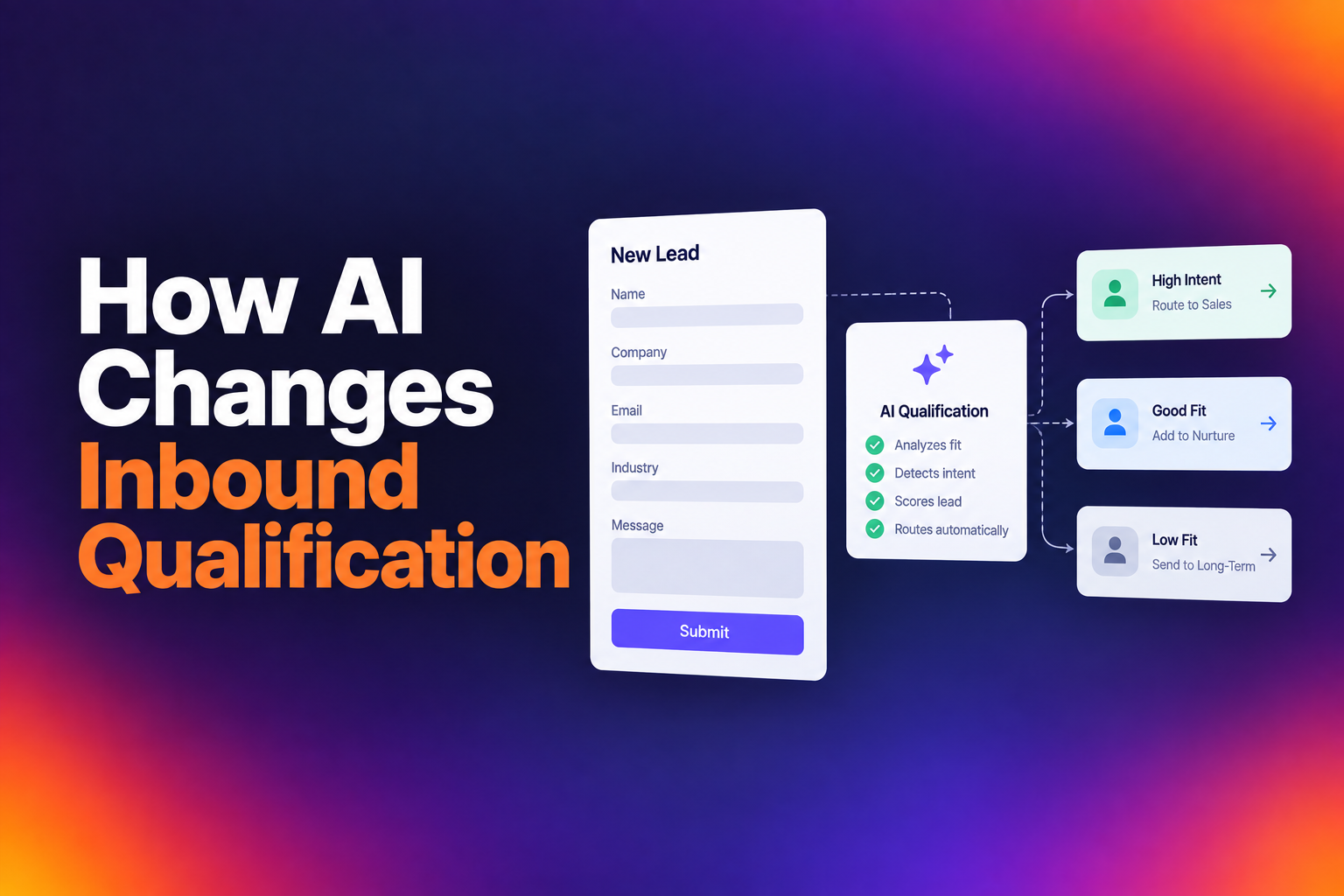
Scoring models compare lead attributes against your ideal customer profile. A Series B SaaS company with 200 employees in your target vertical scores higher than a solo consultant in an adjacent market. These scores reflect conversion probability and potential deal size.
The matching logic pulls from enriched data: company revenue, employee count, industry classification, and technology usage. Leads that match your ICP closely get flagged for immediate attention. Those on the margins might enter a nurture sequence instead of a sales queue.
Behavioral Signals vs. Firmographic Data
Firmographic data tells you who submitted the form. Behavioral data tells you how interested they are. A visitor who viewed your pricing page three times, watched a product video, and then submitted a demo request signals higher intent than someone who landed on a blog post and filled out a form on impulse.
Sophisticated scoring combines both dimensions. A perfect ICP match with low behavioral engagement might still convert but requires more effort. A marginal ICP match with high engagement might close faster than expected. The weighting between these factors varies by business model and sales motion.
Behind the Scenes of Lead Routing
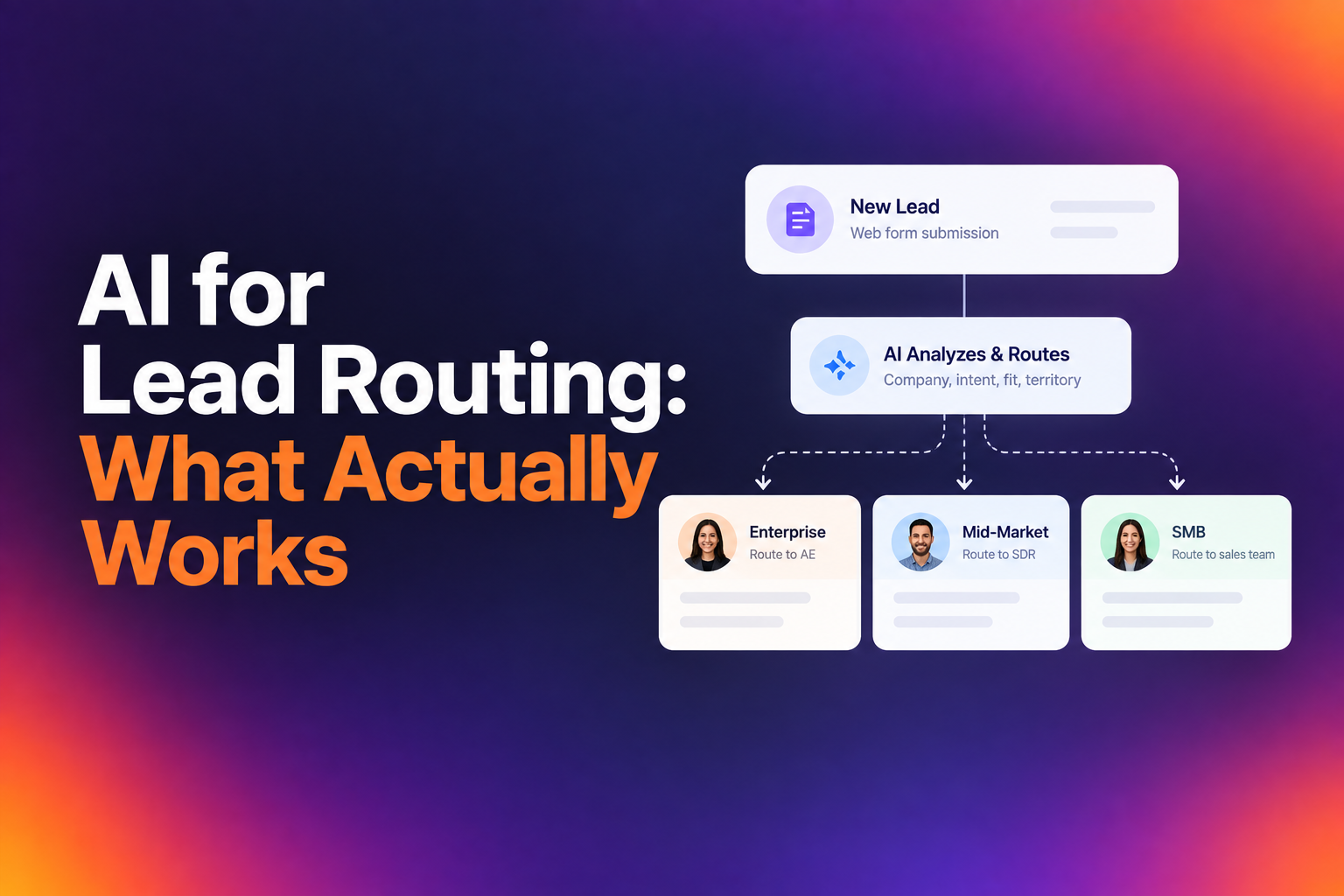
Routing determines which rep receives the lead. This decision happens in the gap between submission and follow-up, and errors here create friction that kills deals.
Round-Robin vs. Territory-Based Assignment
Simple round-robin distributes leads evenly across available reps. It's fair but ignores context. A lead from an existing customer account might land with a rep who has no relationship history. A prospect in the APAC region might get assigned to someone who works US hours.
Territory-based routing adds sophistication. Leads route based on geography, company size, industry, or account ownership. This respects existing CRM relationships and ensures reps work leads they're equipped to handle. RevenueHero's routing engine, for example, uses form responses, enrichment data, and CRM ownership to match leads with the right rep instantly, eliminating manual assignment delays.
SLA Tracking and Notification Alerts
Once routed, the clock starts. Service level agreements define how quickly reps must respond, and tracking systems monitor compliance. A lead assigned at 2:47 PM should receive contact by a specified deadline, whether that's five minutes or four hours.
Notification alerts push assignments to reps via email, Slack, or mobile. Escalation rules trigger when SLAs approach breach. A lead sitting untouched for 30 minutes might reassign to a backup rep or alert a manager. These mechanisms ensure no submission falls through the cracks during the gap between form fill and follow-up.
Automated Engagement and Warm-Up Sequences
While routing and assignment happen, automated systems begin engaging the prospect. This bridges the gap between submission and human contact.
The Psychology of the Immediate Thank You Page
The thank you page is the first post-submission touchpoint. A generic "Thanks, we'll be in touch" message creates uncertainty. The prospect wonders when they'll hear back, who will contact them, and whether their submission even worked.
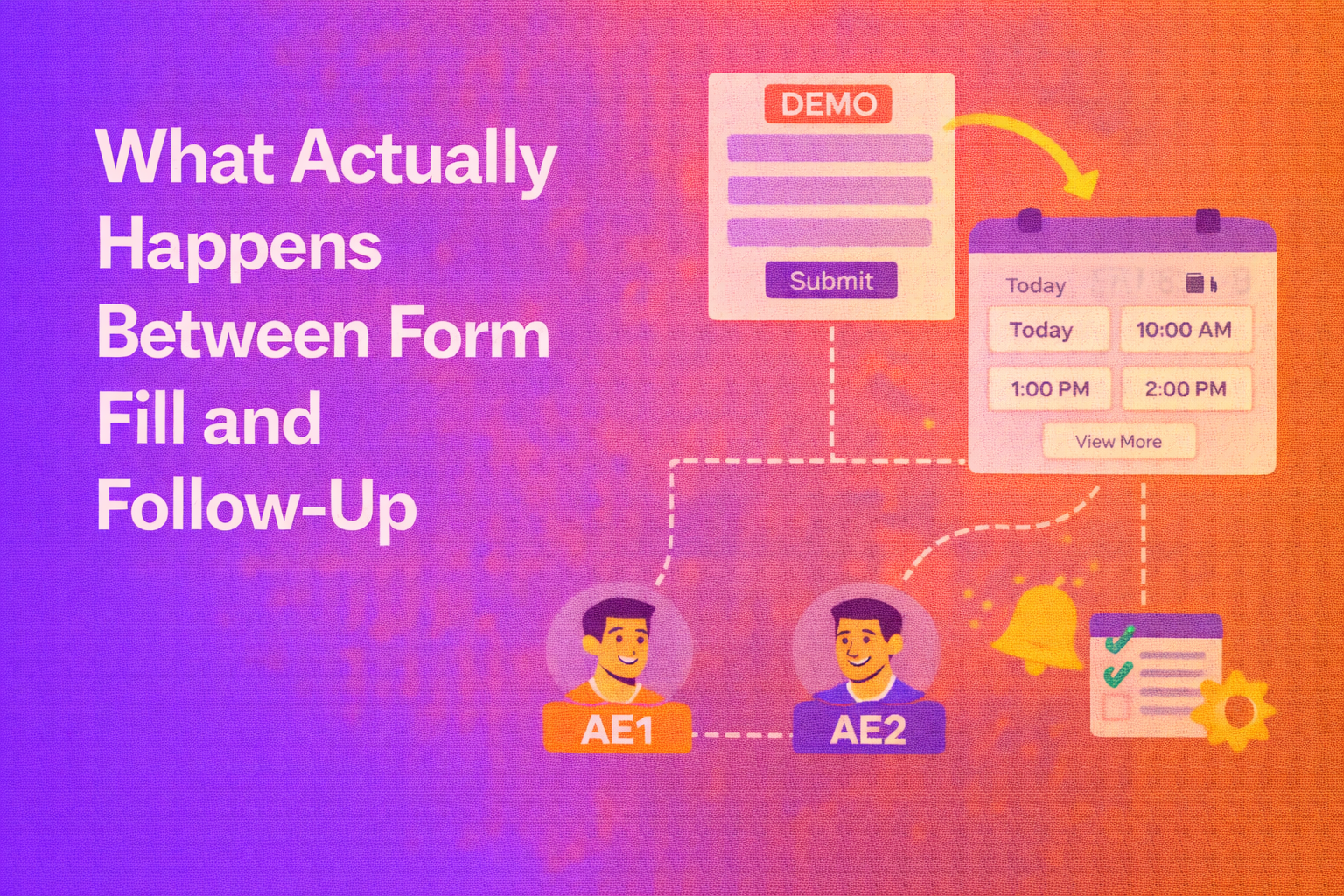
High-converting thank you pages do more. They confirm receipt, set expectations, and ideally present a calendar for immediate scheduling. The top performers in benchmark data skip the waiting game entirely: qualified leads see available time slots within seconds of submission, booking meetings before intent decays.
The companies booking 78% or more of qualified leads treat the thank you page as a conversion event, not a dead end. They put a calendar in front of prospects immediately, not after an SDR reviews the lead.
Optimizing the Gap for Maximum Conversion
The 30 seconds after someone clicks submit determine whether they become a meeting or a missed opportunity. Every process described above either accelerates or delays that outcome.
Mapping your own gap reveals optimization opportunities. Where do leads wait? Which handoffs introduce latency? What percentage of submissions reach a rep within five minutes versus five hours? These questions expose the friction that benchmark data shows costs teams 20 or more percentage points of conversion.
The companies at the top of the benchmark didn't get there by generating better leads. They got there by eliminating the delays, errors, and manual steps that plague the journey from form fill to follow-up. They automated qualification. They enriched data in real time. They routed instantly based on logic, not queues. And they put calendars in front of qualified prospects before intent could decay.
If your team converts at 40% today and reaches the median of 62%, that's 22 more meetings per 100 qualified leads with the same traffic and spend. Reach the top 10% threshold of 78%, and the math gets even more compelling. The opportunity sits in the gap most teams have never examined.
Let RevenueHero help your team turn high-intent users into booked meeting without slowing down your funnel.