Most GTM teams have a routing problem they don't fully see. A lead fills out a form, hits a queue, and waits. Someone reviews it manually. Maybe they assign it. Maybe they email the lead back. Days pass. Intent decays. The meeting that should have happened never does. The gap between a 35% meeting rate and a 78% one isn't about lead quality or ad spend. It's about what happens in the 30 seconds after someone clicks "Book a Demo." Do they see a calendar, or do they see a "thanks, we'll be in touch" message? Weighted lead routing is the operational layer that determines which rep gets which lead, and why. Done well, it turns your inbound funnel into a precision instrument. Done poorly, or not at all, it quietly bleeds pipeline every quarter.
The Lead Distribution Problem: Why Equal Distribution Fails Modern GTM Teams
Equal distribution sounds fair. Every rep gets the same number of leads, and the math works out on a spreadsheet. But fairness and effectiveness aren't the same thing. Your reps aren't interchangeable. They have different close rates, different industry expertise, and different capacity at any given moment. Sending a six-figure enterprise opportunity to a rep who's been closing SMB deals for three months is a misallocation, not equity.
The real cost isn't just a lost deal. It's the compounding effect of misrouted leads across an entire quarter: lower win rates, longer sales cycles, and reps spending time on accounts they aren't equipped to close. When your routing logic doesn't account for rep strengths, deal complexity, or territory alignment, you're essentially running a lottery with your pipeline.
The High Cost of Manual Review and Delayed Routing
Manual lead review is the silent killer of inbound conversion. A lead fills out a form, and it sits in a queue until an SDR or ops person triages it. That delay, even if it's just a few hours, drops your conversion probability dramatically. An 80% booking probability in the first minute can fall to 40% by the next business day.
The old "five-minute rule" for lead response is already obsolete. Buyers in 2026 are evaluating three or four solutions simultaneously. If your competitor puts a calendar in front of them instantly and you send a "we'll be in touch" confirmation email, you've already lost. Manual review adds friction without adding value in most cases.
Why Standard Round Robin Isn't Enough for Specialized Motions
Round robin distributes leads evenly, but it ignores context entirely. It doesn't know that Rep A specializes in financial services while Rep B owns the healthcare vertical. It doesn't account for existing CRM ownership, so a lead from an account that already has an assigned AE might land with a completely different rep.
For teams running multiple sales motions, like enterprise and SMB simultaneously, round robin creates chaos. A 500-person company and a 15-person startup require fundamentally different sales approaches. Treating them as identical routing events wastes everyone's time.
What is Weighted Lead Routing?
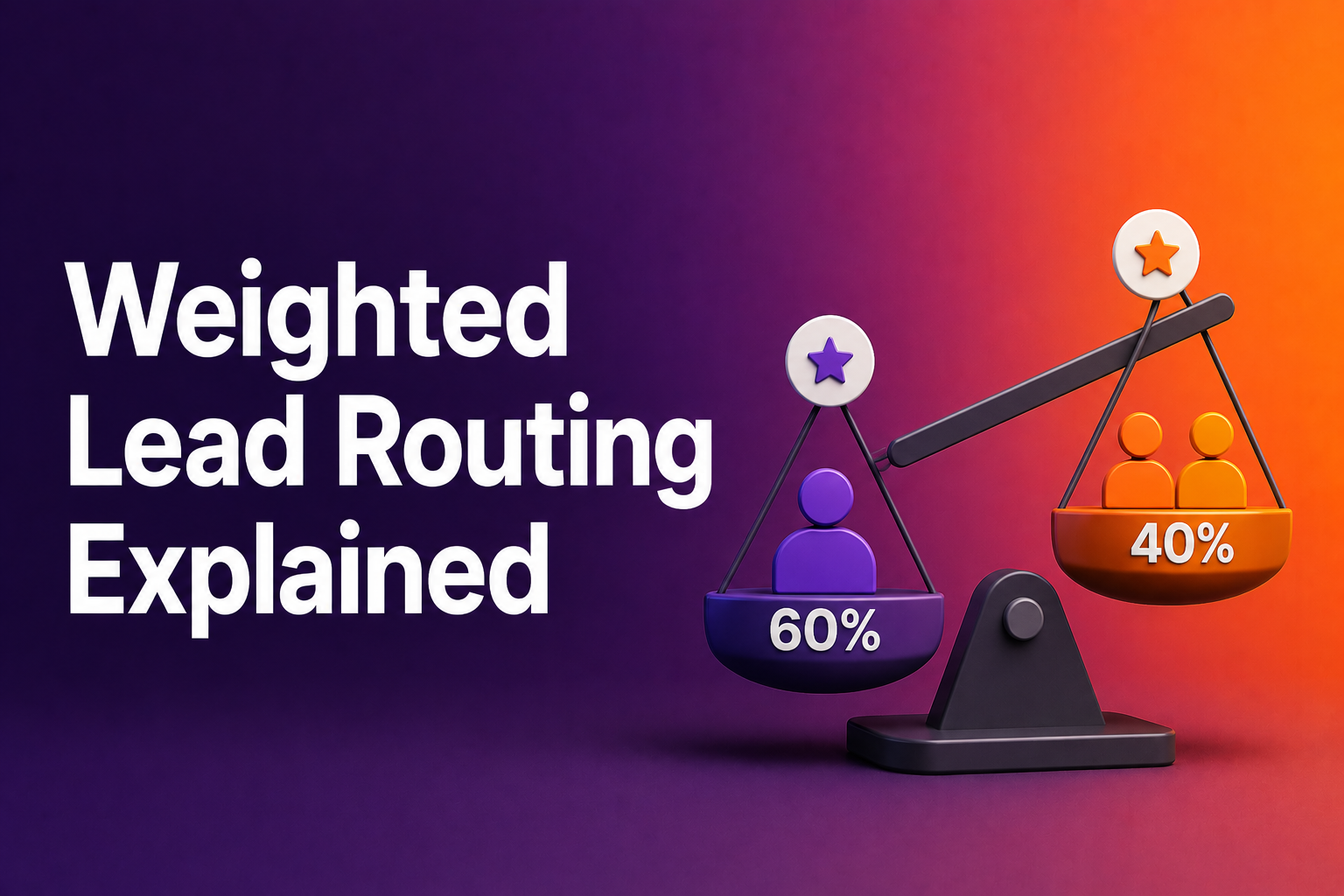
Weighted lead routing assigns inbound leads to sales reps based on predefined criteria and variable distribution ratios rather than simple equal splits. Instead of every rep getting one out of every five leads, you assign weights: maybe your top closer gets 30% of enterprise leads, while a ramping rep gets 10% with a focus on smaller accounts.
The "weights" can reflect almost anything meaningful to your business: rep performance, territory ownership, product specialization, current pipeline load, or account history in your CRM. The goal is to match each lead with the rep most likely to convert them, at the speed that preserves buying intent.
The Difference Between Static and Weighted Assignment
Static assignment uses fixed rules: leads from the West Coast go to Rep A, leads from the East Coast go to Rep B. It's predictable but rigid. When Rep A goes on PTO or gets overloaded, the system doesn't adapt.
Weighted assignment is dynamic. It factors in multiple variables and adjusts distribution in real time. If a rep's calendar is full, their weight effectively drops. If a new territory opens up, you can shift weights without rebuilding your entire routing logic. This flexibility is what separates teams booking 78% of qualified leads from those stuck at the median 62%.
Routing High-Value Leads to Your Best-Performing Reps
Not all leads carry equal revenue potential. A Director of Engineering at a 2,000-person company requesting a demo represents a different opportunity than a solo founder exploring options. Weighted routing lets you direct high-value leads to your highest-performing reps automatically.
This isn't about playing favorites. It's about maximizing conversion on the leads that matter most to your pipeline. Your best reps have earned those opportunities through performance, and your business benefits from the higher close rates that follow.
Optimizing Your Routing Motion for Maximum Conversion
Routing logic is only half the equation. The experience surrounding your routing, from form language to qualification speed, determines whether a qualified lead actually becomes a booked meeting.
Top-performing funnels in 2026 share a common trait: they treat the moment of form submission as a conversion event, not an administrative step. Everything from button copy to field count to calendar presentation is designed to reduce the time between intent and commitment.
Using Intent-Based Language to Drive Immediate Commitments
Among top-performing teams, 29% use "Book a Demo" as their primary CTA, 21% use "Get a Demo," and 12% use "Schedule a Demo." Only 12% use "Request a Demo." The pattern is clear: commitment language outperforms permission language.
"Book" and "Schedule" imply action. "Request" and "Submit" imply waiting. The visitor mentally crosses the threshold from considering to doing while they're still on your page. Search your site for every instance of "Request" and "Submit" and replace them with commitment-oriented language. This is a five-minute fix with measurable impact on meeting rates.
Integrating Form Data and CRM History for Real-Time Qualification
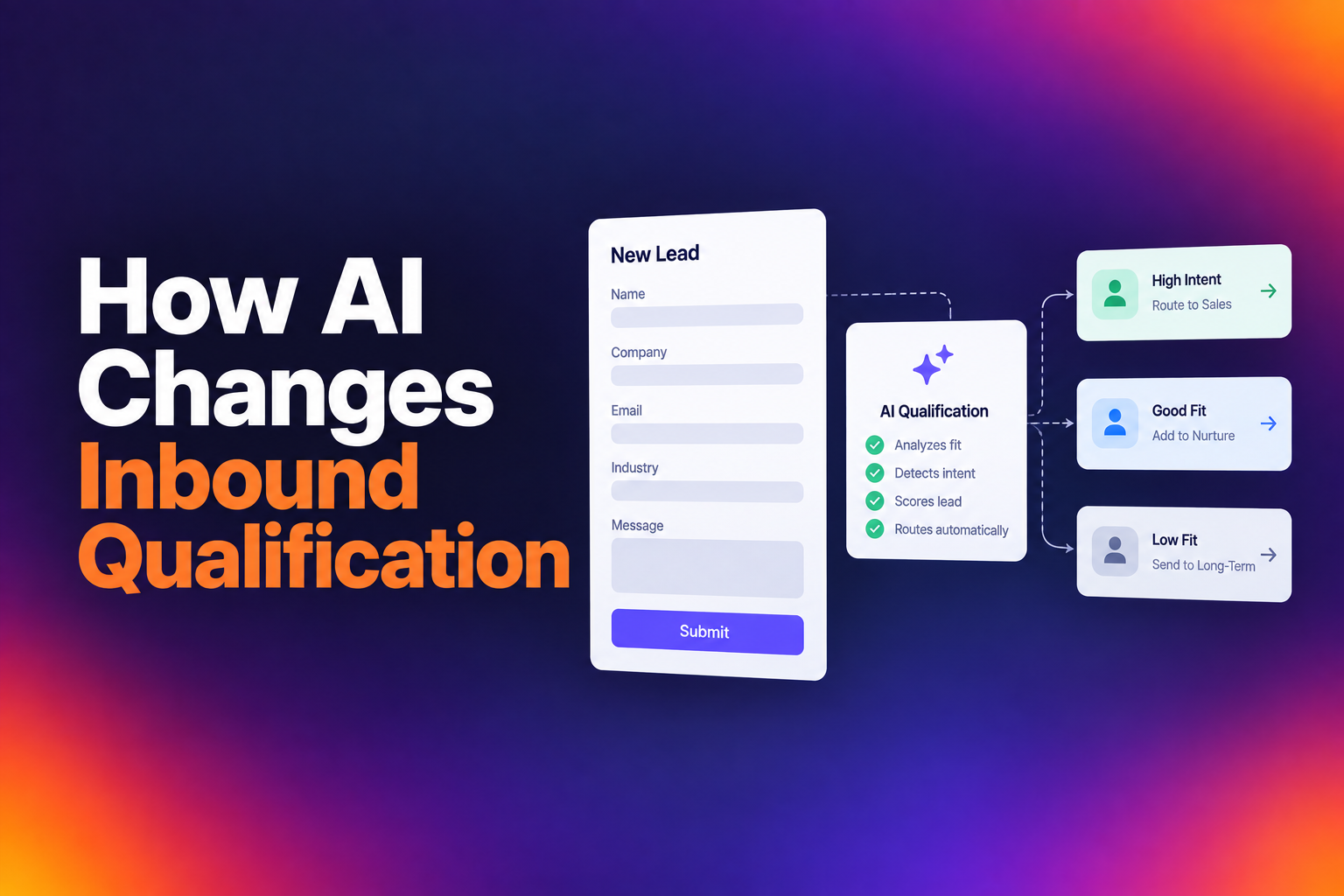
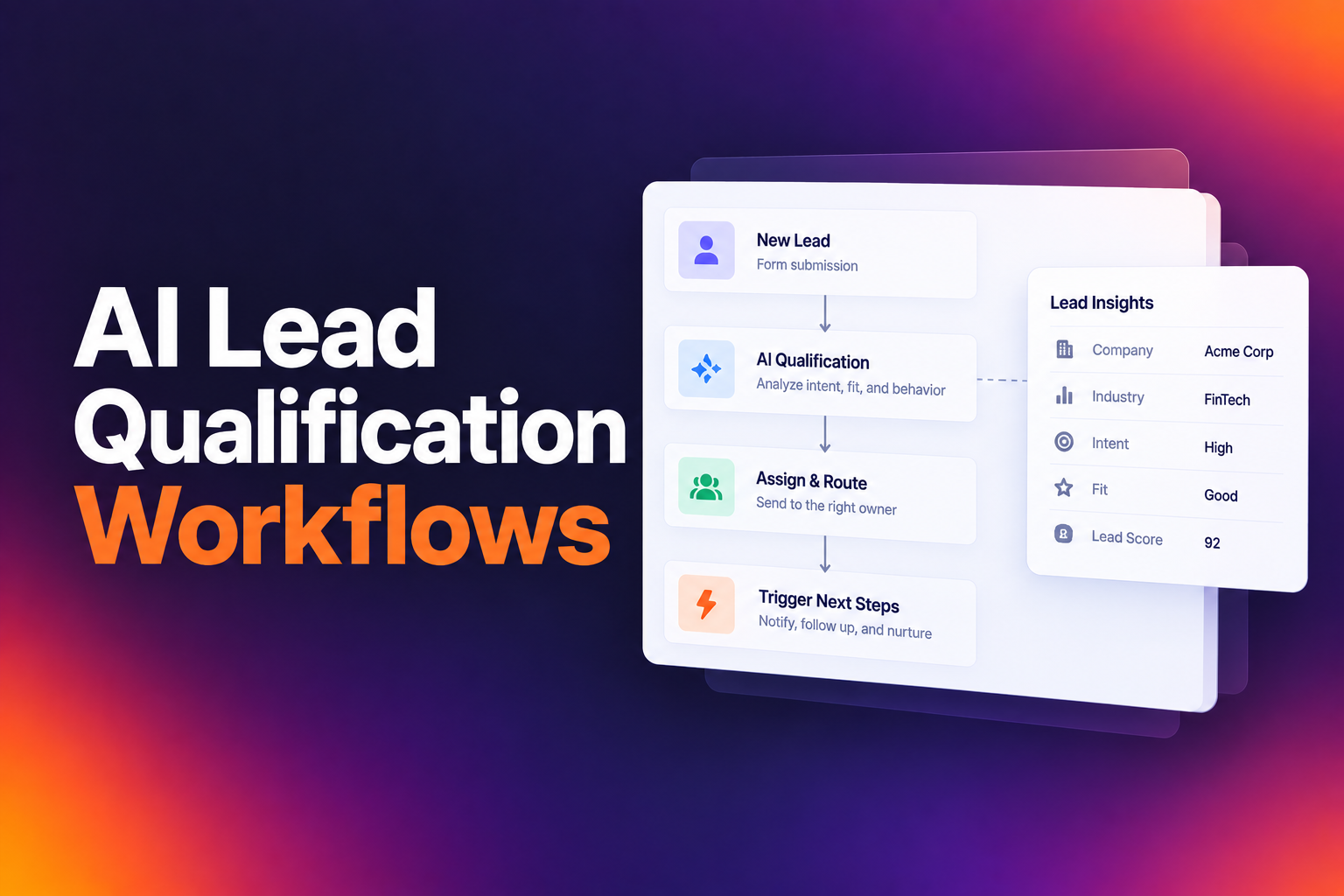
The best routing systems don't just look at what a lead entered on a form. They enrich that data with firmographic information and cross-reference it against existing CRM records in real time. This means checking whether the lead's company already has an assigned account owner, whether they match your ICP based on company size and industry, and whether they've engaged with your product before.
Real-time qualification eliminates the manual review step entirely. The moment someone submits, they know if they qualify, and if they do, they see a calendar immediately. No queue. No delay. No intent decay.
Strategic Weighted Distribution Across Different Sales Motions
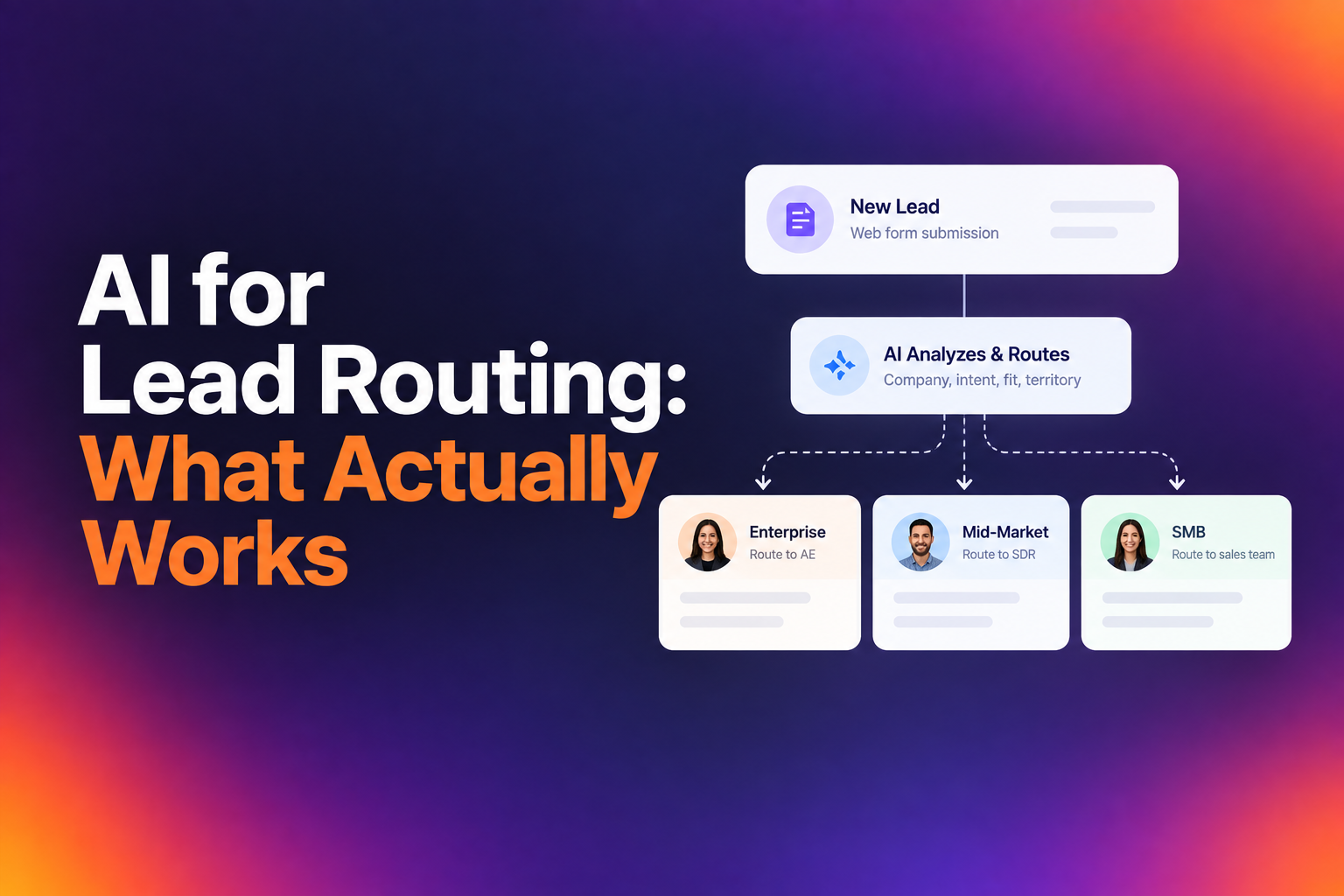
A single routing configuration rarely works across your entire GTM motion. Enterprise deals, SMB velocity plays, and partner-sourced leads each demand different routing logic and different weighting criteria.
Enterprise vs. SMB: Tailoring Weights to Deal Complexity
Enterprise routing needs nested rules and complex logic. You're matching leads against territory maps, checking for existing account ownership, and routing based on product interest or use case. A misrouted enterprise lead doesn't just cost you a meeting: it costs hours of expensive rep time and potentially damages an existing relationship.
SMB routing prioritizes speed above all else. The deals are faster, the demos are shorter, and the cost of a slightly imperfect rep match is low. You can afford to be more inclusive with qualification and more aggressive with immediate booking. Your weighting here might focus primarily on rep availability and current pipeline load rather than specialization.
Managing New Hire Ramp-Up with Graduated Weighting
New reps shouldn't receive the same lead volume or lead quality as tenured closers on day one. Graduated weighting starts new hires at a lower percentage, perhaps 10-15% of the team's total lead flow, and increases their share as they ramp.
This protects your pipeline during the ramp period while still giving new reps enough at-bats to develop. After 30 days, you increase their weight. After 60, again. By 90 days, they're at full capacity if their metrics support it. This approach turns onboarding from a pipeline risk into a controlled, measurable process.
Measuring Success: Benchmarks for Top-Performing Funnels
You can't improve what you don't measure, and most teams measure the wrong things. Lead volume and response time are table stakes. The metrics that actually tell you whether your weighted routing is working are meeting rates, disqualification rates, and conversion by rep segment.
The 78% Rule: How Routing Infrastructure Impacts Meeting Rates
The top 10% of inbound funnels book 78% or more of their qualified leads into meetings. The median sits at 62%. If you're below 58%, you're in the bottom quartile. The difference between these tiers isn't better leads or bigger budgets. It's infrastructure.
Teams at 78% put a calendar in front of qualified leads immediately. They don't route to a queue. They don't wait for an SDR to review. They qualify in real time and book on the spot. If you're at 40% today and you get to 62%, that's 22 more meetings for every 100 qualified leads with no additional spend.
Quarterly Reviews: Auditing DQ Rates and Weighting Efficiency
Your disqualification rate tells you whether your qualification criteria are filtering out poor fits or just adding friction. If your DQ rate is under 20% and your meeting rate is struggling, you might be letting through leads that waste rep time. If it's very high, you could be over-filtering and leaving good opportunities on the table.
Review your DQ criteria quarterly. Ask whether each rule is actually filtering genuinely poor fits. Companies that are selective about who gets through to sales end up with higher-quality conversations: reps aren't wasting time, and the leads who do make it through are more likely to show up and convert.
Implementing Automated Routing with RevenueHero
The concepts behind weighted routing are straightforward. The execution is where most teams stall, usually because their tech stack wasn't built for real-time lead processing. RevenueHero handles this by qualifying leads using form responses, enrichment data, and CRM history the moment a form is submitted. There's no manual assignment queue, no delays, and no intent decay.
Every CTA, form, or campaign link becomes an always-on meeting setter. Leads are qualified and routed based on custom logic: territory, product interest, account match, rep performance, or any combination you define. Existing CRM ownership stays intact, so you're never stepping on an AE's account. Meetings and statuses sync back to the CRM instantly, giving RevOps real-time visibility into pipeline without manual logging.
The gap between knowing how weighted routing should work and actually running it is smaller than most teams think. You already have the traffic. You already have people raising their hands. The only question is how many of them actually end up talking to your team, and whether they're talking to the right person. If you're ready to close that gap, RevenueHero is worth a serious look.
Let RevenueHero help your team turn high-intent users into booked meeting without slowing down your funnel.