Response time isn't a minor operational detail. It's the single most controllable variable in your conversion funnel. Research consistently shows that the first vendor to engage a prospect wins the deal 35-50% of the time, regardless of product superiority. Yet most organizations treat lead response as an afterthought, routing submissions through manual review queues and email chains that add hours or days of latency.
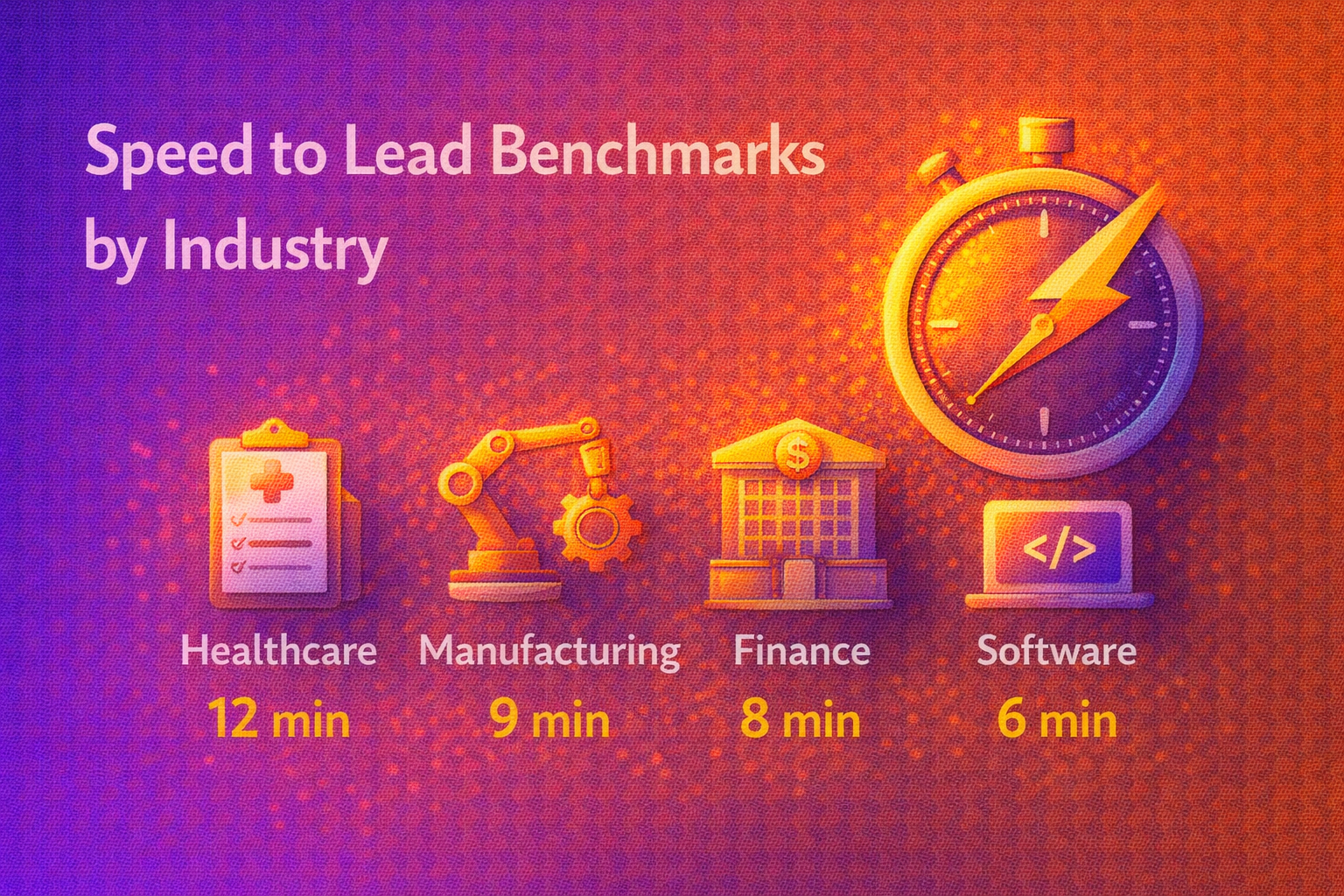
Understanding speed to lead benchmarks by industry helps you identify where your organization falls on the performance spectrum. The gap between median performers and top performers is substantial: RevenueHero's analysis of over one million inbound form fills shows top performers booking 78% of qualified leads into meetings, while the median sits at 62%. That 16-point difference represents significant pipeline left on the table for companies operating at average speeds.
The Critical Impact of Response Time on Conversion Rates
Response time directly determines how much of your marketing spend converts into actual pipeline. Every minute between form submission and human contact represents decaying intent and increasing competition.
The Five-Minute Rule: Science of Lead Decay
Lead value deteriorates rapidly after initial contact. Studies from MIT and InsideSales.com established that contacting a lead within five minutes makes you 21 times more likely to qualify them compared to waiting 30 minutes. The decay curve is steep: after just ten minutes, your odds of meaningful engagement drop by over 400%.
This happens because buyer intent is situational. Someone researching solutions at their desk has time, focus, and motivation in that moment. An hour later, they're in a meeting. The next morning, they've moved to different priorities. The context that made them fill out your form has evaporated.
The companies in the top 10% of RevenueHero's benchmark data made a specific choice: they stopped treating inbound scheduling as an afterthought and started treating it as a conversion event. When someone submits a form, they see a calendar immediately, not a "thanks, we'll be in touch" message.
How Speed to Lead Influences Buyer Perception
Fast response signals organizational competence. When a prospect requests a demo and receives immediate engagement, they infer that your company is responsive, well-organized, and likely to provide good customer support. Slow response creates the opposite impression: if you can't manage a simple demo request efficiently, how will you handle complex implementation issues?
This perception compounds across the sales cycle. Buyers who experience friction early become skeptical of claims made later. They're more likely to negotiate aggressively on price, request additional references, and extend evaluation timelines. The trust deficit created by slow initial response takes significant effort to overcome.
Speed to Lead Benchmarks by Industry Sector
Different industries operate with different buyer expectations and competitive dynamics. Understanding where your sector falls helps you set appropriate targets and identify competitive advantages.
High-Stakes Sectors: Real Estate and Insurance
Real estate and insurance buyers operate with urgency built into their purchase context. Someone requesting a quote after a life event or property decision expects near-immediate response. Industry data suggests that real estate leads contacted within one minute convert at rates 391% higher than those contacted after one hour.
Insurance follows similar patterns. A prospect comparing auto insurance quotes will typically request information from three to five providers simultaneously. The first to respond with a clear next step captures attention and often closes the deal before competitors even make contact. Top performers in these sectors aim for sub-60-second response times during business hours.
B2B SaaS and Professional Services Standards
B2B SaaS operates on longer sales cycles, but initial response speed remains critical. RevenueHero's benchmark data shows significant variation across software categories. Construction Tech leads at 69.1% qualified-to-booked rate, while generic Sales Tech sits at 62.8%. The pattern is consistent: vertical positioning and fast response outperform horizontal approaches with slower follow-up.
Professional services firms often underestimate response time importance. Consulting and agency prospects frequently evaluate multiple providers concurrently. The firm that responds first with a clear scheduling option captures the initial conversation, shaping the evaluation criteria in their favor.
Consumer Services and Home Improvement Expectations
Home improvement and consumer services face intense local competition. A homeowner requesting roofing estimates will typically contact three to five contractors. The contractor who calls back within minutes gets the site visit; the one who responds the next day gets ignored.
Consumer services benchmarks suggest that response within five minutes yields conversion rates four to seven times higher than responses after 30 minutes. The math is straightforward: faster response means more conversations, which means more closed business from the same lead volume.
Factors Influencing Response Times Across Organizations
Understanding why response times vary helps identify specific improvement opportunities within your organization.
Inbound Channel Variability: Web Forms vs. Chat
Different channels create different response expectations. Live chat implies real-time engagement: visitors expect responses within seconds. Web forms carry slightly more tolerance, but modern buyers still expect same-hour contact.
The challenge is that many organizations route all channels through the same processes. Chat requests go into the same queue as form submissions, creating inappropriate delays for high-urgency channels. Effective organizations differentiate their routing logic by channel, prioritizing real-time channels while maintaining fast response on asynchronous ones.
Lead Routing and Distribution Bottlenecks
Manual routing creates the largest latency in most organizations. A lead submits a form, it goes to a queue, someone reviews it, assigns it to a rep, and eventually someone reaches out. Each handoff adds hours.
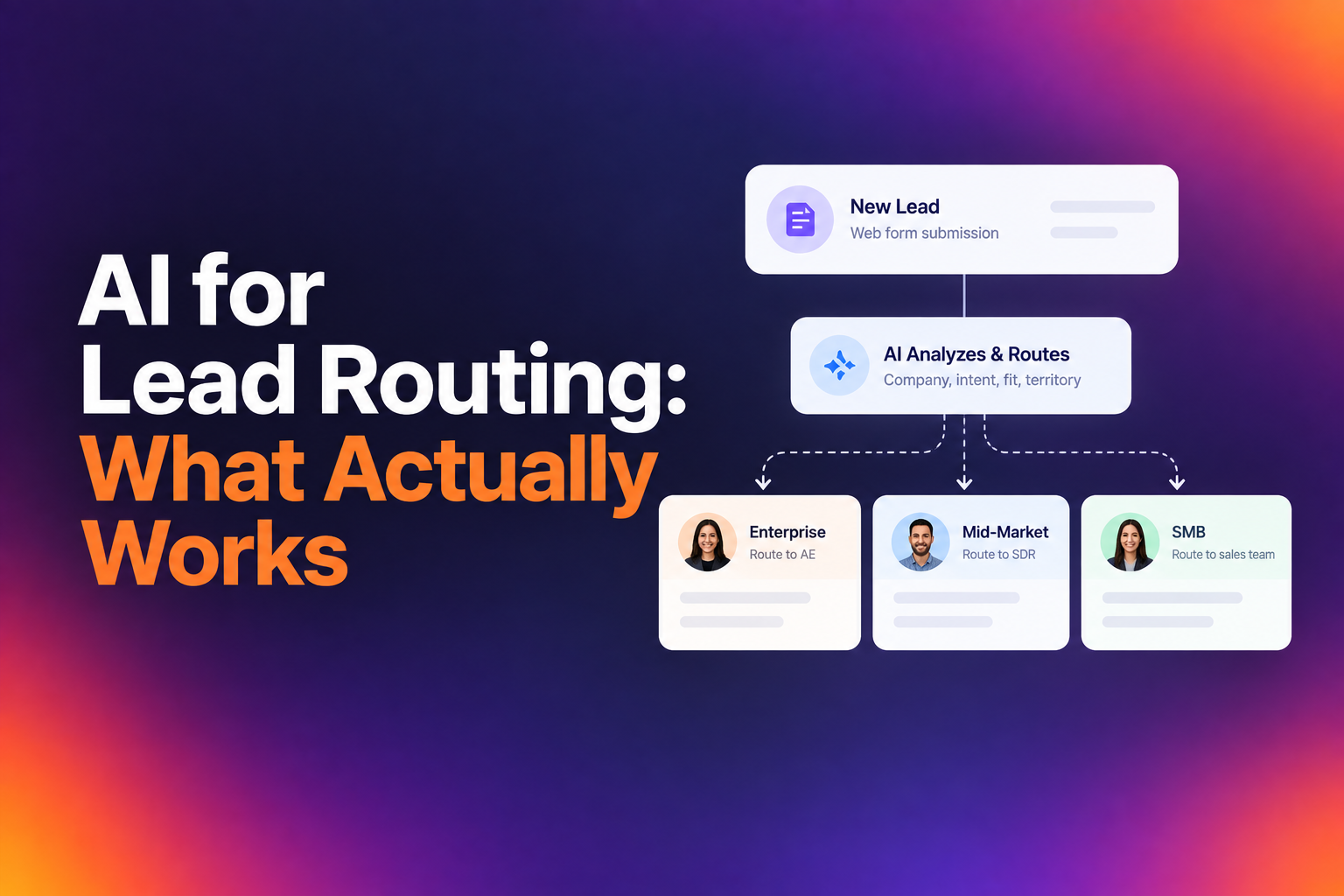
Territory conflicts compound the problem. When routing logic is unclear, leads sit in limbo while sales managers debate ownership. RevenueHero addresses this by routing based on custom logic like territory, product interest, or account match, keeping existing CRM relationships intact while eliminating manual review delays.
Strategies to Improve Your Speed to Lead Performance
Improving response times requires systematic changes to process and technology, not just exhortation to work faster.
Automating Initial Contact with Instant Response Tools
The most effective approach eliminates the gap between form submission and calendar booking entirely. When someone qualifies, they see available times immediately. No queue, no manual review, no email back-and-forth.
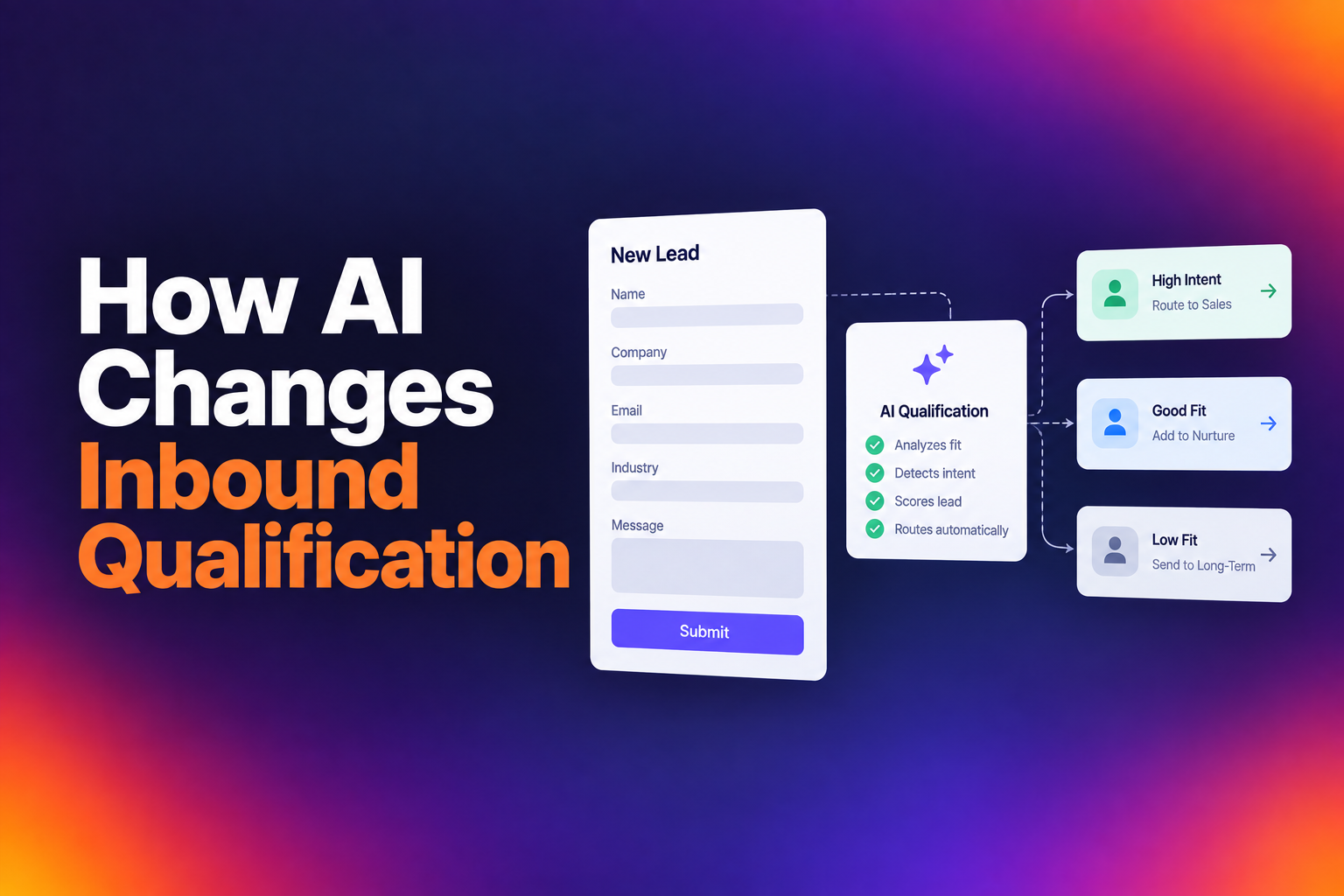
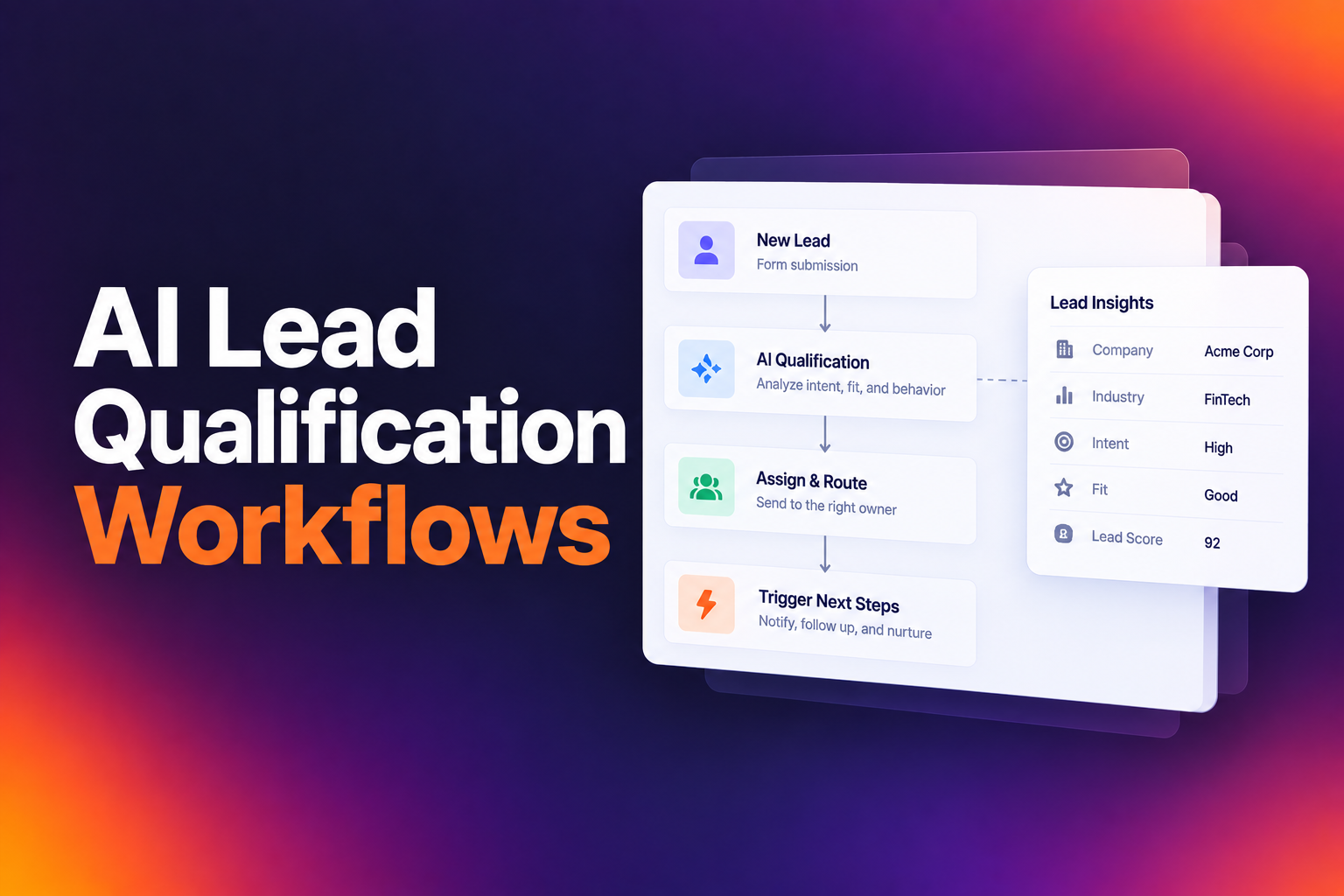
This requires real-time qualification during the form fill itself. Enrichment data and CRM history determine qualification status the moment someone submits. Qualified prospects book directly; unqualified ones receive appropriate alternative paths. The companies achieving 78% qualified-to-booked rates have made this their standard operating procedure.
Implementing Real-Time Lead Alerts for Sales Teams
For leads requiring human judgment before booking, real-time alerts reduce response latency significantly. Push notifications to mobile devices, Slack channels, and email ensure reps see new leads immediately regardless of where they're working.
Effective alert systems include context: lead source, company information, and relevant CRM history. Reps can make informed decisions about prioritization without switching to multiple systems. The goal is reducing the time between lead arrival and rep awareness to under one minute.
Measuring Success Beyond the Initial Response
Speed to lead matters, but it's one metric in a broader conversion picture. Effective measurement tracks the full path from form fill to closed revenue.
Tracking Lead-to-Opportunity Conversion Ratios
Fast response with poor qualification wastes rep time. The goal isn't just speed: it's speed with quality. Track qualified-to-opportunity conversion alongside response time to ensure you're not sacrificing lead quality for velocity.
RevenueHero's data shows that companies with disqualification rates under 20% and struggling meeting rates are often letting through leads that waste rep time. Tightening qualification criteria on company size, industry, or use case fit improves downstream conversion even if it reduces top-of-funnel volume.
Long-Term ROI of Reduced Response Latency
The compound effects of faster response extend beyond individual deal conversion. Faster response means shorter sales cycles, which means more deals closed per rep per quarter. It means better win rates against competitors, which improves average deal size as you compete less on price. It means higher customer satisfaction scores, which improves retention and expansion revenue.
Calculate the full value by modeling your current conversion rates against benchmark performance. If you're at 40% qualified-to-booked today and reach 62%, that's 22 more meetings for every 100 qualified leads. Reach 78%, and you've nearly doubled your pipeline from the same traffic and spend.
The gap between average and excellent performance isn't about better leads or bigger budgets. It's about what happens in the 30 seconds after someone clicks your CTA. Organizations that treat that window as a conversion event rather than an administrative task consistently outperform their competitors. The benchmarks are clear: the question is whether you'll close the gap.
Let RevenueHero help your team turn high-intent users into booked meeting without slowing down your funnel.