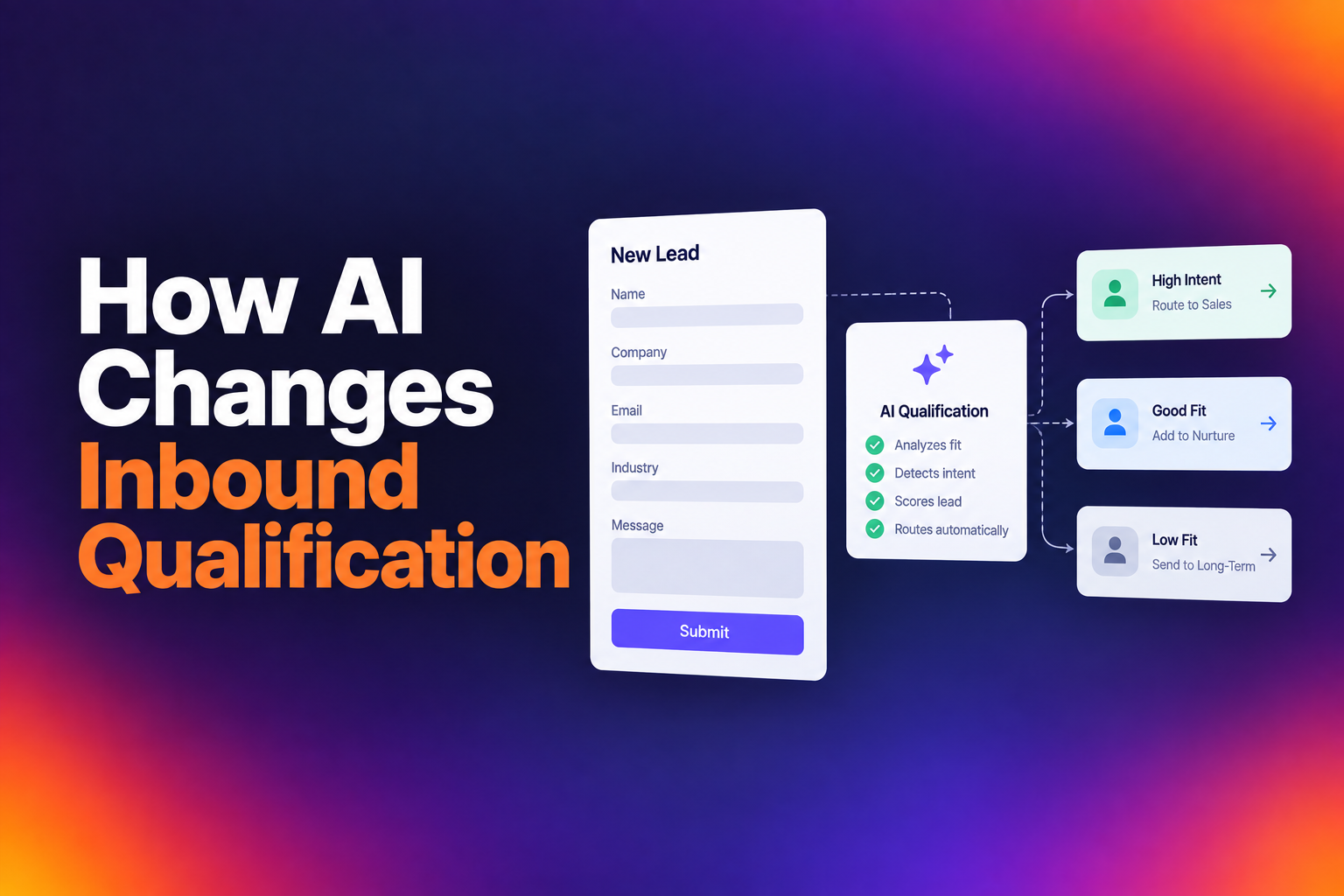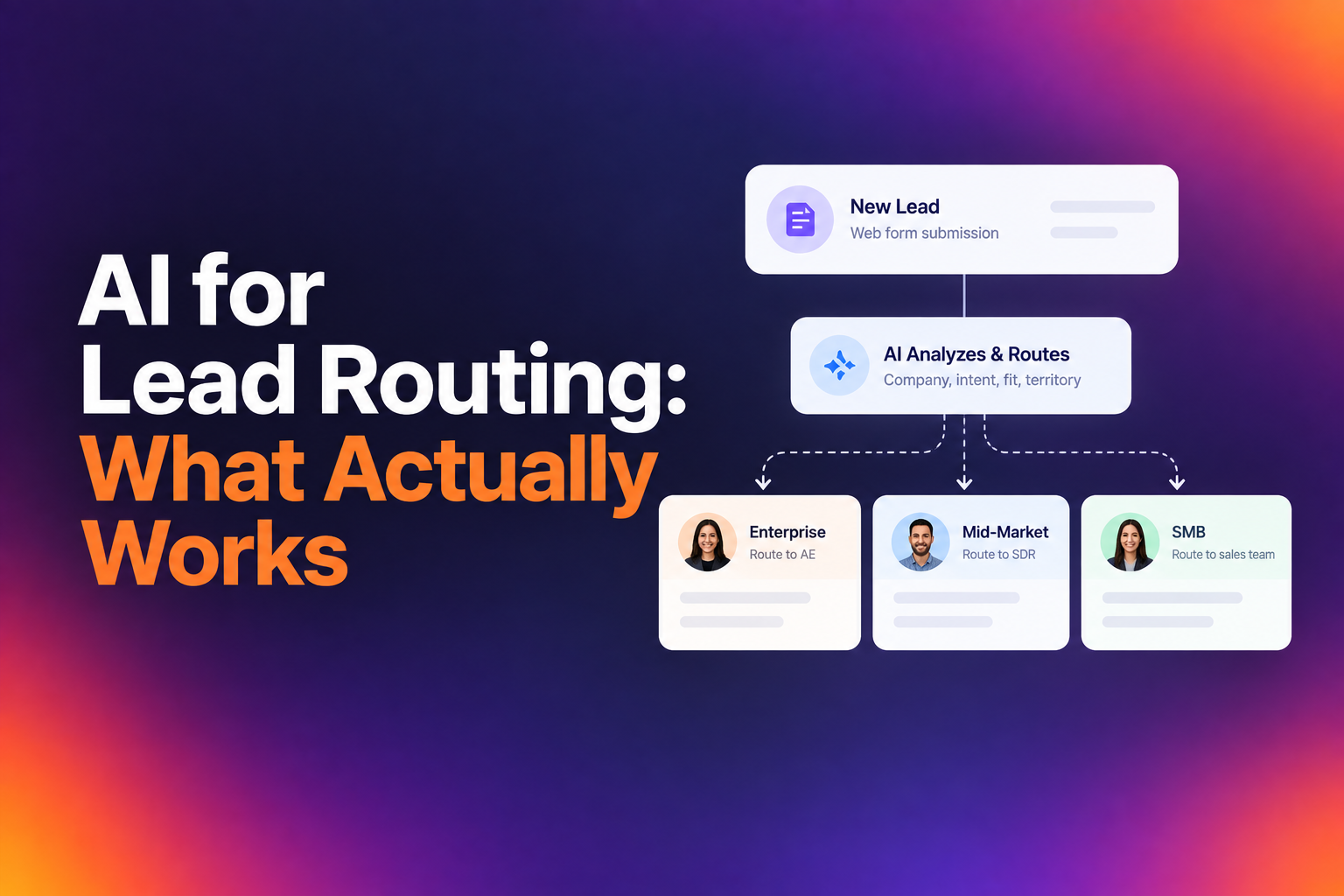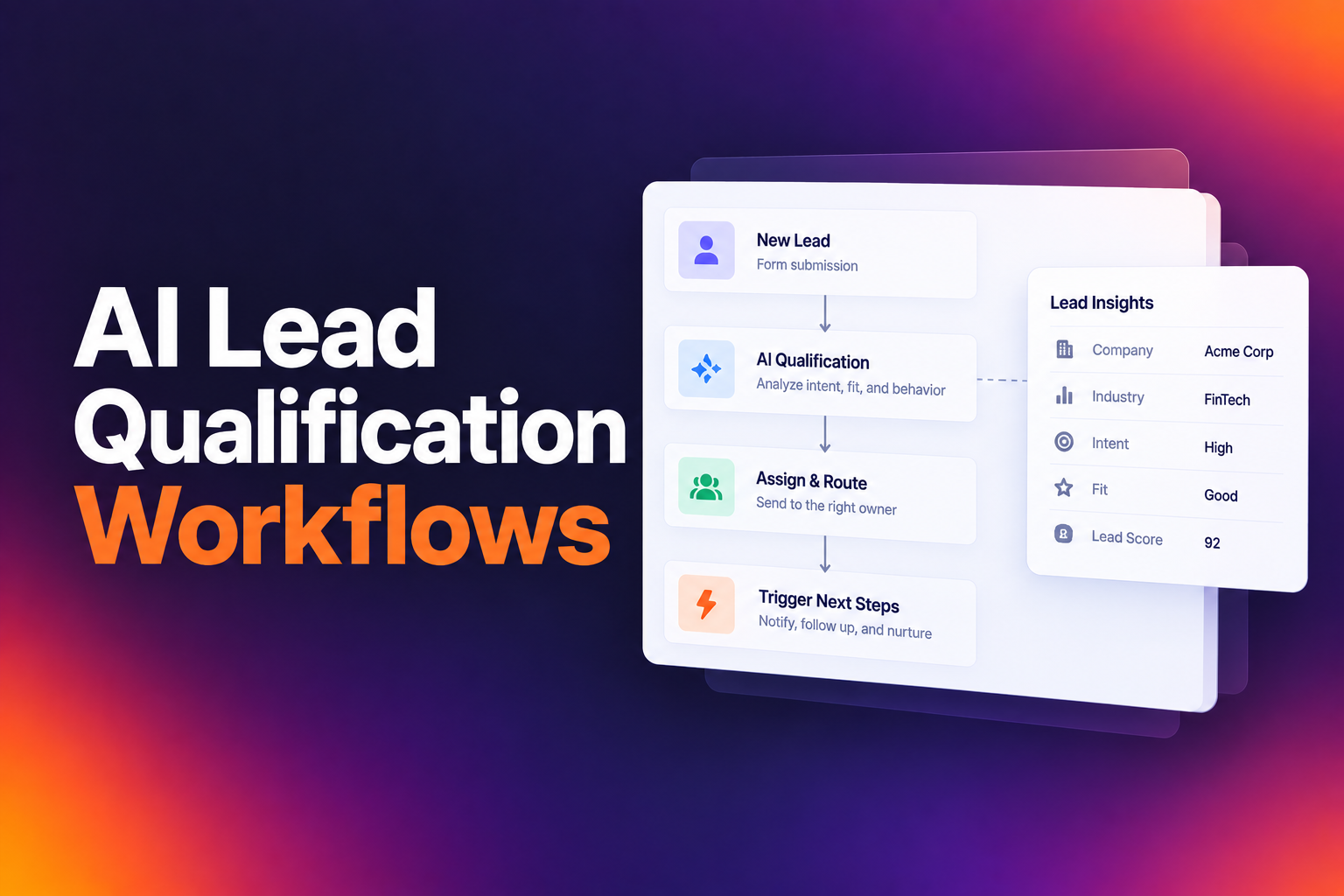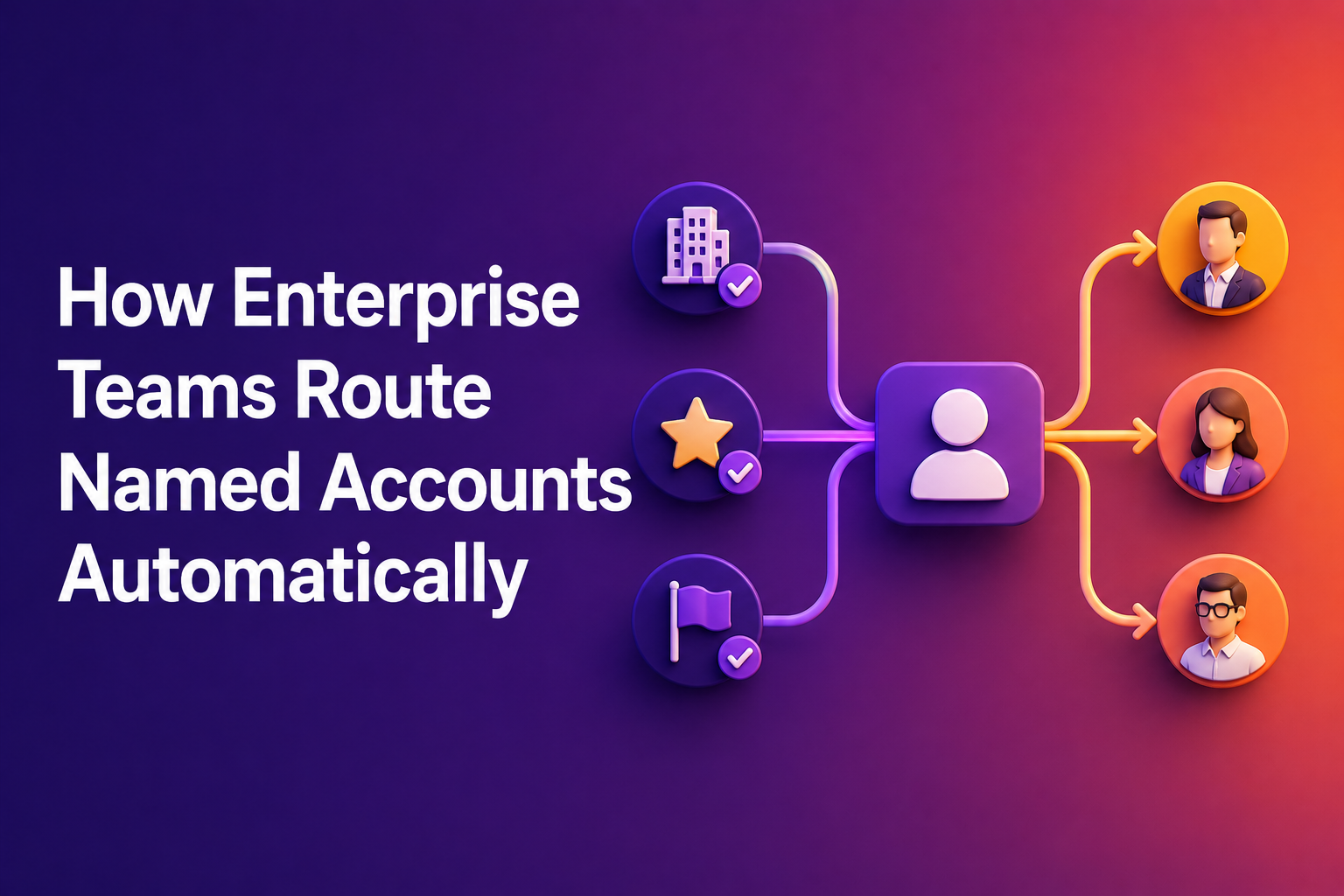
A named account hits your website, fills out a form, and signals clear buying intent. What happens next determines whether that account enters your pipeline or disappears into a competitor's. For most enterprise teams, the answer is disappointing: the lead lands in a queue, waits for manual review, gets routed to the wrong rep, and the buyer moves on. The gap between capturing intent and converting it into a meeting is where pipeline goes to die. Enterprise go-to-market teams are increasingly focused on how to route named accounts automatically, and the data shows why. Companies in the top 10% of inbound conversion book 78% or more of their qualified leads into meetings. The median sits at 62%. That spread isn't explained by better products or bigger budgets. It's explained by what happens in the 30 seconds after a form submission. The difference is mechanical, not strategic, and the fix is closer than most teams think.
The High Cost of Manual Routing for Named Accounts
Manual routing persists in enterprise orgs for understandable reasons. Named account lists are complex. Ownership rules span territories, verticals, product lines, and sometimes individual relationships that predate the CRM itself. Teams default to human review because the routing logic feels too nuanced to automate. But that caution comes at a measurable cost, and it compounds with every hour a lead sits unassigned.
The Decay of Intent During Manual Review Queues
A lead fills out a form. The form goes to a queue. Someone manually reviews it, maybe routes it, maybe emails the lead back. Maybe the lead responds. Days pass. Intent decays. The meeting that should have happened doesn't. This is the default workflow at most enterprise companies, and it's a conversion killer. Conversion probability drops from roughly 80% in the first minute to around 40% by the next business day. The old "five-minute rule" for speed to lead is already obsolete in 2026. Buyers evaluating multiple vendors simultaneously expect sub-minute engagement. If your response is a "thanks, we'll be in touch" confirmation page, you've already lost ground to any competitor who puts a calendar in front of that buyer immediately.
Why Enterprise Teams Face a 71% Disqualification Rate
Enterprise segments show a 71.2% disqualification rate, far higher than the 21.8% seen in SMB motions. That number isn't a problem on its own. Enterprise teams should be selective, because a single bad meeting costs hours of expensive rep time. The problem is when disqualification happens slowly. If your qualification process requires manual review before a lead even gets a response, you're adding latency to every interaction, including the ones that do qualify. The best-performing enterprise teams apply qualification rules instantly at the point of form submission. Leads who don't meet criteria get routed to nurture tracks. Leads who do qualify see a calendar within seconds. Selectivity and speed aren't in conflict. They should operate in the same step.
Automating Ownership Recognition via CRM History
Named accounts exist because your sales team has invested time and relationships in specific companies. Any routing system that ignores those relationships creates internal friction and damages rep trust. Automated routing for enterprise teams must start with CRM ownership as the primary data source.
Matching Inbound Leads to Existing Account Owners
The core logic is straightforward: when an inbound lead submits a form, the system checks the email domain against existing accounts in your CRM. If that account has an assigned owner, the lead routes directly to that rep's calendar. No queue. No manual assignment. No delay. This sounds simple, but the edge cases matter. What happens when the account owner is on PTO? What about accounts with multiple owners across different product lines? What if the contact exists in the CRM but the account ownership field is blank? Your routing rules need to handle these scenarios with fallback logic: route to a backup rep, escalate to a manager, or distribute via round-robin within the account team. Platforms like RevenueHero use CRM history, enrichment data, and form responses to handle these decisions in real time, so the lead never waits for a human to sort it out.
Leveraging Enrichment Data to Identify Strategic Targets
Not every named account lead will come from a domain you already recognize. A prospect might use a personal email, or they might work for a subsidiary that isn't mapped in your CRM. Real-time enrichment fills these gaps by appending firmographic data like company size, industry, revenue, and corporate hierarchy at the moment of form submission. This enrichment data serves double duty. It powers qualification rules, filtering out poor fits before they reach a rep. And it enables smarter routing, sending construction tech prospects to your vertical specialist or routing enterprise-tier companies to your most experienced closers. The enrichment step turns a basic form submission into a fully contextualized lead record, without asking the buyer to fill in 15 fields.
Transforming the Demo Request into a Commitment Event
The language and mechanics of your demo page have a measurable effect on conversion. Small changes in how you frame the interaction can shift your booking rate by double digits.
Replacing 'Request' with 'Book' to Increase Meeting Rates
Among top-performing companies, 29% use "Book a Demo" as their primary CTA. Only 12% use "Request a Demo." The pattern is consistent: commitment language outperforms permission language. "Request" implies a handoff. The buyer submits a form and waits for someone else to decide what happens next. "Book" implies action. The buyer is choosing a time, making a commitment, and moving forward on their terms. This is a five-minute fix. Search your site for every instance of "Request," "Submit," "Contact Sales," or "Get in Touch." Replace them with "Book," "Schedule," or "Reserve Your Spot." Check buttons, headers, meta descriptions, and email templates. The psychological shift is small but the conversion impact is real and measurable.
Instant Qualification Rules for Enterprise GTM Motions
Qualification and scheduling should happen in the same step. When a qualified enterprise lead submits a form, they should see a calendar immediately, not a thank-you page promising follow-up. The companies in the top 10% of inbound conversion made this choice deliberately. They stopped treating scheduling as an afterthought and started treating it as a conversion event. Leads are qualified in real time using form responses, enrichment data, and CRM history. No manual review queue. No delays. The moment someone submits, they know if they qualify, and if they do, they pick a time. For leads that don't qualify, automated nurture sequences can still capture value. But the qualified path must be instant. Every hour of delay between qualification and meeting booking erodes the conversion rate you worked so hard to earn with your demand gen spend.
Optimizing Form Fields for Routing Without Friction
There's a persistent myth that fewer form fields always means higher conversion. The data tells a different story. Top performers convert at 77% with two fields and at 76% with 13 fields. The number of fields doesn't matter nearly as much as whether each field earns its place.
Every field on your form should do one of two things: get the lead to the right rep, or help the rep tailor the conversation. Company size and region power routing logic. Use case and current tools help reps prepare. Job title can be useful for qualification. Fields that don't serve either purpose, like "how did you hear about us" when nobody acts on the answer, create friction without value.
Audit your forms quarterly. For each field, ask: does this data change who the lead is routed to, or does it change how the rep prepares? If the answer is neither, remove it. Your form isn't a survey. It's the first step in a conversion event, and every unnecessary field is a chance for the buyer to abandon.
Scaling the 'Book-to-Meeting' Ratio for Top Performers
Getting a lead to book a meeting is only half the battle. The meeting actually has to happen. No-shows and cancellations erode pipeline quality and waste rep time, especially in enterprise motions where calendar slots are expensive.
Benchmarking Against the 78% Conversion Gold Standard
The top 10% of inbound teams achieve a 78% or higher qualified-to-booked rate. The median is 62%. If you're below 58%, you're in the bottom quartile. These numbers give you a clear target. If you're at 40% today and you get to 62%, that's 22 more meetings for every 100 qualified leads with zero additional spend on traffic or demand gen. Getting from 62% to 78% requires tightening every step: faster routing, better CTA language, smarter qualification, and fewer form-field dropoffs. None of these changes require a bigger budget. They require operational discipline and the right infrastructure.
Automating Reschedule Workflows for No-Shows
No-shows happen. The question is whether your system recovers automatically or lets the lead go cold. Automated reschedule workflows trigger immediately when a meeting is canceled or missed, sending the prospect a new link to rebook without requiring a rep to chase them down manually. One GTM operations leader reported booking 75% or more of qualified inbounds the same day after implementing automated reschedule workflows for cancellations and no-shows. That recovery rate only works because the system acts instantly. A manual follow-up email sent 24 hours later won't produce the same result.
Turning Routing Into a Revenue Function
The companies winning at inbound conversion in 2026 aren't doing anything exotic. They use commitment language on their CTAs. They cut form fields that don't serve routing or personalization. They're intentionally selective about who reaches a rep. And when someone qualifies, they put a calendar in front of them immediately. Not after an SDR reviews the lead. Not tomorrow. Right then.
Enterprise teams that route named accounts automatically aren't just saving time. They're protecting the intent their marketing team spent real money to generate. Every manual handoff, every queue, every "we'll be in touch" message is a leak in your pipeline. The fix is structural, not incremental. If your qualified-to-booked rate sits below 62%, the opportunity in front of you is significant, and it doesn't require a single additional lead to capture it.
Let RevenueHero help your team turn high-intent users into booked meeting without slowing down your funnel.