Every inbound lead carries a ticking clock. The moment someone fills out your form, their intent starts to decay. An 80% conversion probability in the first minute can drop to 40% by the next day. Yet most Salesforce orgs still funnel leads into manual review queues, where reps cherry-pick or managers batch-assign hours later. The result? Meetings that should have happened simply don't. A well-built round robin assignment system in Salesforce can fix the distribution problem, but distribution alone isn't enough. You need the full chain: qualification, routing, and booking, all happening before the buyer moves on to your competitor's calendar. This guide walks through how to build effective round robin logic in Salesforce, where most teams hit a ceiling, and what it takes to close the gap between "qualified" and "booked" at the speed your buyers expect.
The Decay of Inbound Intent: Why Manual Assignment is Killing Conversions
The traditional inbound flow has a structural flaw baked in. A lead fills out a form. That form goes to a queue. Someone manually reviews it. Maybe they route it. Maybe they email the lead back. Maybe the lead responds. Days pass. Intent decays. The meeting that should have happened never materializes.
This isn't a people problem. It's a process problem. Your reps aren't slow because they're lazy. They're slow because the system forces them to be. Every manual step between form submission and calendar booking is a leak in your funnel.
The 35% Conversion Trap: The Cost of Manual Review Queues
The old benchmark for qualified-to-booked conversion was around 35%. That number came directly from manual review queues and delayed follow-up. Teams operating this way are leaving more than half their qualified pipeline on the table.
Data from RevenueHero's 2025 benchmark report, based on 12 months of inbound conversion data, shows a median qualified-to-booked rate of 62% across their customer base. The top 10% hit 78% or higher. The best performer in the dataset reached 88%. The gap between 35% and 78% isn't about having better leads. It's about what happens in the 30 seconds after someone clicks "Book a Demo."
From 'Request' to 'Book': Moving Beyond Permission-Based Routing
Language matters more than most teams realize. Among top performers, 29% use "Book a Demo," 21% use "Get a Demo," and only 12% use "Request a Demo." The pattern is clear: commitment language outperforms permission language.
"Request a Demo" creates uncertainty. It tells the buyer they're entering a queue, not a conversation. "Book Your Demo" creates commitment. The visitor mentally crosses the threshold from considering to doing while they're still on your page. Search your site for every instance of "Request," "Submit," or "Contact Sales" and replace them with "Book," "Schedule," or "Pick a Time." This is a five-minute fix with measurable impact on your conversion rate.
Core Mechanics of Salesforce Round Robin Assignment
Salesforce doesn't ship with native round robin functionality out of the box. You can approximate it using standard features, but most teams end up building custom logic or layering on third-party tools. Understanding the mechanics helps you decide where to invest.
Standard Lead Assignment Rules vs. Custom Round Robin Logic
Salesforce's built-in Lead Assignment Rules let you route leads based on field criteria: region, lead source, product interest. But they're essentially if-then rules. They can send a lead to a specific user or queue, but they can't distribute leads evenly across a group of reps in sequence.
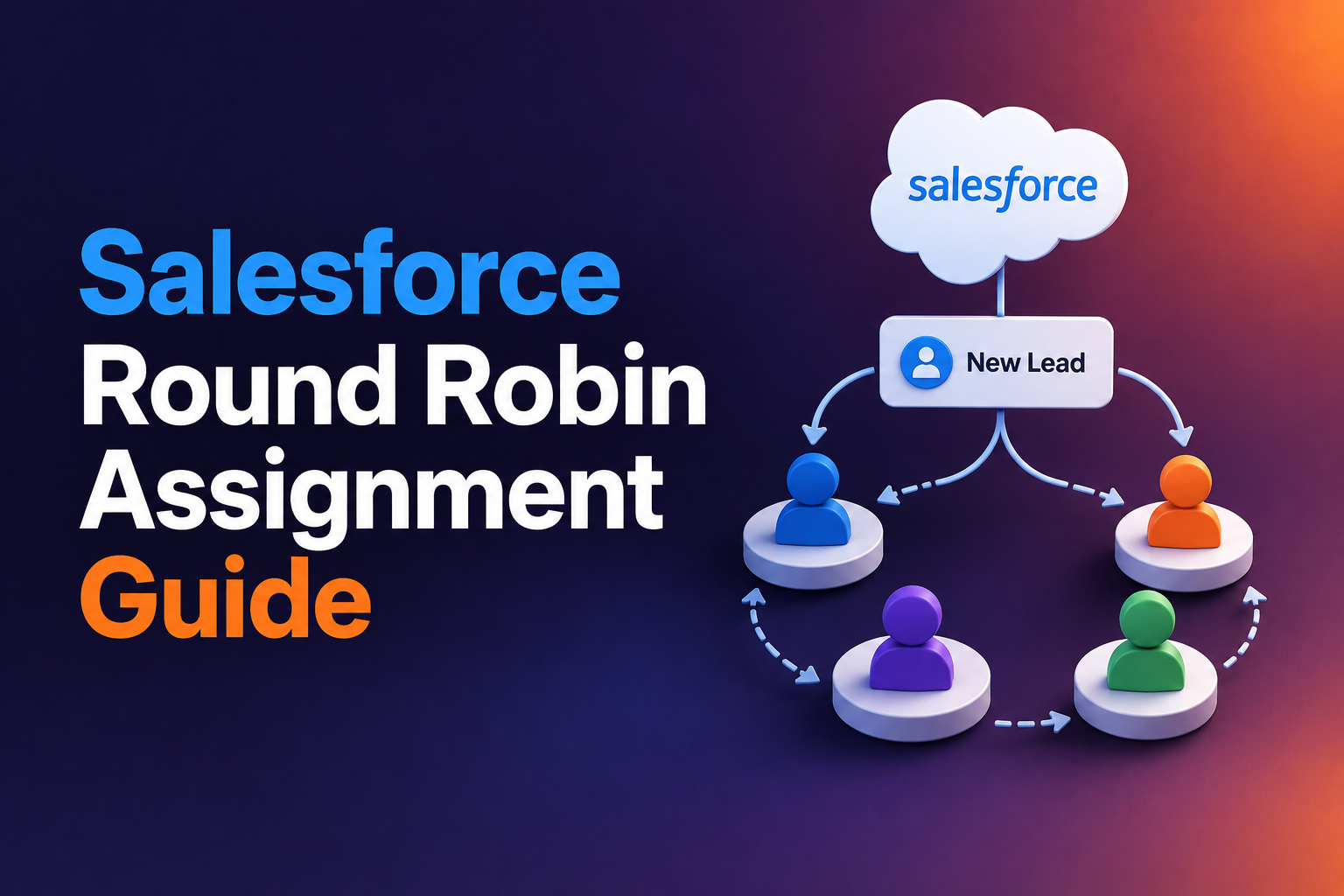
To build true round robin, you need a mechanism that tracks who received the last lead and assigns the next one to the next rep in line. Standard assignment rules don't do this. You'll need either Flow-based automation, Apex triggers, or an external routing tool to maintain that counter and enforce the rotation.
Leveraging Formulas and Auto-Number Fields for Distribution
One common DIY approach uses an auto-number field on the Lead object combined with a formula field that calculates a MOD value. If you have five reps, the formula divides the auto-number by five and uses the remainder to determine assignment. Rep A gets remainder 0, Rep B gets remainder 1, and so on.
This works for simple, equal-weight distribution. It breaks down quickly when you need to account for rep availability, capacity limits, territory rules, or account ownership. It also can't handle scenarios like a rep being on PTO or a lead that should bypass round robin entirely because it matches an existing account. For SMBs with small teams and straightforward needs, the formula approach is a reasonable starting point. Enterprise orgs with nested routing rules and complex approval workflows will outgrow it fast.
Advanced Routing: Integrating Enrichment and CRM Data
Pure round robin treats every lead the same and every rep as interchangeable. Neither is true. The best routing systems factor in who the lead is and who in your org already has a relationship with their company.
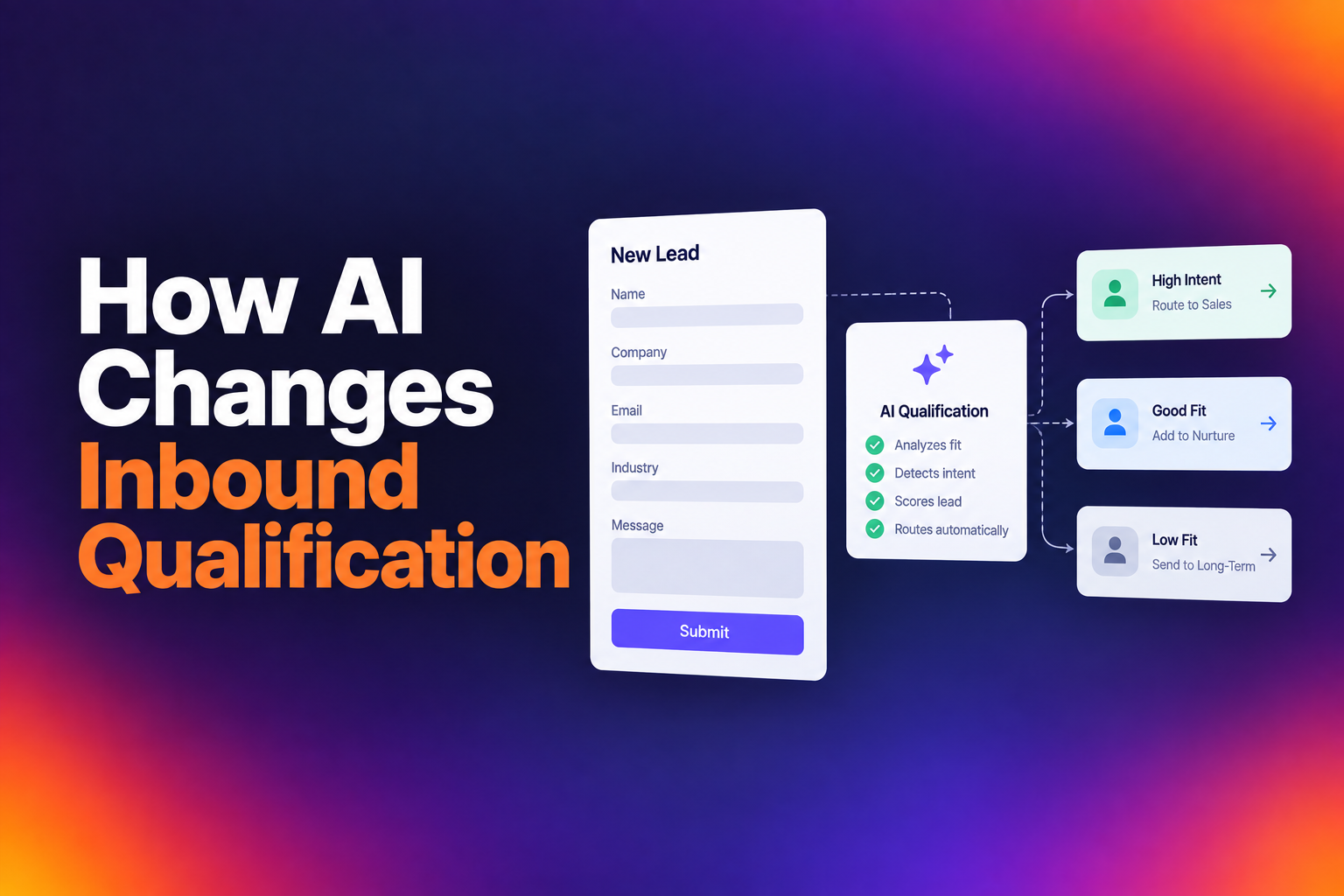
Using Form Responses and Company Size for Instant Qualification
Every form field should serve one of two purposes: it either changes who gets the lead, or it changes how the rep opens the call. If a field doesn't do either, it's costing you conversions without delivering value.
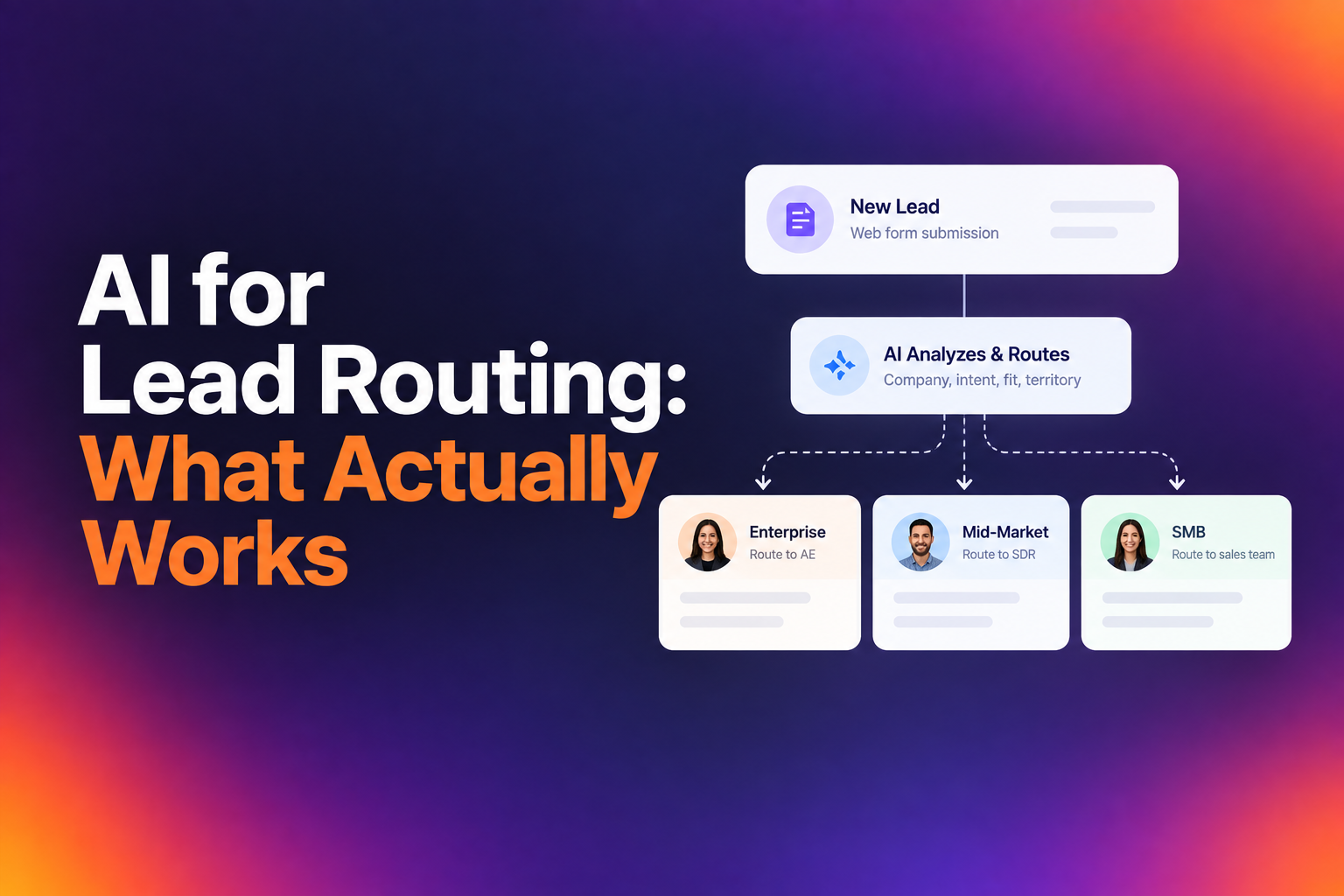
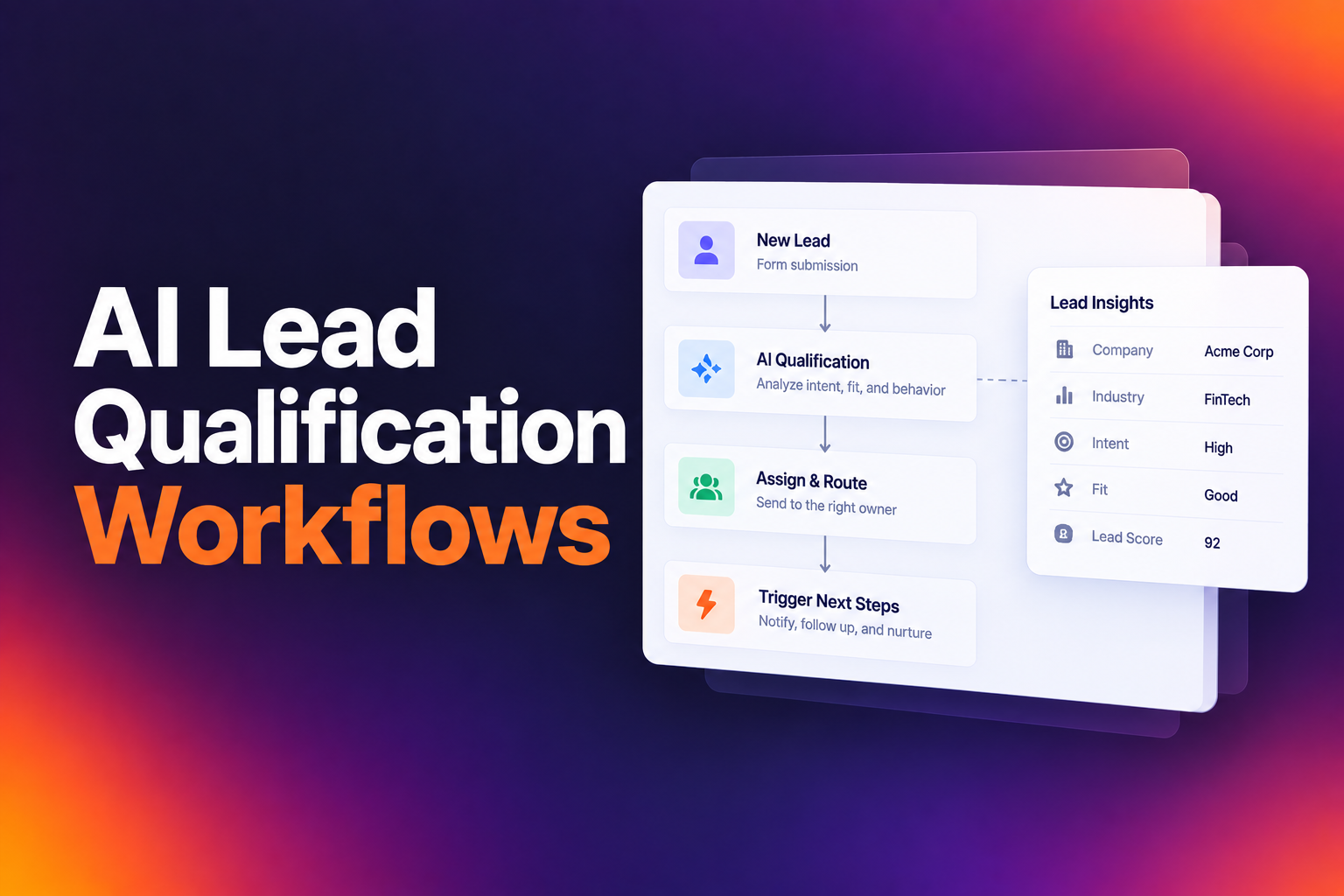
Top performers use form responses and firmographic data to qualify leads in real time. Company size determines whether a lead routes to your SMB team or enterprise AEs. Use case or product interest sends them to the right specialist. Industry vertical can trigger segment-specific routing. The goal is to make qualification happen at the moment of submission, not hours later in a manual review. Teams that build this logic into their routing consistently outperform those that qualify after the fact.
Routing Based on Lead-to-Account Matching and CRM History
Round robin should never override existing CRM relationships. If a lead comes in from a company where your AE already has an open opportunity, that lead needs to go to the account owner, not the next rep in the rotation.
Lead-to-account matching checks the incoming lead's domain or company name against existing accounts in your CRM. If a match exists, the lead routes to the account owner. If no match exists, round robin kicks in. This logic preserves territory integrity and prevents the awkward situation where a prospect hears from two different reps at the same company. Building this in native Salesforce requires Apex or a fairly complex Flow. Most teams running lead-to-account matching at scale use a dedicated routing layer that sits between the form and the CRM.
Automating the Handoff: From Lead Assignment to Instant Booking
Getting the lead to the right rep is only half the problem. The other half is getting a meeting on the calendar before intent fades. Assignment without booking is just a faster way to create tasks that reps forget to follow up on.
Eliminating the 48-Hour Lag with Real-Time Scheduling
The old "five-minute rule" for lead response is already obsolete in 2026. Buyers evaluating multiple solutions simultaneously expect sub-minute engagement. A 48-hour lag between form fill and first contact isn't just slow; it's a disqualification event.
Real-time scheduling means the qualified lead sees a calendar immediately after submitting the form. No "thanks, we'll be in touch" confirmation page. No SDR review step. No email ping-pong to find a time. The calendar appears, the prospect picks a slot, and the meeting is booked. The gap between "qualified" and "booked" shrinks to seconds. Companies that treat inbound scheduling as a conversion event rather than an afterthought consistently land in the top quartile of performance.
The RevenueHero Advantage: Reaching the 78% Elite Threshold
RevenueHero's routing engine uses form responses, enrichment data, and CRM ownership to get every lead to the right rep instantly. No manual assignment. No delays. The platform qualifies leads in real time, respects existing account relationships, and presents the matched rep's calendar on the same page.
The benchmarks tell the story. The median qualified-to-booked rate across RevenueHero customers is 62%. The top 10% book 78% or more of their qualified leads. One customer reported moving from around 40% to 75%+ same-day bookings after implementing automated routing and scheduling. The companies hitting these numbers aren't doing anything complicated. They cut unnecessary form fields, tightened qualification criteria, and put a calendar in front of qualified leads immediately. Not tomorrow. Not after an SDR reviews the lead. Right then.
Optimizing Round Robin Performance and Fair Distribution
Building the system is step one. Keeping it fair and performant over time requires ongoing attention to rep capacity, coverage gaps, and conversion metrics.
Managing Rep Availability, Time Zones, and Capacity
A round robin that assigns leads to reps who are offline, on PTO, or already at capacity isn't fair distribution. It's a broken process with extra steps. Your routing logic needs real-time awareness of rep availability.
Time zone coverage is especially critical for teams with global inbound traffic. A lead from London submitting at 9 AM GMT shouldn't route to a rep in San Francisco where it's 1 AM. Capacity weighting matters too: a senior AE handling enterprise deals might take three qualified leads per day, while an SDR handling SMB could take ten. Your round robin should reflect these differences rather than blindly alternating.
Measuring Success: Qualified-to-Booked Benchmarks for GTM Teams
You need a clear target to measure against. Based on 2025 benchmark data, here's where teams fall:
- Below 58% qualified-to-booked: bottom quartile, likely suffering from manual queues or poor routing
- 62% qualified-to-booked: median performance across measured teams
- 78%+ qualified-to-booked: top 10%, the elite threshold where process is truly dialed in
Track these numbers using median values, not averages. Averages let outliers hide systemic delays. Review your qualified-to-booked rate monthly, segment it by rep, by lead source, and by time of day. The patterns will tell you exactly where your funnel leaks.
Making Round Robin Work for Your Revenue Goals
The gap between a 35% and a 78% qualified-to-booked rate doesn't come from better leads or a bigger budget. It comes from eliminating every unnecessary step between a buyer raising their hand and a meeting appearing on the calendar. Build your Salesforce round robin with real-time qualification, account matching, and availability-aware distribution. Replace "Request a Demo" with "Book Your Demo." Treat the form submission as a conversion event, not the start of a manual review process.
You already have the traffic. You already have people raising their hands. The only question is how many of them actually end up talking to your team. If you're sitting at 40% today and you get to 62%, that's 22 more meetings for every 100 qualified leads. Get to 78%, and you've nearly doubled your pipeline from the same inbound volume. The infrastructure exists to make this happen. The only thing left is the decision to stop treating scheduling as an afterthought.
Let RevenueHero help your team turn high-intent users into booked meeting without slowing down your funnel.