Most marketing teams obsess over traffic numbers while ignoring the conversion gaps that actually determine pipeline output. You can double your website visitors and still miss revenue targets if your qualified-to-booked rate sits at 35% when top performers hit 78%. The difference isn't better leads or bigger budgets. It's what happens in the thirty seconds after someone fills out your demo request form.
Understanding inbound conversion benchmarks by company stage gives you a realistic picture of where you should be and where you're leaving money on the table. A seed-stage startup optimizing for market validation operates under different constraints than a Series D company focused on enterprise account expansion. Yet both can benefit from knowing their conversion targets and the specific friction points holding them back.
Data from over one million inbound form submissions reveals patterns that challenge conventional wisdom. Early-stage and late-stage companies often outperform the middle. Vertical SaaS consistently beats horizontal positioning. And the median qualified-to-booked rate across B2B SaaS sits at 62%, not the 35% many teams assume is normal. If your team converts at 40% and considers that acceptable, you're leaving significant pipeline on the table.
Defining Inbound Conversion Metrics Across the Lifecycle
Conversion metrics mean different things depending on where you measure them. A visitor-to-lead ratio tells you about top-of-funnel performance. MQL-to-SQL velocity reveals qualification efficiency. Qualified-to-booked rate shows whether your scheduling process captures or kills intent. Each metric matters, but they matter differently at different stages.
Visitor-to-Lead Ratios vs. MQL-to-SQL Velocity
Visitor-to-lead ratios measure how effectively your content and landing pages capture interest. A 2-3% conversion rate is typical for most B2B websites, though this varies dramatically by traffic source and intent level. Paid traffic from high-intent keywords often converts at 5-10%, while organic blog traffic might sit below 1%.
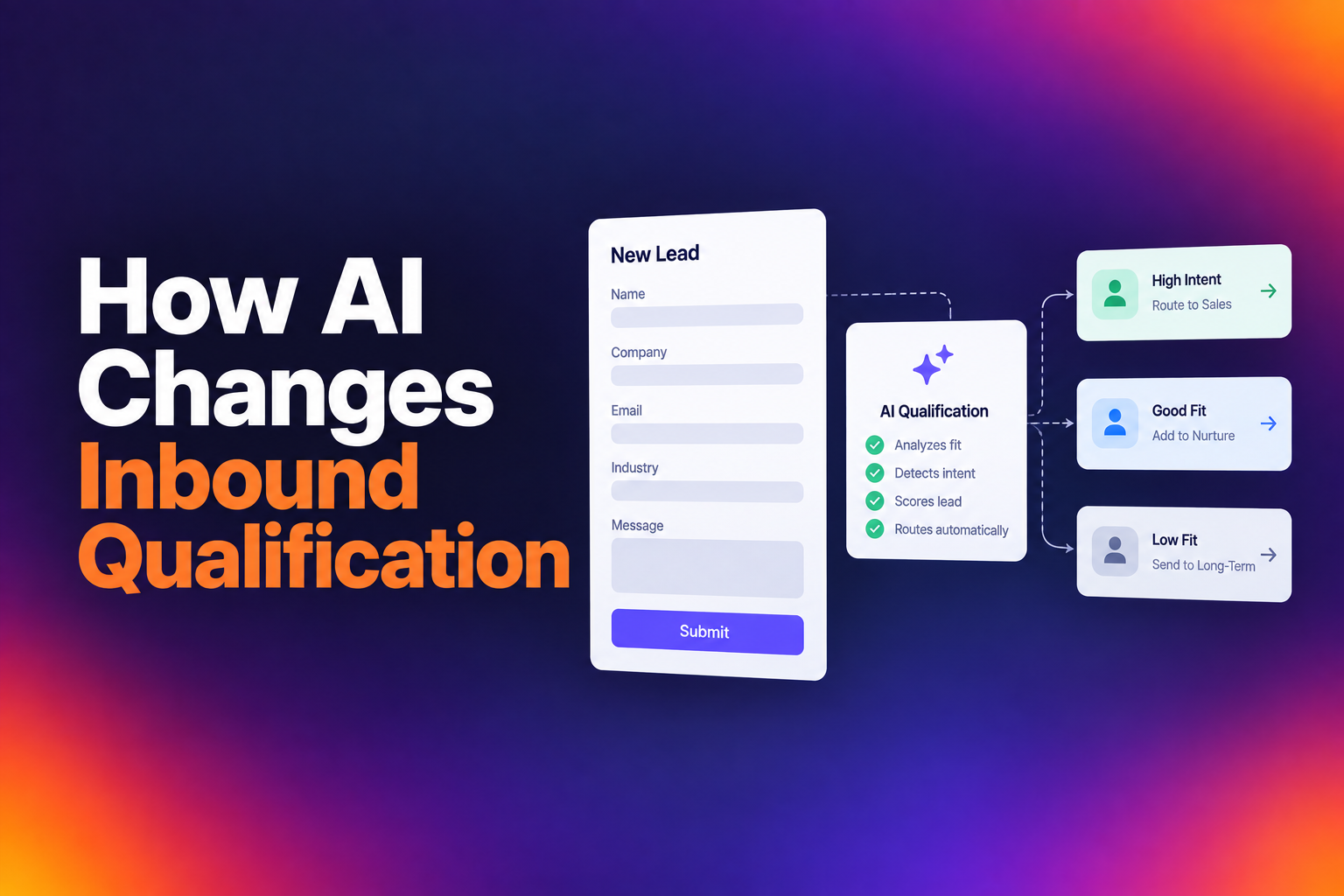
MQL-to-SQL velocity tracks how quickly marketing-qualified leads become sales-qualified. This metric exposes handoff delays and qualification misalignment. If leads sit in a review queue for 48 hours before someone decides they're qualified, intent decays and conversion suffers. The best-performing companies compress this window to seconds through automated qualification and instant scheduling.
Why Stage-Specific Benchmarking Matters
A 60% qualified-to-booked rate means something different for a company processing 50 leads per month versus one handling 5,000. Stage-specific benchmarking accounts for volume, team structure, and strategic priorities. Early-stage companies often accept lower efficiency in exchange for learning. Growth-stage companies need efficiency to scale without proportionally scaling headcount. Mature companies optimize for lifetime value and account expansion.
Benchmarking against the wrong peer set creates false confidence or unnecessary panic. Your Series A competitor with a 55% conversion rate isn't underperforming if that's the median for their stage. They're underperforming if top performers at the same stage hit 70%.
Early Stage: Prioritizing Volume and Market Fit
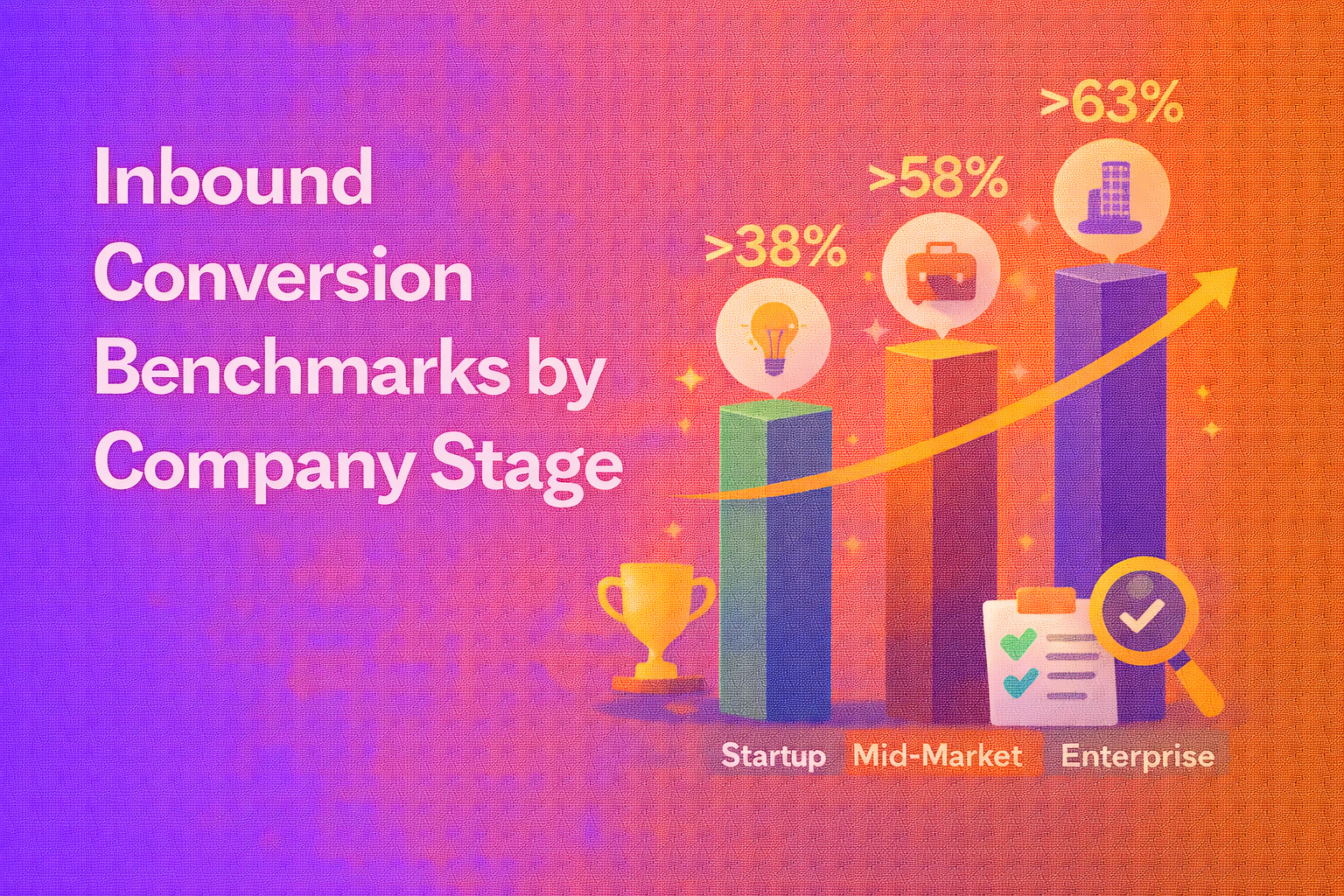
Unfunded and seed-stage companies convert at 63.6% on average, outperforming Series A and Series B counterparts. This seems counterintuitive until you consider what drives it: clarity. Early-stage companies typically serve a narrow, well-defined audience. They know exactly who they're selling to, and their messaging reflects that specificity.
Pre-Seed and Seed Stage Conversion Goals
At this stage, conversion efficiency matters less than learning velocity. You need enough qualified conversations to validate your value proposition, identify your ideal customer profile, and refine your positioning. A 50% qualified-to-booked rate with high-quality conversations beats a 70% rate with poor-fit prospects.
That said, you shouldn't ignore conversion mechanics entirely. Every lost meeting is a lost learning opportunity. If you're getting demo requests but failing to book them, you're wasting the limited traffic you've worked hard to generate. Target 55-65% qualified-to-booked as a reasonable benchmark, with the understanding that qualification criteria should tighten as you learn.
Optimizing Low-Traffic Landing Pages
Low traffic demands high conversion efficiency. You can't afford to lose prospects to slow follow-up or confusing next steps. The companies that perform well at this stage share a common trait: they eliminate the gap between form submission and calendar booking.
Instead of sending a "thanks, we'll be in touch" message, show a calendar immediately. Qualify in real time using form responses and enrichment data. Route to the founder or first sales hire directly. These aren't complex operations at low volume, but they establish habits that scale.
Growth Stage: Scaling Efficiency and Lead Quality
Series A companies convert at 53.6%. Series B companies hit 55.3%. This middle-stage dip reflects the growing pains of scaling a go-to-market operation. Teams add complexity, processes multiply, and the clarity that drove early success gets diluted.
Series A and B Performance Standards
At this stage, you're building the infrastructure that will support your next growth phase. Conversion efficiency becomes a forcing function for operational discipline. If your qualified-to-booked rate drops below 55%, something in your process is broken. Common culprits include manual review queues that add delay, routing logic that sends leads to the wrong reps, and qualification criteria that don't match your actual ICP.
Top-performing growth-stage companies target 65-70% qualified-to-booked rates. They achieve this by treating scheduling as a conversion event rather than an administrative task. The form submission isn't the goal. The booked meeting is.
Balancing Friction in Lead Capture Forms
Form length debates miss the point. Data shows top performers convert at 77% with two fields and 76% with thirteen fields. The number doesn't matter. What matters is whether each field does something useful.
Ask questions that improve routing accuracy or qualification precision. Skip questions that exist only because someone thought they might be useful someday. If you're capturing company size to route enterprise leads to senior reps, that field adds value. If you're capturing industry for a report nobody reads, you're adding friction without benefit.
Mature Stage: Maximizing ROI and Lifetime Value
Series D and PE-backed companies convert at 66.8%, recovering from the growth-stage dip. These organizations have the resources to invest in conversion infrastructure and the data to optimize it continuously.
Enterprise-Level Conversion Expectations
Enterprise companies face unique conversion challenges. Longer sales cycles mean more opportunities for deals to stall. Complex buying committees require multiple touchpoints. Existing customer relationships create routing complexity that simple round-robin can't handle.
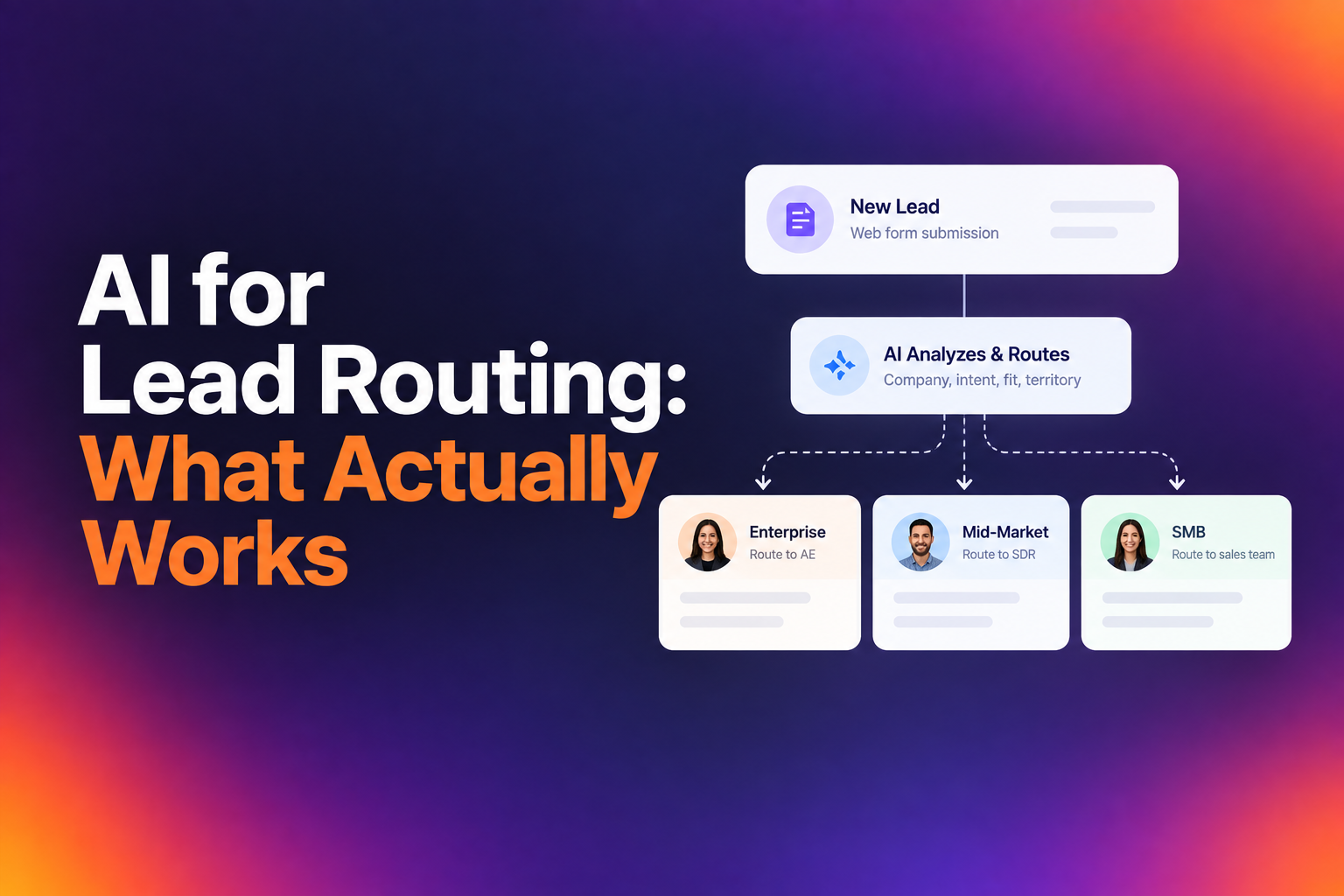
The best enterprise teams hit 70-75% qualified-to-booked rates by respecting CRM relationships in their routing logic. When a prospect from an existing account requests a demo, they shouldn't land on a random SDR's calendar. They should route to the account owner who already has context and relationship equity.
The Impact of Brand Equity on Organic Conversion
Brand recognition compounds conversion efficiency. Prospects who already know your company arrive with higher intent and lower skepticism. They're more likely to complete forms, show up for meetings, and progress through your pipeline.
This creates a virtuous cycle where strong conversion rates fund more brand investment, which drives higher-intent traffic, which converts better. Mature companies can afford to optimize for lifetime value rather than immediate conversion, accepting longer qualification processes that identify the highest-value opportunities.
Variable Factors Influencing Inbound Performance
Stage isn't the only variable that determines conversion benchmarks. Industry vertical and traffic source quality create significant variation within each stage.
Industry Vertical Discrepancies
Vertical SaaS consistently outperforms horizontal positioning. Construction Tech leads at 69.1%. Ecommerce at 68.8%. Travel Tech at 68.3%. Generic Sales Tech sits at 62.8%.
The pattern reflects qualification clarity. When you sell to contractors, "are you a contractor?" is an easy qualification question. When you sell to "any company that does marketing," qualification gets fuzzy. Visitors aren't sure if they're the right fit. Reps aren't sure how to personalize the demo. Everything downstream gets harder.
If you're a horizontal product, consider vertical positioning on your landing pages. A "Marketing software for e-commerce" page will convert better than a generic "Marketing software" page, even if the product is identical.
Traffic Source Quality: SEO vs. Paid Inbound
High-intent paid traffic from demo-focused keywords converts differently than organic traffic from educational content. Your benchmarks should account for traffic mix. A company generating 80% of leads from branded search will naturally outperform one generating 80% from top-of-funnel blog posts.
Segment your conversion analysis by traffic source. Set different targets for different channels. Don't let high-performing sources mask problems in others, and don't let low-performing sources drag down your overall confidence.
Strategies to Improve Benchmarks at Every Level
The gap between 40% and 78% conversion rates comes down to what happens in the thirty seconds after form submission. Companies that treat scheduling as a conversion event rather than an administrative afterthought consistently outperform their peers.
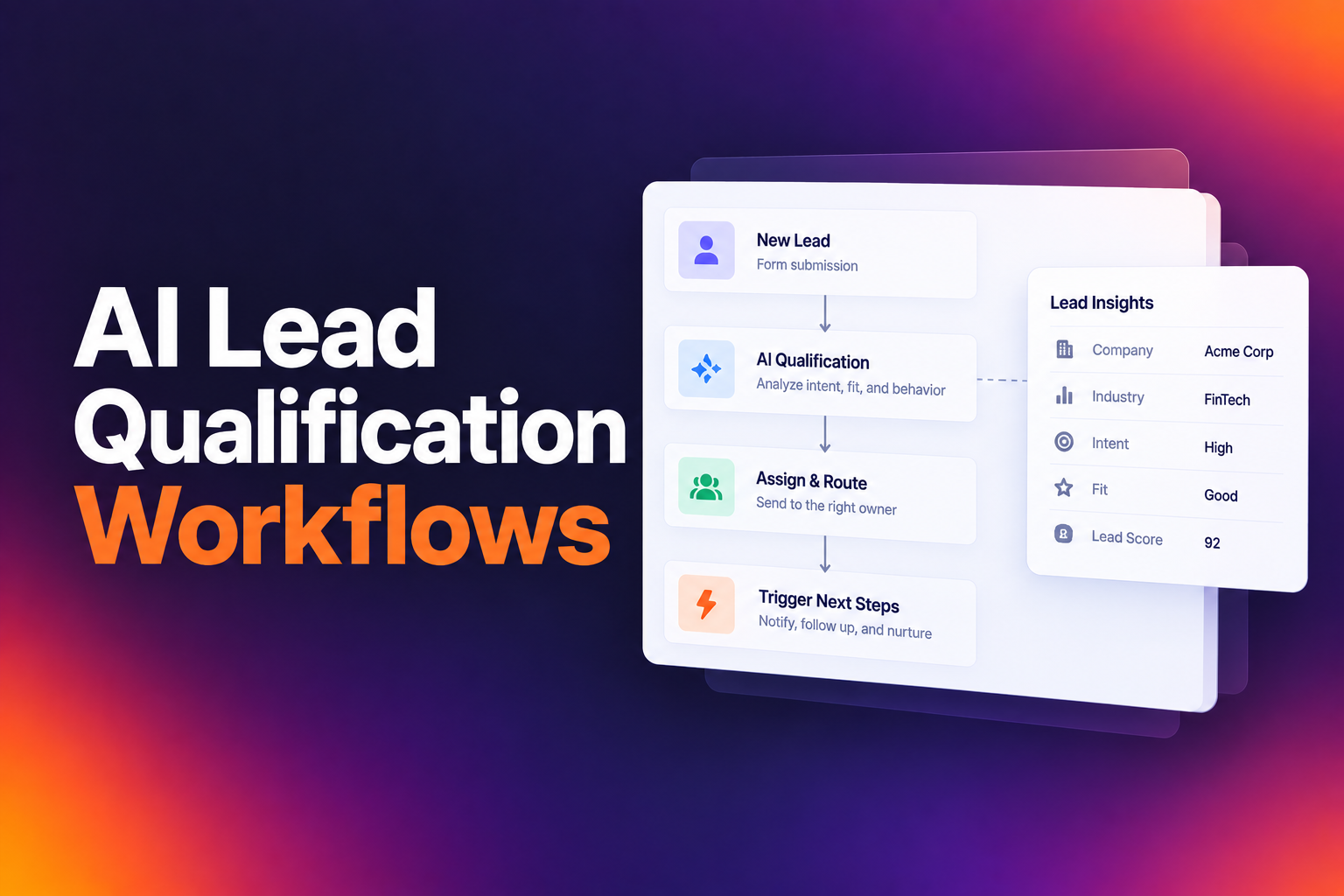
Qualify leads in real time using form responses, enrichment data, and CRM history. No manual review queue. No delays. The moment someone submits, they should know if they qualify. Route based on custom logic that respects existing relationships and matches leads to the right reps. Show a calendar immediately instead of a "thanks, we'll be in touch" message.
Tools like RevenueHero automate this entire sequence, compressing the qualified-to-booked window from days to seconds. The companies in the top 10% of conversion benchmarks made a choice: they stopped treating inbound scheduling as an afterthought and started treating it as their primary conversion event.
Whether you're at seed stage optimizing for learning or Series D optimizing for enterprise expansion, the principle holds. Speed and clarity drive conversion. Delays and friction kill it. Know your stage-appropriate benchmarks, identify where you're falling short, and fix the thirty seconds that matter most.
Let RevenueHero help your team turn high-intent users into booked meeting without slowing down your funnel.