Every inbound lead carries a shelf life measured in seconds, not hours. The moment someone clicks "Book a Demo," they're mentally committed to a conversation. Whether that conversation actually happens depends almost entirely on what your system does next. For most go-to-market teams running HubSpot, the answer involves some version of round robin assignment: distributing leads across reps so no one person gets overwhelmed and no lead sits untouched. But basic rotation is just the starting point. The real question is how fast and how accurately you can get from form fill to booked meeting. Data from over one million B2B SaaS form submissions shows the top 10% of teams convert 78% or more of qualified leads into meetings, while the median sits at 62%. The gap between those numbers isn't about traffic volume or lead quality. It's about what happens in the 30 seconds after submission. This guide to HubSpot round robin assignment breaks down how to set up fair distribution, where default rotation falls short, and what high-performing RevOps teams do differently to close the conversion gap.
The Decay of Inbound Intent: Why Manual Routing Fails Modern GTM Teams
The old five-minute rule for lead response is dead. In 2026, buyers researching solutions have three or four competitor tabs open simultaneously. They're not waiting five minutes for your SDR to notice a new lead in the queue. Intent starts decaying the instant a form is submitted, and every manual step between that moment and a booked meeting compounds the loss.
Most GTM teams still operate with some version of a manual review process baked in. A lead fills out a form, it enters a queue, someone reviews it, maybe routes it, maybe sends an email. Days pass. The meeting that should have happened doesn't. This isn't a people problem. It's a process architecture problem.
The Gap Between Form Fill and Meeting: A 30-Second Conversion Window
Conversion probability drops from roughly 80% in the first minute after a form fill to around 40% by the next day. That's not a gradual decline: it's a cliff. The 30-second window after submission is where the highest-performing teams separate themselves.
Teams hitting 78%+ qualified-to-booked rates aren't doing anything exotic. They're presenting a calendar immediately after qualification, while the prospect is still on the page. No "thanks, we'll be in touch" interstitial. No waiting for an SDR to manually pick up the lead.
Why 'Request a Demo' and Manual Queues Kill Pipeline
Manual queues introduce at least two handoffs before a meeting gets booked: form submission to queue, queue to rep review, rep review to outreach. Each handoff adds latency and drops conversion.
The language around your CTA matters too. Among top-performing teams, 29% use "Book a Demo" and 21% use "Get a Demo." Only 12% use "Request a Demo." The word "request" signals uncertainty. It tells the visitor they're asking permission rather than taking action. That distinction alone creates measurable differences in conversion rates.
HubSpot Round Robin Fundamentals: Distributing Leads Fairly
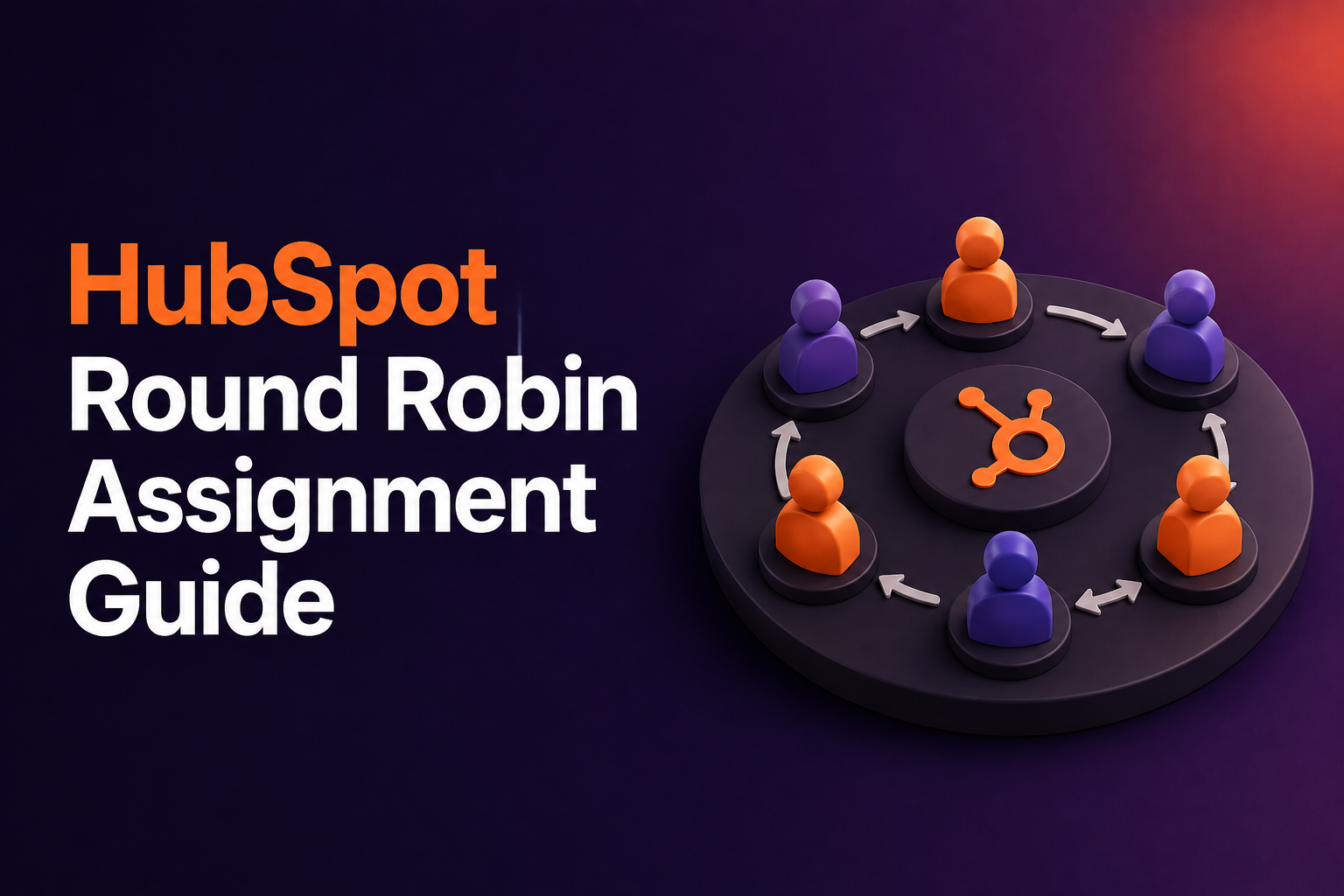
HubSpot's native round robin functionality lives inside its workflow engine. The core idea is simple: when a new lead enters a workflow, HubSpot assigns ownership to the next rep in a rotating list. This ensures no single rep gets buried while others sit idle. It's the default starting point for most teams, and it works well enough for straightforward use cases.
The real value of round robin isn't just fairness. It's predictability. Sales leaders can forecast capacity, RevOps can measure assignment-to-meeting SLAs, and reps know they'll get a consistent flow of opportunities.
Setting Up Owner-Based Rotation in HubSpot Workflows
Inside HubSpot, you create a workflow triggered by form submission or lifecycle stage change. Add a "Rotate record to owner" action, then define the list of reps who should receive leads. HubSpot cycles through this list sequentially, assigning one lead per rep before looping back.
A few practical considerations matter here. First, make sure your rotation list only includes reps who are actively working leads. Leaving someone on the list who's on PTO means leads get assigned to a black hole. Second, pair your rotation action with enrollment triggers that match your qualification criteria so unqualified leads don't consume rep capacity.
Managing Weighted Distribution and Rep Availability
Not every rep should get equal volume. A senior AE handling enterprise accounts might need fewer but higher-value leads, while a newer rep ramping up benefits from higher volume. HubSpot supports weighted rotation, where you assign percentages to each rep in the rotation list.
Availability management is trickier. HubSpot doesn't natively sync with rep calendars to check real-time availability before assignment. If a rep is in back-to-back meetings, the lead still gets assigned to them, and the follow-up waits. This is where the gap between "assigned" and "booked" becomes a real problem.
Moving Beyond Basic Rotation to Instant Scheduling
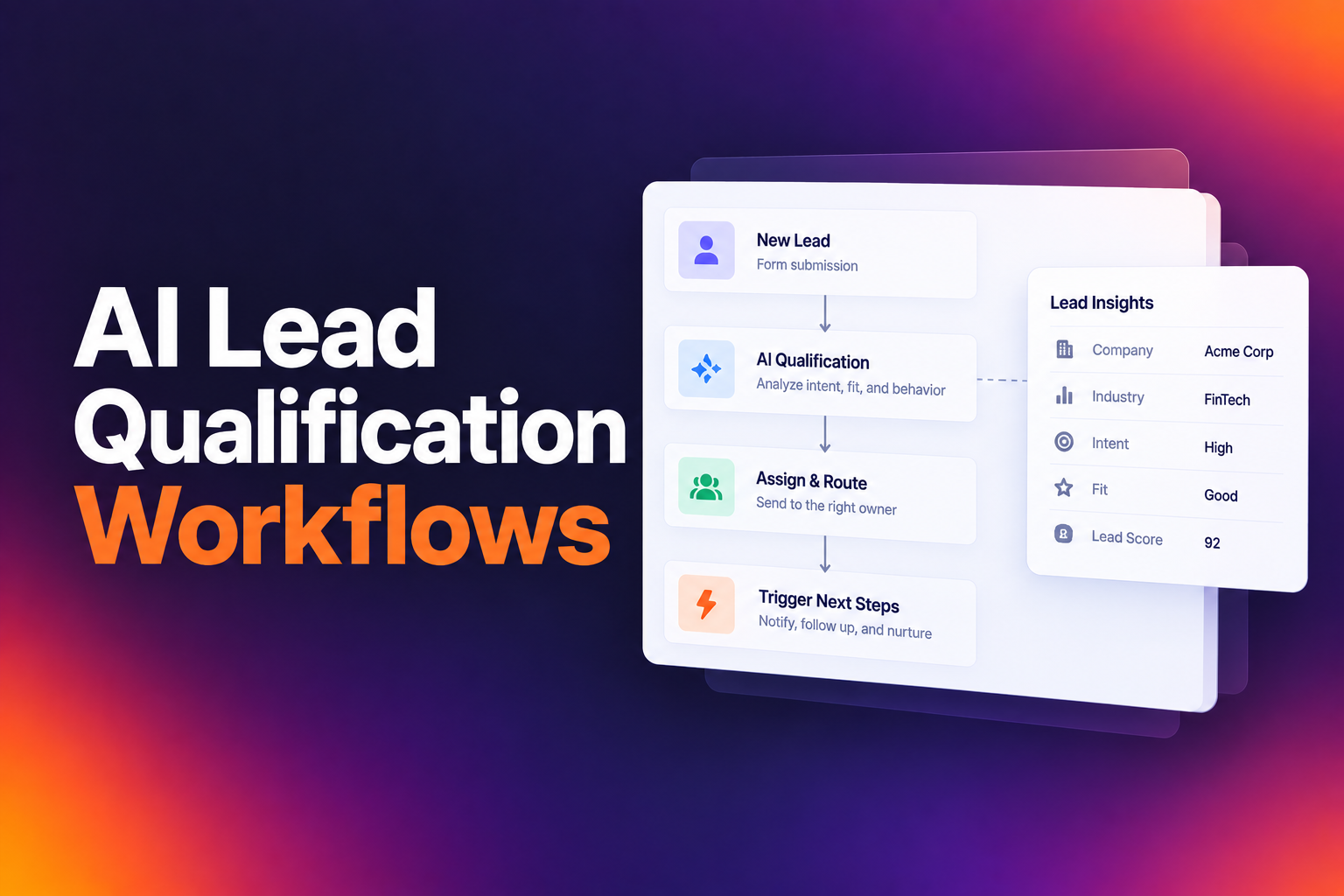
Assignment alone doesn't book meetings. A lead assigned to a rep at 2:00 PM who doesn't check their queue until 4:00 PM has already lost two hours of intent. The shift high-performing teams have made is collapsing assignment and scheduling into a single step: the prospect qualifies, gets routed, and books directly onto the right rep's calendar without any human intervention in between.
RevenueHero is one example of how teams solve this. Instead of assigning a lead to a queue and hoping for fast follow-up, the prospect sees available time slots immediately after form submission. The meeting is booked, synced to the CRM, and the rep gets a notification with full context.
Replacing Permission Language with Commitment Language
This is a five-minute fix with measurable impact. Search your site for every instance of "Request," "Submit," "Contact Sales," and "Get in Touch." Replace them with commitment-oriented alternatives: "Book Your Demo," "Schedule a Call," "Pick a Time."
The psychology is straightforward. Permission language ("Request a Demo") tells visitors they're entering a queue. Commitment language ("Book Your Demo") tells them they're about to take action. Top performers overwhelmingly use commitment framing, and the conversion data supports it. This change costs nothing and requires no technical work beyond updating button copy and meta descriptions.
Using Real-Time Enrichment to Qualify Before Assignment
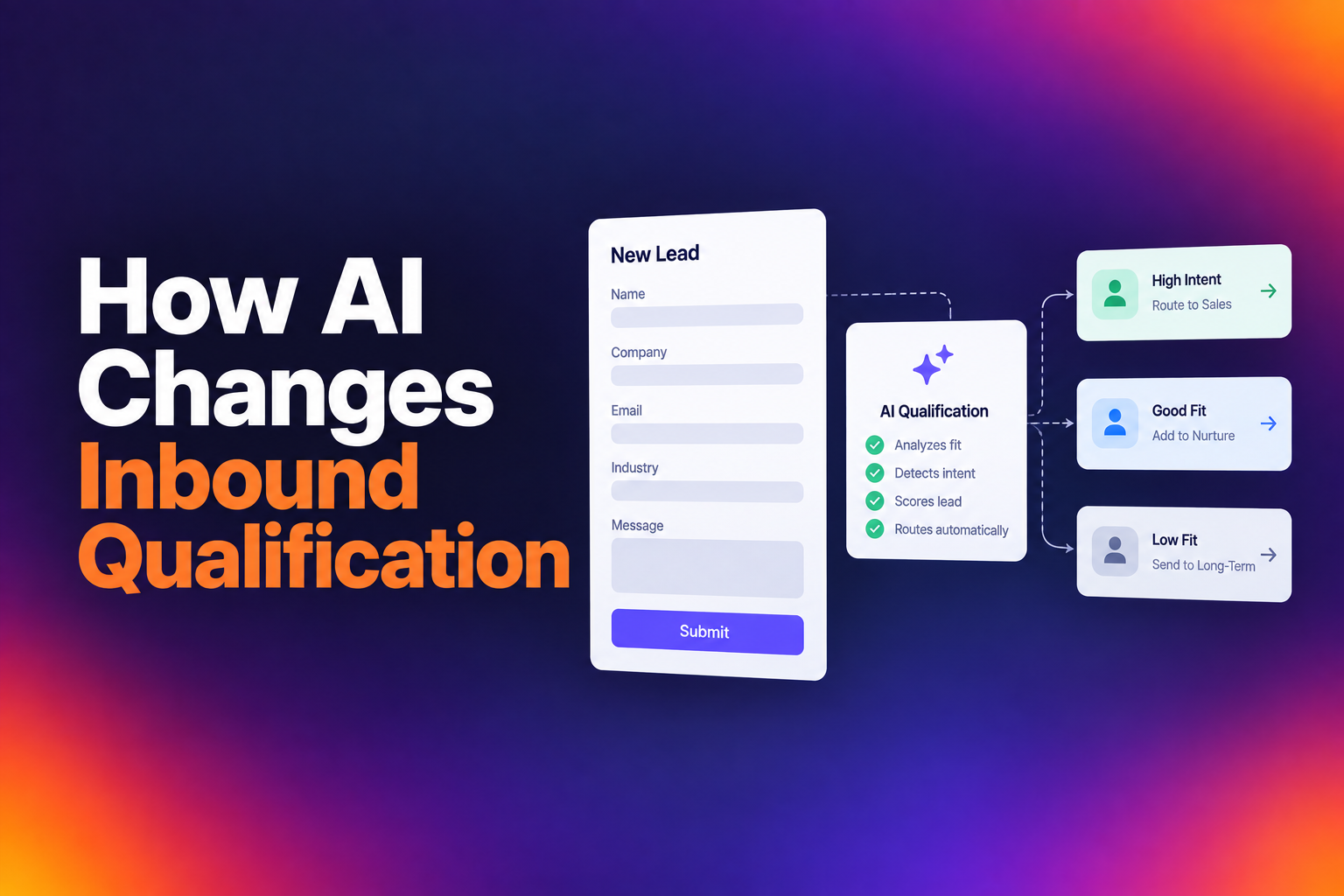
Qualification before routing is what separates smart round robin from blind round robin. Instead of assigning every form fill to a rep and letting them manually qualify, you can enrich leads with firmographic data at the moment of submission: company size, industry, tech stack, revenue range.
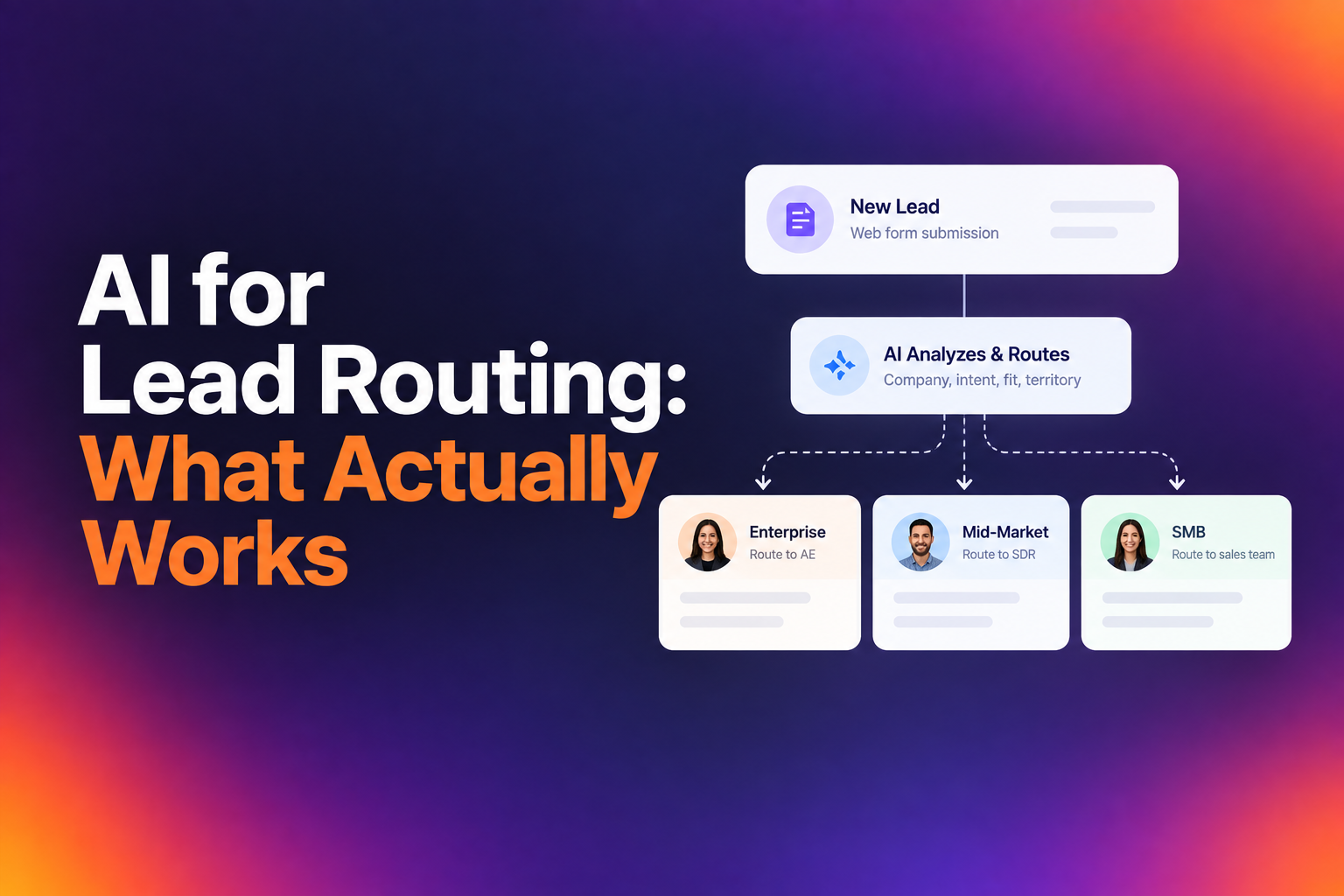
This enrichment data powers two decisions simultaneously. First, does this lead qualify for a sales conversation at all? Second, which rep or team should handle it? A 500-person fintech company and a 10-person agency shouldn't follow the same routing path, even if they filled out the same form.
Benchmarking Success: What Top Performers Achieve
Across 12 months of inbound conversion data from B2B SaaS companies, the median qualified-to-booked rate is 62%. The top quartile hits 72-77% depending on category, and the top 10% consistently exceed 78%. Some categories outperform others: Construction Tech reaches a median of 70%, while Dev Tools sits at 55%.
If your team is converting at 30-40% and assuming that's normal, the data says otherwise. You're leaving significant pipeline on the table, and the fix isn't more traffic or better leads. It's faster, smarter conversion of the leads you already have.
The 78% Rule: How the Top 10% Convert Qualified Leads
The top 10% share three consistent patterns. They present a calendar immediately after qualification. They're selective about who gets through to sales, with intentional disqualification criteria that filter poor fits before they consume rep time. And they minimize form fields to only those that inform routing or personalization.
These teams aren't running complex playbooks. They've removed friction from the path between intent and meeting. Every unnecessary step, whether it's a manual review, an email confirmation, or a "we'll be in touch" page, costs them conversions. The math is simple: going from 40% to 78% on the same traffic means 38 more meetings per 100 qualified leads. That's pipeline you already paid for.
Advanced Routing Logic: CRM Ownership and Segmented Rules
Basic round robin treats every lead as interchangeable. Advanced routing recognizes that leads carry context: existing CRM relationships, account history, territory assignments, and product interest signals. The best routing systems respect this context automatically.
Matching Leads to Existing Account Owners Automatically
When a new contact submits a form from a company that already has an account owner in your CRM, that lead should go to the existing owner. Period. Sending it to a random rep through round robin creates confusion for the prospect and internal friction for your team.
This requires a CRM lookup at the moment of submission: check whether the lead's company domain matches an existing account, identify the owner, and route accordingly. Only leads from net-new accounts should enter the round robin pool. This single rule prevents a surprising number of misrouted leads.
Balancing High-Velocity SMB vs. Enterprise Routing Motions
SMB and enterprise leads need fundamentally different routing logic. High-velocity SMB motions benefit from inclusive qualification criteria and fast, automated scheduling. Demos are short, the cost of a bad meeting is low, and volume matters.
Enterprise routing demands more nuance. You might route based on territory, industry vertical, or deal size. Leads above a certain employee count might skip round robin entirely and go to a named account owner. The key is building segmented rules that match your sales motion rather than forcing one routing model across your entire funnel.
Optimizing Your Funnel for Peak Performance Seasons
Seasonality affects inbound conversion more than most teams realize. Q2 consistently outperforms other quarters, with April, May, and June all exceeding 60% median conversion rates. Q3 dips, driven almost entirely by August (53.4%) and September (53.7%). July actually performs well at 61.1%.
Plan your biggest inbound campaigns for Q2 when conversion rates peak. During Q3, focus on tightening your funnel mechanics rather than pushing volume into a seasonal headwind. Review your disqualification criteria quarterly to ensure they're filtering poor fits, not just adding friction.
The companies that sustain strong conversion rates year-round share a common trait: they treat the form-to-meeting path as a conversion event, not an administrative process. Whether you're running HubSpot round robin assignment natively or layering in more sophisticated routing and scheduling tools, the principle holds. Speed, accuracy, and respect for buyer intent are what separate the 78% from the 40%. Your leads are already raising their hands. The only question is how many of them end up on your reps' calendars.
Let RevenueHero help your team turn high-intent users into booked meeting without slowing down your funnel.