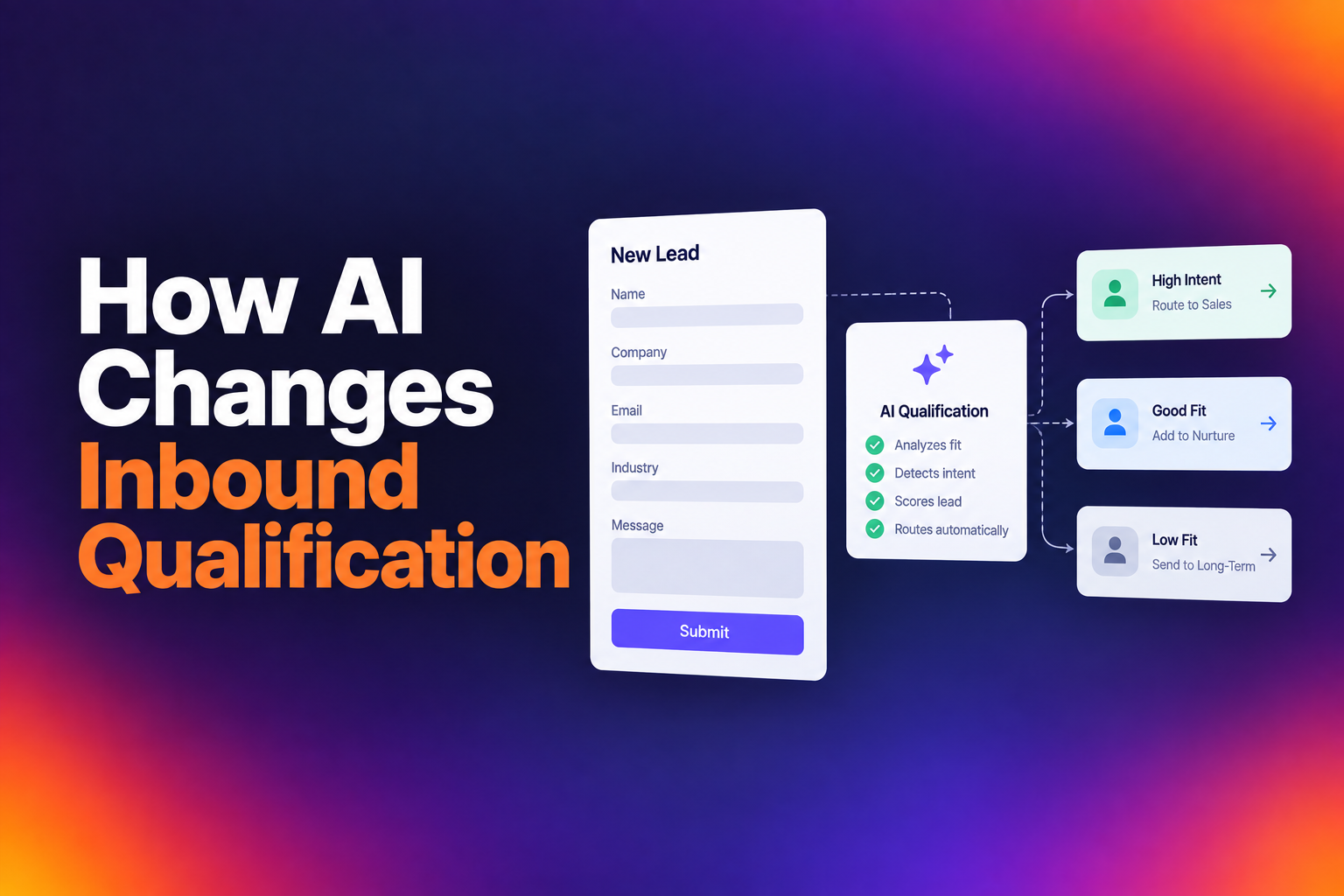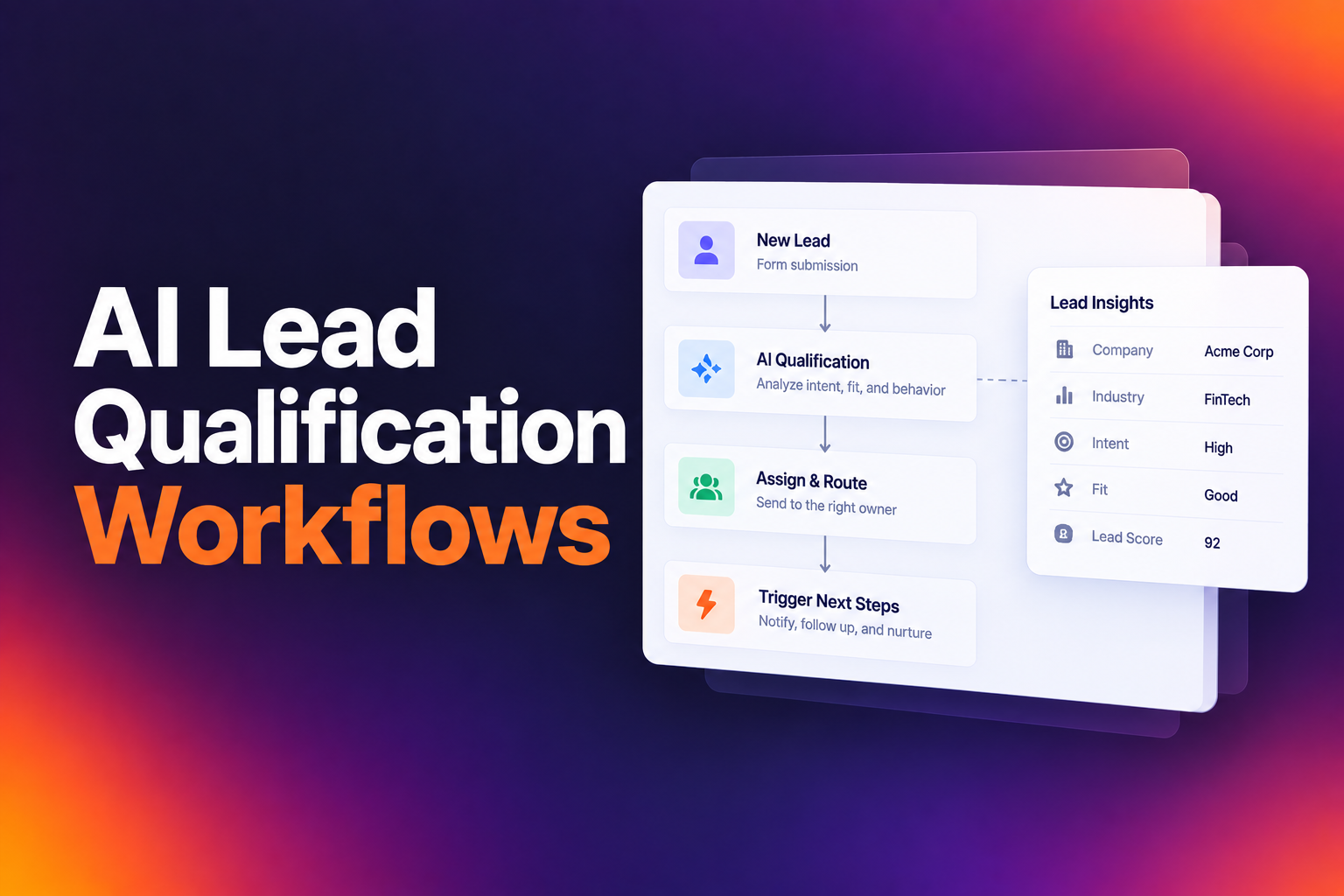
Every inbound lead carries a window of intent, and that window is shrinking. Data from 2025 benchmarks shows that conversion probability drops from roughly 80% in the first minute after a form fill to around 40% by the next day. For existing accounts already in your CRM, the stakes are even higher: these are people with history, context, and often an assigned rep. Yet most teams still dump these leads into a manual queue, where they sit while someone figures out who owns the account. Learning how to route existing accounts automatically isn't a nice-to-have anymore. It's the difference between a 40% qualified-to-booked rate and a 78% one. The gap isn't about lead quality. It's about what happens in the 30 seconds after someone clicks a button on your site.
The Cost of Manual Routing for Existing Accounts
Manual routing is expensive in ways that don't show up on a balance sheet. The real cost is measured in lost meetings, frustrated reps, and decayed intent. When a known contact from an existing account fills out a demo form and gets a "thanks, we'll be in touch" message, you've just told someone who already has a relationship with your company that they need to wait. That wait is where pipeline goes to die.
The Decay of Intent in the Manual Queue
The old "five-minute rule" for lead response is already obsolete. Buyers in 2026 are evaluating three or four solutions simultaneously, and the vendor who puts a calendar in front of them first wins the meeting. When an existing account lead enters a manual queue, it typically sits for hours. An SDR has to check the CRM, identify the account owner, confirm territory alignment, and then route the lead. By the time the right rep reaches out, the prospect has already booked with a competitor or lost the urgency that drove them to the form in the first place.
Median response times are more telling than averages here, because averages get dragged down by outliers. A team might have a few sub-five-minute responses that make the average look acceptable, while the median sits at four or six hours. That median is what most of your leads actually experience.
Why CRM Ownership Data Often Goes Unused
Most CRMs already contain the information needed to route existing accounts correctly. Account owners are assigned. Territories are mapped. Relationship history exists. The problem isn't data availability: it's that the routing process doesn't query this data at the moment of form submission.
Instead, the form goes to a generic queue. Someone manually cross-references the lead's email domain against CRM records. If the account owner is on PTO or has left the company, the lead might bounce between reps for days. All of this happens while the CRM holds every answer the routing logic needs. The data is there. It's just not connected to the moment that matters.
Leveraging CRM History for Instant Routing
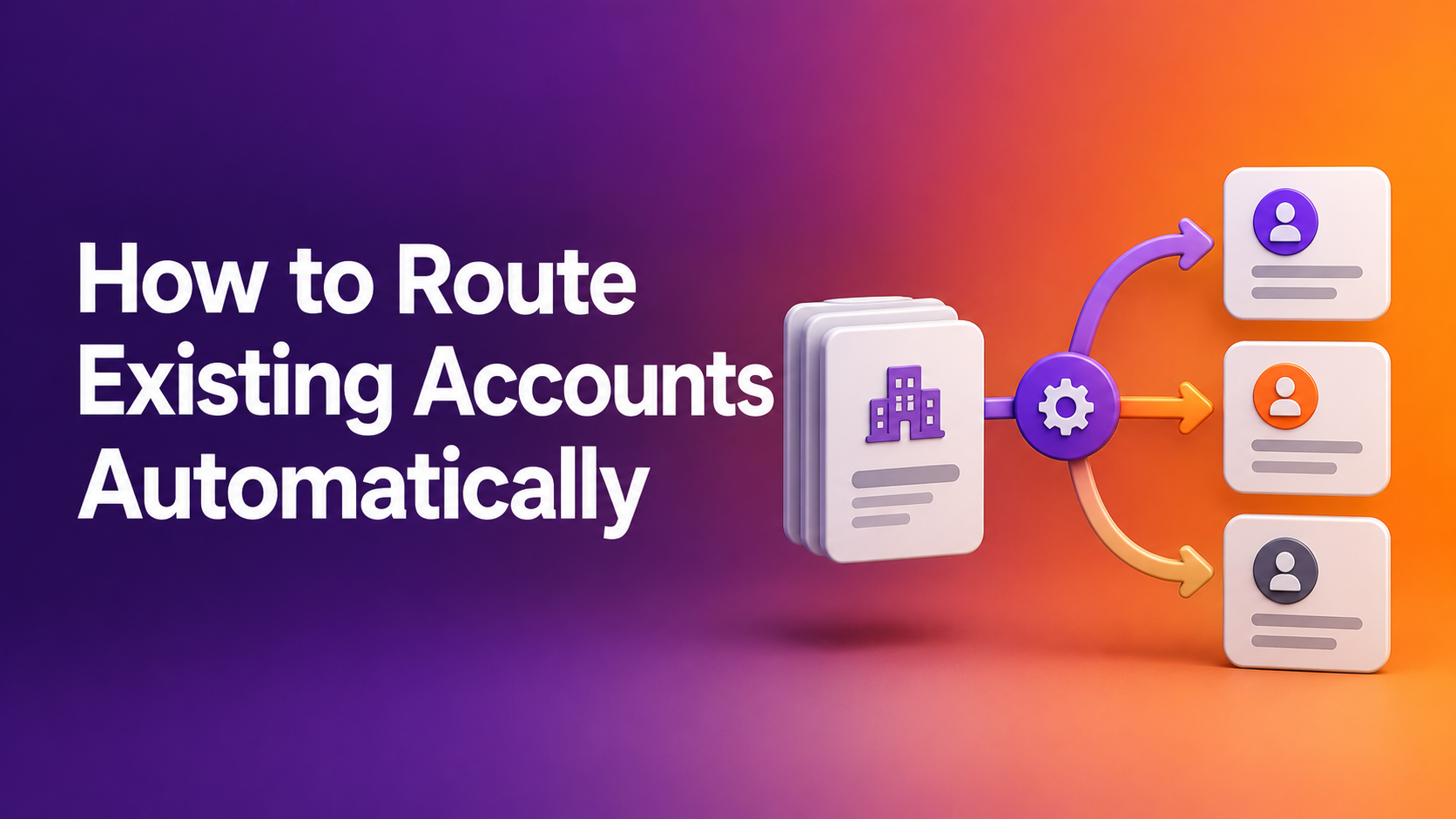
The fix starts with connecting your scheduling and qualification logic directly to CRM ownership data. When a lead submits a form, the system should instantly check whether their company already exists as an account, identify the assigned owner, and present that rep's calendar. No queue. No manual review. No delay.
Matching Leads to Account Owners Automatically
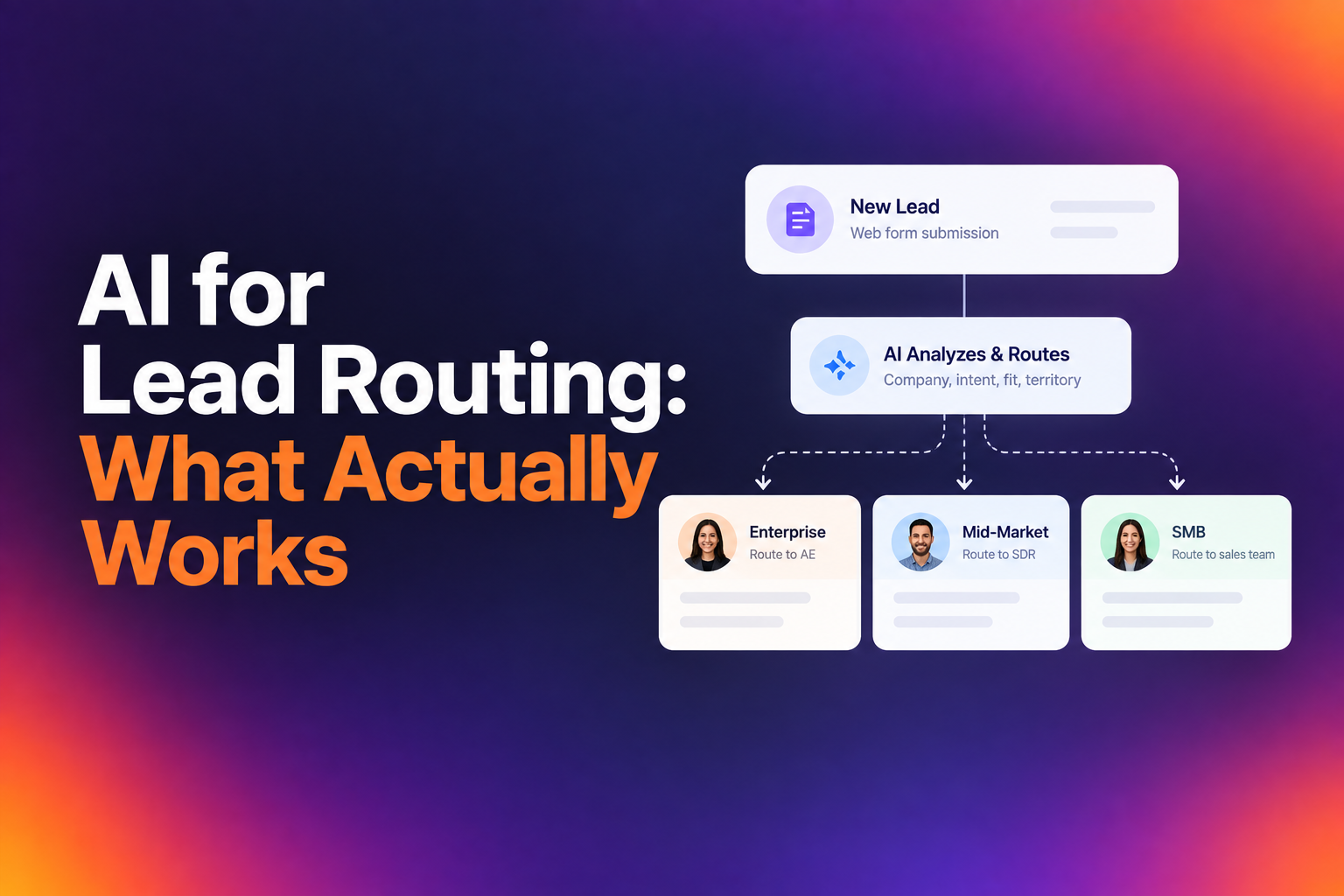
Account matching works by comparing the lead's email domain, company name, or firmographic data against existing CRM records in real time. If a match is found, the system routes directly to the account owner. If the owner is unavailable due to PTO or capacity limits, fallback rules kick in: route to a backup rep on the same team, or to a manager who can cover the conversation without losing context.
This is where platforms like RevenueHero earn their keep. The routing engine uses form responses, enrichment data, and CRM ownership to get every lead to the right rep instantly, with no manual assignment step. The CRM relationship stays intact, which matters for enterprise accounts where rep continuity affects deal velocity.
Using Enrichment Data to Bypass Manual Review
Enrichment adds firmographic and technographic data at the point of form submission. Company size, industry, tech stack, and funding stage can all be appended without asking the prospect to fill in extra fields. This enriched data feeds directly into routing logic.
For existing accounts, enrichment serves a different purpose than for net-new leads. It confirms and updates what's already in the CRM. Maybe the account's employee count has changed, or they've moved into a new market segment. Enrichment keeps your routing rules accurate without requiring manual CRM hygiene. The lead gets routed based on current reality, not stale data from six months ago.
The Conversion Gap: Request vs. Book
Routing speed matters, but so does the language and experience at the point of conversion. The gap between teams booking 62% of qualified leads and those booking 78% often comes down to what happens on the page itself.
Moving from 'Request a Demo' to Commitment Language
Among top-performing teams, 29% use "Book a Demo," 21% use "Get a Demo," and only 12% use "Request a Demo." The distinction isn't semantic: it's psychological. "Request" implies a gatekeeper. "Book" implies action and ownership. The visitor mentally crosses from "considering" to "doing" while they're still on the page.
This is a five-minute fix with measurable impact. Search your site for every instance of "Request," "Submit," or "Contact Sales." Replace them with "Book," "Schedule," or "Pick a Time." Check buttons, headers, meta descriptions, and email templates. The shift in language removes ambiguity about what happens next, which reduces drop-off between form submission and meeting confirmation.
The Impact of Immediate Calendar Access on Qualified Leads
When a qualified lead sees a calendar immediately after submitting a form, the booking rate jumps. The companies in the top 10% of conversion benchmarks made a specific choice: they stopped treating inbound scheduling as an afterthought and started treating it as a conversion event.
The difference between showing a calendar and showing a "thanks, we'll be in touch" confirmation page is the difference between a booked meeting and a follow-up email that might never get opened. For existing accounts, this is even more critical. These prospects already know your product. They've interacted with your team before. Making them wait for a callback is a friction point that signals disorganization.
Building Qualification Rules That Match Your Motion
Not every lead should reach a rep's calendar. Qualification rules exist to protect rep time and ensure conversations are productive. But poorly designed rules create friction that kills conversion without improving quality.
Balancing Friction and Lead Quality
Data shows a counterintuitive pattern: companies with higher disqualification rates often have higher meeting-to-opportunity conversion. Teams that DQ 71% of inbound leads convert the remaining qualified leads at 70.1%, compared to 63.2% for teams with a 21.8% DQ rate. Being selective about who gets through means reps spend time on better-fit conversations.
The key question for every form field and qualification criterion is whether it's filtering out genuinely poor fits or just adding friction. If your DQ rate is under 20% and your meeting rate is struggling, you might be letting through leads that waste rep time. Review and update your qualification criteria quarterly to keep them aligned with your actual ICP.
Optimizing Routing for Enterprise vs. SMB Segments
Enterprise and SMB motions require fundamentally different routing approaches. Enterprise accounts need nested routing rules that respect existing ownership, territory boundaries, and sometimes approval workflows before a meeting is booked. A mid-market AE shouldn't accidentally get a Fortune 500 account's demo request because the routing logic only checked email domain.
SMB routing can afford to be more inclusive and faster. Pre-built round-robin rules, lower DQ thresholds, and simpler qualification criteria work well when demos are fast and the cost of a bad meeting is low. The benchmark data reflects this: enterprise teams convert at 70.1% with a 71.2% DQ rate, while SMB teams convert at 63.2% with a 21.8% DQ rate. Both are valid approaches. The mistake is applying one model to both segments.
Scaling Revenue with Automated Lead Infrastructure
The companies that consistently outperform on qualified-to-booked rates aren't doing anything exotic. They connect CRM data to their routing logic so existing accounts go to the right rep. They use enrichment to keep that data current. They show a calendar instead of a confirmation message. And they build qualification rules that match their go-to-market motion rather than copying someone else's playbook.
Automatically routing existing accounts is the foundation of this approach. It preserves rep relationships, eliminates manual handoff delays, and respects the CRM data your team has already invested in maintaining. The difference between a 40% meeting rate and a 78% one isn't better leads or a bigger budget. It's infrastructure that converts intent into meetings while that intent is still fresh.
If your existing accounts are still landing in a manual queue, start with three changes: connect your routing to CRM ownership data, replace "Request" with "Book" across your site, and review your qualification criteria to make sure they're filtering, not just adding steps. The traffic you already have is enough. The question is how much of it actually ends up in a conversation with your team.
Let RevenueHero help your team turn high-intent users into booked meeting without slowing down your funnel.