Why ABM Fails Without Operational Follow-Through
ABM can promise high conversion rates and tailored marketing. Yet many teams wrestle with stagnant pipelines and missed opportunities. The disconnect isn’t always in the strategy itself; it’s in the operational follow-through. When conversion speed is compromised by lagging systems and manual processes, even the best ABM tactics fall short. Read on to understand the operational pitfalls, why they exist, and how revenue-focused teams can overcome these challenges.
The Follow-Up Gap: Where ABM Strategies Crumble
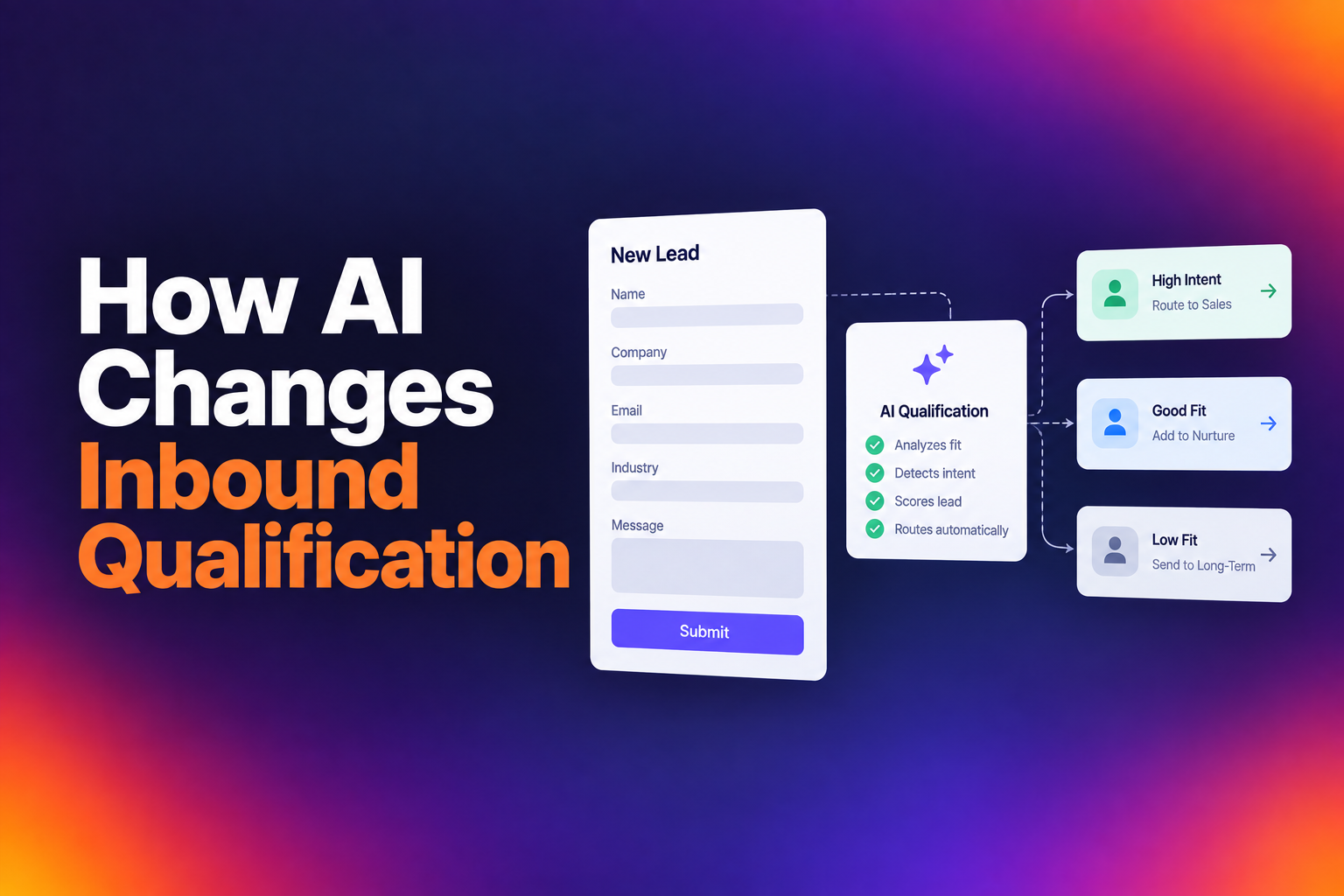
Imagine a prospect who fills out a form on your website. They are interested, curious, and ready to engage. Timely follow-up matters because a delay can cost you a conversion. Too often, the follow-up gap remains unaddressed, and the buyer’s enthusiasm dissipates.
This operational lag is especially damaging in account-based marketing. When follow-up doesn't happen immediately, it gives competitors a reason to snatch the opportunity, and prospects end up wandering elsewhere.
What is the Follow-Up Gap?
The follow-up gap is the delay between a prospect’s initial engagement and when the sales team begins the outreach. During this window, a prospect might be checking emails, attending meetings, or exploring competitors. This delay inevitably leads to lower conversion rates.
In many cases, manual processes or sluggish automation contribute to this gap. For instance, when routing rules fail to trigger immediately, a lead might be sitting idle in your CRM until a rep notices the new entry. This operational delay kills the momentum built during the initial engagement.
Operational Causes
Let’s break down why the gap exists:
- Manual lead routing that waits for repetitive checks.
- Inadequate automated alerts causing reps to be unaware of incoming leads.
- Lack of immediate calendar integration providing no instant scheduling option.
- Delayed internal communications between SDRs and AEs.
These issues are common in systems where automation is an afterthought. When teams set up ABM programs without an operational playbook, they risk letting a prospect’s enthusiasm evaporate before any meaningful contact is made.
Real-World Impact
Picture this: an ideal buyer fills out a demo request form. Due to operational delays, aware reps only follow up 30 minutes later. By that time, the buyer might have shifted focus or even picked another service. That delay isn’t by design-it’s a flaw in the system.
Research reveals that only 12% of companies report significant success with their ABM programs (Al Campa). These failures are not because the strategy is inherently flawed, but largely due to operational lag and the lack of integrated automation.
Understanding the Operational Pitfalls in ABM
Operational pitfalls create the environment in which great ABM strategies falter. When the operational process is cumbersome, sales teams face challenges that no amount of lead quality can overcome.
Revenue organizations that rely on manual follow-up are at a disadvantage. It’s not enough to have a well-targeted list, you need an efficient system that funnels leads to reps the moment a form is submitted.
The Delay in Lead Routing
Automated routing is meant to be seamless, but too many systems still rely on periodic checks or manual triggers. In practice, this means that an ideal lead might wait too long before being handed off to a rep.
RevenueHero’s approach addresses this exact scenario by ensuring instant scheduling and automated lead distribution. By bypassing generic confirmation screens and automating the calendar integration, teams can echo a consistent message: “We value your time, and so does our process.”
Calendar Integration Woes
Many systems simply inform the prospect that someone will be in touch without offering a clear next step. In a world where a single click can schedule a meeting, this simple act of friction increases the risk of a lost prospect.
Operationally mature teams understand that calendar integration is not an add-on-it’s essential. Embedding scheduling at the point of form submission removes the friction and keeps the momentum alive.
Internal Communication Breakdowns
Even with the best automation, gaps in internal communication can stymie follow-up efforts. When SDRs and AEs are not aligned, a delay is inevitable. For example, if SDRs aren’t immediately alerted through their preferred tools like Slack or email, important follow-up actions don’t occur until much later.
RevenueHero highlights the necessity of triggering personalized alerts. This system alerts the right rep immediately, ensuring that the lead is responded to while still fresh in their mind.
The Inbound Conversion Imperative
ABM is not just about reaching a list of accounts-it's about converting engaged prospects in real time. Operational speed to lead is critical because every minute counts in capturing the buyer’s interest.
The more complicated the routing process, the slower the conversion. When internal workflows are optimized, buyers experience a smooth, frictionless transition from interest to booked meeting.
Speed as a Conversion Tactic
Speed is often misunderstood. It’s not only about contacting the lead quickly but doing so in a way that respects the buyer’s time and intent. When your system instantly routes leads and surfaces available calendars, it sets a conversion-friendly process in motion.
Your prospects expect a frictionless process. The speed at which your team can confirm a meeting becomes a signal of reliability. This is especially evident in inbound conversion strategies where the prospect’s intent is already high.
Real-Time Scheduling
The right operational approach offers instant scheduling. With systems like RevenueHero, environments where scheduling is integrated with form submissions lead to lower drop-off rates and higher quality conversions. Rather than a vague promise to follow up, prospects can immediately engage by booking a time that works for them.
Teams that adopt real-time scheduling see tangible improvements in their demo conversion rates. When prospects are empowered to set meetings on their own terms, the overall conversion cycle speeds up markedly, boosting the team’s performance.
Analytical Insights
Operational success is built on data-driven insights. Granular reporting lets teams identify when and why conversions drop within the workflow. Armed with this information, leaders can refine processes-whether it's adjusting alert timing or reworking the lead routing logic.
Data has shown that 73% of companies struggle with conversion rates despite implementing ABM (Market Report Lab). This statistic highlights a systemic issue in traditional approaches where follow-up speed and process clarity are not prioritized.
Internal Resource Constraints and Their Impact
Resource constraints are a recurring challenge. Many organizations invest heavily in ABM-often dedicating nearly 29% of their marketing budget to it-but still lack the internal resources to optimize the follow-up process.
This misalignment between budget and operational capacity is a recipe for suboptimal outcomes. Teams can plan the perfect strategy, but without streamlined processes, the execution remains clunky and inefficient.
The Reality of Limited Resources
Statistics show that 36% of companies cite a lack of internal resources as a barrier to ABM success (2020 ABM Benchmark Survey). This finding underscores the frustration felt by many GTM teams.
For resource-strapped teams, allocating funds to ABM without investing in automation may yield disappointing results. The right approach eliminates the manual steps that consume time and lead to slower responses.
Overcoming Resource Limitations
What happens when a team looks at the process and says, “There must be a faster way”? Operational improvements are the answer. Investing in automation tools that align with inbound conversion best practices is not a luxury-it's a necessity.
RevenueHero provides a clear example. Their platform doesn’t just rely on ABM tactics; it focuses on routing complexity and speed to lead. Teams adopt these systems, and suddenly, internal resource limitations become a marginal concern because the automation does the heavy lifting.
Operationally Mature vs. Resource-Strapped Teams
Mature GTM teams optimize every touchpoint of the buyer journey. They leverage real-time insights and automated alerts to keep the process moving, ensuring that no lead is left unattended for too long.
In contrast, resource-strapped teams might rely on manual checks or legacy systems that slow them down. It’s not necessarily a failure of ABM strategy but of the operational follow-through. Successful teams invest not only in strategy but in the processes that bring that strategy to life.
How Mature Teams Redefine the Process
Teams that master the operational side of ABM replace outdated processes with systems designed for speed and precision. They understand that converting inbound leads is as much about the technology behind the scenes as the high-level strategy.
The workflow for these teams is streamlined, empowering them to act on insights instantly, reduce friction, and ultimately see a higher conversion rate.
Instant Lead Routing
The old way: a prospect fills out a form and waits under the assumption that someone will follow up. In reality, this wait is frequently punctuated by lag-manual routing that lacks any real-time integration.
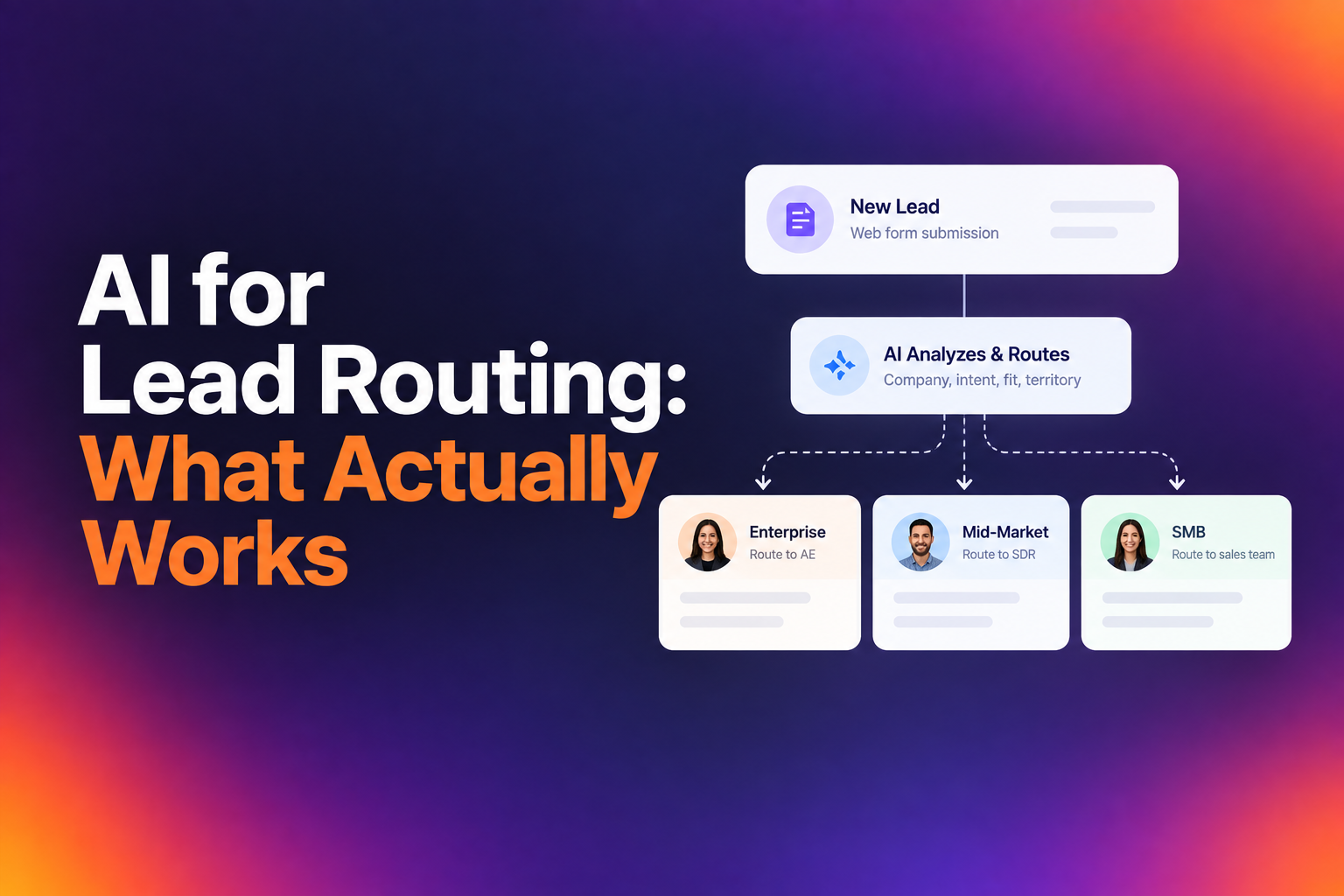
The new way: as soon as the form is submitted, rules-based routing kicks in, assigning the lead to the correct rep immediately. There is no waiting period for manual intervention; the system does it automatically. This approach not only reduces human error but also respects the prospect’s time and intent.
Automated Scheduling Experiences
Consider a scenario where the prospect is given an option to push their booking forward immediately. Instead of the old generic “we’ll be in touch” screen, the system displays the representative’s current calendar availability.
This method is designed to keep the buyer’s momentum going. When prospects can book a meeting instantly, the friction between form submission and follow-up disappears. It’s a streamlined, efficient, and buyer-centered approach.
The Role of Smart Notifications
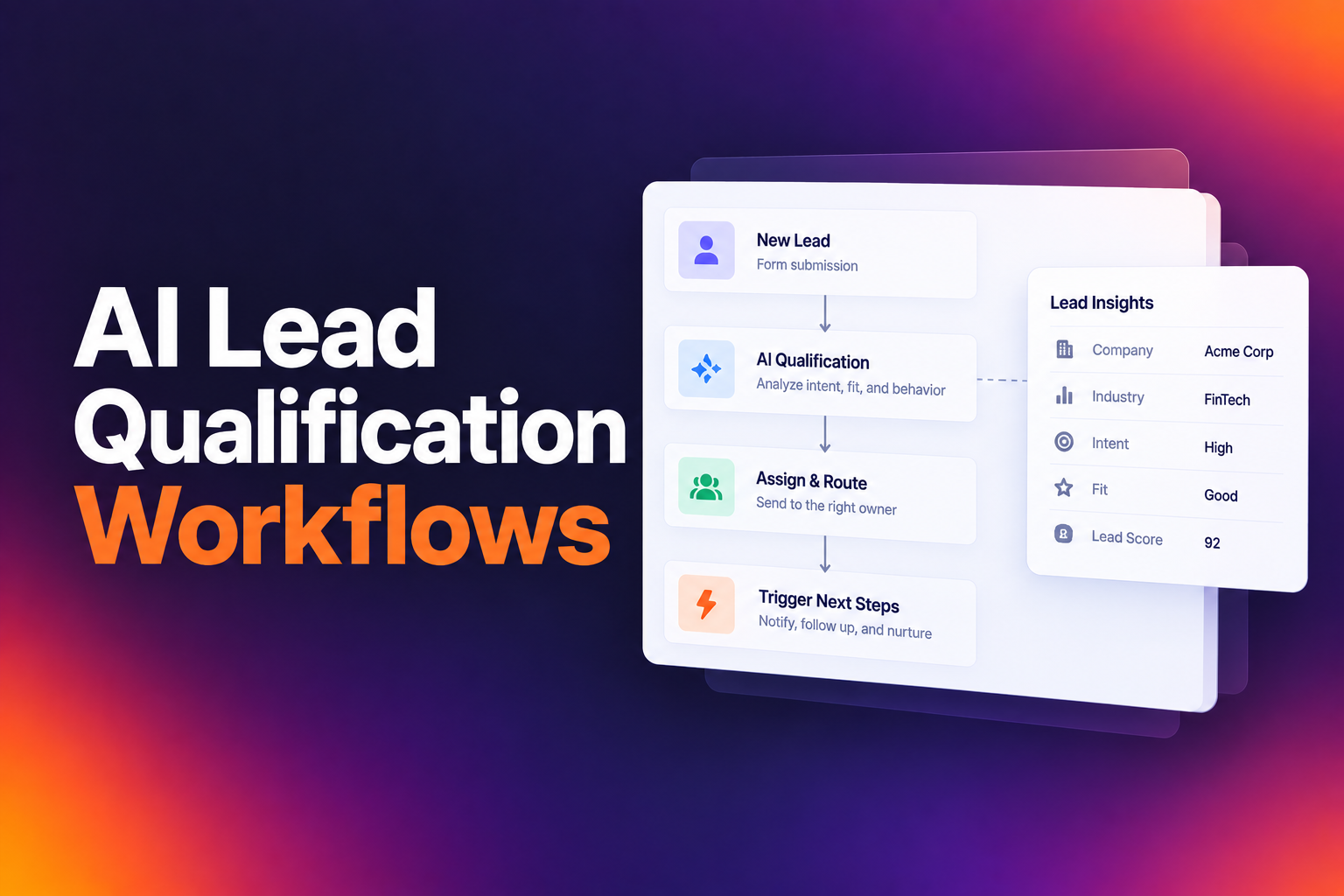
Even the best routing and scheduling systems achieve little without keeping the human element intact. That’s where smart notifications come in. When a lead is assigned, alerts through email or Slack ensure that the respective rep is up-to-date with real-time information.
Operationally mature teams have no room for delays. They set up personalized alerts and fallback logic ensuring that if the initially assigned rep is unavailable, a backup pool quickly takes over. This approach protects against dropped opportunities.
Reframing ABM with Data-Driven Insights
Data is the backbone of operational excellence. Without measurable insights, improvements to the follow-up process remain guesswork rather than strategic adjustments. Mature teams use detailed reports to fine-tune every element of their workflow.
Granular insights into buyer behavior, meeting outcomes, and conversion trends enable teams to identify bottlenecks. For teams struggling with conversion metrics-shown by statistics that 73% of companies face poor conversion rates (Market Report Lab)-data-driven approaches are a game changer.
Listening to the Numbers
Mature teams frequently analyze metrics to determine when leads drop from the funnel. Whether it’s a lag in internal processes or a misalignment in lead handoff, the numbers reveal the weak spots.
This approach is operationally critical. When data highlights that 60% of ABM programs fail to scale due to budget constraints (Gitnux), the answer is often hidden in the process. Replacing manual steps with automated insights can drastically improve outcomes.
Continuous Process Adjustment
Data-driven teams embrace continuous improvement. They test new processes, monitor outcomes, and adjust on the fly. A slight delay in follow-up might prompt a deeper dive into the alert system or a review of the lead assignment logic.
This iterative process transforms ABM from a static marketing exercise into a dynamic, responsive operation. The goal is not to hit a one-time metric, but to continually refine the approach until every lead is handled optimally.
Case Studies: Success Through Operational Precision
Consider real-world examples from high-velocity teams that have integrated seamless automation. These teams have shifted from a reactive model to a proactive one by marrying inbound conversion best practices with instant lead assignment.
One example involves a company that saw its demo booking rates double after implementing an instant scheduling system. With automated handoffs and real-time alerts, the follow-up gap was minimized and prospects were engaged at the moment of their interest.
Combating Routing Complexity in the Modern GTM Environment
Routing complexity is a fact of life for many GTM leaders. When multiple channels, territories, and buyer personas come into play, the process of lead routing becomes exponentially more complicated.
The problem isn’t the volume of leads; it’s getting the right lead to the right rep instantly. Teams that rely on outdated, manual systems often see delays that cost valuable conversions.
Breaking Down Complexity
Routing complexity is often the result of multiple touchpoints and systems that aren’t fully integrated. A lead might be enriched by one tool, routed by another, and scheduled by a third. This fragmentation can cause significant delays.
Operationally mature teams simplify the process by consolidating functions into one streamlined platform. RevenueHero, for example, integrates instant scheduling, smart routing, and automated alerts into a seamless experience. The result is a system that works as a cohesive whole.
Integrating Multiple Data Sources
Another challenge is capturing and using data effectively from multiple sources. When prospect data is fragmented, targeting and personalization suffer. The solution is an integrated approach that feeds reliable data into a unified system.
Leaders must ensure that every data point, from form submissions to internal resource status, is used to inform routing. This integration creates a comprehensive view of the buyer’s journey, allowing teams to personalize interactions at scale while maintaining operational efficiency.
Fallback Mechanisms for Complex Workflows
In complex routing scenarios, what happens when a rep is unavailable? A mature operational approach always includes fallback logic. If the primary channel fails, secondary processes ensure that the lead is never left waiting.
This might mean auto-routing to a backup pool or surfacing alternative scheduling options. The key is to account for every potential hiccup in the process so that even the most complex workflows remain responsive.
Reimagining the Buyer Experience with a Seamless Process
The ultimate goal of operational optimization is to enhance the buyer experience. A smooth transition from inquiry to booked meeting sets the tone for the entire engagement, building trust from the outset.
Buyers today have high expectations. They want a process that recognizes their time, offers immediate solutions, and minimizes hassle. A frictionless booking process isn’t just a luxury; it’s a competitive advantage.
The New Buyer Journey
In a reimagined buyer journey, every step is intentional, and every interaction is designed to strengthen the relationship. The moment a prospect fills out a form, they’re not met with a generic confirmation screen. Instead, they are presented with immediate scheduling options that reflect a deep understanding of their needs.
This system builds trust by demonstrating that the organization is ready, modern, and responsive. Every minute saved in the follow-up process is a minute the buyer receives undivided attention and actionable insights to move their buying process forward.
Leveraging Personalization at Scale
Personalization is central to modern ABM. Yet it’s not enough to simply address a buyer by name. Teams must match the right lead to the right rep, provide tailored scheduling options, and deliver data-driven insights that speak directly to the buyer’s phase in the journey.
Mature teams use automation to gather and analyze the needed data, ensuring that every interaction is relevant. This approach minimizes a disconnect between the buyer’s expectations and the follow-up action-a disconnect that has cost many teams dearly.
Linking the Buyer Experience to Inbound Conversion
Operational follow-through and an enhanced buyer experience go hand in hand. When prospective clients are treated to a high-speed, personalized process, it reinforces the company’s reliability and commitment to conversion excellence.
The result is not only higher demo conversion rates and shorter sales cycles but a more engaged and confident buyer. This integration of buyer experience and operational efficiency is at the core of RevenueHero’s offering, ensuring that every touchpoint reinforces the company’s value.
Mature Operational Tactics That Close Deals
The traditional ABM model often falls short because teams treat operational efficiency as secondary. The reality is that revenue generation hinges on robust, streamlined workflows that eliminate the friction caused by manual processes.
Modern, high-velocity teams use operational tactics that not only close gaps but turn them into competitive advantages. Here are tactics that differentiate mature teams from the rest.
Direct Routing for Immediate Impact
Mature teams reject the notion of relying on periodic checks or outdated CRMs for lead assignment. Instead, they deploy direct routing methods powered by advanced rules that assign leads based on account data, geography, or industry verticals the moment a lead is generated.
This direct approach addresses both the operational delay and the routing complexity. It ensures that leads are handled promptly, minimizing any lag that could dissipate buyer interest.
Automated Calendar Integration
The simplicity of an integrated calendar cannot be overstated. Rather than asking a prospect to wait for a follow-up confirmation, the system exposes real-time availability directly after form submission. This instant connection echoes the expected professional pace of modern buyer interactions.
When booking is immediate, the whole process becomes frictionless. High-velocity teams see a decrease in no-shows because the meeting is confirmed when the lead is most engaged. This translates directly to faster pipeline velocity and an overall more efficient sales process.
Personalized Notifications and Alerts
The final piece of operational excellence is the personalized alert system. Instead of generic signals, notifications are tailored to ensure that the right rep receives the right information at the right time. This minimizes the cognitive load on sales teams and ensures a ready response, every time.
It’s not just about sending an alert-it’s about embedding detailed context about the lead in that notification, allowing reps to prepare even before reaching out. This attention to operational detail significantly improves the quality of follow-up interactions.
Moving Beyond ABM Defaults: An Operational Revolution
Default ABM models operate on the assumption that strategy alone will drive conversion. The truth is that without moving beyond these defaults, you’re leaving money on the table. The trigger for success is operational execution that embraces automation, personalization, and immediate follow-up.
ABM without operational follow-through is like an engine without fuel-it might look good on paper, but it isn’t going to take you very far.
From Strategy to Execution
Most GTM leaders understand the high-level goals of ABM. However, without the right operational tools, even the best-laid plans stumble at the finish line. The conversion happens when process speed and automation converge to deliver a smooth buyer journey.
Successful companies have shifted from a model of reactive follow-up to one of immediate engagement. They leverage automation not as a gimmick, but as the backbone of their strategy, ensuring that every lead is processed without delay.
The RevenueHero Difference
RevenueHero has positioned itself firmly in this space by addressing the key misses in traditional ABM workflows. By embedding scheduling experiences immediately after form submissions and automating the follow-up process, they eliminate delays that cost conversions.
There is a clear operational advantage when teams can see real-time data, trigger automated alerts, and ensure every lead is routed intuitively. RevenueHero’s focus on speed to lead demonstrates that operational excellence is not optional-it’s essential.
Building a System That Doesn’t Drop the Ball
The commitment to operational detail should be as firm as the commitment to strategy. Every process, from data collection to lead routing, needs to be thought through meticulously. Mature teams embrace technology that consolidates these elements into a single, effective workflow.
This system doesn’t just reduce friction-it completely eradicates the follow-up gap. That means every engaged prospect is met with the immediacy they expect, turning potential interest into an actual booked meeting almost instantly.
Operational Accountability: Who Owns the Follow-Through?
Even the most advanced systems need human accountability. While automation minimizes delay, leadership plays a crucial role in ensuring that the operational processes are maintained and refined continuously.
The debate shouldn’t be whether automation is needed; it’s about integrating it seamlessly into the overall GTM strategy while ensuring that responsibilities are clearly defined and ownership is transparent.
Responsibility in a High-Speed Environment
When processes are automated, it might seem like human oversight is less important. In reality, operational accountability remains vital. Every lead assignment and follow-up action must be monitored and optimized continuously.
Operational maturity means assigning clear roles. Teams should have routine checks on their automation systems, ensuring that alerts are timely and lead routing remains error-free. Operational responsibility is the final safety net-a commitment to excellence.
Management as the Catalyst
GTM leaders must hold themselves accountable for the operational performance of their teams. They need to ensure that every system-from instant scheduling to automated notifications-runs flawlessly.
This commitment sends a clear message: every minute counts. When leadership is engaged with data-driven insights and is ready to address even the smallest slowdown, the operational foundation becomes robust and trustworthy.
Feedback Loops and Continuous Improvement
A critical element of operational success is the feedback loop. Mature teams encourage input from all levels-SDRs, AEs, and even prospects-to identify any missed opportunities or friction points.
This ongoing dialogue ensures that the process evolves in real time. By embracing feedback, teams can continually fine-tune their follow-up strategies and adapt to changing market dynamics, ensuring that the overall system never becomes stagnant.
Turning Operational Challenges into Competitive Advantages
When done right, operational excellence turns traditional ABM challenges into distinct competitive edges. Teams that move beyond the default and invest in automation see faster, more reliable conversions and happier sales reps.
Speed is more than a metric-it’s a promise to the buyer that their time is valuable. This promise is kept by eliminating process delays and ensuring that every lead receives the immediate attention it deserves.
The Competitive Edge of Speed
The modern buyer expects instant responses. When a system is designed to meet this expectation, it not only improves conversion rates but also reinforces the brand’s reputation. Fast, effective follow-ups convey a sense of reliability and commitment.
Companies that integrate systems like RevenueHero are a step ahead. They are able to capture buyer interest at its peak, converting curiosity into a committed meeting without the usual friction of manual processes.
Operational Resilience in Complex Environments
Complex lead routing and multi-channel communications can overwhelm less prepared teams. Operationally mature teams use integrated solutions that handle complexity gracefully. By doing so, they avoid the pitfalls that trap many ABM programs.
It’s not just about handling more data or accounts-it’s about managing that complexity with precision. When every component of the process is automated and tightly integrated, a company gains resilience against the common operational pitfalls that many face.
Future-Proofing Your ABM Strategy
Even as ABM evolves, the fundamental need for operational follow-through remains constant. By investing in automation and data-driven process management today, teams can adapt smoothly to future challenges.
This forward-thinking approach ensures that as market dynamics shift, the operational backbone maintains its pace. The result is a robust system that scales efficiently, regardless of the evolving ABM trends.
Final Thoughts: Bridging Strategy and Operations
The reality is simple: стратегия без исполнения – это просто бумажный план. The most brilliant ABM strategy falls flat if it isn’t executed with speed and precision. Operational follow-through is what transforms a well-crafted plan into tangible results.
Every step from the moment a prospect expresses interest, through automated routing, instant scheduling, and personalized follow-ups, solidifies the buyer’s journey. Teams that tackle the operational challenges head-on see higher conversion rates, faster sales cycles, and a more reliable revenue pipeline.
Aligning with RevenueHero’s Vision
At its core, RevenueHero embodies this operational philosophy by ensuring every touchpoint is designed for speed and efficiency. Their platform’s focus on immediate scheduling, intelligent lead distribution, and actionable insights exemplifies how operational maturity can drive conversion success.
For RevOps and GTM leaders, the takeaway is clear: operational follow-through isn’t optional. It’s the engine that drives ABM success. If you’re building an inbound strategy without integrating these rapid, automated processes, you’re leaving money on the table.
A Call to Action for GTM Leaders
The path to successful ABM lies not only in understanding your target accounts but in ensuring that every operational detail from inquiry through invoice execution is seamless. It’s time to rethink the follow-up gap. Embrace systems that route leads in real time, schedule meetings instantly, and send personalized alerts without delay.
This is the operational revolution. Mature teams are already making the shift. They are replacing outdated manual processes with intelligent automation, ensuring that every prospect is engaged at the moment of interest. And when this happens, ABM transforms from a hopeful strategy into a proven revenue engine.
Your Next Step
If you’re ready to bridge the gap between an effective ABM strategy and operational excellence, start by evaluating your current process. Look for delays in lead routing, areas where internal communications might be lagging, and opportunities to integrate automated scheduling tools.
By doing so, you not only improve conversion rates but also empower your sales team to act on every valuable lead immediately. Operational maturity is not a distant goal-it’s something you can achieve with the right tools, mindset, and a commitment to continuous improvement.
Remember, the journey from inquiry to conversion is a race against time. The moment a prospect fills out that demo form, they have potential that must be harnessed immediately. A frictionless, automated process that emphasizes speed and integration is the key to unlocking real revenue growth.
Conclusion: The Future Belongs to the Fast and Focused
The future of ABM lies in operational precision. When automation and data-driven insights combine with a commitment to immediate follow-up, what once was a fragmented process becomes an engine of conversion and revenue acceleration.
Operational excellence is a discipline. It requires planning, the right technology investments, and accountability at every level. From direct routing to automated calendar integration, every element of the process must work in tandem. Teams that master this blend not only secure more meetings but also nurture stronger relationships with prospects-transforming operational challenges into competitive advantages.
Your Operational Transformation Starts Now
For RevOps and GTM leaders, the message is simple. If your ABM approach isn’t matched with operational follow-through, you risk the inefficiencies that have crippled 73% of companies struggling with conversion rates (Market Report Lab).
Examine your lead routing, your scheduling options, and your alert systems. Identify the lag, and eliminate the follow-up gap with automated tools that guarantee immediate action. As evidenced by the successes of teams using platforms like RevenueHero, operational agility isn’t just an option-it’s the foundation of modern, scalable ABM.
Your journey toward a truly integrated ABM strategy begins with operational excellence. Make the change. Automate the follow-up. Convert more leads. The future belongs to teams that prioritize speed, efficiency, and accountability every step of the way.
Ready to see the difference that operational follow-through can make? Start today by reevaluating your processes, investing in the right automation tools, and embracing a system where every lead is handled with the urgency it deserves. The result is a robust pipeline and a transformed approach that turns ABM challenges into repeatable, scalable success.
Let RevenueHero help your team turn high-intent users into booked meeting without slowing down your funnel.