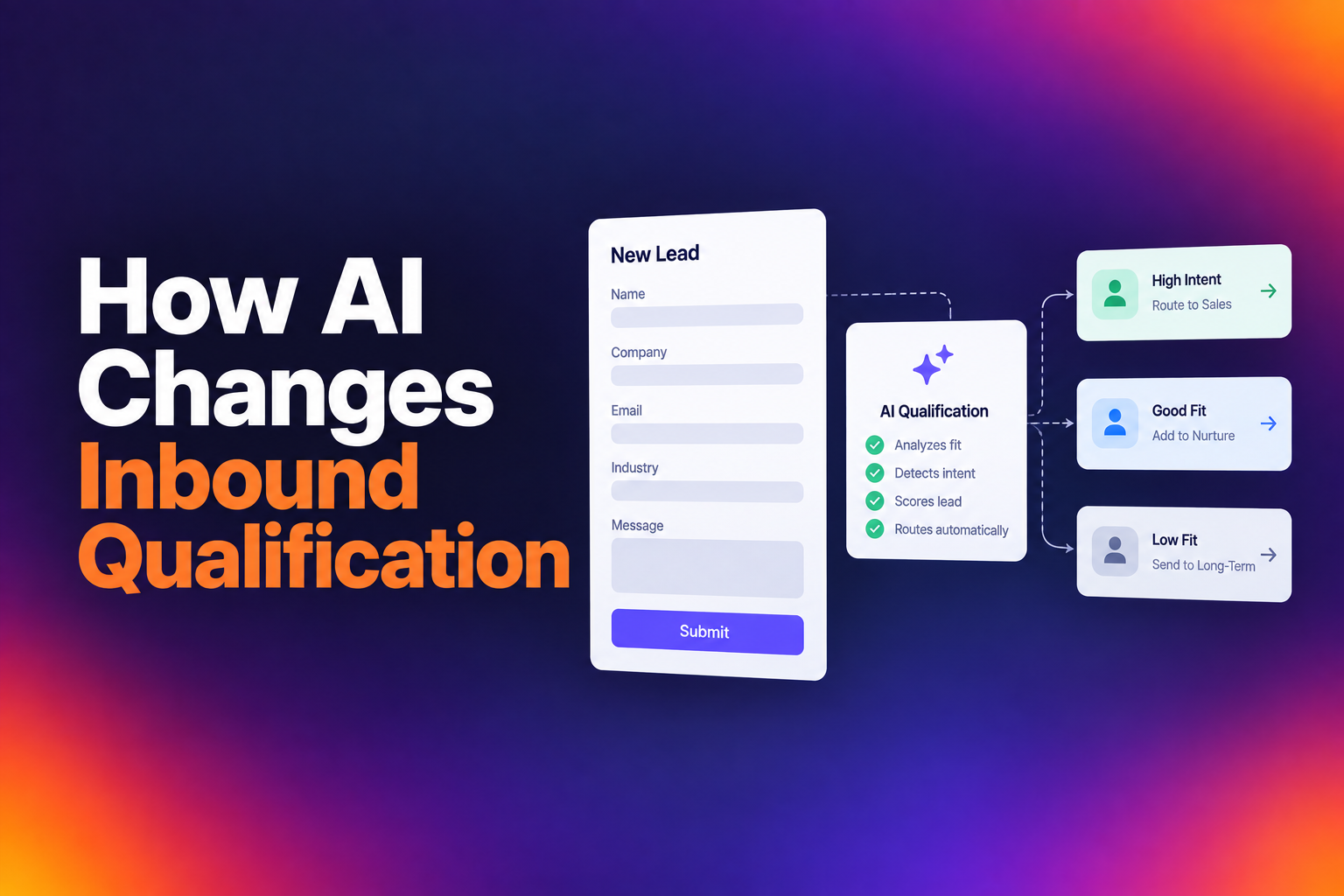
A lead fills out your demo form. They're interested, they're comparing vendors, and they're ready to talk. What happens next? In most Salesforce-driven orgs, that lead enters a queue. Someone reviews it. Maybe it gets routed. Maybe an SDR sends an email. Hours pass. Sometimes days. By the time your team reaches out, the prospect has already booked a call with a competitor who showed them a calendar instantly. This is the core tension between Salesforce lead assignment rules and a platform like RevenueHero: one was built to organize records inside a CRM, and the other was built to convert intent into booked meetings before it decays. The question isn't which tool is "better" in the abstract. It's which approach matches the speed your buyers now expect. For RevOps and demand gen leaders evaluating their inbound infrastructure in 2026, the answer has real pipeline consequences.
The Lead Decay Problem: Why Traditional CRM Routing Fails Modern GTM Teams
The old "five-minute rule" for lead response time is already outdated. In 2026, buyers researching B2B SaaS products are evaluating three to five vendors simultaneously. They fill out multiple demo forms in a single session. The probability of converting a lead into a booked meeting drops from roughly 80% in the first minute to under 40% by the next day. Every hour of delay isn't just inconvenient: it's a measurable pipeline leak.
Traditional CRM routing was designed for a different era, one where leads trickled in and SDRs had time to manually review each one. That model doesn't hold up when your inbound volume scales and buyer expectations shift toward instant engagement.
The Cost of the 'Thanks, We'll Be In Touch' Gap
Most Salesforce-native workflows end with a confirmation page that says some version of "thanks, we'll be in touch." That message creates uncertainty. The prospect doesn't know when they'll hear back, who they'll talk to, or whether they even qualified. Meanwhile, their intent is peaking. Data from over one million inbound form submissions shows that the gap between a 40% qualified-to-booked rate and a 78% rate comes down to what happens in the 30 seconds after submission. The "we'll be in touch" gap is where pipeline goes to die.
Manual Review Queues vs. Real-Time Intent
Manual review queues introduce a structural delay that no amount of SDR hustle can fix. A lead sits in a queue until a human triages it, checks firmographic data, determines the right owner, and sends a follow-up. Even well-staffed teams introduce a median lag of several hours. That's not a people problem: it's an architecture problem. The inbound motion was built around internal workflows instead of buyer readiness.
Salesforce Lead Assignment Rules: The Foundational Layer
Salesforce's native lead assignment rules are a core part of most B2B orgs' CRM infrastructure. They've been around for years, and they work well for what they were designed to do: route records to the right queue or user based on field-level criteria.
Standard Capabilities and Field-Based Logic
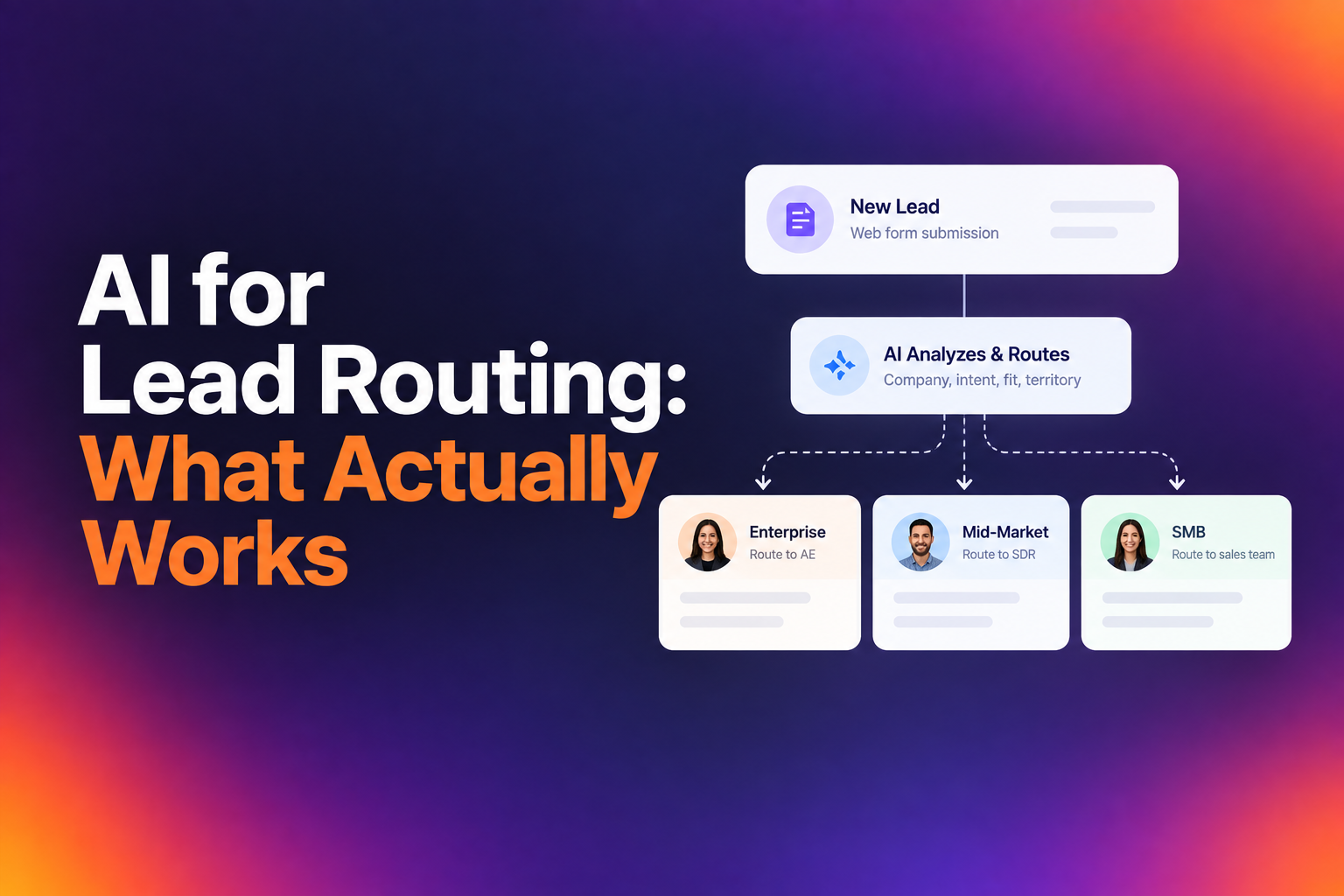
Salesforce assignment rules evaluate leads against an ordered list of rule entries. Each entry checks field values like lead source, geography, company size, or industry and assigns the lead to a specific user or queue. You can build fairly granular logic: route all enterprise leads from EMEA to one team, SMB leads from North America to another. Round-robin distribution is possible with some configuration or third-party add-ons. For orgs with straightforward routing needs and low inbound volume, this setup can be sufficient.
Limitations in Prospect Experience and Speed-to-Lead
The problem isn't that Salesforce assignment rules are broken. It's that they operate entirely inside the CRM, invisible to the prospect. A lead gets routed to the right rep, but the rep still has to manually follow up. There's no calendar presented at the moment of submission. There's no real-time qualification happening on the page. The prospect's experience is passive: fill out a form, wait, hope someone calls back. For high-intent inbound leads, that passivity is expensive. Salesforce rules handle record ownership well, but they don't address the conversion event itself.
RevenueHero: Beyond Routing to Instant Conversion
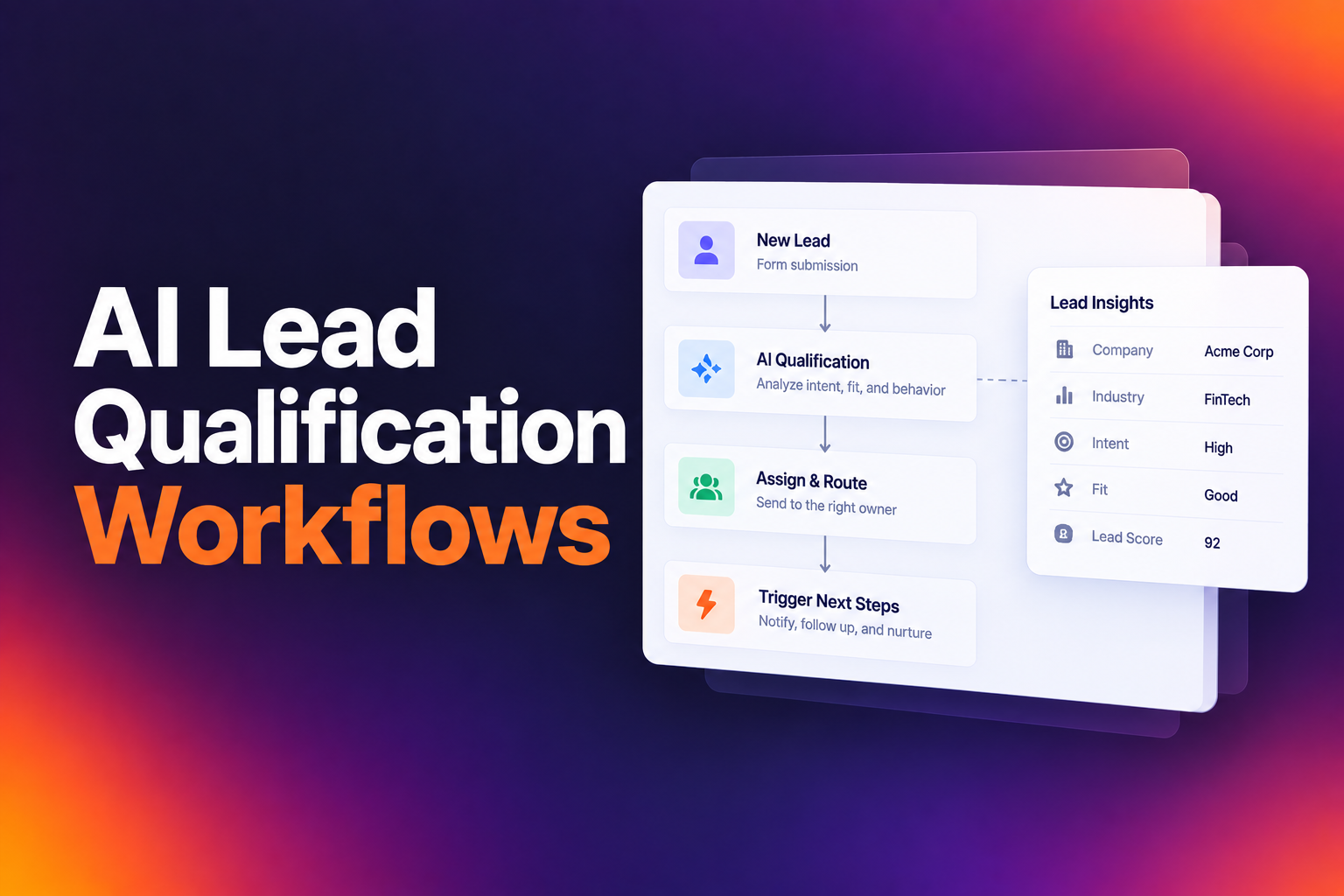
RevenueHero approaches the problem from the prospect's side of the form. Instead of routing a record and hoping for fast follow-up, it collapses the entire qualification-routing-scheduling workflow into a single moment.
Treating Inbound Scheduling as a Conversion Event
The companies booking 78% or more of their qualified leads into meetings share one trait: they treat the form submission as a conversion event, not just a data capture step. The moment a prospect submits, they see a calendar. They pick a time. They're booked with the right rep. No queue, no lag, no "we'll be in touch." This reframing is significant. The form isn't the end of a marketing funnel: it's the beginning of a sales conversation. And the speed of that transition determines whether the conversation happens at all.
Automated Qualification with Enrichment and CRM History
RevenueHero qualifies leads in real time using a combination of form responses, enrichment data, and existing CRM history. If a prospect's company is already an open opportunity, the system respects that ownership and routes accordingly. If the lead matches disqualification criteria based on firmographic data, they're filtered before a rep ever sees them. This matters because qualification accuracy directly affects rep productivity. Teams with higher disqualification rates actually see better conversion numbers downstream: reps spend time on genuine fits, and those meetings are more likely to result in pipeline.
The Data Gap: Comparing 40% vs. 78% Qualified-to-Booked Rates
The difference between a 40% and 78% qualified-to-booked rate isn't about lead quality. It's about infrastructure.
Benchmark Insights from 1 Million Form Submissions
Analysis of 12 months of inbound conversion data across one million form submissions reveals a clear distribution. The median qualified-to-booked rate sits at 62%. The top 10% of performers hit 78% or higher. The best reach 88%. If your team is converting at 30-40% and assuming that's normal, the data says otherwise. You're leaving significant pipeline on the table, and the fix isn't more traffic or better ads. It's what happens after the form fill. Vertical positioning also plays a role: Construction Tech converts at 69.1%, Ecommerce at 68.8%, and generic Sales Tech at 62.8%. Specificity in messaging and routing improves outcomes.
The Impact of Instant 'Book' vs. Passive 'Request' Language
One of the simplest changes that separates top performers from the median is CTA language. "Request a Demo" creates uncertainty. "Book Your Demo" creates commitment. The prospect mentally crosses the threshold from considering to doing while still on the page. This isn't a branding exercise. It's a conversion lever. Teams that replace every instance of "Request" and "Submit" with commitment language like "Book," "Schedule," or "Pick a Time" see measurable lifts. Combined with instant calendar presentation, this shift changes the entire inbound experience from passive to active.
When to Use Salesforce Rules vs. RevenueHero's Routing Engine
Comparing Salesforce lead assignment rules against RevenueHero isn't an either-or decision for most teams. The two tools operate at different layers of the GTM stack, and the right approach depends on your motion.
Optimizing for High-Velocity SMB vs. Enterprise Motion
If you're running a high-velocity SMB motion where demos are fast and the cost per meeting is low, you can afford to be more inclusive with qualification and need instant scheduling to keep pace with volume. RevenueHero's real-time routing and calendar presentation are built for this speed. Salesforce rules alone introduce too much latency.
For enterprise motions, the calculus shifts slightly. You still need speed, but you also need nested routing logic that respects territory assignments, account hierarchies, and existing opportunity ownership. RevenueHero handles this through CRM-aware routing that checks ownership before assigning, while Salesforce rules can serve as a foundational layer for record management underneath. The two systems complement each other rather than compete.
Operationalizing Reschedule Links and No-Show Workflows
Booking the meeting is only half the battle. No-shows and cancellations erode pipeline just as effectively as slow follow-up. Teams that automate reschedule link distribution for canceled meetings and no-shows recover a meaningful percentage of otherwise lost opportunities. Salesforce rules have no native mechanism for this. They handle initial assignment but don't extend into the post-booking lifecycle. Automated workflows that trigger reschedule sequences, update CRM statuses in real time, and maintain bidirectional sync between your scheduling layer and Salesforce are where the operational advantage compounds.
Closing the Pipeline Gap with Real-Time Infrastructure
The gap between a 40% and a 78% qualified-to-booked rate represents, on the same traffic and spend, nearly double the meetings per 100 qualified leads. That's not a marginal improvement. It's the difference between hitting pipeline targets and missing them.
Salesforce assignment rules remain a necessary part of CRM hygiene and record management. But they were never designed to be a conversion tool. They route records after the fact. The teams outperforming their peers in 2026 have added a real-time layer on top: one that qualifies, routes, and books in the same moment the prospect raises their hand.
If your current qualified-to-booked rate sits below 62%, the median, the fix isn't more leads. It's removing the friction between form fill and calendar. Start by auditing what your prospects see after they submit. If it's a "thanks, we'll be in touch" message, you've found your pipeline leak.
Let RevenueHero help your team turn high-intent users into booked meeting without slowing down your funnel.