Most B2B teams don't have a lead generation problem. They have a conversion problem that lives in the gap between a form submission and a booked meeting. A prospect fills out your demo form with genuine intent, and what happens next determines whether they become pipeline or a ghost. The data tells a stark story: the median qualified-to-booked rate sits at 62%, while top performers book 78% or more of their qualified leads. That 16-point gap isn't explained by better products or bigger budgets. It's explained by what happens in the 30 seconds after someone clicks a button. Fixing broken marketing-to-sales handoffs isn't about adding more tools or hiring more SDRs. It's about removing the delays, manual steps, and friction that let buyer intent evaporate before a conversation ever starts.
The Decay of Inbound Intent: Why Modern Handoffs Are Broken
The traditional inbound funnel was built on an assumption that no longer holds: that a prospect who fills out a form will patiently wait for your team to respond. The old five-minute rule, once considered best practice, is now a relic. Buyers in 2026 are evaluating three to five solutions simultaneously, and the vendor who gets a meeting on the calendar first wins a disproportionate share of deals.
Intent decays on a curve that punishes delay. Conversion probability sits around 80% in the first minute after a form fill. By the next day, it's dropped to roughly 40%. Yet most teams have built processes with manual review queues, SDR triage, and email follow-up sequences that introduce hours or days of lag. The system is designed to lose.
The 'Thanks, We'll Be In Touch' Trap
You've seen this page. You've probably built this page. A prospect submits a demo request and lands on a confirmation screen that says some version of "Thanks, we'll be in touch." That message is a conversion killer. It tells the buyer their intent doesn't matter enough to act on right now. It hands them back to their browser, where your competitor's calendar is already loading.
The companies booking 78% or more of qualified leads don't use this pattern. They treat the form submission as the beginning of a conversion event, not the end of one. The moment someone qualifies, they see a calendar. No waiting, no ambiguity, no "someone from our team will reach out."
Manual Review Queues and the 48-Hour Lag
The structural problem behind most broken handoffs is the manual review queue. A lead comes in, sits in a queue, waits for an SDR to review it, gets routed (maybe), and then someone sends an email. The median response time in these setups isn't minutes. It's hours, sometimes stretching to 48 hours or more.
That lag isn't just a speed problem. It's a trust problem. The buyer raised their hand and heard silence. By the time your SDR sends a "Great to connect!" email, the prospect has already booked time with someone else. The old benchmark of 35% qualified-to-booked came directly from this kind of manual process. The gap between 35% and 78% is almost entirely explained by eliminating the queue.
The Shift from Permission to Commitment Language
Language shapes behavior. The words on your buttons and headers influence whether a visitor crosses the psychological line from browsing to booking. This isn't theory: among top-performing companies, 29% use "Book a Demo," 21% use "Get a Demo," and only 12% use "Request a Demo." Permission language creates uncertainty. Commitment language creates action.
Replacing 'Request' with 'Book' to Drive Action
"Request a Demo" implies a process. It tells the visitor they're submitting a petition that someone else will evaluate. "Book a Demo" implies an outcome. It tells them they're about to get something done. This distinction matters because it changes the visitor's mental model of what's about to happen.
Search your site for every instance of "Request," "Submit," "Contact Sales," or "Get in Touch." Replace them with "Book," "Schedule," "Reserve Your Spot," or "Pick a Time." This is a five-minute fix. The data from thousands of inbound funnels confirms that commitment language consistently outperforms permission language across industries and company sizes.
Psychological Thresholds: Moving from Considering to Doing
The real shift isn't linguistic. It's psychological. When a visitor sees "Book Your Demo" and a calendar loads immediately after qualification, they mentally cross from considering to doing while they're still on your page. That threshold is everything. Once they leave your site without booking, you're fighting intent decay, inbox competition, and the inertia of a busy workday. Keeping them in the moment of highest intent is the single highest-impact change you can make to your handoff process.
Optimizing Form Fields for Routing over Friction
Conventional wisdom says fewer form fields equal higher conversion. The data tells a more nuanced story. Top performers convert at 77% with 2 fields and at 76% with 13 fields. The number of fields doesn't determine conversion rates. What each field does determines conversion rates.
Why Field Count Matters Less Than Field Purpose
Every field on your form should answer one of two questions: does it help route the lead to the right rep, or does it help the rep tailor the conversation? Fields that serve neither purpose are pure friction. "How did you hear about us?" is a common offender: if nobody acts on that data in real time, it's costing you conversions without delivering value.
A 13-field form can work brilliantly if the audience expects that level of detail. Medical software buyers are accustomed to detailed intake. Enterprise procurement teams expect specificity. The question to ask about your form isn't "how many fields?" but "what does each field enable?" If you can't tie a field to a routing rule or a personalization action, remove it.
Using Vertical Positioning to Signal Fit
Specificity drives conversion. Construction Tech converts at 69.1%. Ecommerce at 68.8%. Travel Tech at 68.3%. Generic Sales Tech sits at 62.8%. The pattern is consistent: vertical positioning wins because it signals fit.
If you're a horizontal product, consider building dedicated landing pages for your strongest verticals. A "Marketing software for e-commerce" page will outperform a generic "Marketing software" page, even if the product is identical. The specificity builds confidence. Confident visitors convert. Add industry-specific logos, testimonials, and form fields ("How many locations?" for multi-site businesses, "Current ATS?" for HR buyers) and run traffic for 30 days against your generic page.
Automating the Qualified-to-Booked Conversion Event
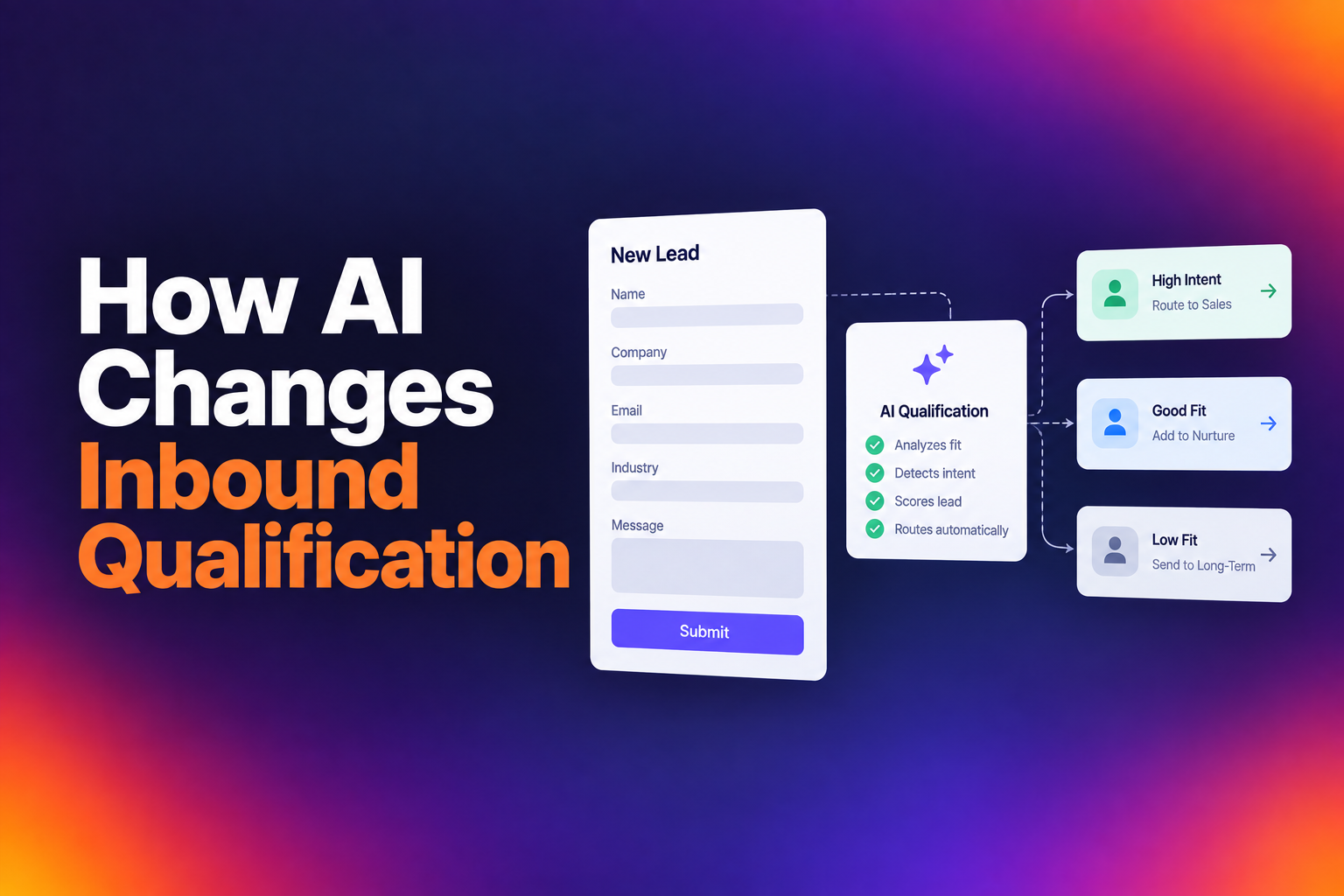
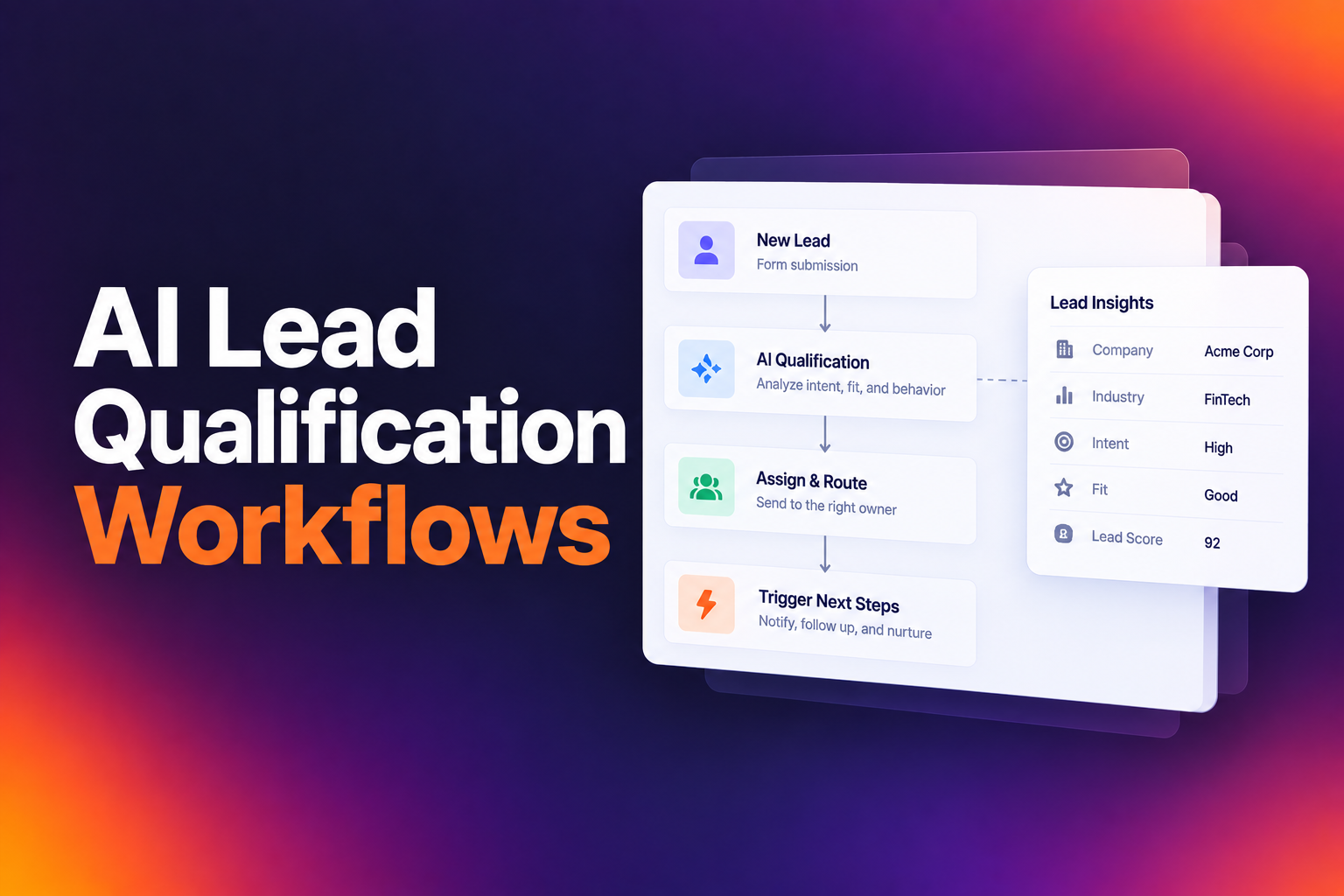
The gap between "qualified" and "booked" is where most pipeline leaks. Closing that gap requires treating the transition as a single, automated event rather than a multi-step, multi-person process. Platforms like RevenueHero compress this by qualifying leads in real time using form responses, enrichment data, and CRM history, then immediately surfacing a calendar for the right rep. No queue. No delay.
Instant Qualification via Enrichment and CRM Data
Real-time enrichment changes the economics of qualification. Instead of asking a prospect 10 questions to determine fit, you ask three and enrich the rest from firmographic databases and your CRM. You already know their company size, funding stage, and tech stack. You already know if they're an existing contact in Salesforce or HubSpot. Using that data to qualify instantly means fewer fields, faster routing, and better rep preparedness.
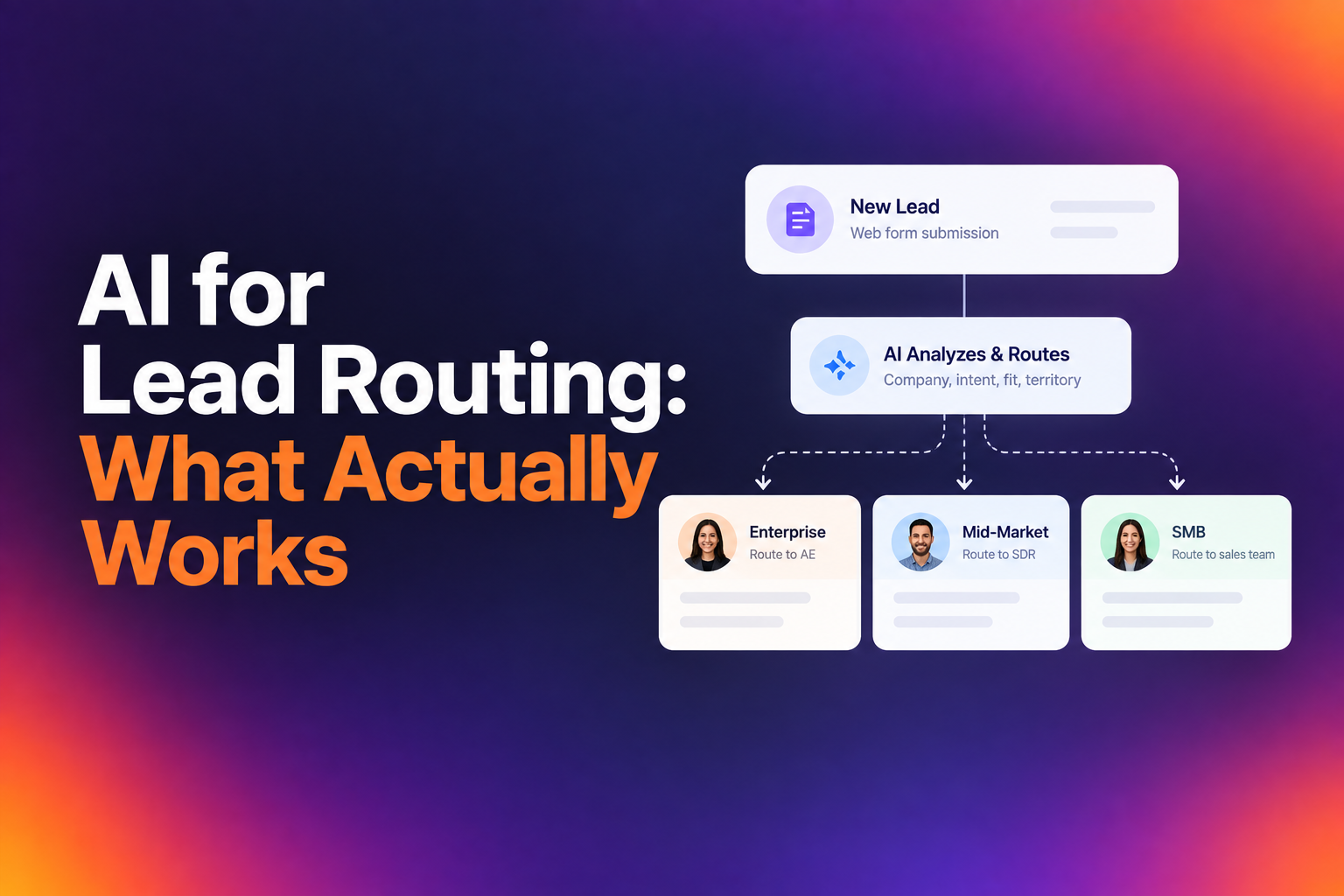
This matters for routing accuracy too. If a lead belongs to an existing account with an assigned AE, the system should respect that CRM relationship and route accordingly. Not simple round-robin. Actual ownership-aware routing that handles territory rules, product interest, and even rep PTO without manual intervention.
Meeting the 78% Benchmark: Putting Calendars First
The top 10% of inbound funnels book 78% or more of their qualified leads. The best performer in the dataset hits 88%. These teams share one practice: the moment someone qualifies, a calendar appears. Not a thank-you page. Not a promise of follow-up. A calendar with available times for the right rep.
This is the core operational change that separates high-performing funnels from average ones. Every CTA, form, or campaign link becomes a 24/7 meeting setter. The qualified-to-booked conversion happens in seconds, not days. Meetings and statuses sync back to the CRM automatically, giving RevOps real-time pipeline visibility without manual logging.
Tightening Criteria to Protect Sales Rep Time
Higher meeting rates don't always mean better pipeline. If your qualification criteria are too loose, you're booking meetings that waste rep time and dilute pipeline quality. The balance between volume and quality is a constant calibration.
The 20% Disqualification Rule for Better Meeting Rates
Here's a useful diagnostic: if your disqualification rate is under 20% and your meeting-show rate is struggling, you're probably letting through leads that don't deserve rep time. Tightening criteria on company size, industry, or use case fit will reduce total meetings booked but increase the percentage that actually convert to opportunities.
Review your qualification thresholds quarterly. Funding stage data reveals an interesting pattern: unfunded and seed-stage companies convert at 63.6%, while Series A drops to 53.6% and Series B to 55.3%. Series D and PE-backed companies recover to 66.8%. The advantage comes from clarity of fit. When your ICP is well-defined, both the buyer and the rep know the conversation will be relevant. When it's fuzzy, everything downstream gets harder.
Operationalizing the Handoff for Sustained Growth
The companies that consistently book 78% or more of their qualified leads aren't running a single campaign trick. They've made a structural decision: inbound scheduling is a conversion event, not an administrative task. They use commitment language on every button. They build forms where every field serves routing or personalization. They qualify in real time and put a calendar in front of the buyer while intent is still high.
None of this requires a bigger budget or better leads. You already have the traffic. You already have people raising their hands. If you're at 40% today and you get to 62%, that's 22 more meetings for every 100 qualified leads. Get to 78%, and you've nearly doubled your pipeline from the same traffic. The fix isn't more leads. It's a better handoff. Start by auditing your post-form experience this week: what does a qualified prospect see in the 30 seconds after they click your CTA? If the answer is anything other than a calendar, you know where to start.
Let RevenueHero help your team turn high-intent users into booked meeting without slowing down your funnel.