Most B2B SaaS teams assume a 30-40% qualified-to-booked rate is normal. It isn't. That assumption is costing you pipeline every single day. Data from over one million inbound form submissions across a full calendar year tells a different story: the median qualified-to-booked rate sits at 62%, and the top 10% of companies book nearly 8 out of 10 qualified leads into meetings. These aren't theoretical projections or cherry-picked case studies. They're aggregate numbers, weighted by volume, from real B2B SaaS funnels. If you're running a GTM team and your conversion rate hovers around 40%, you're not performing at par. You're leaving significant pipeline on the table. The difference between 40% and 78% on the same traffic, the same spend, and the same leads comes down to what happens in the 30 seconds after someone fills out your form. Understanding where your funnel stacks up against current demo funnel benchmarks for B2B SaaS is the first step toward closing that gap.
Redefining Success: Core Funnel Benchmarks for 2026
The qualified-to-booked metric has become the most important number for RevOps teams measuring inbound efficiency. Forget vanity metrics like total form fills or MQL volume. What matters is how many of those qualified leads actually end up on a rep's calendar.
The 78% Rule: Why the Top 10th Percentile Outperforms the Median
The 90th percentile of B2B SaaS companies converts at 78% or higher, with the best performers hitting 88%. That gap between 62% (the median) and 78% (the top decile) represents a massive difference in pipeline output. For every 100 qualified leads, the top performers book 16 more meetings than the median company, without spending an extra dollar on demand gen.
What separates these companies isn't better leads or a superior product. It's infrastructure. Top performers put a calendar in front of qualified leads immediately. They don't route to a queue. They don't send a "thanks, we'll be in touch" confirmation page. They treat the moment of form submission as a conversion event, not an administrative task.
Decoding the 62% Median: Identifying Gaps in Inbound Conversion
A 62% median means roughly 4 out of 10 qualified leads never book a meeting. That's a staggering amount of wasted intent. The causes are predictable: manual review queues, delayed email follow-ups, SDR bottlenecks, and timezone mismatches between lead and rep.
Intent decays fast. An 80% booking probability in the first minute can drop to 40% by the next day. Every hour of delay compounds the problem. If your process includes a human review step between form fill and calendar invite, you're building decay into your funnel by design.
Verticalization as a Conversion Engine
One of the clearest patterns across the data is that vertical SaaS companies consistently outperform horizontal ones. The reason is straightforward: specificity builds confidence.
Why Construction and Ecommerce Tech Lead with 69% Conversion
Construction Tech converts at 69.1%. Ecommerce Tech hits 68.8%. Travel Tech comes in at 68.3%. Generic Sales Tech? 62.8%. The pattern holds across segments and company sizes. Vertical products attract visitors who already know they're the right fit. The qualification question is simple: "Are you a contractor?" or "Do you run an ecommerce store?" There's no ambiguity.
That clarity flows downstream. Reps know exactly how to personalize the demo. Prospects show up with higher confidence. Show rates improve. The entire funnel tightens.
Horizontal vs. Vertical Positioning: Solving the 'Fuzzy' Qualification Problem
Horizontal products face a structural disadvantage. When you sell to "any company that does marketing," visitors aren't sure if they're the right fit. Reps aren't sure how to tailor the conversation. Qualification gets fuzzy, and fuzzy qualification kills conversion.
The fix doesn't require rebuilding your product. It requires rebuilding your landing pages. A page titled "Marketing software for ecommerce" will outperform a generic "Marketing software" page, even if the underlying product is identical. Pair that with industry-specific customer logos, testimonials with real metrics, and form fields that signal relevance ("How many locations do you operate?"), and you're replicating the vertical advantage without changing your ICP.
The 'Valley of Death' in Mid-Stage Funding
Funding stage correlates with conversion efficiency in a surprising way. Both ends of the spectrum outperform the middle.
Analyzing the Series A and B Slump (53-55% Meeting Rates)
Series A companies convert at 53.6%. Series B sits at 55.3%. These are the lowest conversion rates across all funding stages. The pattern makes sense once you consider what's happening operationally. Series A and B companies are scaling fast, adding reps, expanding ICPs, and testing new segments. Their qualification criteria are often in flux. Routing logic is incomplete. The tech stack is half-built.
This is the stage where teams outgrow their manual processes but haven't yet invested in the infrastructure to replace them. Leads pile up in queues. Response times stretch. The gap between demand gen output and sales capacity widens.
How Late-Stage and Unfunded Companies Maintain 64%+ Efficiency
Unfunded and seed-stage companies convert at 63.6%. Series D and PE-backed companies hit 66.8%. Both groups share something: clarity of motion.
Early-stage companies have tight ICPs and founders who respond to every lead personally. Late-stage companies have mature routing logic, established SLAs, and systems that handle volume without manual intervention. The middle stages are where that clarity breaks down. If you're a Series A or B company reading this, the highest-ROI investment you can make isn't more ad spend. It's fixing the handoff between form fill and meeting.
Optimizing the 30 Seconds After the Form Fill
The 30-second window after a form submission is where pipeline is won or lost. Everything else, your ad creative, your content strategy, your SEO, exists to get someone to that form. What happens next determines whether the intent converts or decays.
Moving from 'Request a Demo' to Instant Scheduling Infrastructure
The phrase "Request a Demo" implies a process. The prospect requests; someone reviews; maybe they respond. That framing introduces delay by default. Changing the CTA to "Book a Demo" is a small copy tweak with outsized impact, because it sets the expectation that the prospect will leave with a confirmed meeting.
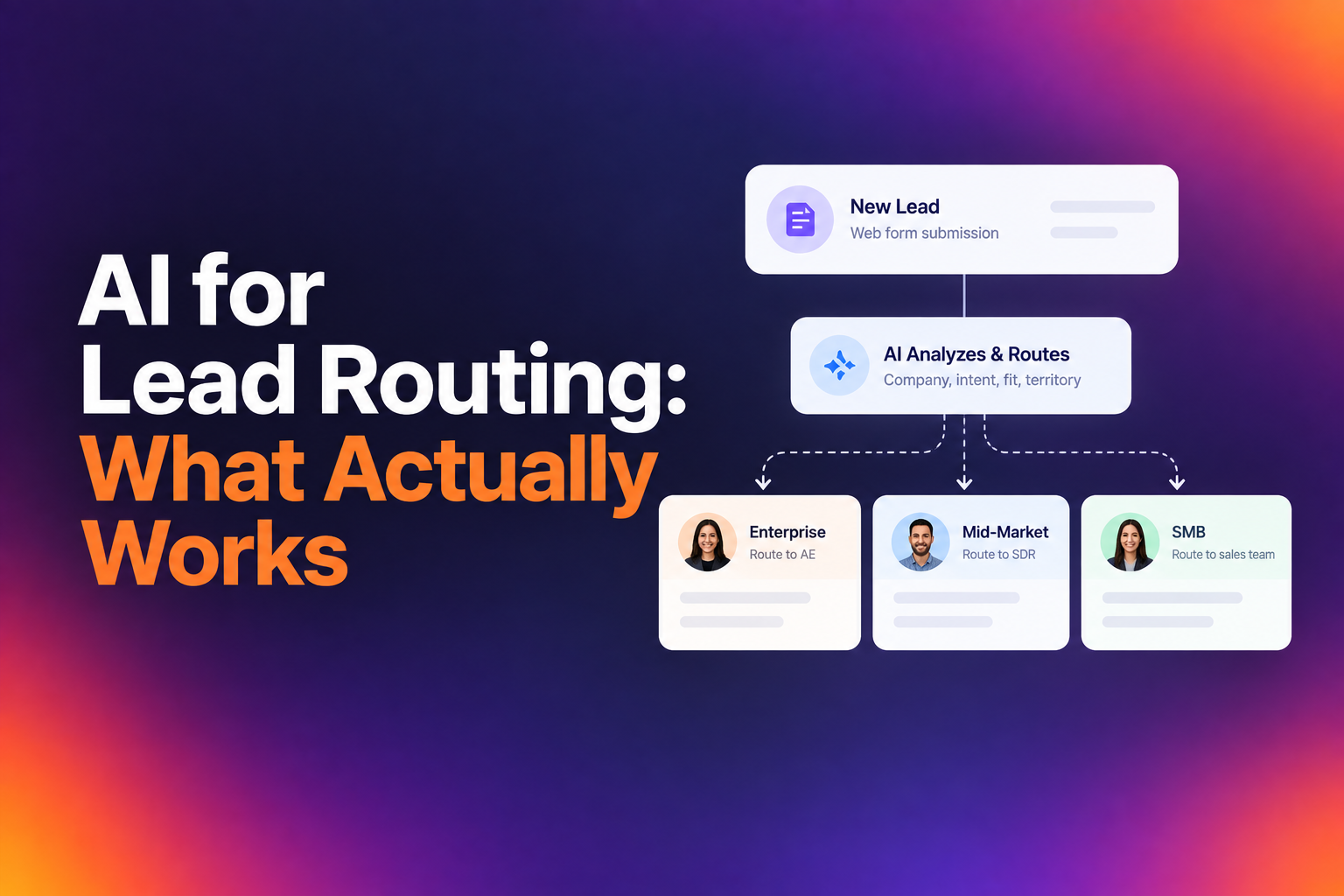
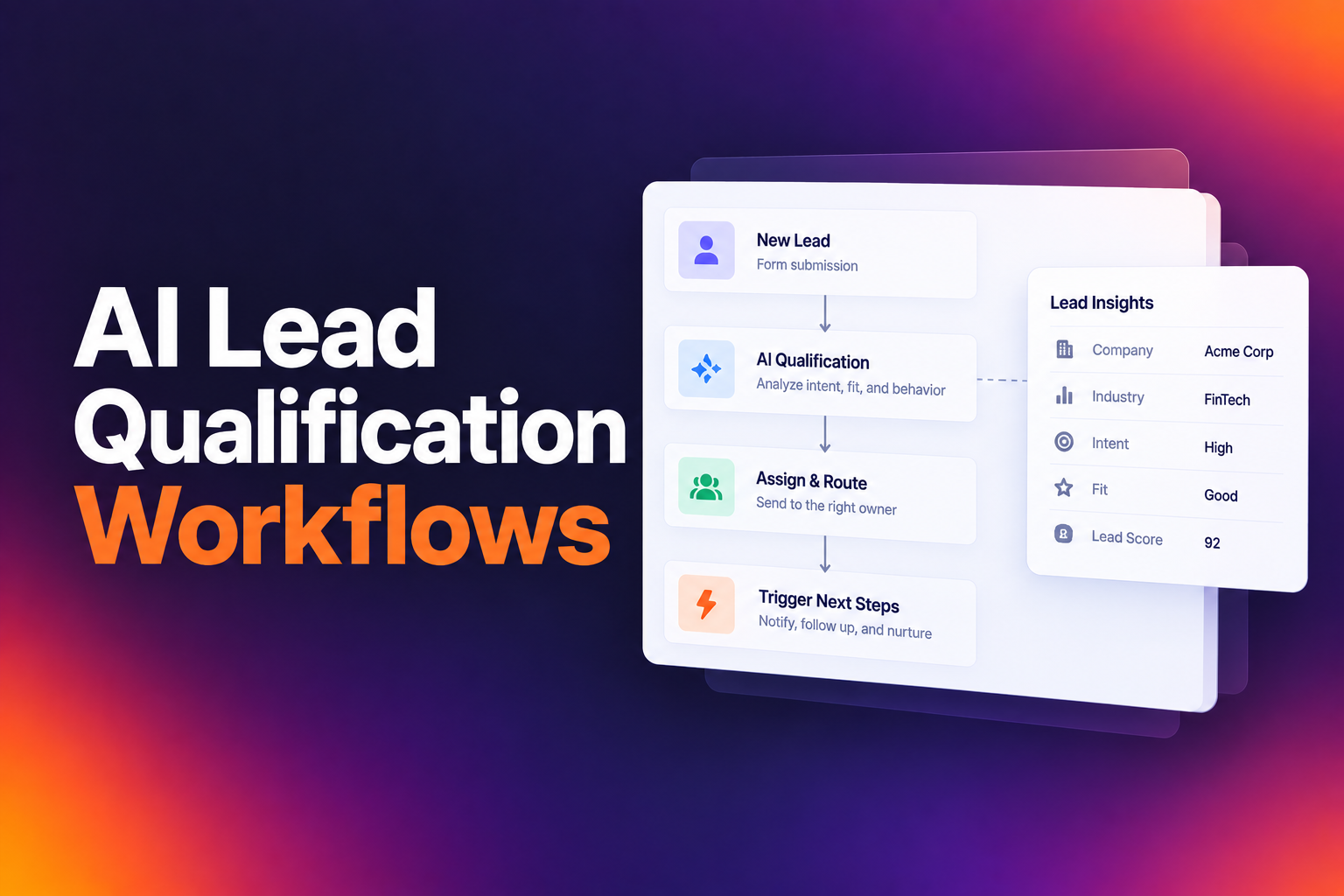
But the CTA only works if the infrastructure backs it up. The moment someone submits a form, they should see a calendar. Not a thank-you page. Not a promise of follow-up. A calendar with available times from the right rep, routed based on firmographic data, territory, product interest, or existing CRM ownership. RevenueHero customers who implement this instant scheduling approach are the ones driving the 78%+ benchmarks in the data. The system qualifies in real time using form responses, enrichment data, and CRM history, then surfaces a calendar without any manual review step.
The Impact of Real-Time Qualification on Disqualification (DQ) Rates
Higher DQ rates don't hurt conversion. They help it. Enterprise-segment companies carry a 71.2% DQ rate and still convert the remaining qualified leads at 70.1%. SMB companies DQ at 21.8% and convert at 63.2%. Being selective about who gets through to sales means reps spend time on better-fit opportunities. Those leads show up, engage, and convert at higher rates.
The key is making sure your DQ criteria are intentional. Review them quarterly. Ask whether each rule is filtering out genuinely poor fits or just adding friction. If you're running an enterprise motion where a single bad meeting costs hours of expensive rep time, a higher DQ rate makes sense. If you're running high-velocity SMB, you can afford to be more inclusive.
Strategic Levers for 2026 Pipeline Growth
Knowing the benchmarks is useful. Knowing which levers actually move them is what matters for your next quarter.
Balancing Friction: Why Form Field Count Matters Less Than Intent
The conventional wisdom says fewer form fields equal higher conversion. The data tells a different story. Top performers convert at 77% with 2 fields and at 76% with 13 fields. The number of fields doesn't matter. What matters is whether each field does something useful for routing, qualification, or personalization.
A field that asks "What's your company size?" and routes the lead to the right rep is worth the friction. A field that asks for a phone number you'll never call is not. Audit every field on your form. If it doesn't directly inform qualification logic or help the rep prepare for the demo, remove it.
Social Proof and Specificity: Using Metrics to Drive Demo Confidence
Generic testimonials don't move the needle. A quote that says "Great product, love it!" adds nothing. A quote that says "We saw a 57% increase in bookings within 90 days" gives prospects a concrete expectation and signals that you have customers willing to share real numbers.
If you're going to invest in social proof, invest in getting specific metrics from your best customers. Call them this week. Ask for one sentence with a number. Put the best one on your demo page, above the fold, near the form. One testimonial with a metric is worth ten without.
Where You Go From Here
You've seen the data behind B2B SaaS demo funnel benchmarks for 2026. The top 10% book 78%+ of qualified leads. The median is 62%. Somewhere between those numbers is where most teams sit, wondering if their performance is normal.
The companies that win aren't doing anything complicated. They use "Book" instead of "Request." They cut form fields that don't help routing. They're selective about who gets through to sales. And when someone qualifies, they show a calendar immediately. Not after an SDR reviews the lead. Not tomorrow. Right then.
None of this requires a bigger budget or better leads. You already have the traffic. You already have people raising their hands. The only question is how many of them actually end up talking to your team. If you're at 40% today and you get to 62%, that's 22 more meetings per 100 qualified leads. Get to 78%, and you've nearly doubled your pipeline from the same inbound volume. The math is clear. The infrastructure exists. The only thing left is the decision to fix it.
Let RevenueHero help your team turn high-intent users into booked meeting without slowing down your funnel.