Most B2B SaaS teams obsess over driving more traffic and filling the top of the funnel. Fewer pay attention to what happens in the 30 seconds after a prospect clicks "Book a Demo." That gap, between a qualified form fill and an actual meeting on the calendar, is where pipeline quietly dies. If you're a RevOps or demand gen leader trying to benchmark your demo request to booked conversion rate, you've probably encountered the same frustration: vague numbers, recycled stats with no methodology, and "industry standards" that nobody can trace back to a real dataset. This article draws on 12 months of aggregate inbound conversion data from over one million B2B SaaS form submissions to give you specific, defensible benchmarks for qualified-to-booked rates, broken down by segment, vertical, and season. More importantly, it explains what separates the median from the elite, and what your team can do about it this quarter.
The Decay of Inbound Intent: Why Traditional Funnels Fail
The traditional inbound funnel was built for a world where buyers had patience. A lead fills out a form. That submission enters a queue. Someone manually reviews it, maybe routes it, maybe emails the prospect back. Days pass. The prospect, who was actively evaluating three or four vendors simultaneously, has already booked time with a competitor.
Intent decays fast. The probability of booking a meeting drops from roughly 80% in the first minute to around 40% by the next business day. The old "five-minute rule" for lead response is already outdated: modern buyers expect sub-minute engagement, and the data backs that expectation up.
The Hidden Cost of Manual Lead Routing and Response Delays
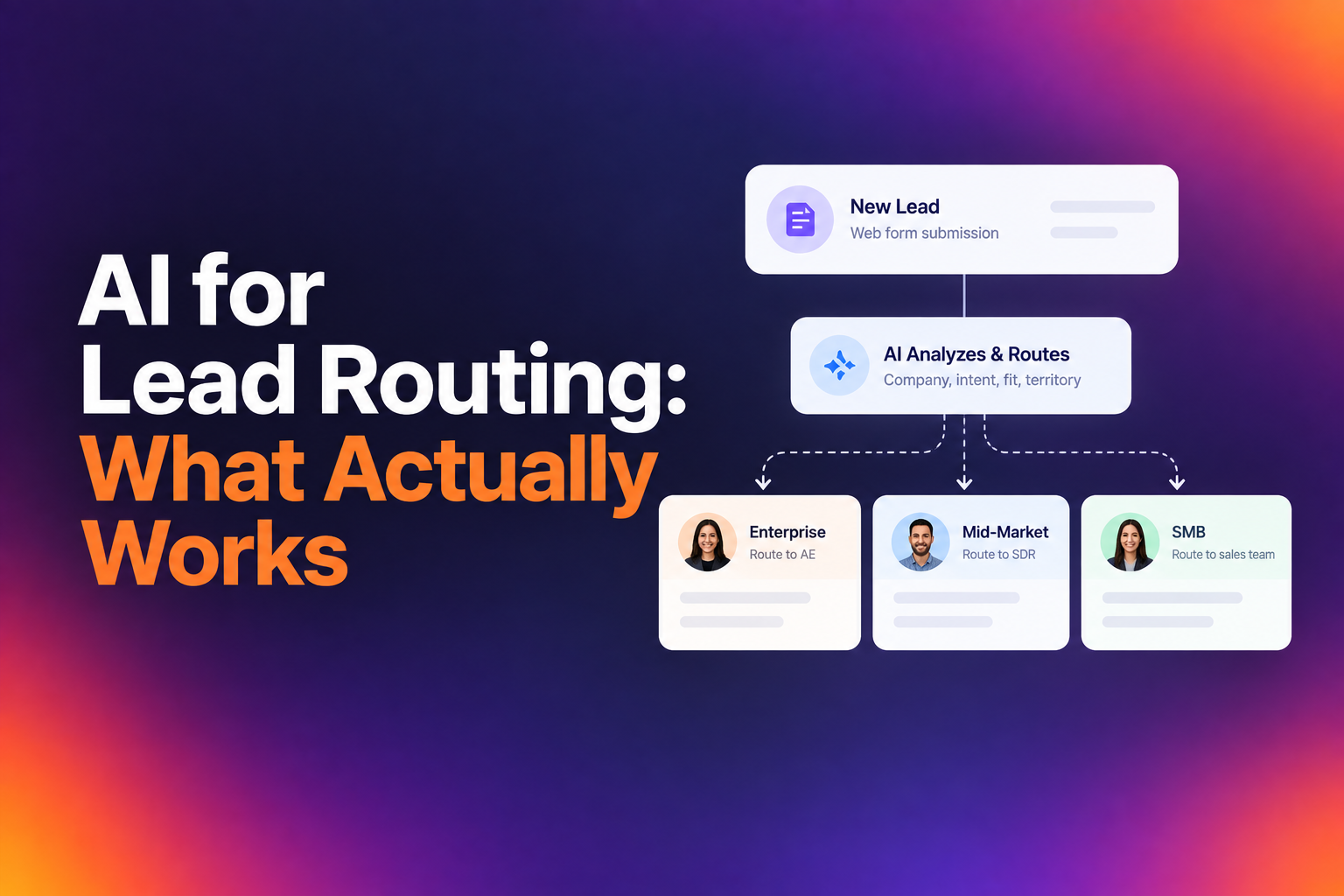
Manual routing introduces two compounding problems. First, there's the raw time delay: a lead sits in a queue while someone checks CRM ownership, territory rules, or rep availability. Second, there's the error rate. Misrouted leads get bounced between reps, creating duplicate outreach or, worse, no outreach at all.
For enterprise teams with nested routing rules and complex account hierarchies, these delays multiply. A territory mismatch or a rep on PTO can add hours. For SMBs without dedicated ops resources, the problem is different but equally damaging: leads simply sit in a shared inbox until someone notices.
Why 'Industry Standard' Benchmarks Are Often Outdated
The "50% is good" benchmark that gets passed around in RevOps circles comes from a world of back-and-forth email scheduling and 48-hour response times. With instant scheduling, the floor is much higher. Most teams citing these numbers can't point to the original source, the sample size, or the methodology. They're operating on inherited assumptions, not data.
2025 Qualified-to-Booked Benchmarks for B2B SaaS
The data analyzed here comes from RevenueHero customers across a full calendar year: over one million inbound form submissions from B2B SaaS companies, weighted by volume. These aren't cherry-picked case studies. They represent aggregate performance across companies of different sizes, verticals, and go-to-market motions.
The New Baseline: Median vs. Elite Performance Tiers
The median qualified-to-booked rate across all customers is 62%. The top 10% hit 78% or higher. The single best performer in the dataset reached 88%.
If your team is converting at 30-40% and treating that as normal, it isn't. You're leaving significant pipeline on the table. The gap between 40% and 78% on the same traffic, the same spend, and the same leads is determined by what happens in the 30 seconds after the form fill. Do prospects see a calendar, or do they see a "thanks, we'll be in touch" message?
Performance Variations by Company Segment and Funding Stage
A single benchmark doesn't capture the full picture. SMB-focused companies convert at 63.2% with a 21.8% disqualification rate. Mid-market companies sit at 61.2% with a 28.1% DQ rate. Enterprise-focused teams actually lead at 70.1%, though their DQ rate climbs to 71.2%, reflecting much tighter qualification criteria.
The enterprise number is instructive. Higher DQ rates aren't a problem if they're filtering genuinely poor fits. If your DQ rate is under 20% and your meeting rate is struggling, you might be letting through leads that waste rep time. Consider tightening criteria on company size, industry, or use case fit, and review quarterly.
Seasonal Trends: Navigating the Q3 Dip and Q2 Peak
Q2 is the best quarter for inbound conversion, with April, May, and June all exceeding 60%. The peak quarter average hits 61.0%. Q3 drags to 55.9%, driven almost entirely by August at 53.4% and September at 53.7%. July actually performs well at 61.1%.
If your late-summer numbers drop, the pattern is consistent with the broader market. Plan your biggest inbound launches for Q2 and use Q3 to run experiments, clean up routing logic, and prepare for a Q4 push at 58.0%.
Industry-Specific Conversion Rates: Why Vertical SaaS Wins
One pattern stands out across the entire dataset: vertical SaaS consistently outperforms horizontal SaaS. The reason is straightforward. Vertical buyers arrive with higher intent and more specific needs. They know what they're looking for, and when the landing page speaks directly to their industry, friction drops.
Top Performers: Construction, Ecommerce, and Travel Tech
Construction Tech leads at 69.1%. Ecommerce follows at 68.8%. Travel Tech comes in at 68.3%. These verticals benefit from buyers who are accustomed to detailed intake processes and who self-select with strong purchase intent.
The playbook here is clear. Identify your best-performing industry or use case. Build a dedicated landing page with industry-specific headlines, customer logos, testimonials, and form fields. "How many locations?" for multi-site businesses or "Current ATS?" for HR buyers. Run traffic to it for 30 days and compare against your generic page.
Horizontal SaaS and the General Sales Tech Benchmark
Generic Sales Tech converts at 62.8%, right around the overall median. Dev Tools sit lower at 55%, and Security & Compliance hovers at 60%. Horizontal products face a structural disadvantage: their audience is broader, intent signals are weaker, and the landing page can't speak to any single buyer's specific pain.
If you sell a horizontal product, vertical positioning on specific landing pages can close this gap without changing your product at all.
The Anatomy of a High-Converting Demo Experience
The top 10% of performers aren't running radically different playbooks. They've made a series of small, compounding decisions about language, form design, and scheduling mechanics that add up to a 20-30 percentage point advantage.
Commitment Language: 'Book' vs. 'Request' Call-to-Actions
Among top performers, 29% use "Book a Demo," 21% use "Get a Demo," and 12% use "Schedule a Demo." Only 12% use "Request a Demo." Commitment language outperforms permission language. "Book" implies the prospect is taking action. "Request" implies they're asking for permission and waiting.
Search your site for every instance of "Request," "Submit," "Contact Sales," or "Get in Touch." Replace them with "Book" or "Schedule." This is a zero-cost change you can make today.
Form Friction vs. Utility: Balancing Fields with Qualification
The data shows that top performers convert at 77% with 2 fields and at 76% with 13 fields. The number of fields doesn't matter. What matters is whether each field does something useful.
A 13-field form works brilliantly when each field serves a clear purpose: routing the lead to the right rep, enriching the CRM record, or qualifying the opportunity. Medical software buyers expect detailed intake. A 2-field form works when your ICP is broad and any extra friction costs more than the data is worth. The question isn't "how many fields?" but "what does each field enable?" If a field doesn't change who gets the lead or how the rep opens the call, it's costing you conversions without delivering value.
The 30-Second Rule: Instant Scheduling as a Conversion Event
The companies in the top 10% of this dataset made a specific choice: they stopped treating inbound scheduling as an afterthought and started treating it as a conversion event. The moment someone submits a form, they see a calendar. No "thanks, we'll be in touch" page. No email follow-up chain. No manual review queue.
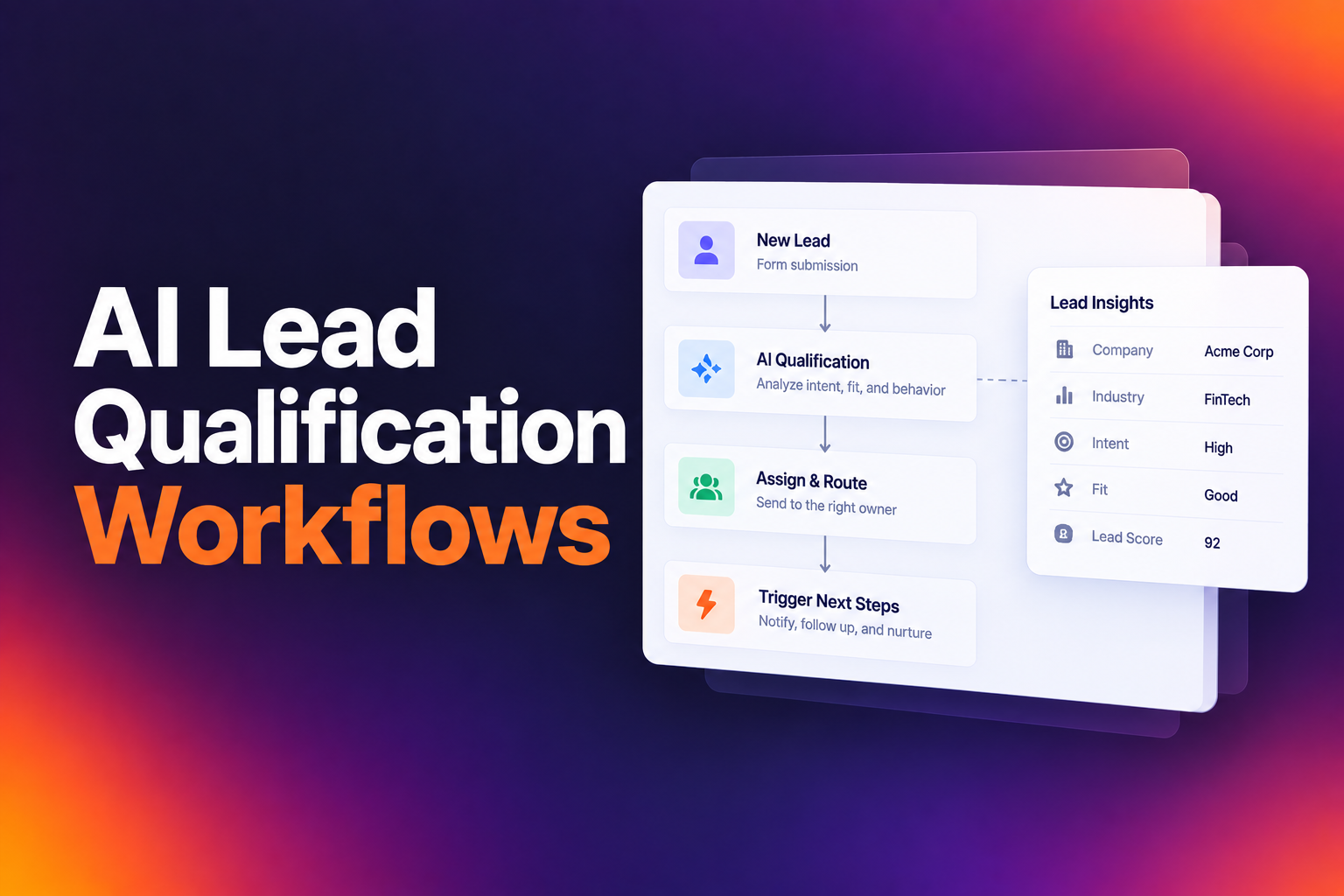
This is the single biggest differentiator in the data. Instant qualification using form responses, firmographic enrichment, and CRM history, followed by immediate calendar presentation, collapses what used to be a multi-day process into seconds.
Bridging the Gap: Moving from 40% to 78%+ Conversion
Closing the gap between median and elite performance doesn't require more budget or better leads. It requires removing the friction between form fill and booked meeting.
Automating Workflows for Reschedules and No-Shows
Even after a meeting is booked, no-shows and cancellations erode your numbers. Top-performing teams automate workflows that send reschedule links for canceled meetings and no-shows without requiring rep intervention. This alone recovers a meaningful percentage of meetings that would otherwise disappear from the pipeline.
The key is treating the post-booking experience with the same urgency as the initial conversion. Automated reminders, calendar holds that sync bidirectionally with the CRM, and instant reschedule options keep the meeting alive.
Leveraging Real-Time Enrichment to Skip the Queue
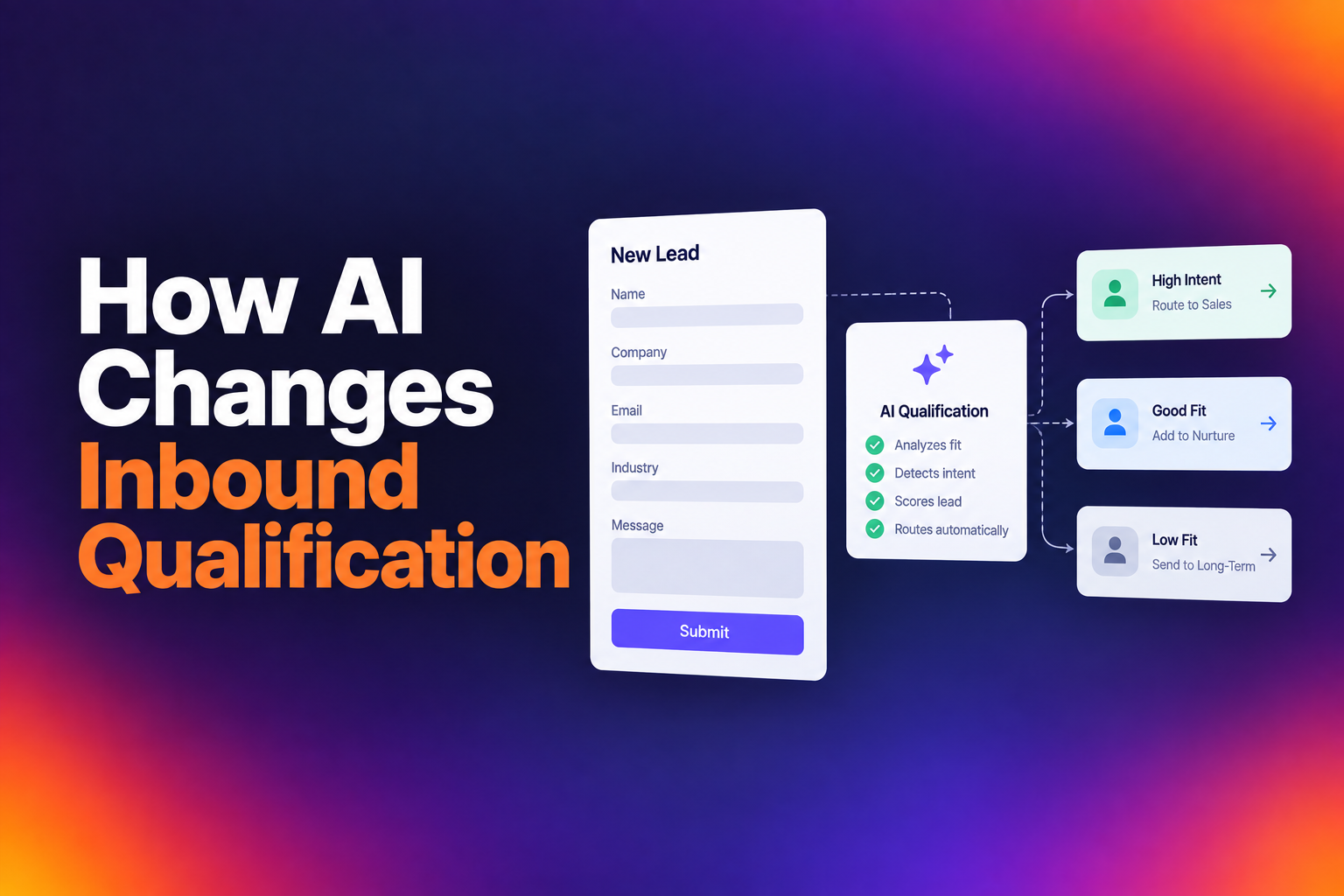
Real-time data enrichment eliminates the manual review step entirely. When a lead submits a form, enrichment tools append firmographic data like company size, industry, tech stack, and funding stage. Qualification happens instantly based on pre-set rules, and routing logic assigns the lead to the correct rep based on territory, product interest, or existing account ownership in the CRM.
This isn't about replacing human judgment. It's about ensuring that human judgment gets applied in the meeting itself, not in a triage queue where intent is already decaying.
Where to Go from Here
The benchmarks for demo request to booked conversion rates are clearer than they've ever been. A 62% median is achievable with basic automation. The 78% elite threshold requires treating every form submission as a time-sensitive conversion event: qualifying instantly, routing accurately, and presenting a calendar within seconds.
If your team is sitting at 30-40%, you're not facing a traffic problem or a lead quality problem. You're facing a process problem. The fix starts with auditing what happens between form fill and meeting: how long it takes, how many handoffs occur, and where leads fall out. Swap "Request a Demo" for "Book a Demo." Eliminate the manual review queue. Automate reschedule workflows. Build vertical landing pages for your best-converting segments.
The gap between 40% and 78% is entirely closable, and it doesn't require a single additional dollar of ad spend to get there.
Let RevenueHero help your team turn high-intent users into booked meeting without slowing down your funnel.