.png)
Most advice around conversion rate optimization (CRO) is built for e-commerce: add-to-cart buttons, checkout flows, abandoned cart emails. But if you’re running a B2B SaaS demo funnel, the shared wisdom doesn’t apply to your reality.
Because your conversion is a chain: visitor → lead → MQL → meeting booked → meeting attended → opportunity (or SQL) → closed-won deal. Every link in this chain is a place where there’s a potential pipeline leak problem. And the biggest leaks happen after the form fill, i.e., the space between “submit” and “booked meeting” that most CRO guides pretend doesn’t exist.
This guide covers CRO exclusively in a B2B SaaS context: from first-click to booked meeting. It’s built for marketing ops, RevOps, and demand gen leaders at B2B SaaS companies. These are best practices based on what works when you’re struggling to turn website traffic into qualified pipeline.
Chapter I: CRO Foundations
What is conversion rate optimization?
Conversion rate optimization (or CRO) is the systematic process of increasing the percentage of visitors who take a desired action on your website. In a B2B SaaS context, this usually means signing up for a trial or booking a meeting with your sales team.
Conversion Rate = (Conversions / Total Visitors) x 100%
For instance, if your page gets 10,000 visits, and 300 people fill out a demo form, your conversion rate would be 3%.
However, filling out the demo form isn’t the finish line for B2B SaaS. The 3% conversion rate is just the starting point, i.e., 3% of your visitors have shown interest for a demo.
Why do B2B SaaS teams need a different CRO playbook?
Unlike in e-commerce where conversion equals purchase, i.e, one event, conversions are layered in B2B SaaS. A visitor becomes a lead. A lead becomes an MQL, and then a booked meeting. A booked meeting can branch out to an attended meeting or a no-show, and only an attended meeting can turn into opportunity, which finally becomes a closed-won deal.
CRO applies at each stage, and this is why generic CRO advice falls flat for B2B SaaS companies.
Why this matters right now:
- AI overviews are compressing organic CTRs: You’re getting fewer clicks from the same rankings. So every visitor that lands on your site counts.
- CAC keeps spiking across B2B SaaS: CRO improvements are permanent and cumulative, compounding over time. It’s the highest-return investment your marketing team can make.
- 70%+ of B2B buyers research independently, before talking to sales: Your website is your first sales conversation. If that doesn’t convert, you rarely get a second chance.
Doubling your conversion rate delivers the same pipeline impact as doubling your ad spend:
10,000 visitors at 3% = 300 leads
10,000 visitors at 6% = 600 leads
Here’s a revenue frame:
A 1% improvement in demo request conversion at 10,000 monthly visitors = 100 more leads per month
Assuming an average 77% qualification rate, that gives you 77 qualified leads per month.
And, assuming the following metrics:
- Form-to-meeting rate: 60%
- Close rate: 25%
- ACV: $30,000
Your incremental ARR comes to $360,000.
For a 1% improvement in demo request conversions.
B2B SaaS CRO Benchmarks
These are the numbers your leadership cares about:
Chapter II: CRO Process
The CRO Process: A 7-step framework for B2B SaaS
Step 1: Define conversion goals by funnel stage
Start by mapping conversion events across the full funnel: from visitor to the final closed-won stage. Identify which stage has the biggest drop-off.
For instance, if your demo page converts at 12%, but only 40% of those handraisers become booked meetings: you need to optimize the post-form experience.
Step 2: Audit your conversion data
Qualitative: Watch 20-30 session recordings of your demo page visitors. Interview your sales team; they know exactly where leads experience friction, because they hear about it during their discovery sessions.
Quantitative: Go through GA4 funnel reports and CRM pipeline data. Focus on speed-to-lead data, routing accuracy, and meeting show rates.
Step 3: Identify bottlenecks & leakage points
Here are some common B2B SaaS bottlenecks:
- High-traffic pages with low form fills (messaging or UX problem)
- High form fills with low meetings booked* (post-from leakage)
- Meetings booked with low show rates (confirmation and reminder gap)
- Leads routed to the wrong reps (routing logic problem)
*This is the most common one. Based on our analysis of over a million form submissions, the median qualified-to-booked rate across B2B SaaS companies is 62%. If you’re still at 40%, you’re leaving nearly half of your pipeline on the table.
Step 4: Build hypotheses
Structure each hypothesis in the following way: if we [make a change], then [metric] will [improve] because [reason].
Example: If we replace our thank-you page with an instant scheduling widget, then our form fill-to-booked meeting will increase by 20% because we’re capturing peak intent.
Step 5: Prioritize with ICE (Impact, Confidence, Ease)
Score each hypothesis on three dimensions (preferrably on a 1–10 scale):
- Impact: How much will this move the metric if it works?
- Confidence: Based on data, how sure are you that this will work?
- Ease: How fast can you ship this?
Multiply the scores, i.e., Impact x Confidence x Ease. Ship the highest-scoring ideas first.
Step 6: Test & Measure
Your testing method depends on your traffic volume:
- High-traffic pages (homepage, pricing, top blog posts): Run A/B tests for these pages that get thousands of visits per month. You have enough volume to reach statistical significance to declare a winner.
- Low-traffic pages (demo pages, niche landing pages): For pages that get a few hundred visits per month, skip A/B testing. Instead, make the change, measure the 30-day before vs. after delta, and layer in qualitative signals like sessions recordings and post-submission survey responses.
Step 7: Implement, document, iterate
CRO never rests. You need to ship winners fast and document every test. High-converting teams treat conversion rate optimization as an ongoing exercise, not something they revisit once a quarter.
Chapter III: CRO Strategies
10 CRO strategies that actually move the needle for B2B SaaS
Strategy 1: Your demo page should have one action
Remove navigation, sidebar links, and competing CTAs from your demo page. Headline clarity matters as well. A visitor should know within 5 seconds what they’ll get and what they need to do. If they have to scroll to read, or click a dropdown to figure out what you offer, you’ve already lost them.
CTA specificity is a bigger lever than most teams realize. We analyzed 50 high-converting demo pages (70%+ qualified-to-booked) and found that the CTAs “Book a demo”, “Get a demo”, and “Schedule a demo” significantly outperform “Request a demo”.
Strategy 2: Reduce form friction with enrichment
Form length alone doesn’t predict conversion. Our Inbound Conversion Benchmark report found companies converting at 77% with just 2 fields, and at 76% with 13 fields. The context switch needed is whether each field serves a purpose.
For high-converting landing pages, every field on the demo form does one of two things: either helps route the lead to the right rep, or helps the rep personalize the demo.
You can pair a short, purposeful form with enrichment providers that give you firmographic data (company size, industry, revenue, etc.) for progressive profiling. You can capture the essentials, enrich the rest, and show a calendar (or redirect to a different landing page, if disqualified).
Strategy 3: Speed up page load times
Slower pages lose visitors before they even interact with your form. For a demo page generating 200 conversions per month, even a small percentage drop from load time means lost meetings every month.
Third-party widgets, chat widgets, and analytics scripts can add 2-3 seconds of load time. Audit your page with Google PageSpeed Insights and be ruthless about what stays. Every script needs to earn its place.
Choose tools that are built for speed. A scheduling widget that takes 10 seconds to load is burning conversions before a visitor even sees a time slot.
Strategy 4: Personalize by segment and intent
- UTM-based personalization: Match the landing page headline to the ad copy that drove the click. Example: if the ad says "Automate lead routing," the landing page shouldn't say "All-in-one revenue platform."
- Return visitor behavior: If someone has hit your pricing page 3+ times, surface a "Book a call" CTA instead of "Learn More." They're past the education phase.
- Account-based messaging: For enterprise targets, show messaging that references their industry or company size.
- Social proof placement: Logos and G2 badges belong near the form, not buried in the footer. Our Inbound Conversion Benchmark report found that 76% of top-performing demo pages display customer logos, 57% include testimonials, and 36% show trust badges (G2, Capterra, etc.)
Strategy 5: Your SEO traffic must convert, not just rank
Most B2B blogs drive traffic but not pipeline. That’s an SEO win and a CRO failure. Here’s how you can optimize for it:
- Embed contextual CTAs in the body copy: If the post is about lead routing, the CTA should be “See how companies route leads to the right rep instantly”, not “subscribe to our newsletter”.
- Match CTA intent to content intent: High-intent posts (comparisons, "best tools" lists, "how to" guides) should have scheduling CTAs. Informational posts can have softer asks.
- Add internal links: Link high-traffic blog posts to your demo and pricing pages. Every blog post should have a clear path to conversion.
Strategy 6: Optimize for mobile devices
40-50% of B2B research happens on mobile. Your demo form and scheduling widget need to work perfectly on phones.
Tap targets should be 48px minimum for form fields and buttons. Test your calendar embeds on actual devices. If the scheduling experience breaks on mobile, you lose the booking entirely. The full conversion flow, from form to calendar to confirmation, needs to be tested on real phones.
Strategy 7: Fix the post-form black hole
Most CRO advice ends at “optimize your form”. But in B2B SaaS, the meeting is the conversion, not the form fill. And there’s a chasm between the form fill and the meeting, where pipeline goes to die.
At most companies, once a person fills out a demo, a thank you-page appears. The lead enters the CRM, and someone manually routes it. An SDR sends a follow-up email 48 hours later, and after back-and-forth calendar tennis, a meeting gets booked 3-5 days later.
By this time, the same person has filled out 2-3 competitor forms.
The fix lies in replacing the “thank you” page with an instant scheduling experience. The moment the lead submits the form, they see a rep’s calendar to book the meeting in real-time. Companies using instant post-form scheduling hit a median qualified-to-booked rate of 62%, with top performers reaching 78%+.
Strategy 8: Reduce speed-to-lead
Speed-to-lead is the highest-ROI CRO lever in B2B SaaS. It requires removing the time between intent and conversation, and here are three ways to do it:
- Instant scheduling on the confirmation page: Form fill to calendar to booked meeting, making speed-to-lead effectively zero.
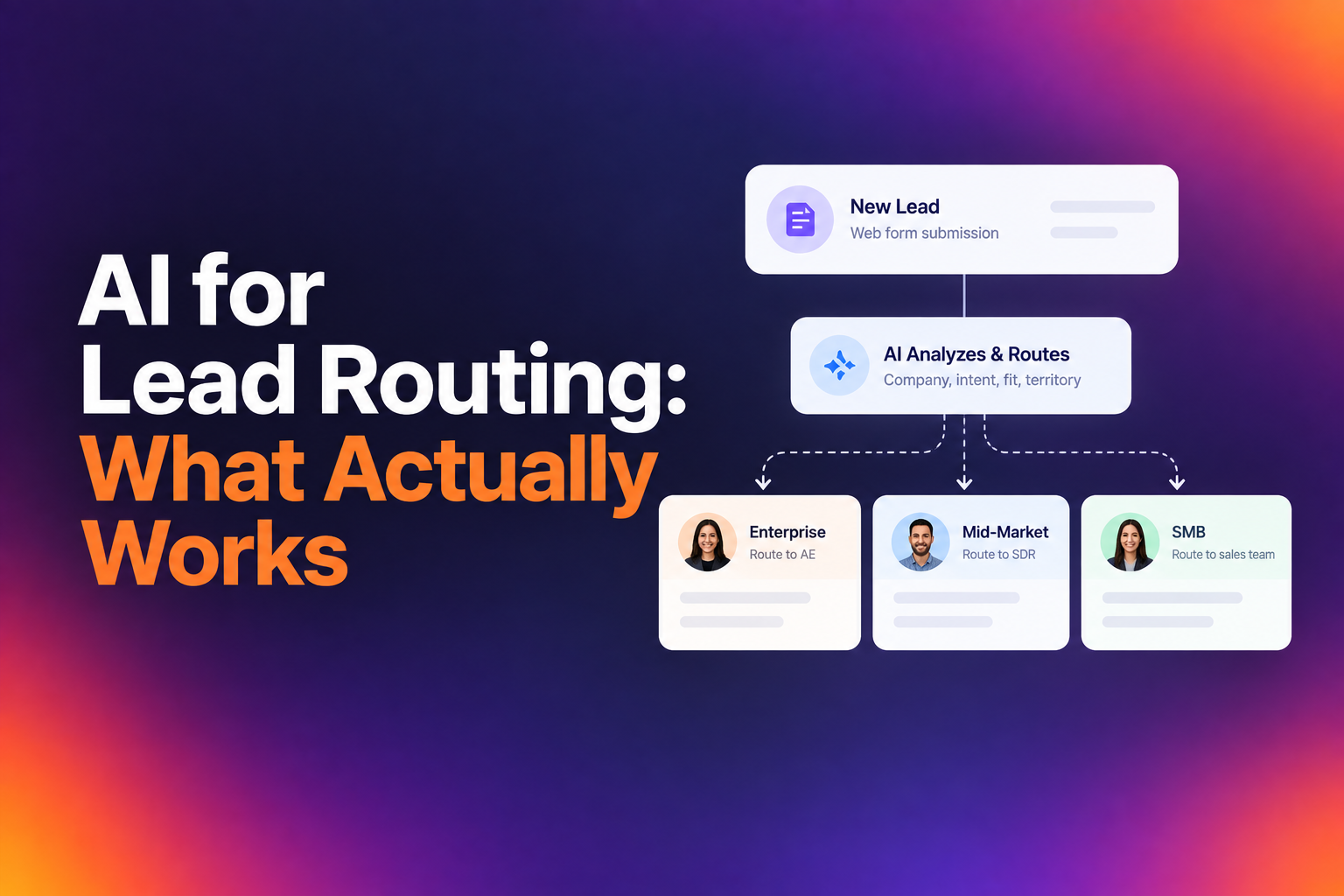
- Automated routing: Leads instantly matched to the right rep by territory, account ownership, or round robin. No manual triage headaches.
- Real-time alerts: An email or messaging app alert with a one-click booking link, so that your reps can engage immediately.
Strategy 9: Route leads to the right rep
Misrouted leads mean slower response times, wrong context, and lower close rates. Here are some routing rules that impact conversion:
- Account ownership: If the company already has a CRM owner, always route there.
- Territory / segment: Route by geography, company size, or industry so the rep has relevant context from the first conversation.
- Balanced round-robin: Distribute reps evenly, so that no rep is overloaded. This prevents slow responses.
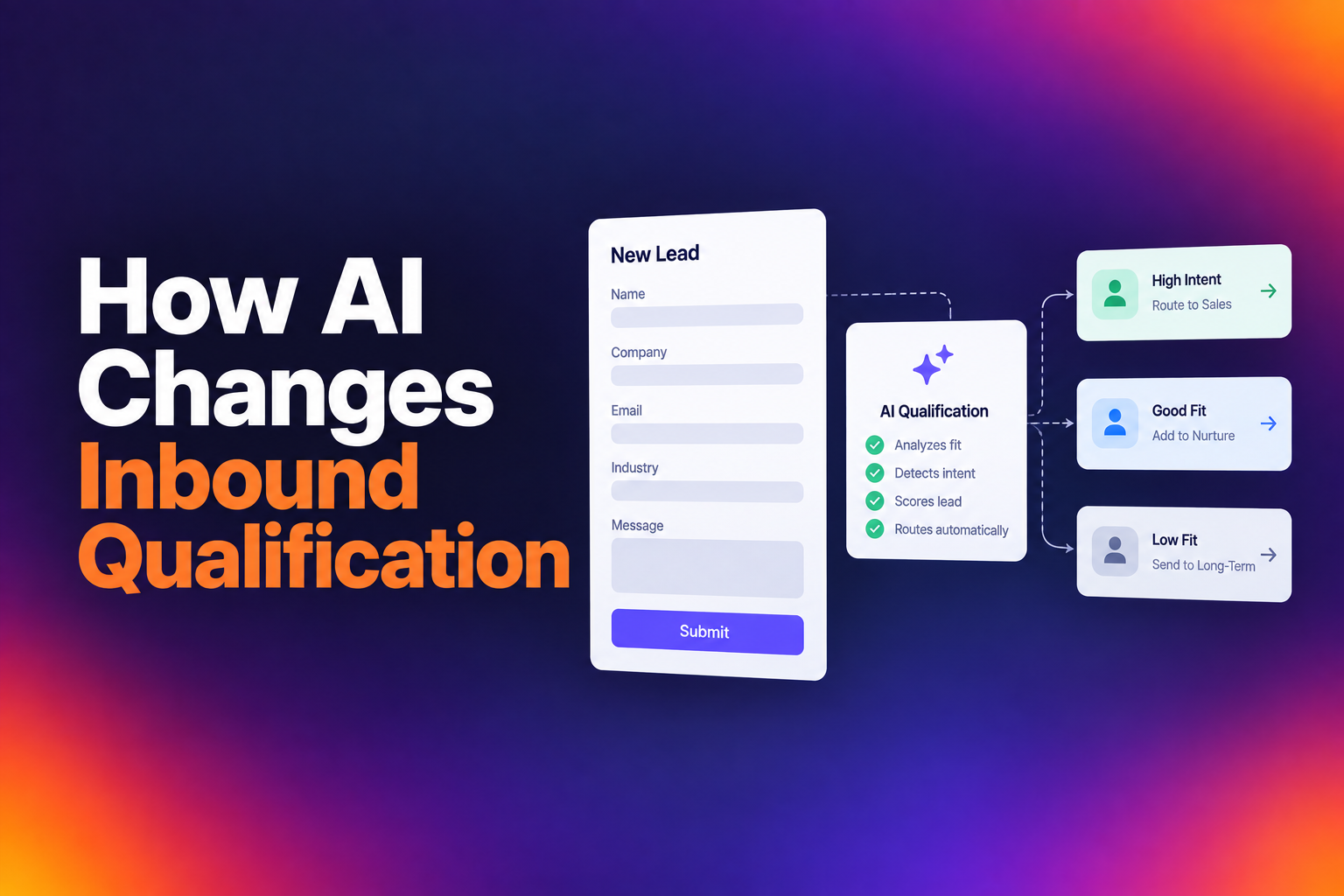
- Qualification-based routing: High-intent leads can go to AEs, while lower-intent leads go to SDRs for nurture.
Ensure that these routing rules live in your scheduling and CRM integration, not a spreadsheet.
Strategy 10: Optimize the booking experience
The scheduling widget is a conversion touchpoint, and shouldn’t be treated as an afterthought. Follow this checklist:
- Load speed: Under 3 seconds. A 3+ second load means 10-15% of visitors drop off before they even see a time slot.
- Mobile: Does the calendar actually work on phones? Test on real devices.
- Timezone intelligence: Auto-detect the visitor's timezone. A manual timezone dropdown is friction that shouldn't exist.
- Confirmation: Instant calendar invite plus email confirmation. Uncertainty creates no-shows.
- Branding: A white-labeled widget on your domain outperforms a third-party widget.
Chapter IV: CRO Metrics, Tools, and Mistakes
CRO metrics that are crucial for B2B SaaS
Downstream metrics matter more for B2B SaaS. Here are a few metrics that actually tell you how your funnel is performing:
Calculating CRO ROI
CRO ROI = (Incremental Revenue from CRO improvements - CRO Investment) / CRO Investment
Here’s an illustration:
You improve your form-to-meeting rate from 40% to 60%. At 200 form fills per month, that’s 40 additional meetings.
Assuming a 25% close rate, and an ACV of $30,000, your incremental ARR per month of improvement is $300,000.
Your pitch to leadership should be: We don’t need more ad budget. We need to convert more of the traffic we already get.
CRO Tools for B2B SaaS in 2026
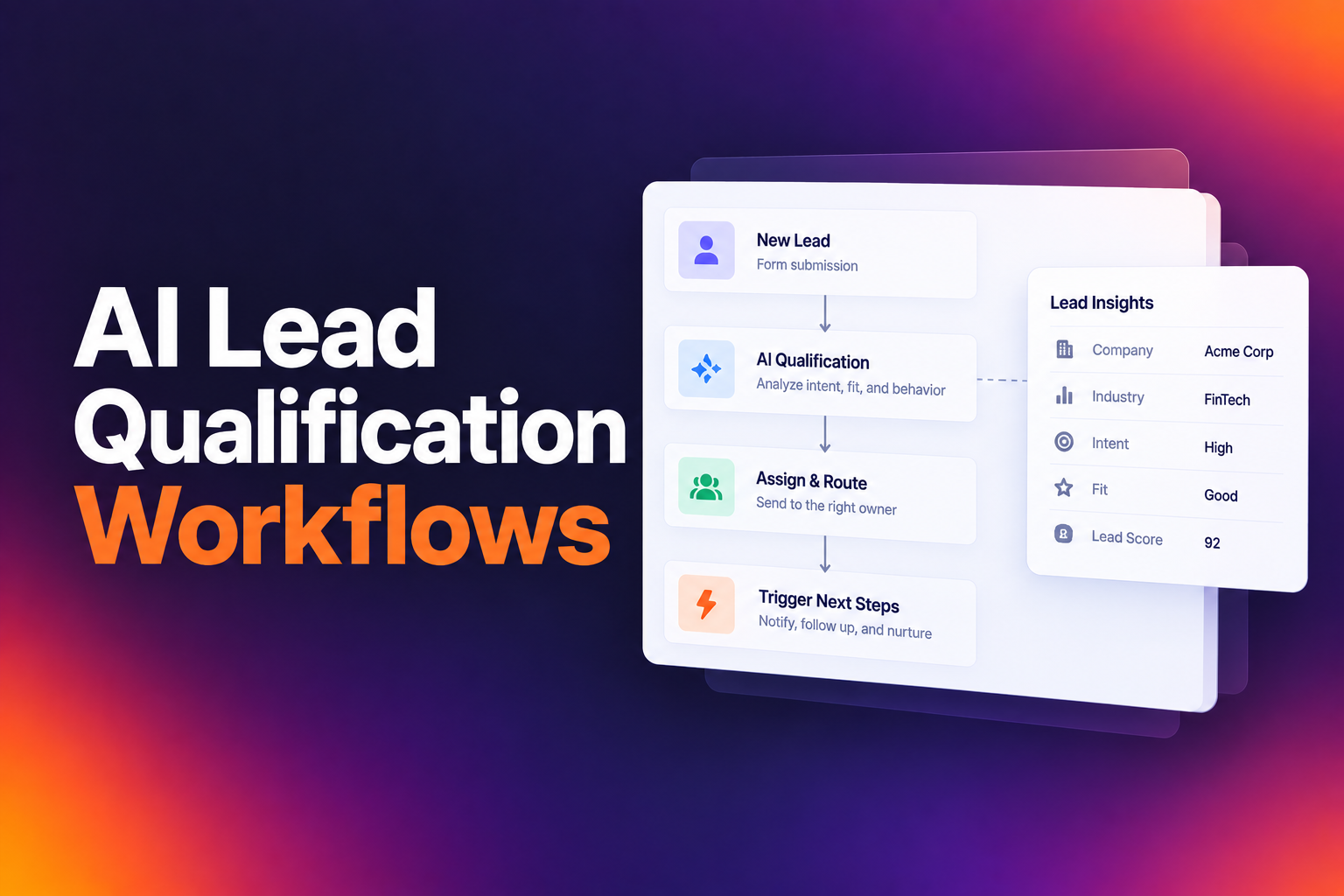
The integration layer matters more than any single tool. A well-connected stack looks like this: form fill → automatic enrichment → instant qualification → automated routing → embedded scheduling → CRM logging. Zero handoffs, zero leakage.
When evaluating, check if each tool integrates natively with your CRM, scheduling, and routing.
5 CRO mistakes B2B SaaS teams make
#1: Optimizing for MQLs instead of revenue
A/B testing your form headline to get 10% more leads means nothing if those extra leads are not qualified. Top performers actually disqualify twice as many leads as bottom performers (37.7% vs. 18.7%). Being selective about who gets through to sales produces higher conversion rates downstream.
#2: Ignoring the post-form experience
You’re playing with the button colors while 40% of handraisers never become meetings. The post-form funnel is your biggest leakage point. Fix what happens after the submit button before you optimize what happens before it.
#3: Slow follow-up
Your SDR team takes 2 days to respond to inbound demo requests, while competitors respond in minutes. Speed-to-lead is the #1 CRO lever most B2B teams aren't pulling.
#4: Manual lead routing
Leads sit in a queue while someone triages them in a spreadsheet. Every minute of delay is lost conversion.
#5: Not measuring the full funnel
If you don’t know your qualified-to-booked rate, show rate, or close rate by source, you’re waddling in uncharted waters. You can only optimize what you measure.
CRO in Action: B2B SaaS stories
Clay: From 40% to 75%+ same-day qualification
Manual lead triage was delaying follow-up on qualified inbounds. Leads sat in queues while ops reviewed them one by one. After automating qualification and instant routing based on enrichment data, 75%+ of qualified inbounds were handled the same day. They eliminated the gap between “qualified” and “on a calendar”.
VulnCheck: 80%+ auto-booking rate
Demo form fills went into a queue for manual SDR scheduling. Intent decayed while leads waited. After replacing the thank-you page with RevenueHero’s instant scheduling widget that auto-routes to the right rep, 80%+ of form fills now auto-book without any manual intervention.
Freshworks: 57% more bookings
High traffic to the demo page, but form-to-meeting conversion was below benchmark. The problem wasn't the page. It was everything that happened after the submit button. After implementing instant scheduling with intelligent lead routing, booked meetings increased 57% from the same traffic. No extra ad spend. No redesign.
CRO for B2B Saas doesn’t end at the form fill.
The biggest conversion gains are hiding in the post-form experience: speed-to-lead, routing, and scheduling. And the best CRO move to make in 2026 is to eliminate the gap between buyer intent and booked meeting.
Let RevenueHero help your team turn high-intent users into booked meeting without slowing down your funnel.