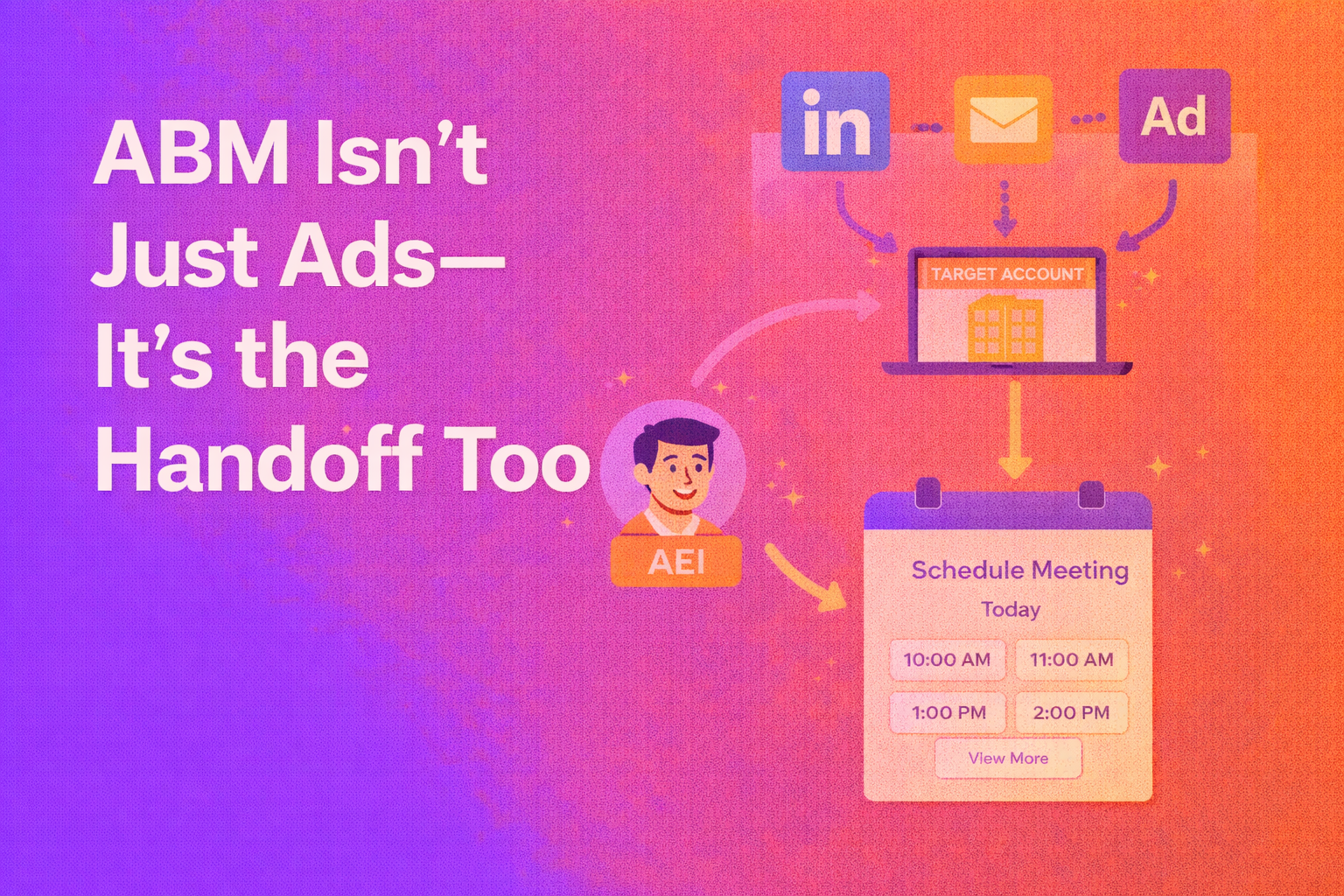
ABM Isn’t Just Ads-It’s the Handoff Too
When you think about Account-Based Marketing (ABM), your mind often jumps to custom ads and tailored content. But if you’re a RevOps or GTM leader, you know it goes much deeper-right into the handoff after a form fill. This is where operational delays and clunky routing can kill momentum. Instead, mature teams use a seamless handoff process that ensures every prospect’s interest is captured and acted upon immediately.
In this article, we peel back the layers on why ABM is as much about the follow-through as it is about the initial engagement. We’ll dig into the nitty-gritty of operational challenges, share concrete examples from real GTM workflows, and explain how systems like RevenueHero are built to propel inbound conversion by automating speed to lead and streamlining routing complexity.
The Old Way: When ABM Was Just About Getting Their Eyes on Your Ads
Traditional ABM tactics focused on attracting attention with personalized ads and content. This method worked well until it hit the wall at the handoff stage.
Once a prospect filled out a form, the entire conversion process could slow down dramatically. Prospects are hyper-engaged at the moment of submission. But if they’re met with a delay, that interest fizzles out.
Understanding the Bottleneck
The first challenge is the lag between interest and action. The moment a prospect completes a form, they expect an instant pathway to schedule a meeting or identify their next step. Instead, many organizations fall into operational traps:
- Manual routing workflows delaying assignment
- A generic acknowledgement page that leaves prospects hanging
- The wait for a rep to dig into CRM enrichment data before following up
In this model, prospects are forced to sit through a waiting game. Consider the scenario of an interested prospect who books a demo through your website. They expect a personalized confirmation along with the next step-a chance to book a meeting immediately. If they don’t get that, you’re leaving conversion money on the table. This handoff gap is not just a missed opportunity; it’s a friction point that sabotages the potential of seemingly successful ABM campaigns.
The Operational Reality Behind the Delay
The operational delay is rarely a fault of the sales rep’s lack of diligence. More often, it’s because the systems in place are not aligned with the pace of your prospects. Think about it: without an instant scheduling system, you're relying on a human touch in every instance. That human touch takes time-even if it's just a minute or two. In the modern digital landscape, those minutes matter.
Manual processes and CRM lag times can really dent your momentum. Studies have shown that a delay of even 30 minutes can cost you the sale. For example, companies implementing ABM see up to a 208% revenue increase over three years thanks to streamlined conversion processes. Yet, without eliminating the follow-up gap, you’re not harnessing the full potential of these gains.
The Problem with a Clunky Handoff
The technical term for this misstep is "handoff complexity." Many GTM leaders have seen their teams struggle with the inefficiencies in routing and follow-up. The handoff between marketing, SDRs, and AEs is crucial, but all too often it becomes a maze rather than a straight line.
This isn’t just about one stage in the cycle-it’s about the entire conversion ecosystem collapsing under its own weight when processes aren’t optimized.
Breaking Down the Handoff Process
At the core, the handoff process involves transforming a prospect’s initial digital footprint into a booked meeting without friction. Let’s outline the typical steps:
- Form Submission:
- The prospect fills out a demo request or inquiry form. This is the moment when interest is at its peak.
- Data Enrichment:
- Systems pull in additional data to qualify the lead. This process is crucial but often introduces lag time.
- Routing to the Right Rep:
- An algorithm or manual process determines who on the team should contact the prospect.
- Booking the Meeting:
- The prospect either receives a follow-up email or is presented with an option to instantly schedule a meeting. This is where many prospects drop off.
Every one of these steps has the potential for delay. Mature teams recognize these pain points and re-engineer the process. They focus on automated, instant routing, ensuring no lead is left waiting.
Handoff Complexity: Why It Persists
At the root, handoff complexity is born out of disjointed systems that don’t speak to each other in real time. Sales teams often have different dashboards and tools, which means that the handoff is not only slow but also riddled with miscommunication.
This problem is operational. It exists because teams have not scaled their systems to match the expectations of a modern digital buyer. The challenge is not a lack of interest on the part of the sales team. It’s the tech stack that slows everyone down.
The Modern Way: Speed, Personalization, and Data-Driven Routing
Mature GTM teams have reimagined the entire handoff process. Instead of a disjointed series of steps that introduce friction, the ideal process is a single, integrated flow where technology bridges the gap between interest and conversion.
This modern, inbound conversion approach centers on immediate scheduling and data-driven routing. With platforms like RevenueHero, the moment a prospect fills out a form, several things happen at once: a personalized scheduling experience is embedded, real-time routing directs the lead to the right representative, and automation ensures there’s no follow-up lag.
The Power of Instant Scheduling
Picture this: a prospect submits a form and is immediately presented with a calendar showing available times with the appropriate rep. This isn’t just a convenience-it’s a conversion weapon. Instant scheduling eliminates the dangerous 30-minute lag where prospects drift away.
RevenueHero’s technology makes this possible by embedding scheduling experiences directly after form submissions. By automating this step, the platform ensures that prospects can book meetings on their own terms, right when their interest is at its peak. That means fewer no-shows, faster response times, and ultimately, a higher conversion rate.
With a system in place like this, companies have reported up to a 200% increase in conversion rates. It’s not magic; it’s operational excellence.
Personalization at Scale
Personalized content isn’t just a buzzword. In ABM, personalization can increase engagement by as much as 56% compared to generic campaigns. But the magic happens when this personalization is extended beyond just the content into the handoff process.
The best teams tailor every interaction to the prospect’s specific context. That means routing leads based not just on geography or general interest but on granular data points that are captured during the form fill. When a prospect sees the face or name of the rep who understands their specific situation, trust builds immediately. That human touch, supported by automation, reinforces the buyer’s confidence.
For instance, if your system recognizes that a lead comes from a high-value account, it can be instantly routed to a specialized team or an AE who has deep expertise in that industry. This ensures each prospect receives the nuanced attention they deserve, right when they need it. It’s all about aligning the right resource with the right lead, in real time.
Data-Driven Insights: The Backbone of Smart Routing
RevenueHero isn’t just about instant scheduling. It also leverages granular reporting and data-driven insights to constantly refine the process. Every interaction offers data-on buyer behavior, meeting outcomes, and conversion patterns. This is invaluable feedback that can be used to optimize campaigns and handoffs.
Many organizations struggling with ABM see delays because they are reactive rather than proactive. Data-driven insights mean you can identify where prospects drop off and correct those issues in real time. For example, you might notice that certain lead sources consistently result in delayed responses. With this insight, you can adjust your routing logic to prioritize those leads, ensuring every touchpoint turns into an opportunity for conversion.
How High-Velocity Teams Eliminate the Follow-Up Gap
High-velocity teams thrive on eliminating friction at every stage of the buyer journey. They understand that every minute counts when a prospect is on the cusp of engaging with your sales team.
They design their workflows so that handoffs are smooth and intuitive. The goal is to have a system where leads are greeted with personalized scheduling options immediately, and where follow-up is automated with precision.
Real-Time Lead Routing
When a lead is captured, it’s not just about getting the data into your CRM-it’s about getting that lead into the hands of the right sales rep without delay. Mature systems route leads in real time using predetermined criteria such as account size, territory, and lead behavior.
This means that instead of waiting for manual assignment or a round-robin process, the lead is automatically funneled to the correct team member who is equipped to handle its unique needs. That’s the key differentiation: Speed combined with precision. Real-time routing isn’t just efficient; it creates a smoother buyer experience that starts from the very first click.
Leveraging Automation for Consistency
Automation is the engine that powers these high-speed processes. By automating follow-up emails, scheduling confirmations, and even personalized reminders, you remove the element of human error from the equation. This means if a prospect misses a scheduled call, the system automatically sends a rescheduling option without requiring a sales rep to intervene.
Take the case where your SDR is in back-to-back meetings. Instead of relying on a delayed human follow-up, the automated system seamlessly handles the engagement, ensuring that every lead receives the prompt attention they deserve. This strategy not only speeds up the process but also results in a consistently high-quality buyer experience. The numbers speak for themselves: Automated systems can deliver a higher ROI, with some studies showing that 87% of marketers believe ABM offers the best return on investment when paired with an efficient workflow (ZipDo Education Reports).
Fallback Logic and Continuous Optimization
No system is perfect. There will always be instances when a rep might be unavailable, or when unusual situations arise that the normal routing rules don’t cover. This is where fallback logic becomes critical.
An effective fallback strategy might include routing the lead to a backup pool or even offering the prospect an asynchronous option, like a recorded video overview, while they wait for a live interaction. The idea is to never let a lead slip through the cracks. By building in fallback options, mature teams ensure that every inquiry is met with a swift and thoughtful response.
Moreover, continuous optimization based on reporting and analytics means that over time, the fallback logic itself is refined. With granular reporting on buyer behavior and conversion outcomes, you can detect bottlenecks and adjust processes, ensuring that the handoff mechanism adapts with your evolving business needs.
Transforming the GTM Workflow: A RevenueHero Perspective
At RevenueHero, we aren’t just focused on generating leads-we’re dedicated to ensuring that every lead is converted efficiently through a frictionless handoff process. Our platform was designed with one goal in mind: to eliminate operational delays and help you capture revenue faster by automating the booking process and streamlining handoffs between teams.
This commitment is rooted in a deep understanding of the challenges that GTM leaders face. The slow, fragmented routing process is a well-known barrier to high conversion rates. Instead of working around these obstacles, mature teams incorporate solutions like instant scheduling and smart lead routing to transform their workflows.
Redefining Speed-to-Lead
Speed-to-lead isn’t just a metric-it’s a philosophy. In today’s competitive landscape, every minute a prospect waits can be a missed opportunity. Systems that enable instant routing and scheduling create significant advantages over workflows that rely on manual follow-up.
For example, if a prospect submits a form at 3 PM and is immediately presented with a booking option, they can secure a meeting without waiting for an email confirmation or phone call. This immediacy is crucial in B2B scenarios where decision makers juggle many priorities and appreciate efficiency.
RevenueHero enables this by embedding scheduling experiences directly after the form submission. The prospect is matched with the right AE based on pre-configured criteria, drastically reducing the follow-up gap. When combined with data-driven insights and real-time adjustments, the result is a consistently higher booking rate and an improved overall buyer experience.
The Role of Granular Reporting
Granular reporting is not just a dashboard metric-it’s the fuel that powers continuous improvement in your GTM process. Detailed analytics provide insight into where leads drop off, how quickly they book meetings, and which criteria yield the highest conversion rates.
This level of insight allows you to constantly refine your routing logic. By analyzing granular data from each interaction, you can identify which touchpoints in your handoff process are lagging, then make adjustments on the fly. This is the operational advantage that mature teams have over those still relying on outdated and siloed processes.
A recent study noted that ABM improves customer lifetime value by 80% and win rates by 86% (Saffron Edge). When your system is optimized to enhance the buyer journey throughout, from ad to handoff, you create an ecosystem where every step feeds back into a more efficient process.
Real-World Scenarios: Tackling the Handoff Gap
Consider these real-life GTM scenarios that highlight the maturity difference between teams that address the handoff gap and those that don’t:
Scenario one: A prospect fills a demo request form after spending time researching your content. With a traditional system, they’re met with a generic “Thanks, we’ll be in touch” message. The lead then passes through multiple hands, first to an SDR and then to an AE, with delays introduced at every stage. By the time the prospect is contacted, their interest has cooled.
Scenario two: The same prospect submits a form but is immediately presented with a personalized calendar. The system automatically confirms the lead’s details, routes them based on industry and persona nuances, and sends real-time notifications to the relevant rep. The prospect is booked for a meeting within minutes. The difference is stark: One process creates friction and dropout; the other builds momentum and trust.
Operational Pain Points and the Mature Response
Operational pain points in the handoff process come in many forms. Common issues include:
- Data lag between form submission and CRM enrichment
- Delayed notifications to sales teams leading to missed opportunities
- Fallback routing that does not account for real-time availability
- Lack of transparency on lead sources and journey insights
Mature teams solve these problems by designing systems that automatically bridge these gaps. They implement instant routing rules, deploy real-time notifications via Slack or email, and establish fallback mechanisms that ensure no lead is overlooked. This creates a continuous flow, where every prospect enjoys a personalized and immediate experience.
The Impact on Conversion Rates
When you fix the handoff gap, conversion rates naturally improve. Micro-moments of immediate engagement significantly increase booking volumes, and this direct correlation is not just anecdotal. Research indicates that companies using ABM can experience dramatic revenue increases-studies have reported up to a 208% increase in revenue over a few years when the process is optimized.
In practical terms, a seamless handoff can mean the difference between a prospect booking a meeting immediately and a lead cooling off before any personal outreach is made. It’s all about closing the gap with speed and precision.
The Future of ABM and Inbound Conversion
The future of ABM will be defined by how quickly and efficiently teams can hand off leads while maintaining a high level of personalization. As technology evolves, the expectation will be that every step of the process-from ad engagement to live meeting-flows seamlessly.
This is where the integration of automation, real-time data, and smart routing becomes non-negotiable. With the right system in place, you’re not just delivering a good first impression; you’re transforming your entire pipeline.
Embracing Automation at Every Step
The new standard for inbound conversion is automation. By integrating systems that automatically trigger the next step in the buyer journey, organizations can eliminate the chance for manual delays. Automation doesn’t remove the human element; it enhances it by ensuring that every touchpoint is timed perfectly and executed reliably.
Imagine a workflow where, immediately after a form submission, the system not only confirms the lead but immediately reveals a tailored scheduling interface. The lead is then directly connected to an AE through smart routing based on real-time data-all without any manual intervention. This is exactly how mature teams drive efficiency and ensure every potential deal is nurtured from the moment of interest.
Shifting from Reactive to Proactive Processes
A key shift in modern GTM operations is moving from reactive follow-ups to proactive engagements. Instead of waiting for the prospect to send another message or for an SDR to catch up, systems should be designed to preemptively address any delays.
This proactive approach is central to platforms like RevenueHero. By embedding flexible time slots based on real-time prospect data, the platform ensures that every lead is nurtured immediately and continuously. The sales cycle shortens, and with data-driven insights confirming what works best, the entire process becomes self-optimizing.
Continuous Improvement and Iterative Learning
This isn’t a set-it-and-forget-it process. Mature teams consistently review performance metrics, customer feedback, and efficiency data to refine their handoff processes. Granular reporting is the feedback loop that informs adjustments in real time. If a certain routing parameter begins to show signs of delay, adjustments are implemented swiftly.
Continuous improvement means that over time, what started as an automated workflow evolves into a finely-tuned engine that anticipates and adapts to buyer behavior. This dynamic process ensures that every aspect of the communication funnel-from initial contact to post-meeting follow-up-remains efficient and effective.
Integrating ABM with a Seamless Handoff
The integration of ABM strategies with streamlined handoff processes is where traditional marketing meets operational maturity. When the initial engagement is perfectly executed but the follow-through stumbles, you lose more than just a meeting-you lose trust. Developing a system that supports instant scheduling and personalized outreach creates a consistent buyer experience from start to finish.
Operationally, this means combining top-tier ABM practices with advanced automation. The goal is to turn every ad, every personalized piece of content, into an opportunity for immediate conversion. By leveraging platforms that offer both data-driven insights and real-time routing, companies can keep up with expectations and dramatically improve their conversion rates.
Case Example: How Operations Change the Game
Let’s walk through a typical example. A prospect engaged with an ABM campaign and filled out a demo form. In the legacy system, this lead would wait for manual intervention, leading to potential disqualification. Under a modern system, this prospect is immediately routed to an AE with real-time calendar integration. The system acknowledges the lead, confirms their details, and directs them into an instant scheduling flow.
This seamless action reduces friction and sends a strong message: your company respects their time and is ready to address their needs immediately. The resulting interaction is not just a meeting but the beginning of a relationship built on trust and efficiency.
Building a Unified Buyer Experience
The unified buyer experience is the goal of aligning your ABM strategy with a smooth operational handoff. This ensures that every touchpoint reinforces the prospect’s confidence in your brand. When a lead is treated with the same level of urgency and personalization they experienced in the initial ABM outreach, the entire buyer journey feels coherent and well-orchestrated.
Data-driven decisions play a key role here. For instance, using insights from past interactions, your system can dynamically adjust the routing rules. This might mean giving priority scheduling to high potential accounts or tailoring the follow-up communication based on the prospect’s industry, all of which make the process appear seamless and proactive.
Operational Tactics for Eliminating the Follow-Up Gap
Now that you understand the importance of a seamless handoff, it’s time to look at practical tactics to eliminate the follow-up gap completely. The following tactics are not just theories-they’re proven operational strategies that high-performing GTM teams have already adopted.
Here’s how mature teams overcome the most common obstacles:
Automate Every Touchpoint
Automation should run the gamut-from the instant the prospect fills out a form, to data enrichment, to personalized follow-up messaging. The key is not to let any manual step slow down the process:
- Instant Confirmation:
- The moment a form is submitted, the system sends a personalized confirmation message along with a link to schedule immediately.
- Automated Data Enrichment:
- Enrich the lead data without delay so the system knows which rep to route the customer to, based on criteria like account size or recent behavior.
- Real-Time Routing:
- Use rules that determine the best available rep and immediately surface their calendar for booking, eliminating the need for follow-up calls or emails.
This level of automation doesn’t just improve speed-it ensures accuracy and reliability in the handoff process.
Integrate with Proven Scheduling Platforms
Adopting a robust scheduling platform is a game-changer. Tools that embed scheduling options right after the form fill can drastically reduce friction. By integrating with platforms like RevenueHero, you bypass the generic thank-you pages and directly connect eager prospects with available key reps.
This integration guarantees that your most engaged leads have the opportunity to immediately book a time slot, matching their level of interest with operational readiness. When prospects see available calendars with real names and personalized notes, it creates a sense of urgency and importance, motivating them to take the next step without delay.
Establish Clear Role Ownership
The journey from a form fill to a booked meeting must be handled by clearly defined roles. When everyone on your team knows their part in the process-and when automated systems back up those roles-the handoff becomes flawless. This eliminates the dreaded internal delays where leads get lost in the shuffle.
For example, an SDR might be responsible solely for monitoring the lead capture system, while an AE is prepped to jump into the conversation immediately after booking. Clearly defined and automated responsibilities ensure your operational processes are as seamless as the buyer experience you strive to deliver.
Why RevenueHero’s Approach Wins
RevenueHero is built on the simple truth that a great buyer experience starts the moment a lead engages with your brand. Rather than focusing only on external ABM tactics, our approach emphasizes what happens next: the handoff.
By automating key steps in the lead-to-meeting conversion process, RevenueHero eliminates operational friction. This aligns perfectly with data from Saffron Edge that highlights how streamlined, data-driven practices drive higher revenue and engagement.
Instant Scheduling as a Revenue Multiplier
RevenueHero’s instant scheduling mechanism is designed for the moment a prospect is most engaged. No more waiting for a rep to check their email or for a system to update. Instead, a fully personalized scheduling experience is presented immediately, inline with the buyer’s needs.
This immediate responsiveness doesn’t just prevent drop-offs-it transforms how your GTM teams operate. With a conversion process that’s automated from start to finish, you can focus your team’s efforts on high-value activities rather than chasing ghosts. Faster responses translate directly into more meetings booked, a shorter sales cycle, and ultimately, a higher ROI on your ABM campaigns.
Seamless Handoff that Reinforces Buyer Trust
Trust is built on consistency and speed. When prospects see that your organization is in tune with their needs from the get-go, that trust facilitates deeper engagement. RevenueHero’s platform ensures each prospect isn’t just passed along-they are connected to the rep who’s best suited to address their inquiries immediately.
This seamless handoff underpins the entire buyer experience. It highlights to prospects that your team is not only aware of their specific situation but is also prepared to act in real time, ensuring that every interaction is as satisfying as the initial engagement.
Closing Thoughts: It’s Not Just About the Ad Yet the Handoff
The world of ABM is evolving. While personalized ads and content capture attention, it’s the operational excellence behind the scenes that ultimately seals the deal. When your processes are slow, even the best campaigns can falter. A robust, automated handoff process is what transforms interest into genuine, revenue-driving meetings.
For RevOps and GTM leaders who know that time is money, the solution is clear: embrace a system that blends personalized engagement with instant, automated scheduling. It isn’t enough to generate leads. You must also ensure that those leads are nurtured and converted as swiftly as they’re captured.
Take Action Today
If you’re still relying on manual follow-up or fragmented systems for lead routing, you’re leaving a lot on the table. Consider upgrading to a system that embeds booking experiences right after the lead capture. Not only will you boost conversion rates, but you’ll also build trust with your prospects from the very first interaction.
Adopting a modern approach means eliminating the follow-up gap entirely and transforming every prospect interaction into a seamless, efficient, and personalized experience. In the competitive arena of ABM, that difference can mean exponential revenue growth-backed by data and proven by real-world results.
A Final Word on Efficiency in ABM
Remember, achieving operational excellence in ABM is not about working harder-it’s about working smarter. A well-designed handoff process leverages technology to make every interaction count. When your system works seamlessly, every lead is greeted with the same level of urgency and personal attention, driving conversion rates that reflect your team’s true potential.
The handoff is not an afterthought; it’s the core of inbound conversion. And when you combine this approach with personalized, data-driven engagement, you build a robust pipeline that scales with your business. Efficiency isn’t an option-it’s a necessity in today’s fast-paced GTM environment.
For more insights on how to streamline your operational workflows and boost your inbound conversion rates, visit the RevenueHero blog and explore the latest industry case studies and success stories.
Wrapping It All Up
ABM isn’t just about catching the eye with a well-placed ad or a personalized email. It’s about what happens after that first click-the immediate, frictionless handoff that ensures prospects remain engaged and move swiftly through the pipeline.
The handoff gap in traditional systems has long been a source of lost opportunities. But with automation, real-time data insights, and intelligent routing powered by platforms like RevenueHero, you can eliminate this gap and build a workflow that never leaves money on the table.
Key Takeaways for GTM Leaders
Let’s summarize the most important points:
- Instant Engagement:
- Automate the lead handoff process to ensure immediate engagement. Don’t let prospects wait.
- Data-Driven Routing:
- Use real-time data to serve the right rep and deliver personalized scheduling experiences.
- Seamless Buyer Experience:
- Eliminate friction by integrating workflows that span from form fill to booked meeting, reinforcing buyer trust at every step.
- Continuous Optimization:
- Leverage granular reporting to refine your process and continuously reduce operational delays.
- Operational Excellence:
- Mature teams don’t just capture leads-they convert them immediately with smart technology and automated follow-up procedures.
What’s Next for Your Team?
The insights and strategies discussed today are more than operational tips-they’re steps toward a wholesale transformation of your GTM strategy. Start by evaluating your current handoff process. Identify pain points where delays occur and implement automation to fix them. Experiment with real-time routing and personalized scheduling as a way to boost your conversion rates.
With the right tools and a commitment to operational excellence, you can ensure that your ABM initiatives not only attract attention but also convert that attention into consistent revenue growth. The future is about eliminating gaps and building workflows that operate at the speed of your prospects’ expectations.
Final Call to Action
If you’re serious about improving your inbound conversion rate, it’s time to rethink your handoff process. Integrate a system designed to manage every step of the buyer journey in real time. Let your prospects book meetings immediately, and see how this shift can transform your sales pipeline.
Adopting these strategies could be the critical change your GTM team needs to bridge the gap between attracting leads and closing deals. Embrace the change and set a new standard for operational efficiency in ABM.
Ready to see the impact of a seamless handoff? Explore more at the RevenueHero blog and start transforming your inbound conversion process today.
In Summary
ABM isn’t just a matter of deploying highly personalized ads or content; it’s about ensuring that every single lead receives a prompt, personalized, and frictionless handoff to the next stage in the conversion journey. For RevOps and GTM leaders, operational delays aren’t just inefficient-they’re costly.
The solution is clear: automate every step, integrate real-time data for precise lead routing, and remove any barriers between interest and action. When you do this, every lead becomes a candidate for quick conversion, driving higher revenue and forging lasting relationships with your prospects.
By embracing a system that prioritizes seamless handoffs and immediate engagement, you’re not only keeping up with the modern buyer’s expectations, you’re setting your organization apart in a competitive market. Operational excellence is the key to turning the promise of ABM into consistent, measurable success.
Now is the time to transform your approach. With a focus on speed to lead, routing precision, and operational efficiency, you can ensure that every touchpoint counts. This isn’t just theory-it’s the new reality for high-performance GTM teams.
There’s no magic bullet; there’s only a proven system that works. And when you build it right, you’ll see that the handoff isn’t a break in the process-it’s the very engine that drives lasting conversion. Make the shift today, and watch your conversion rates soar.
Let RevenueHero help your team turn high-intent users into booked meeting without slowing down your funnel.