
Default vs RevenueHero

Every lead to the right rep, and the reason it went there.

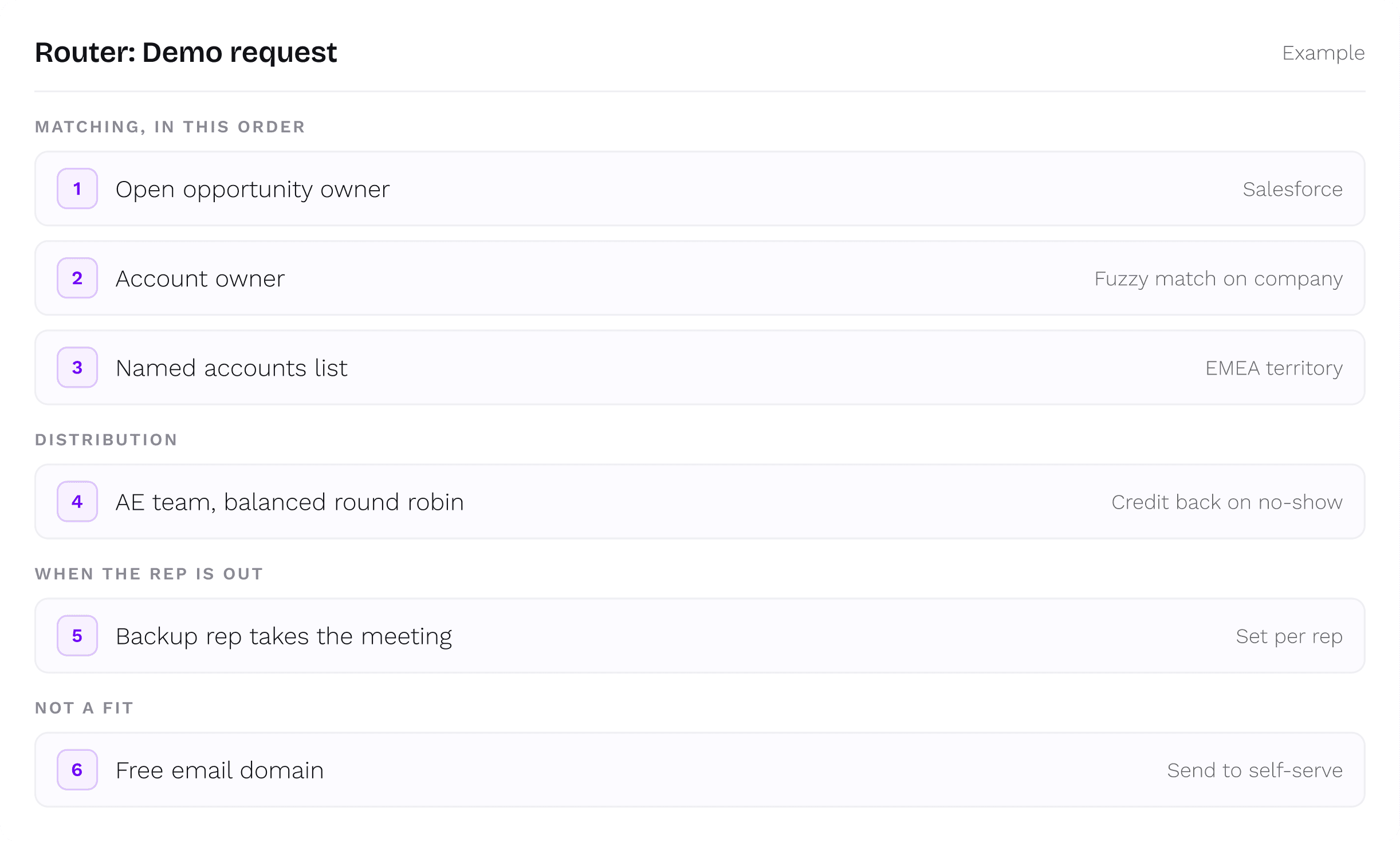
RevenueHero is built for routing and scheduling. It matches the account, books the meeting with the right rep, keeps the rotation fair, covers reps who are out and logs why every lead went where it did, without a platform to maintain.

Trusted by 550+ B2B companies route leads and book meetings with RevenueHero
Which one fits

When Default is the better buy, and when it isn't

Default covers more of the inbound process than we do. If routing itself is the hard part, that is where RevenueHero goes deeper.

Default is enough
You want one vendor for the whole inbound process

Switching will not buy you much. Default's platform fee includes 24,000 enrichment credits a year and a workflow builder.

The trade-off is upkeep. Routing lives in workflows that someone on your team builds and maintains.

Enrichment in the same contract
AI agents and MCP
Workflows that start from CRM changes
Website visitor identification
Salesforce and HubSpot in one workspace
Where routing depth shows

Pick RevenueHero when routing is the job

The job
Default
RevenueHero
Why it went there
The reason
Every lead comes with its reason
Rules of Engagement logs list the last 7 days. Which reps were skipped, and why, shows only through its MCP server.
Every form fill gets a Routing Log: each rule checked, the rep chosen, what reached your CRM. Audit Logs track every setup change.
Fair to your reps
Rotation
Turns are shared the way you choose
Round robin, most available time or least recent assignment, with weights.
Strict order, first available or balanced by meeting count, with lighter weights for ramping reps.
Rep caps
One rep should not take every meeting
No cap on how many meetings a rep takes.
Meeting limits per rep, by day, week or round robin period. Reps at their limit are skipped.
Coverage
Each rep needs a named backup
Skips reps marked out of office, with one fallback host per scheduler.
A named backup takes each rep's meetings while they're away, and nobody loses their turn. Holidays are covered too.
No-shows
Mark it once, and your CRM knows
Getting a no-show into your CRM takes a workflow that someone builds.
Reps mark a no-show from anywhere. It's written to the CRM, and they get their turn back.
The right owner
Matching
Messy CRM data still finds its owner
Salesforce account fields you choose, with tie-breakers when several accounts match.
Domain, fuzzy company names, lookup fields, any CRM property and named-account lists. Tie-breakers settle Salesforce accounts that share a domain.
Prospect limits
One account, one conversation
No limit on how often a prospect or company can book.
Caps bookings per person or company, checks before a second booking, and asks prospects to confirm a late-night slot.
Handoffs
An SDR's meeting lands with the right AE
SDRs book through a Chrome extension in Gmail, Salesforce or HubSpot.
SDRs book AEs from your CRM, inbox or Gong, routed by your inbound rules.
“
Default does a few pieces together. That seems like a lot more lift. I'd go simpler, something purpose built for one thing.
— A prospect who evaluated both
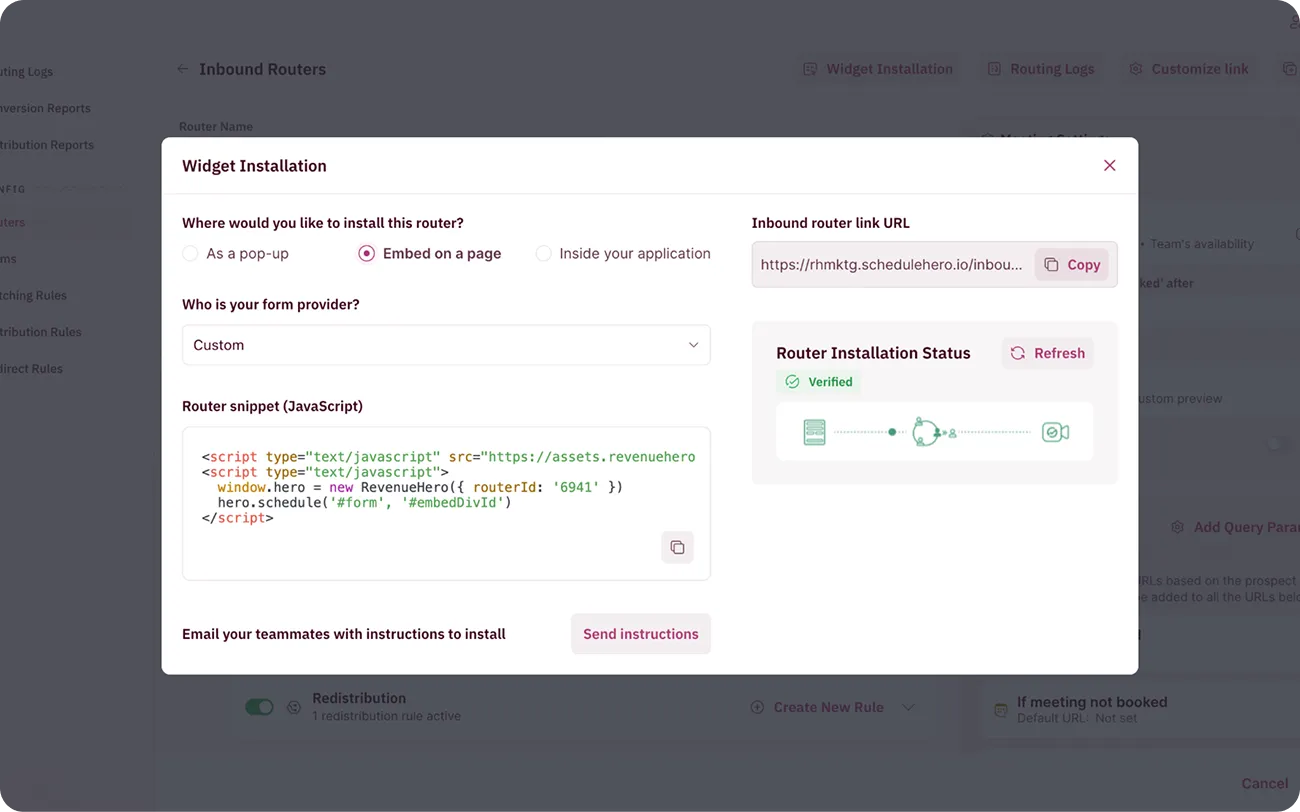
RevenueHero matches, routes and books every meeting on your rules, and keeps the reason for each one. A router takes about an hour to set up.
Book a demo
Side by side

Default vs. RevenueHero

The jobs an inbound team hands to routing and scheduling, including the two where Default does more.
What you need
Enrichment
Enrich the lead before it routes
Triggers
Start routing from more than a form
Matching
Find the rep who owns the account
Rep caps
Cap meetings per rep
coverage
Cover a rep who is out
no-show
Log the no-show and give the turn back
the reason
Answer "why this rep?"
crm
Run on the CRM you have
Booking pages
Book on your own domain
Default
Four providers in a waterfall, with 24,000 credits a year in the platform fee.
Forms, CRM record changes, webhooks, an API, website visits, chatbots and a Chrome extension.
Salesforce account fields you choose, with tie-breakers when several accounts match.
No cap on how many meetings a rep takes.
Skips reps marked out of office. One fallback host per scheduler, no named backup per rep.
Turns come back for meetings booked through a queue. Logging it in the CRM needs a workflow someone builds.
Run logs show if each condition was true or false. Rules of Engagement logs cover 7 days, and routes straight to a named rep have no assignment row.
Salesforce and HubSpot. Attio is listed as coming soon.
Custom domains for booking links are not available today.
RevenueHero
revenuehero logo
Add-on at $79 a month for 500 credits a month. Clearbit, Apollo, ZoomInfo, Crustdata and Ocean.io run as a waterfall when the form is filled.
Web forms, in-app scheduling, booking links, email campaign links, Intercom, the Chrome extension, and SDR handoffs from your CRM, inbox or Gong.
Domain, fuzzy company names, lookup fields, any CRM property and named-account lists. Tie-breakers settle Salesforce accounts that share a domain.
Limits per rep for each meeting category, by day, week or round robin period.
A named backup covers time off, and nobody loses a turn. Regional holidays and one-off exceptions are covered too.
Mark it from anywhere. It's written to the CRM automatically, and the rep gets the turn back.
A Routing Log for every form fill and campaign link: each rule that passed or failed, the value it checked, the rep chosen and what happened next. Workflow Logs and Audit Logs show what ran and what changed.
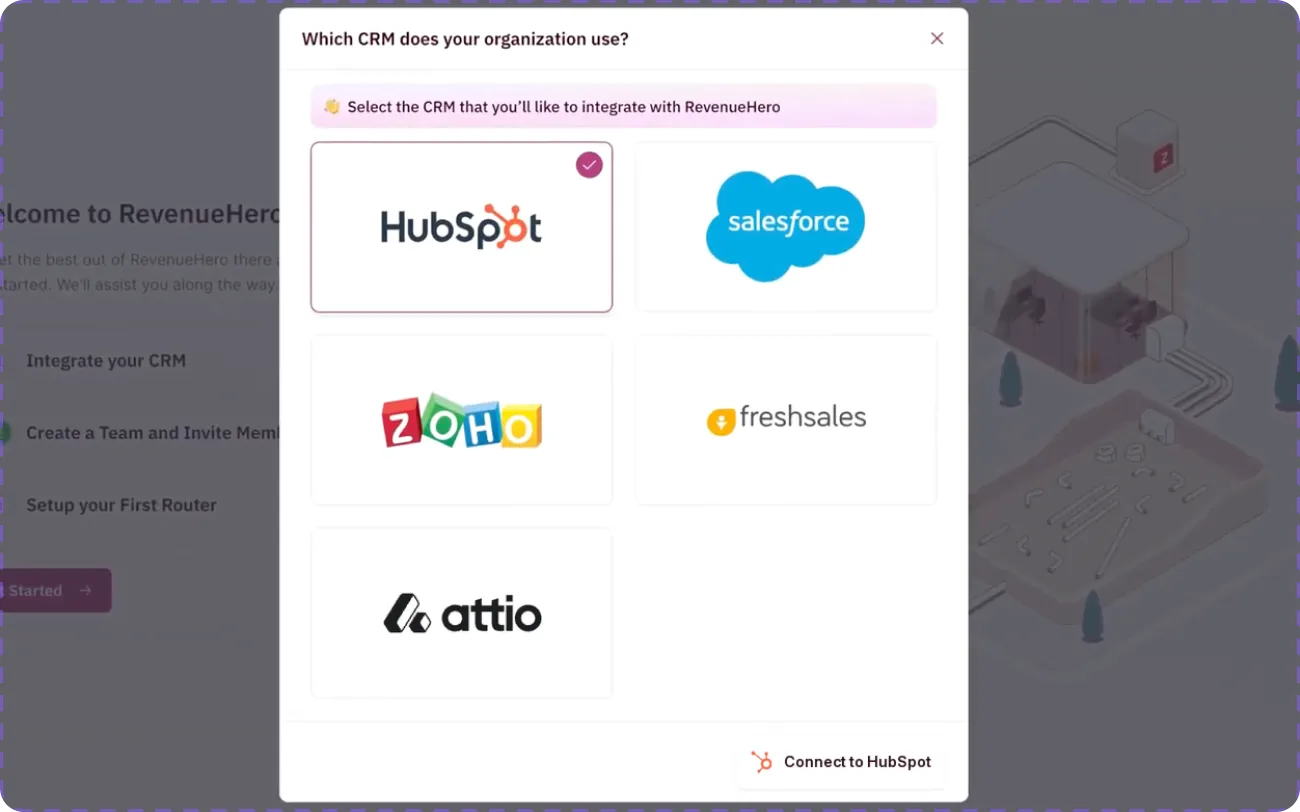
HubSpot, Salesforce, Zoho, Freshsales and Attio.
Booking pages on your own domain.
Enrichment
Enrich the lead before it routes
Default
Four providers in a waterfall, with 24,000 credits a year in the platform fee.
RevenueHero
Add-on at $79 a month for 500 credits a month. Clearbit, Apollo, ZoomInfo, Crustdata and Ocean.io run as a waterfall when the form is filled.
Triggers
Start routing from more than a form
Default
Forms, CRM record changes, webhooks, an API, website visits, chatbots and a Chrome extension.
RevenueHero
Web forms, in-app scheduling, booking links, email campaign links, Intercom, the Chrome extension, and SDR handoffs from your CRM, inbox or Gong.
Matching
Find the rep who owns the account
Default
Salesforce account fields you choose, with tie-breakers when several accounts match.
RevenueHero
Domain, fuzzy company names, lookup fields, any CRM property and named-account lists. Tie-breakers settle Salesforce accounts that share a domain.
Rep caps
Cap meetings per rep
Default
No cap on how many meetings a rep takes.
RevenueHero
Limits per rep for each meeting category, by day, week or round robin period.
coverage
Cover a rep who is out
Default
Skips reps marked out of office. One fallback host per scheduler, no named backup per rep.
RevenueHero
A named backup covers time off, and nobody loses a turn. Regional holidays and one-off exceptions are covered too.
no-show
Log the no-show and give the turn back
Default
Turns come back for meetings booked through a queue. Logging it in the CRM needs a workflow someone builds.
RevenueHero
Mark it from anywhere. It's written to the CRM automatically, and the rep gets the turn back.
the reason
Answer "why this rep?"
Default
Run logs show if each condition was true or false. Rules of Engagement logs cover 7 days, and routes straight to a named rep have no assignment row.
RevenueHero
A Routing Log for every form fill and campaign link: each rule that passed or failed, the value it checked, the rep chosen and what happened next. Workflow Logs and Audit Logs show what ran and what changed.
crm
Run on the CRM you have
Default
Salesforce and HubSpot. Attio is listed as coming soon.
RevenueHero
HubSpot, Salesforce, Zoho, Freshsales and Attio.
Booking pages
Book on your own domain
Default
Custom domains for booking links are not available today.
RevenueHero
Booking pages on your own domain.
Price

Run your team size through both

Both charge a platform fee plus a seat for each rep who takes meetings.

Default

Growth

Platform fee
$12,000/yr$1,000 a month
Per seat
$540/yr$45 a month
Total for 10 reps, per year
$17,400

  • Billed yearly only
  • Includes 24,000 enrichment credits and 200,000 workflow runs a year
  • Workflow enrichment calls every provider at once, and each one that returns data uses credits
RevenueHero

Advanced

RevenueHero plan
What's in each plan?
Platform fee
$1,908/yr$159 a month
Per seat
$420/yr$35 a month
Add-on
Total for 10 reps, per year
$6,108
$11,292 less than Default (65%)

  • Billed monthly or yearly
  • Unlimited form submissions and meetings, no overage charges
  • No seat minimum; admins are free

Default list pricing, Growth plan, as of October 2026. RevenueHero totals use yearly billing to match Default, which only bills yearly.

How it works

Live in under a week, whatever you run today

You keep your CRM and your forms. RevenueHero takes over the decision after submit, and our team sets it up with you.

Already on Default?

Moving to Default's new workspace breaks the booking links you've already shared, leaves past meetings behind, and means reconnecting calendars and integrations. If you're changing workspaces anyway, it's a good time to compare.

Keeping Default?

Keep it for enrichment and workflows. RevenueHero can route on any field Default has already written to your CRM, such as an account's industry or size.

01 / 04

Frequently asked questions

Can we keep Default for enrichment and route with RevenueHero?
Yes. RevenueHero routes and qualifies on form values, enriched values and any property already in your CRM, so fields that Default writes to the CRM can drive your routing rules.
Does RevenueHero have workflows?
Yes. Workflows run when a form is submitted, when a prospect doesn't book or is disqualified, and when a meeting is booked, rescheduled, canceled, completed or marked as a no-show. They send Slack and email alerts and call webhooks, and Workflow Logs record every run. Routers also write back to your CRM, updating owners and creating contacts and leads. Outbound sequences stay in your sales engagement tool, such as Outreach or Salesloft.
Does RevenueHero enrich leads?
Yes, as an add-on on Advanced. A Clearbit, Apollo, ZoomInfo, Crustdata and Ocean.io waterfall runs when the form is filled and stops at the first provider that finds a match, and you can qualify and route on any field it returns. It costs $79 a month billed yearly, or $99 a month billed monthly, for 500 credits a month.
Which CRMs does RevenueHero work with?
HubSpot, Salesforce, Zoho, Freshsales and Attio
Is there a seat minimum?
No. The platform fee is $79 a month on Essentials or $159 on Advanced, billed yearly, plus a seat for each rep who takes meetings. A team of three reps pays for three seats, and admins are free.
What happens to our Default workflows and links?
They keep running until you switch them off. You can move one form first, check the Routing Log, then move the rest.
How long does it take to switch?
Building a router for a form takes about an hour, and most teams are live in under a week. We set it up with you, with no setup fee, and you get a person on Slack Connect with a reply within 24 hours, on every plan.
What does RevenueHero have that Default doesn't?
Default's own switching guide lists what doesn't carry over from RevenueHero: campaign links that look up the owner in your CRM, a scheduler in 31 languages, meeting and prospect limits, a named backup for each rep, Gong, Appcues and Intercom integrations, ZeroBounce, Crustdata, Ocean.io and ZoomInfo enrichment, and Daily or custom conference links. Default also doesn't support Zoho or Freshsales.
Is RevenueHero a smaller Default?
No. Default sells a platform for the whole inbound process. RevenueHero does routing and scheduling and puts its depth there: matching, a fair rotation, coverage when reps are out, and a reason for every assignment.

See why teams make the switch