

Welcome to the twelfth edition of Breaking Inbound, your weekly deep-dive into inbound numbers and form-to-demo conversion rates across industries.
MarTech is stuck in the murky middle 😵💫
For the last 12 weeks, the industry has barely budged, moving 2-3% in either direction compared to the overall form-to-demo conversion rates. Most companies are struggling to convert their qualified inbounds, channeling their inner Ross Geller:

Except for three companies, who hit 70%+ conversion rates while receiving 40+ demos every week.

If you’re a MarTech company, this matters more than you think.
Your competitors are fighting for the same leads as you. And the ones winning aren’t outspending you, they’re fixing the leaks between form submission and booked meetings.
Here's exactly what this Big Three did differently from their peers ⬇️
Rising above the murky middle: The tale of 3 MarTech companies
MarTech companies have always hovered around the median, rarely moving more than 2-3% above or below the overall average form-to-demo conversion rates.
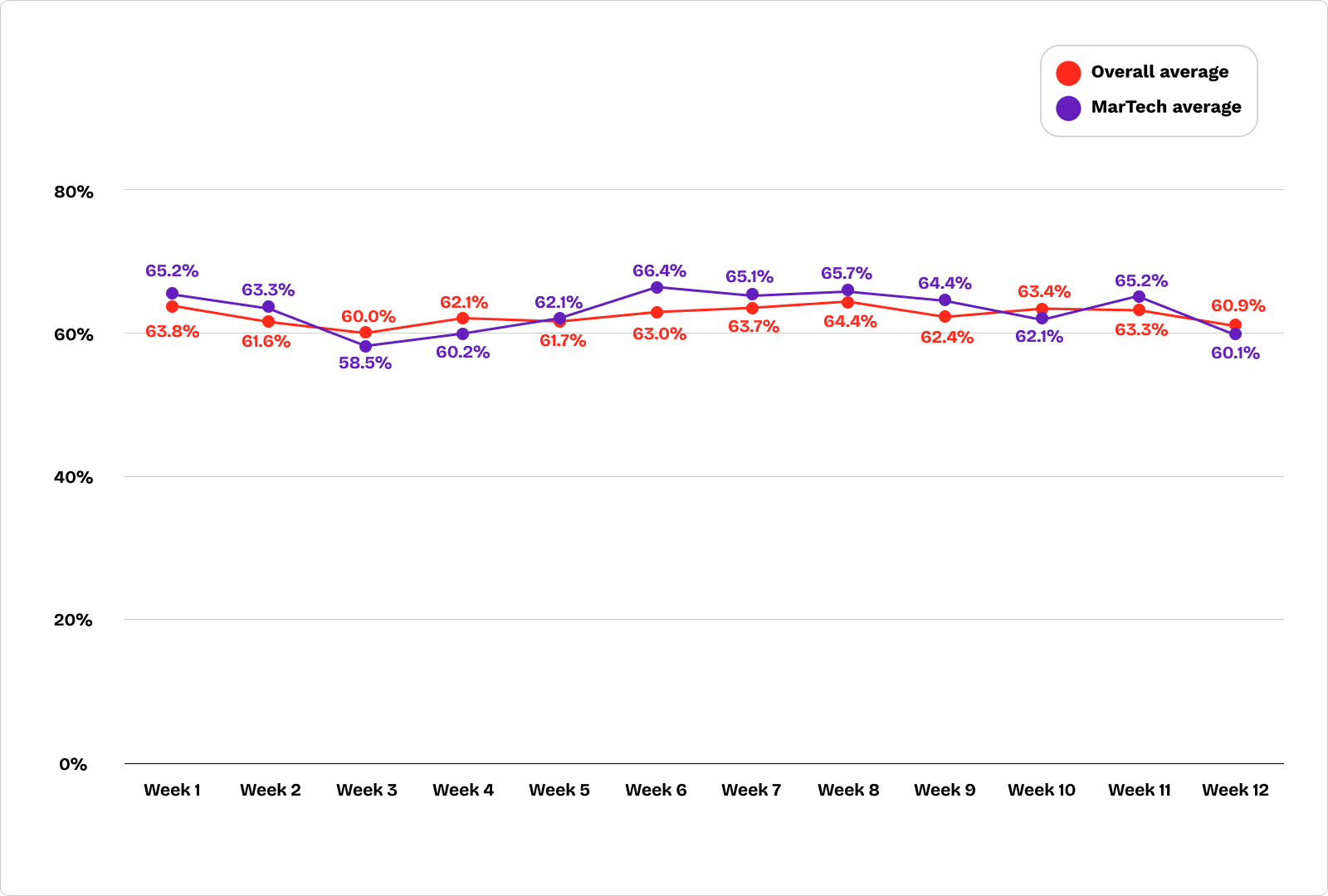
Most of them converted on par with the industry’s average inbound requests to meeting conversion rates. But three of them broke the pattern, despite operating in the same segment.
Let’s explore each of their playbooks, one at a time ⬇️
Note: I’ve anonymized their names to reflect their size and funding stage.
Company 1: A seed-funded mid-market company
They eliminated the SDR step entirely by routing directly to the AEs.
Their main challenge was a 5-minute lag between form submission and the automated follow-up email with the booking link. Their reps had to chase leads manually, because the email got buried and that killed conversion in a window where intent was the highest.
A basic fix that they implemented was embedding instant scheduling on their website. Prospects booked the AE meeting at the moment of form submission. They also optimized their demo pages:
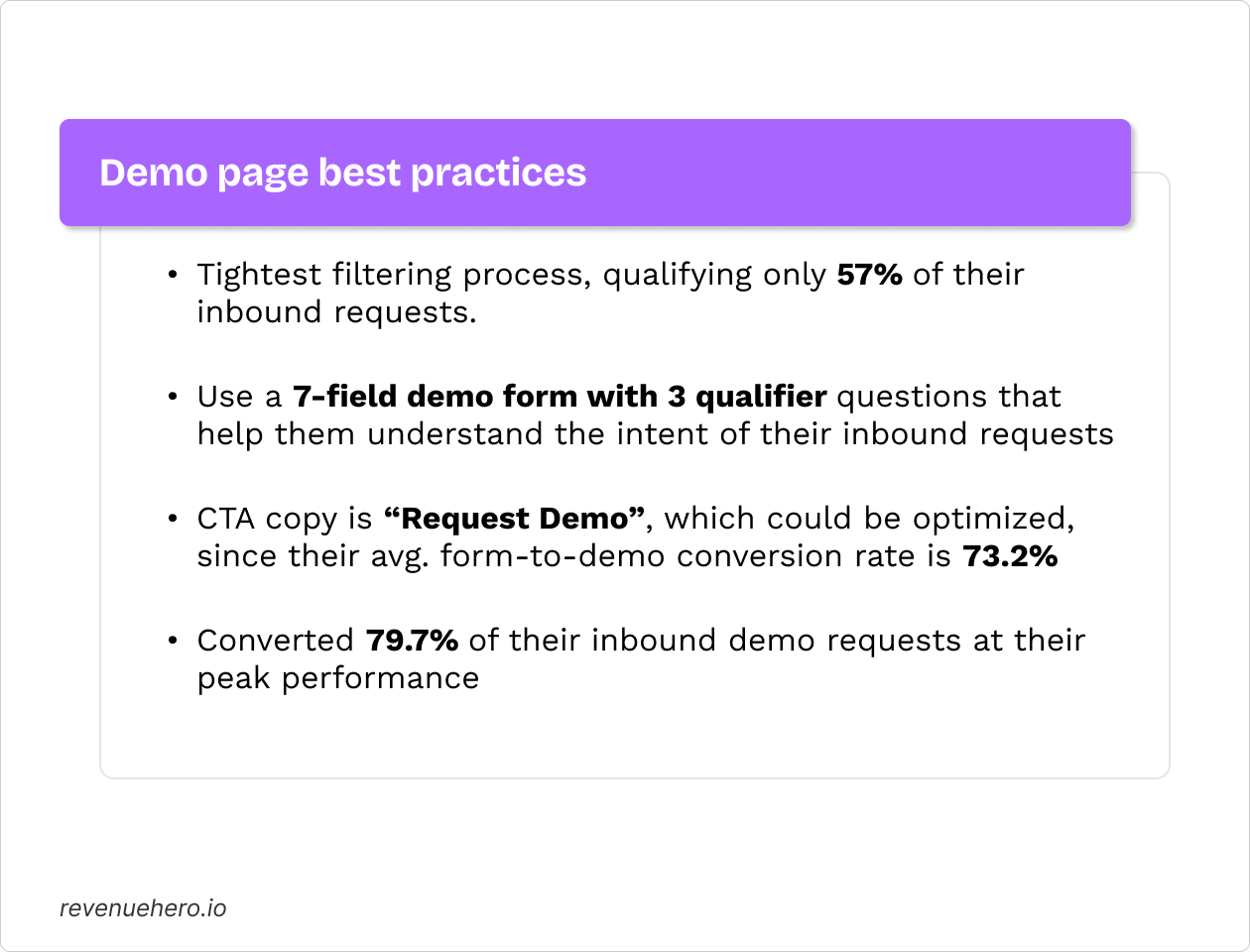
This company also relies on category authority (Capterra) and client logos. But, with only 4 logos and no testimonials, their instant scheduling experience has to do the heavy lifting when it comes to building trust—and their numbers show it.
Company 2: A Series A mid-market company
Every inbound demo request for this company with more than 10 employees mandated an SDR follow-up within 10 minutes, a mandatory company-wide commitment. Their core driver is speed-to-follow up.
All inbound forms funnel into a single inbound SDR router. The SDR team then books a 10-minute qualifying call based on which they assign the lead to the right AE. And, since RevenueHero links directly into their CRM logic, the right booking link auto-populates for the SDR, sans manual chaos.
For all inbound requests with less than 10 employees, the demo page redirects to the self-service trial page. This is smart segmentation as it reserves sales resources for accounts with real revenue potential, while still capturing smaller companies into a self-serve funnel.
Here are the best practices they followed in their demo page:
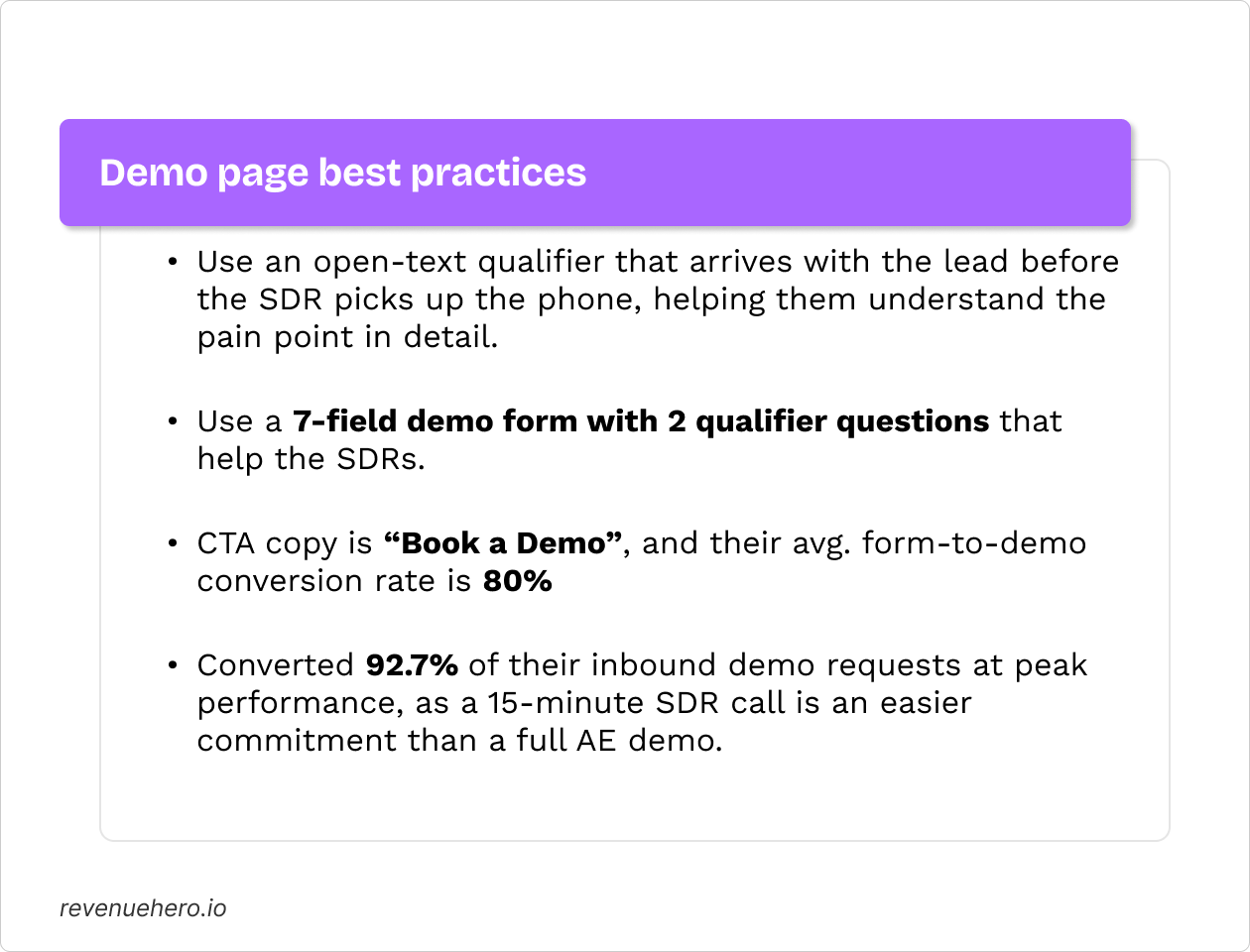
Their social proof is the most balanced out of the three: G2 badges, 4 testimonials, and 4 customer logos. This reduces hesitation at the form stage before prospects even reach the SDR.
Company 3: A Series A SMB company
Like Company 1, they’ve also eliminated the SDR step entirely.
They faced a more serious issue of manual lead distribution, time-consuming email exchanges, and a failed evaluation of a few scheduling software tools.
They fixed this with instant booking with CRM-integrated routing logic. Leads route to the right AE based on rules, and their calendars get populated automatically. As a result, their inbound conversion rates doubled and their sales cycles became shorter.
Here are the best practices that they followed for their demo page:
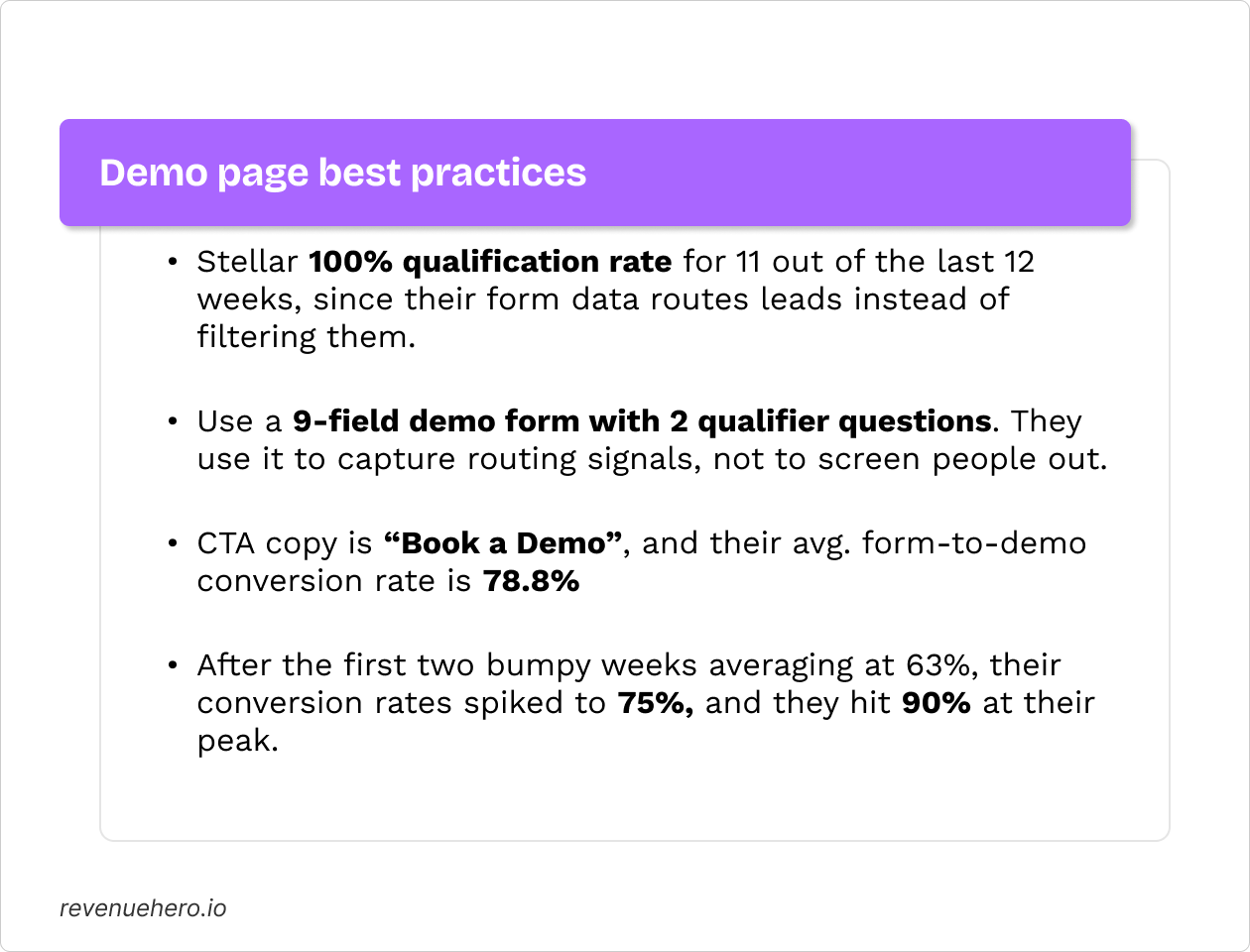
They lean the hardest on their client logos for social proof. They use 10 logos and zero testimonials. At the SMB level, peer-company recognition drives trust faster than written reviews.
Here’s a quick summary:
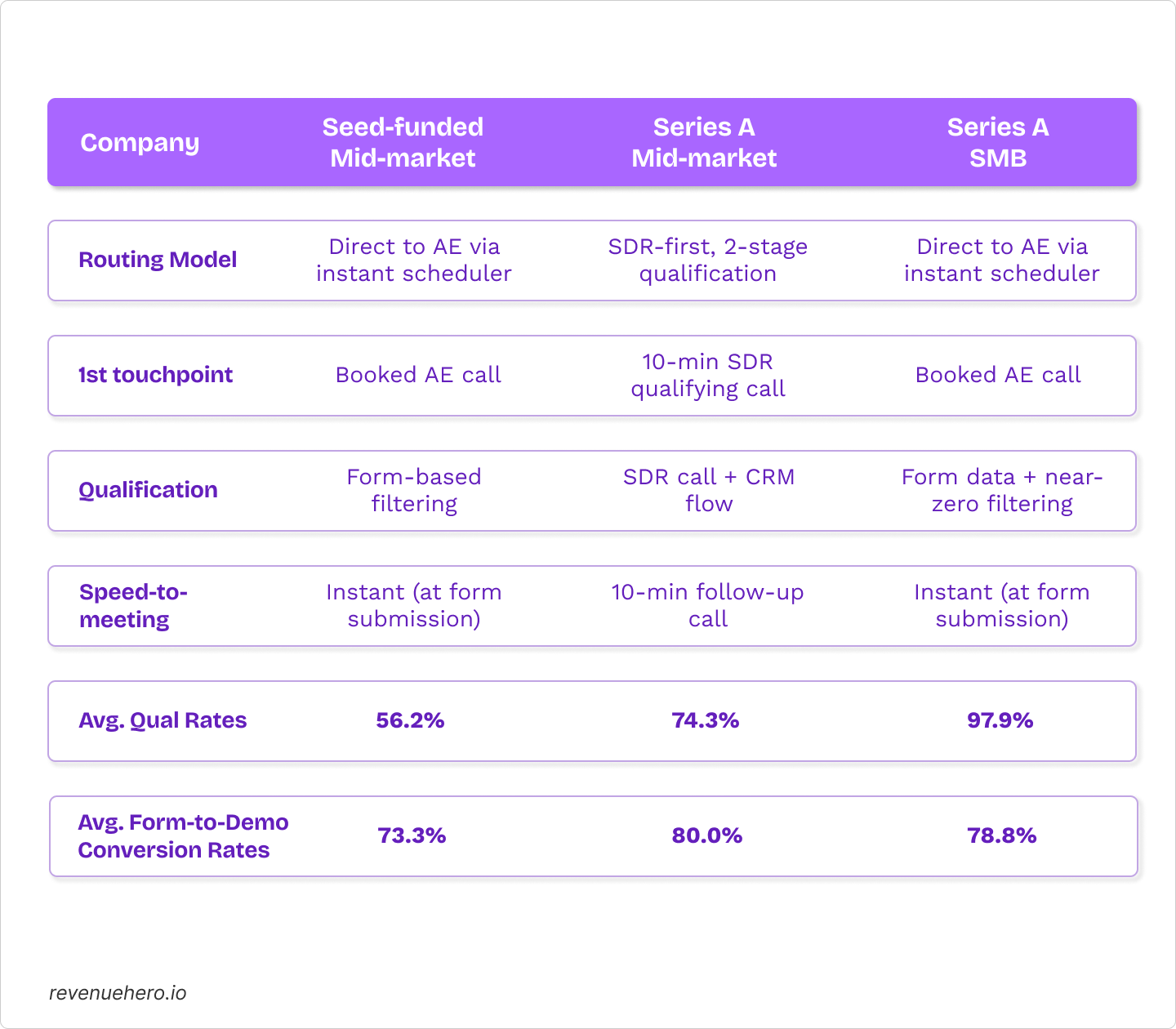
There is a common thread between the three: they capture the buyer's interest when they’re already searching, remove barriers between intent and booking, and make sure the right person is waiting to take the meeting.
Onto the regular weekly numbers now ⬇️
Weekly Highlights ✨
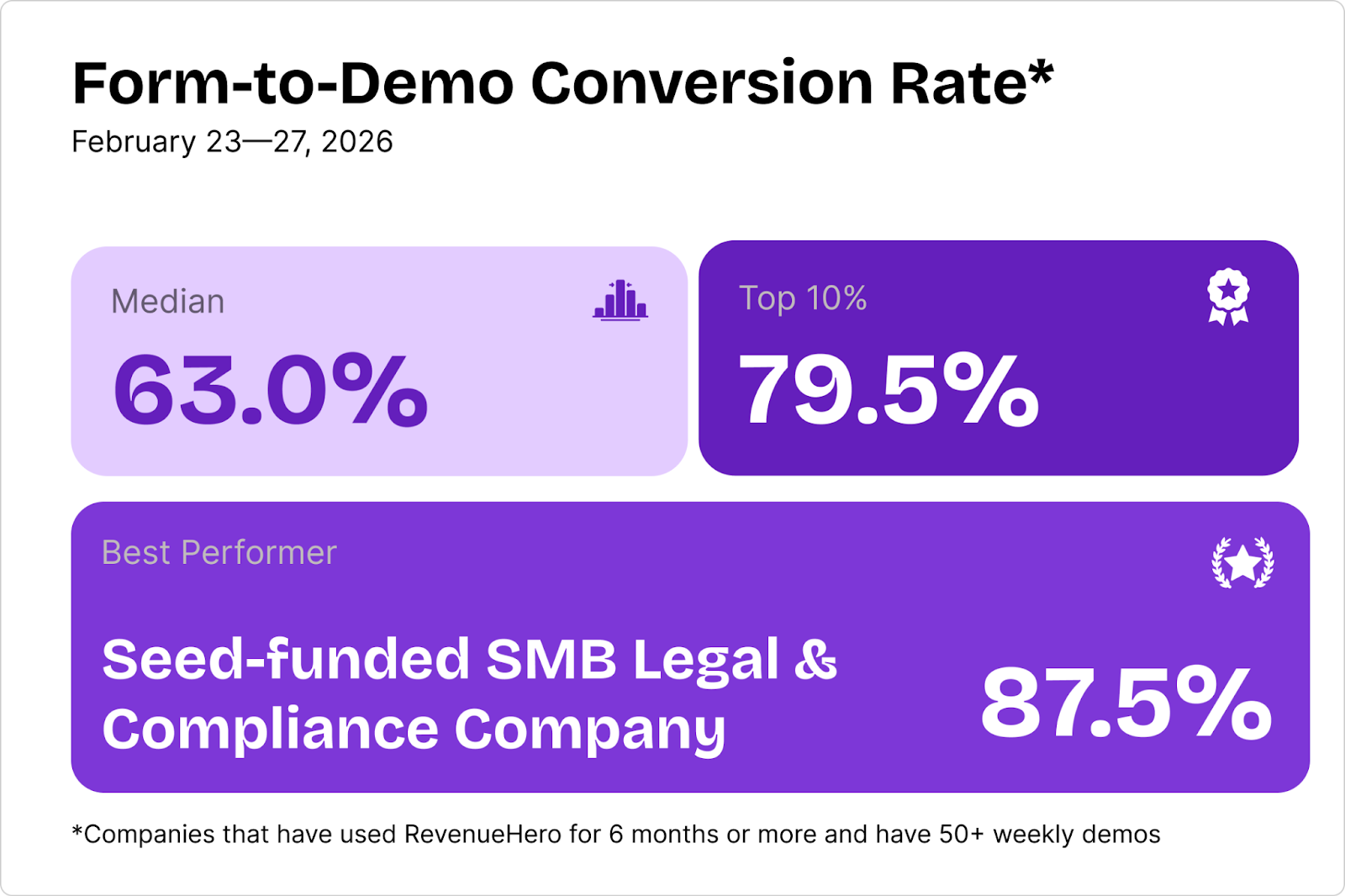
The best performer last week was a Seed-funded legal & compliance software company. Here’s what we learnt from their demo page:
- They use “Book a Demo” as their CTA
- They have displayed 9 customer testimonials and 8 customer logos
- Their demo form has 10 fields, 3 of which are used for qualification purposes
Inbound Snapshot
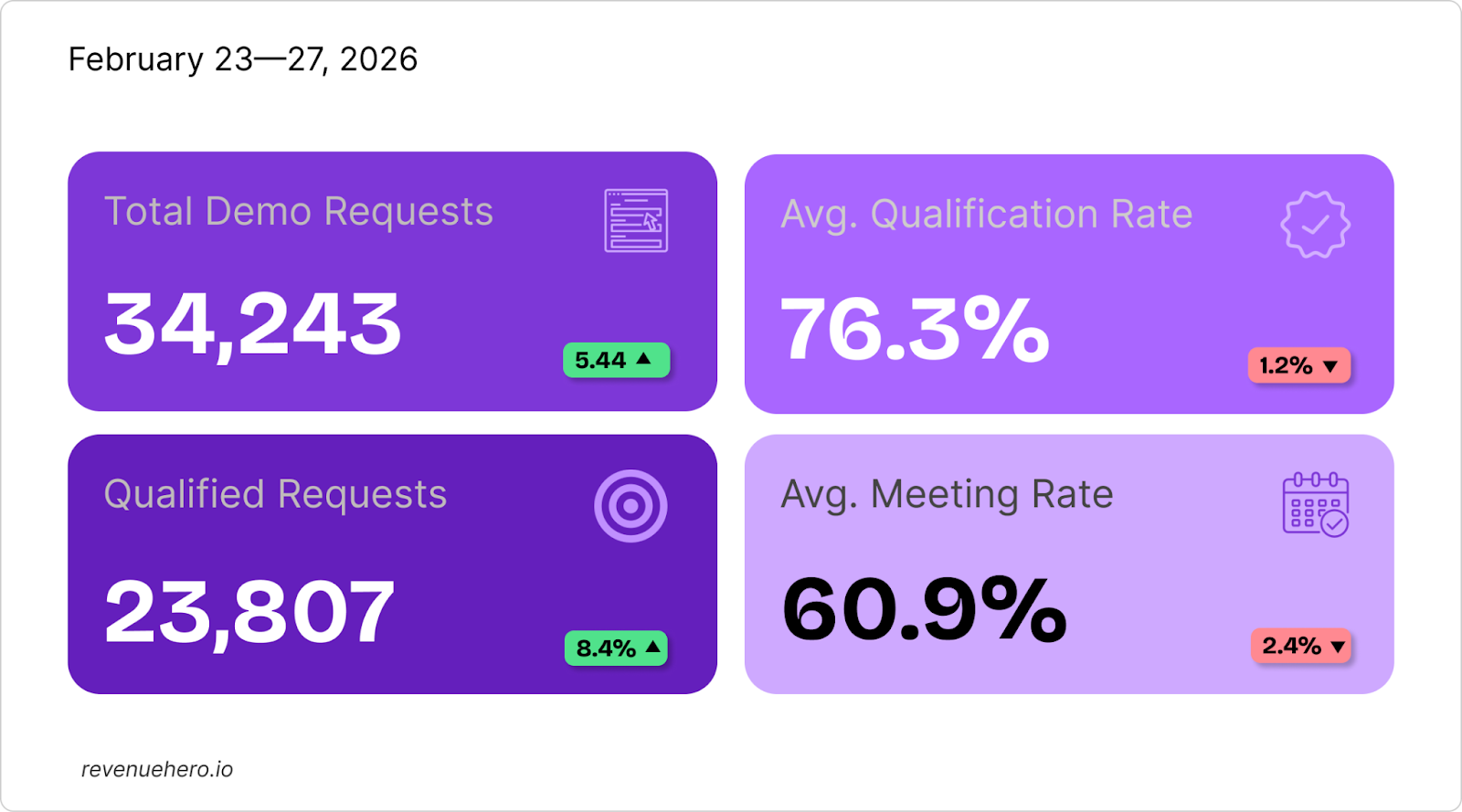
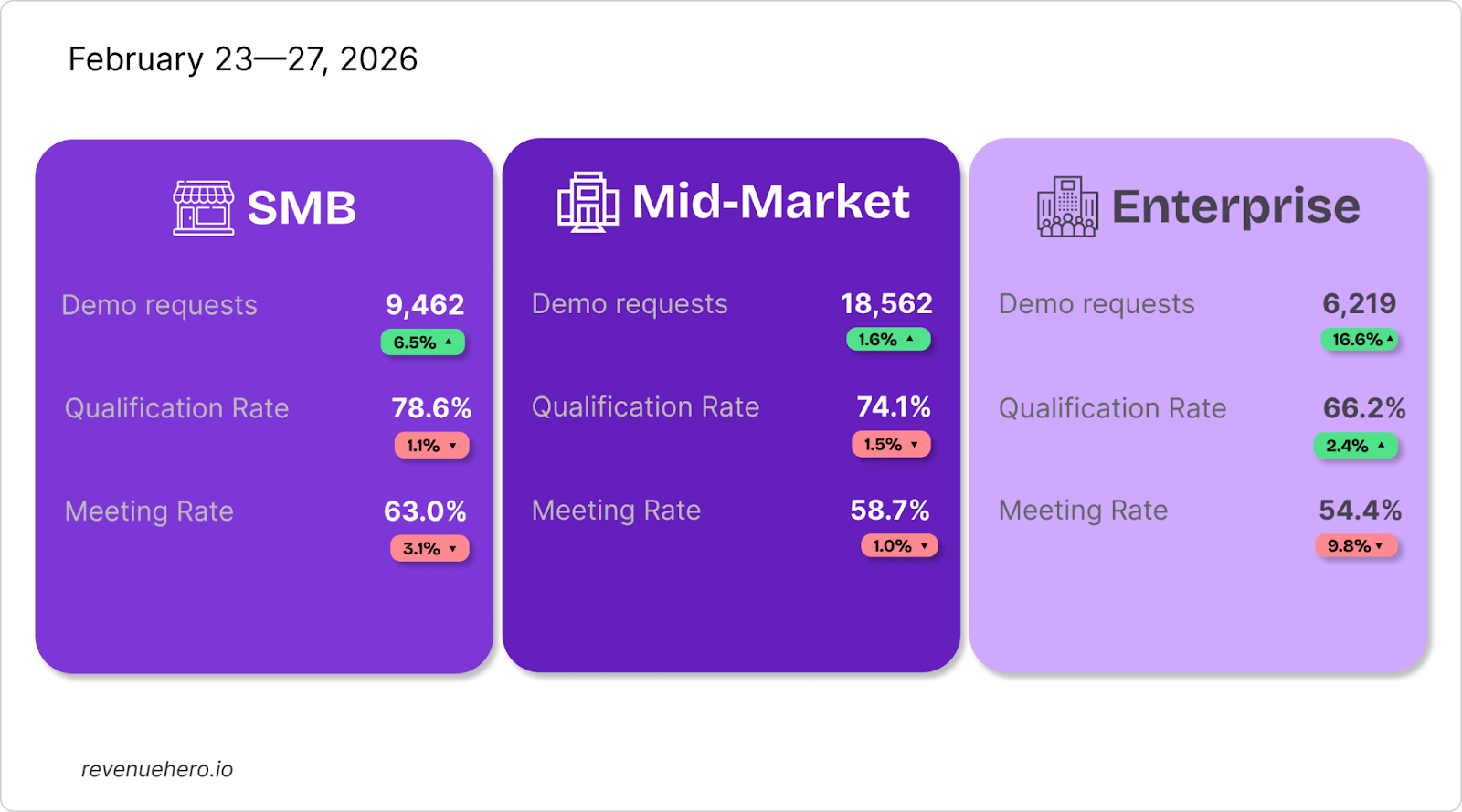
More demo forms were filled out last week, but conversions were a bit shaky. Demo request volumes surged 5.4%, but form-to-demo conversion rates slipped 2.4%.
Segment Snapshot
Demo volumes rose across all segments this week, with Enterprise companies witnessing a 9.8% plunge in form-to-demo conversion rates. Mid-market remained the most resilient, with a 1.5% downtick in qualification rates and a 1% slip in form-to-demo conversions. SMBs saw relatively steady qualification rates, but a 3% decline in form-to-demo conversions.
Funding Stage Analysis
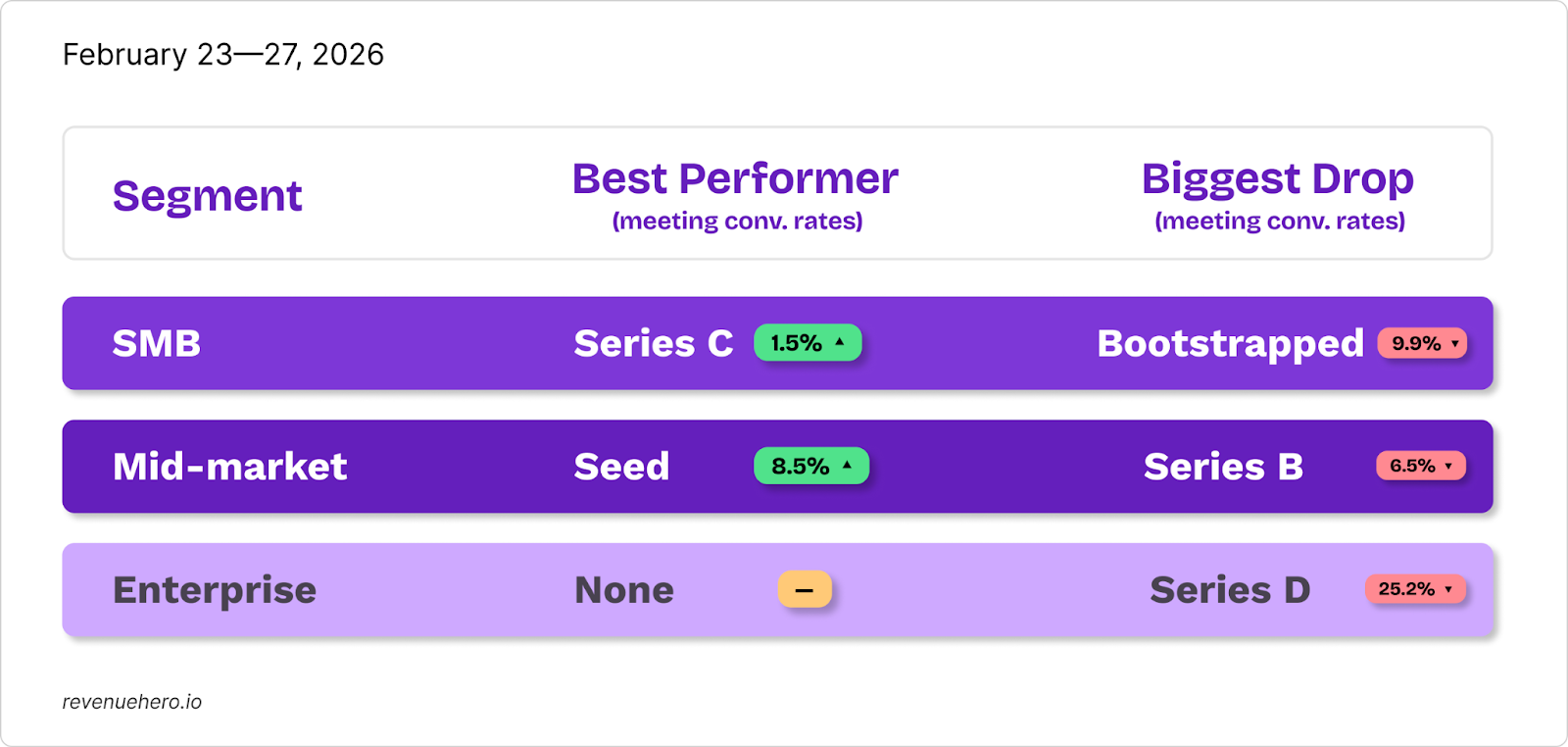
No segment in Enterprise saw steady or better conversion rates last week. Bootstrapped SMB companies saw a 9.9% drop in form-to-demo conversion rates, despite getting 13% more demo requests last week. If you fall into this category, revisit your demo page to check what's impacting your prospects' user experience.
Industry-wise Meeting Rates
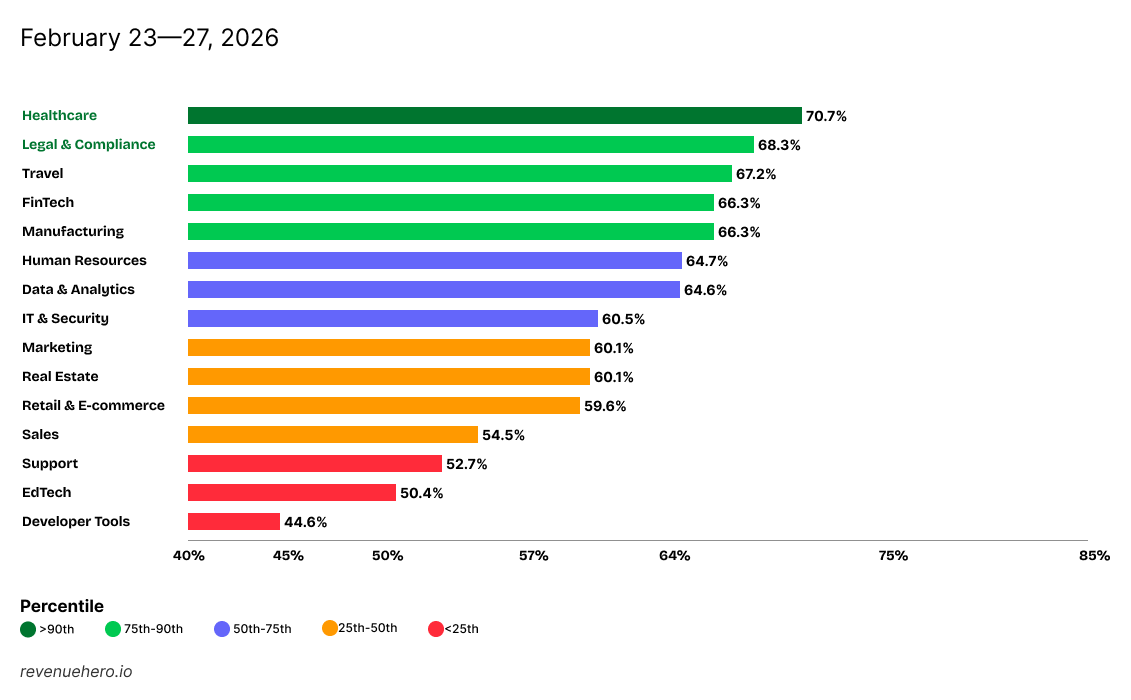
Data & analytics saw the biggest improvement in form-to-demo conversion rates last week, catapulting 15.4% and pushing the overall average to 64.6%.
Support software witnessed the growth see-saw, plummeting 17.3% points and dropping to 52.7% form-to-demo conversion rates, putting it below the 25th percentile.
Except for legal & compliance, every other industry in the top 5 category saw a drop compared to the previous week. FinTech and travel & hospitality remained in the top 5, despite witnessing 6% drops each.
Across the board, all industries except developer tools converted 50%+ of their qualified inbounds. However, only 27% of the industries saw steady or better conversion rates this week.
Top Performers
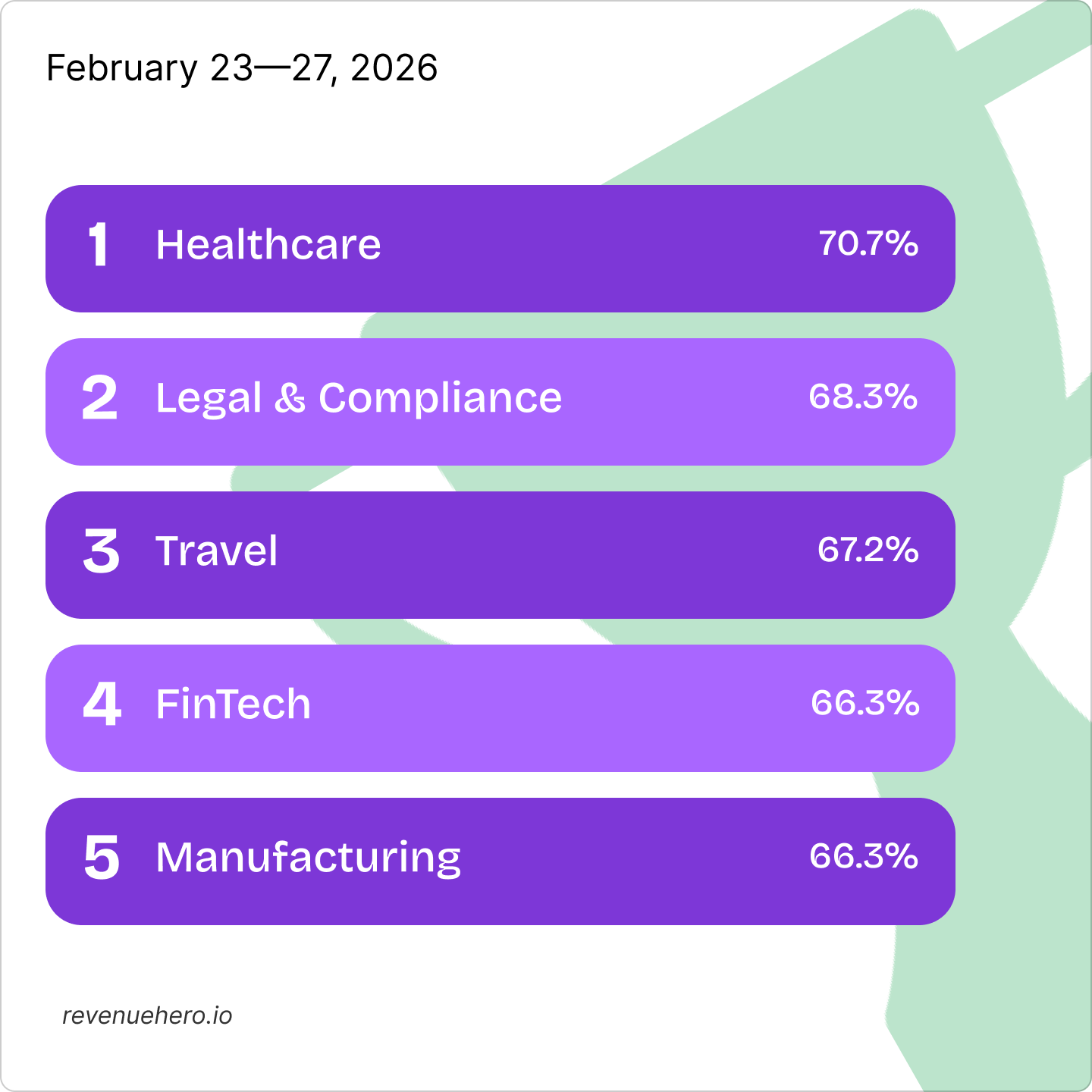
Healthcare retained its crown with a form-to-demo conversion rate of 70.7%
Key Observations
- Demand cooled, funnel efficiency stayed flat: demo requests fell 4.5% and qualified demos dropped 4.3%, but qualification (77.5%) and meeting rates (63.3%) were virtually unchanged.
- SMB softened slightly with demos down 4.8% and meeting rates dipping 2% despite strong qualification (79.7%).
- Mid-Market quietly improved, rising 2.1% in meeting conversion, even with 3.6% fewer demos.
- Enterprise remained steady with meeting rates holding at 64.2% and qualification improving 2.9%, despite 7.3% fewer demos.
- Biggest wins: Support Software (+17.1%), Travel (+5.1%) and Marketing (+3.1%).
- Biggest drops: Financial & Accounting (-5.9%), Real Estate (-5.2%), and Education (-5.0%).
- Healthcare (74.9%) and Travel (73.9%) led above the 90th percentile, with Financial & Accounting slipping but staying top-tier.
- SMB's Series B jumped 5.4% in form-to-demo conversion rates, while Series A saw the biggest decline of 4.9%.
- Mid-Market's Series B surged 9.9% in meetings despite lower volume, while Seed struggled on conversion despite 25% demo growth.
- Enterprise's Series C led with a 10% meeting rate jump, with all enterprise cohorts maintaining stable-to-improving conversion rates overall.
We’ll be back next week with a fresh batch ✨
Until then, keep those meetings flowing 📈


