Most B2B SaaS teams are converting about 40% of their qualified inbound leads into booked meetings and assuming that's normal. It isn't. Data from over one million inbound form submissions shows the top 10% of companies book 78% or more of their qualified leads. The gap between 40% and 78% isn't about better leads, bigger budgets, or more traffic. It's about what happens in the 30 seconds after someone fills out your form. If your process involves a manual review queue, an SDR eyeballing a spreadsheet, or a "thanks, we'll be in touch" confirmation page, you're watching pipeline evaporate in real time. Figuring out how to qualify inbound leads automatically is the single highest-leverage change most GTM teams can make to their conversion numbers, and it doesn't require a single additional dollar of ad spend.
The Decay of Intent: Why Manual Lead Qualification Fails Modern GTM Teams
The traditional inbound workflow was designed for a slower buying cycle. A lead submits a form, it enters a queue, someone reviews it during business hours, and eventually an SDR sends a follow-up email. That process made sense when buyers were evaluating one or two vendors at a time. In 2026, your prospect has three competitor tabs open while filling out your form. Every minute of delay is a minute they're spending with someone else.
The 30-Second Window Between Submission and Lost Revenue
The old "five-minute rule" for lead response is already obsolete. Conversion probability drops from roughly 80% in the first minute after a form fill to around 40% by the next business day. That's not a gradual decline: it's a cliff. The companies hitting 78%+ qualified-to-booked rates aren't responding faster. They're eliminating the response step entirely. The moment someone submits a form, they see a calendar. No waiting, no "someone will reach out," no email chain. The form submission is the conversion event, not the start of a nurture sequence.
The False Comfort of 40% Conversion Rates
If your team is converting 40% of qualified leads and celebrating, you're leaving more than half your pipeline on the table. The median across B2B SaaS companies using automated qualification and scheduling sits at 62%. The best performers hit 88%. A team converting at 40% that moves to 62% picks up 22 additional meetings for every 100 qualified leads, on the same traffic and the same budget. That's not a marginal improvement. That's a fundamentally different pipeline number, and it comes entirely from fixing what happens after the click.
Building an Infrastructure for Instant Inbound Qualification
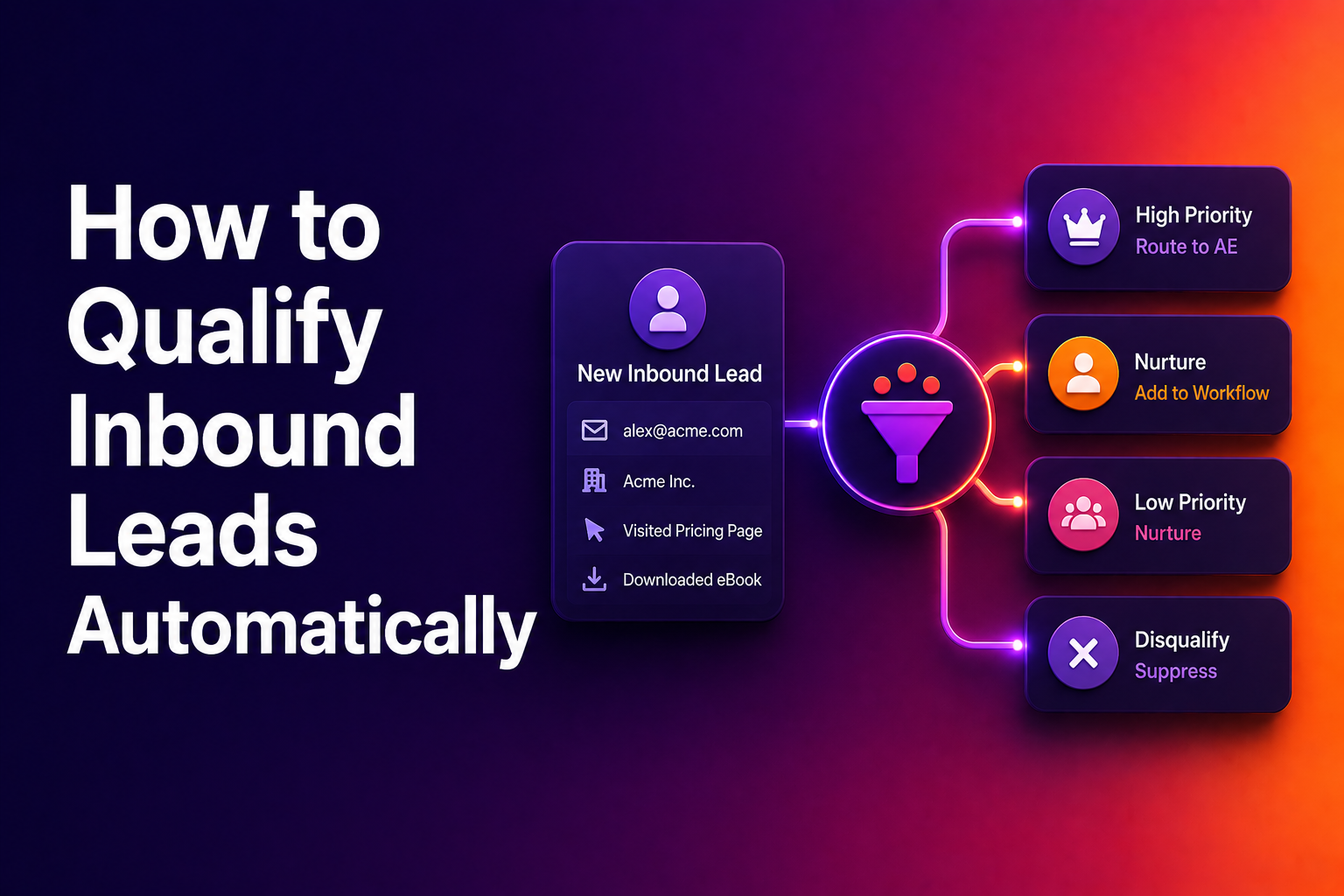
Automating qualification isn't just about speed. It's about building a system that can make a routing decision in real time, without human intervention, and get it right consistently. That requires three inputs working together: what the lead tells you on the form, what enrichment data reveals about their company, and what your CRM already knows about the account.
Leveraging Form Data, Enrichment, and CRM History
A strong qualification engine combines self-reported form data (company size, use case, role) with firmographic enrichment (industry, employee count, tech stack) and CRM history (existing account ownership, prior engagement, open opportunities). RevenueHero, for example, runs this enrichment and qualification logic at the moment of form submission, so the routing decision happens before the confirmation page loads. The key is that no single data source is sufficient on its own. A VP at a 500-person company looks great on paper, but if your CRM shows that account already has an open opportunity with a different rep, routing it to round-robin would create a mess. Layering these three inputs together is what makes instant qualification accurate, not just fast.
Moving from 'Request' to 'Book' Language to Drive Commitment
This is a five-minute fix with measurable results. Among top-performing companies, 29% use "Book a Demo," 21% use "Get a Demo," and only 12% use "Request a Demo." The pattern is clear: commitment language outperforms permission language. "Request" implies uncertainty: you're asking, and someone else decides. "Book" implies action: you're choosing a time, and it's happening. Search your site for every instance of "Request," "Submit," or "Contact Sales." Replace them with "Book," "Schedule," or "Pick a Time." This shift changes the visitor's mental frame from "considering" to "doing" while they're still on your page.
Optimizing Form Strategy for Higher Qualified-to-Booked Rates
Form design is one of the most debated topics in demand gen. The conventional wisdom says fewer fields equal higher conversion. The data tells a more nuanced story.
Why Field Count Matters Less Than Field Intent
Top performers convert at 77% with 2 fields and at 76% with 13 fields. The number of fields doesn't determine your conversion rate. What matters is whether each field does something useful. Every field should serve one of three purposes: routing the lead to the right rep, qualifying the lead against your ICP, or giving the rep context to personalize the conversation. If a field doesn't do any of those three things, cut it. "How did you hear about us?" is a classic offender: it rarely gets actioned, and attribution tools handle this better. Job title matters only if your routing logic uses it. Company size matters if it's a qualification criterion. Be ruthless about removing fields that exist out of habit rather than function.
Using Vertical Positioning to Increase Segment-Specific Conversions
Generic landing pages convert at generic rates. The data shows that vertical-specific positioning consistently outperforms horizontal messaging. Construction Tech converts at 69.1%. Ecommerce at 68.8%. Travel Tech at 68.3%. Generic Sales Tech sits at 62.8%. The playbook is straightforward: identify your best-performing industry or use case, build a dedicated landing page with industry-specific headlines, customer logos, and testimonials, and run traffic to it for 30 days. Compare against your generic page. You can even tailor form fields to the vertical: "How many locations?" for multi-site businesses, "Current ATS?" for HR buyers. This specificity signals to the prospect that you understand their world, which increases both form completion rates and post-booking show rates.
Automating the Handoff: Real-Time Routing and Scheduling
Qualification without instant routing is only half the equation. The moment a lead is deemed qualified, they need to see a calendar, and it needs to be the right rep's calendar.
Eliminating the Manual Review Queue
The manual review queue is where intent goes to die. A lead fills out a form at 2 PM. An SDR reviews it at 4 PM. They send an email. The lead sees it the next morning. Maybe they respond. Maybe they don't. Three days have passed, and the prospect has already booked a demo with a competitor who showed them a calendar instantly. Eliminating this queue means building qualification rules that are specific enough to make a binary decision: qualified or not. If qualified, present a calendar. If not, route to an appropriate nurture path. No human in the loop for the initial decision. This doesn't mean your SDRs become irrelevant. It means they stop spending time on triage and start spending time on high-value prep and follow-up for booked meetings.
Matching High-Value Leads to the Right Rep Instantly
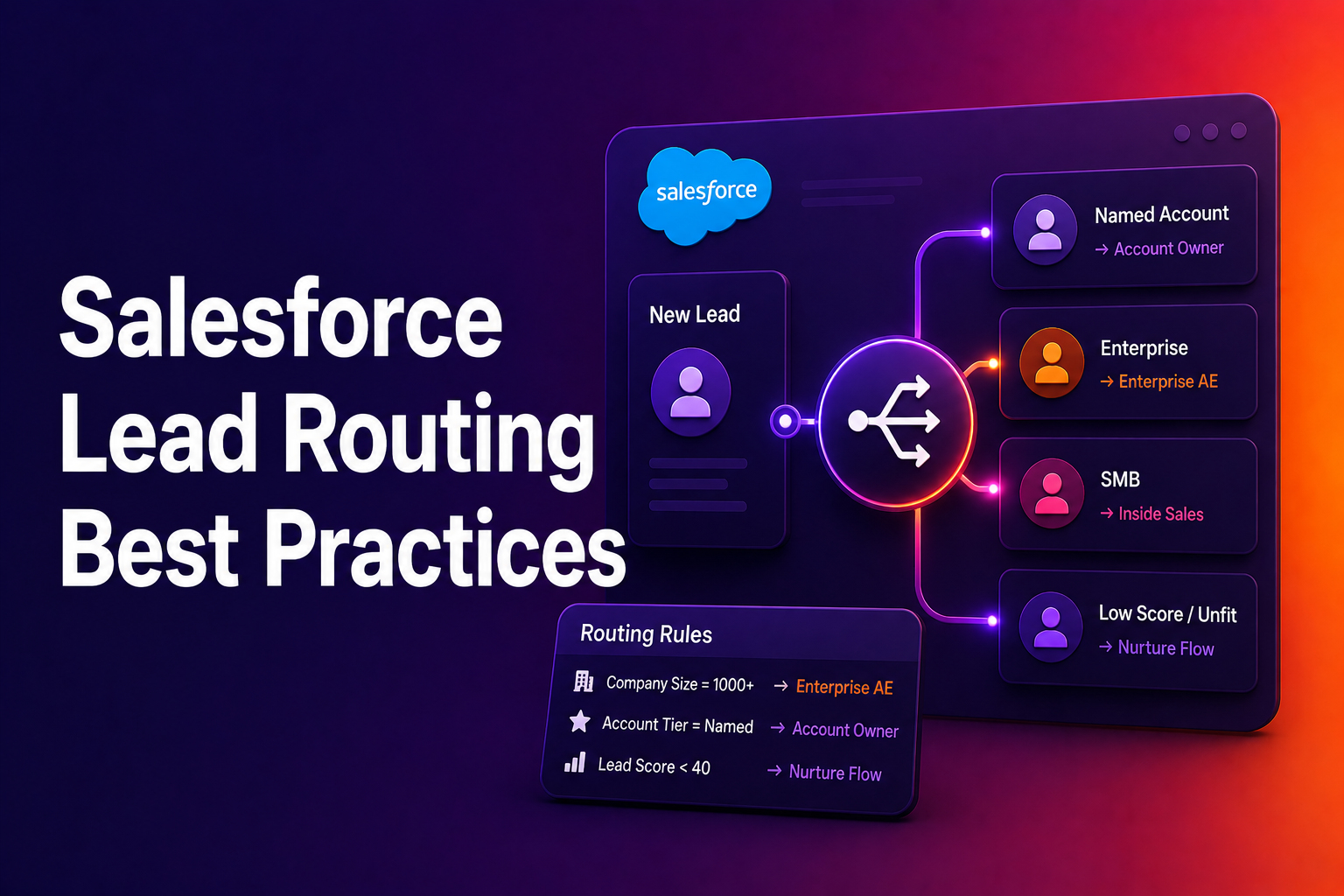
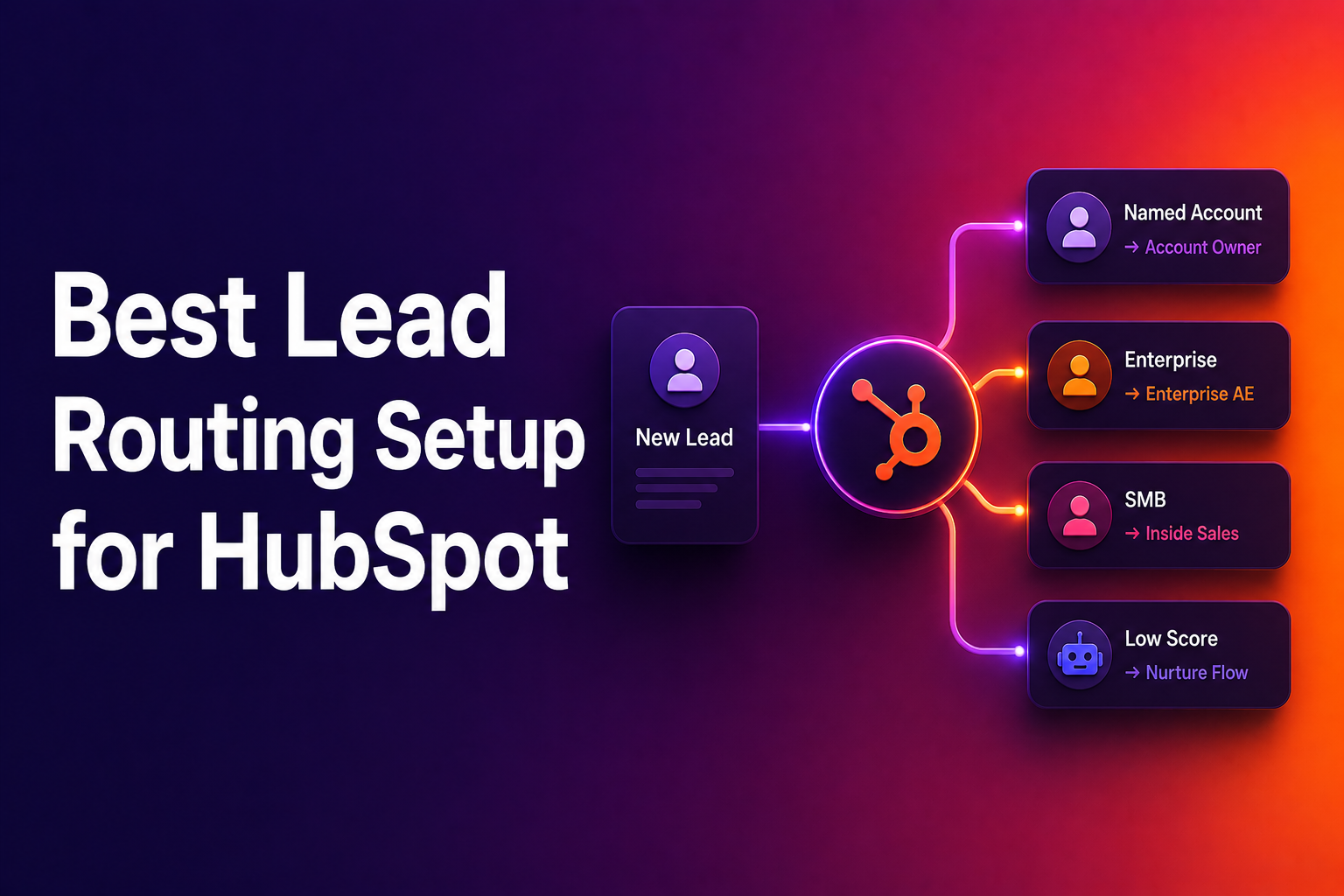
Simple round-robin assignment ignores the complexity of real sales organizations. Enterprise accounts need to route to the rep who owns the account in Salesforce. Leads from specific territories need to land with territory owners. High-value accounts might need to skip the SDR entirely and go straight to an AE. Your routing logic should respect CRM relationships, account ownership, territory rules, and product interest. It should also handle edge cases: what happens when the assigned rep is on PTO? What if the account has an open renewal? These aren't theoretical problems. They're the exact scenarios that cause leads to fall through cracks when routing is manual. Automated routing with nested rules handles this in milliseconds.
Refining Qualification Rules to Balance Friction and Quality
Getting your qualification criteria right is an ongoing process, not a one-time setup. Too loose, and you waste rep time on poor fits. Too tight, and you filter out real buyers.
Establishing a Disqualification (DQ) Rate North of 20%
If your DQ rate is under 20% and your meeting quality is suffering, you're probably letting through leads that waste expensive rep time. Companies with higher DQ rates consistently show higher qualified-to-booked conversion rates. This makes sense: when you're selective about who reaches sales, the leads who do get through are more engaged, more likely to show up, and more likely to convert. The right DQ threshold depends on your motion. Enterprise teams selling six-figure deals, where a single bad meeting costs hours of senior rep time, should aim for a higher DQ rate. High-velocity SMB teams running 15-minute demos can afford to be more inclusive. The principle holds regardless: intentional disqualification improves pipeline quality.
Quarterly Audits of Qualification Criteria by Motion
Your ICP shifts. Your product evolves. Your market changes. Qualification criteria that worked six months ago might be filtering out a new buyer persona you didn't anticipate. Run a quarterly audit of your qualification rules. Pull the data on disqualified leads and check whether any segments are being incorrectly filtered. Look at your booked-to-closed rate by qualification criteria to see if certain rules correlate with higher win rates. If you're running multiple motions (enterprise, mid-market, PLG), each motion should have its own qualification logic. A single set of rules applied uniformly across different buyer types creates blind spots that compound over time.
Scaling Performance Toward the 78% Benchmark
The companies booking 78% or more of their qualified leads aren't doing anything exotic. They use commitment language on their CTAs. They cut form fields that don't serve routing or personalization. They're pickier about who gets through to sales. And when someone qualifies, they put a calendar in front of them immediately: not tomorrow, not after a review, right then.
None of this requires a larger budget or better leads. You already have the traffic. You already have people raising their hands. The question is how many of them actually end up in a conversation with your team. If you're sitting at 40% today, moving to 62% means 22 more meetings per 100 qualified leads. Getting to 78% nearly doubles your pipeline from the same spend.
Start with the highest-impact change: eliminate the gap between form submission and calendar. Then tighten your qualification rules, audit them quarterly, and build vertical-specific landing pages for your best segments. The path from 40% to 78% is a series of operational decisions, each one compounding on the last.
Let RevenueHero help your team turn high-intent users into booked meeting without slowing down your funnel.