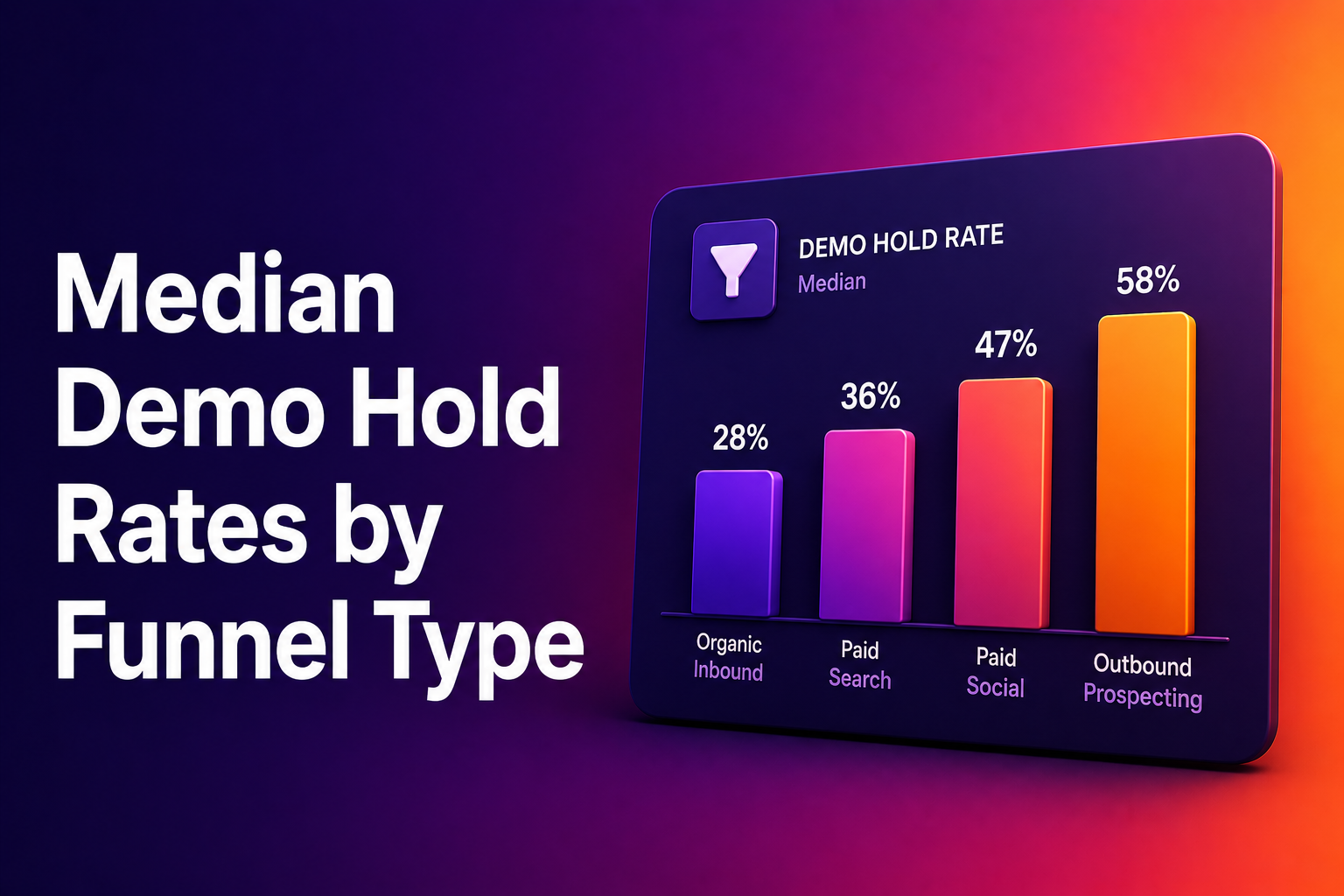
Most GTM teams obsess over traffic and lead volume, but the real leverage point sits further down the funnel: how many qualified leads actually show up to a demo. The gap between "qualified" and "booked" is where pipeline quietly dies. A lead fills out your form, meets every qualification criterion, and then disappears into a scheduling black hole. According to 2026 benchmark data, the median qualified-to-booked meeting rate across all customers is 62%. That means nearly four out of ten qualified leads never make it to a conversation. Understanding how demo hold rates vary by funnel type, segment, and season gives you a concrete framework for diagnosing where your pipeline is leaking and what to fix first. The difference between median performance and top-10% performance (78%+) isn't better leads or bigger budgets. It's process design.
The Lead-to-Meeting Gap in Modern GTM Teams
The distance between a qualified lead and a booked meeting feels small on a flowchart. In practice, it's where the most revenue gets left behind. Every hour that passes after a form submission erodes the buyer's intent. They were ready to talk when they clicked "submit," but by the time an SDR reviews the lead, sends a follow-up email, and proposes three time slots, the moment has passed.
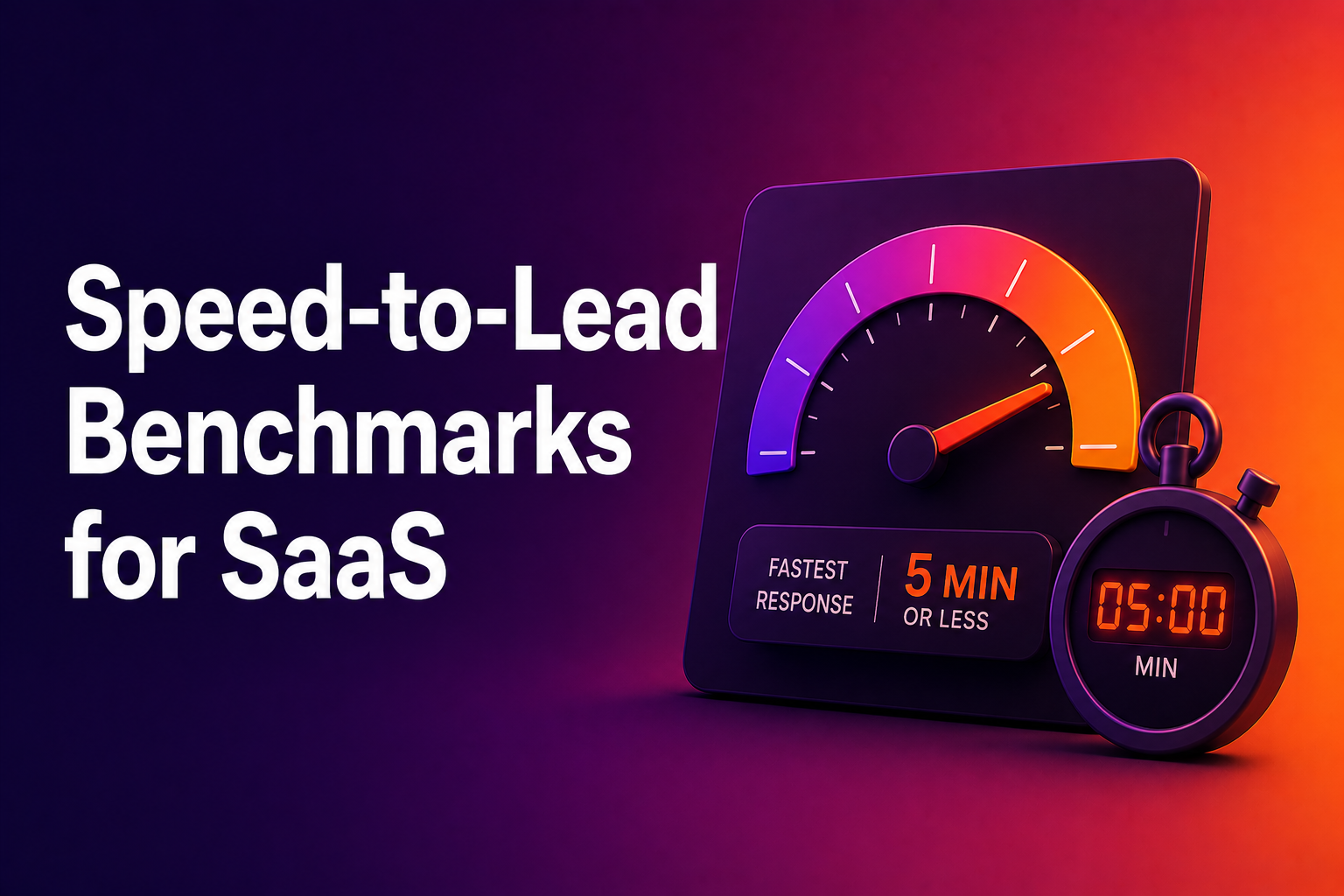
This isn't a people problem. It's a structural one. Most inbound funnels are designed around internal workflows rather than buyer momentum. The lead enters a queue, gets routed manually, and waits for someone to take action. That delay compounds fast: conversion probability drops from roughly 80% in the first minute to around 40% by the next day. The five-minute response rule that teams used to target is already outdated. Buyers evaluating multiple solutions simultaneously expect sub-minute engagement or they move on.
The Friction of Permission-Based Language
Your CTA copy signals more than you think. Data from the 2025 benchmark report shows that among top-performing funnels, 29% use "Book a Demo," 21% use "Get a Demo," and only 12% use "Request a Demo." The pattern is consistent: commitment language outperforms permission language.
"Request" implies a gatekeeper. It tells the visitor that someone else decides whether they're worthy of a conversation. "Book" and "Schedule" put the visitor in control, creating a psychological shift from consideration to action while they're still on the page. This distinction isn't theoretical. Teams that swap "Request a Demo" for "Book a Demo" see measurable lifts in conversion without changing anything else about the page. It's a five-minute fix.
Why Manual Scheduling Kills Inbound Momentum
Manual scheduling is the single biggest destroyer of inbound momentum. When a qualified lead submits a form and receives a "we'll be in touch" confirmation page, you've introduced uncertainty at the exact moment the buyer was most certain. They don't know when they'll hear back, who they'll talk to, or whether their request even landed with the right person.
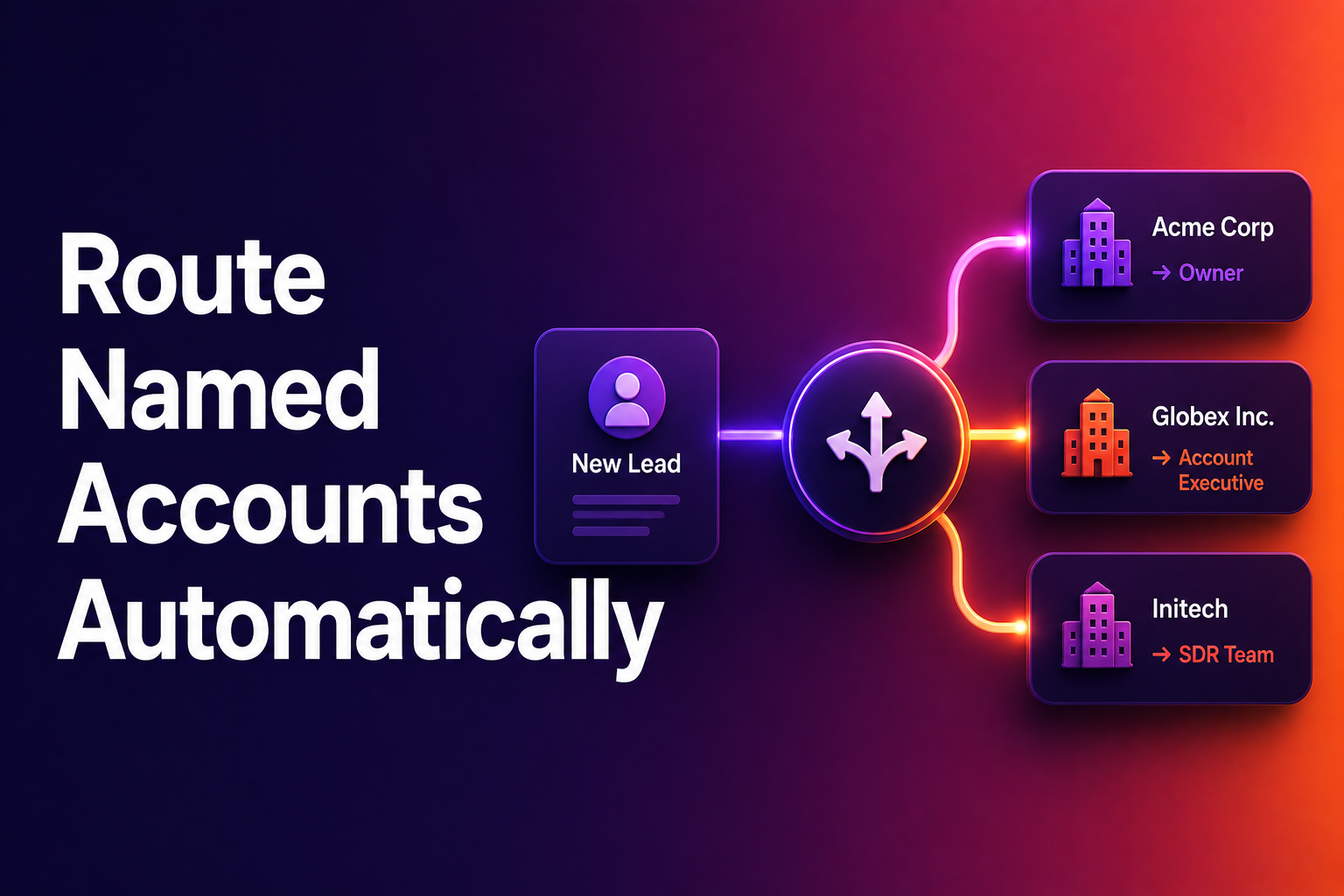
The alternative is instant scheduling: putting a calendar directly in front of the qualified lead the moment they pass your qualification criteria. RevenueHero and similar platforms handle this by enriching, qualifying, and routing leads in real time so that a calendar appears immediately after form submission. The median hold rate across the benchmark dataset is 62%, but that number includes teams still relying on manual follow-up. With instant scheduling, the performance floor rises significantly.
Benchmarking Median Hold Rates by Segment
A single benchmark number doesn't tell you much. A 60% hold rate might be excellent for one segment and mediocre for another. The real value comes from comparing your numbers against peers in your specific market, company size, and stage.
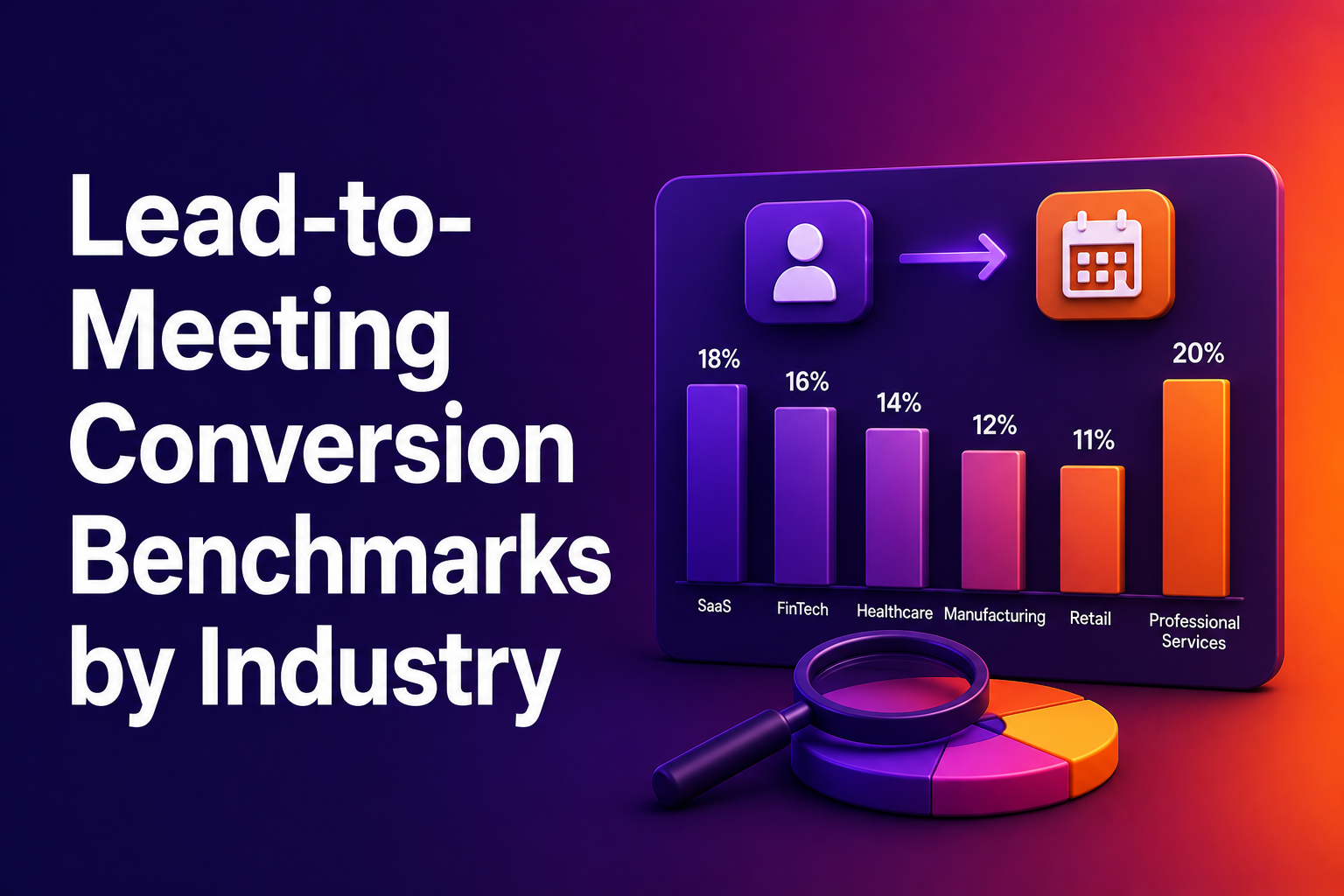
Across the full dataset, the median demo hold rate varies meaningfully by company segment. SMB-focused companies convert qualified leads at 63.2% with a relatively low disqualification rate of 21.8%. Mid-market teams land at 61.2% but carry a higher DQ rate of 28.1%. Enterprise funnels show the most interesting split: a 70.1% meeting rate alongside a 71.2% DQ rate. Enterprise teams are pickier about who gets through, but the leads that do qualify convert at a much higher clip.
SMB vs. Enterprise: The Impact of Qualification Friction
SMB funnels tend to cast a wider net. Lower deal sizes mean teams can afford to take more meetings, even with imperfect qualification. The tradeoff is that reps spend time on calls that don't convert to pipeline. The DQ rate of 21.8% suggests that most SMB teams let nearly everyone through.
Enterprise funnels flip this equation. The 71.2% DQ rate means these teams reject the majority of inbound leads before they ever reach a rep. But the leads that survive qualification convert at 70.1%, the highest rate in the dataset. The lesson isn't that enterprise is "better." It's that tighter qualification upstream produces better conversion downstream. If your DQ rate is under 20% and your meeting rate is struggling, you might be letting through leads that waste rep time. Tightening criteria on company size, industry, or use case fit could lift your hold rate without adding any traffic.
Funding Stage Disparities: The Series A and B Slump
One of the more surprising patterns in the data: both early-stage and late-stage companies outperform the middle. Unfunded and seed-stage companies convert at 63.6%. Series D and PE-backed companies hit 66.8%. But Series A companies? Just 53.6%. Series B? 55.3%.
The explanation likely comes down to process maturity. Seed-stage teams are scrappy and respond fast because every lead matters. Late-stage companies have invested in automation, routing logic, and dedicated ops teams. Series A and B companies sit in an awkward middle: they've grown past the founder-led sales motion but haven't yet built the infrastructure to handle inbound at scale. If you're in this stage, the fastest path to improvement isn't more leads. It's fixing the plumbing between form fill and calendar.
Vertical vs. Horizontal Funnel Performance
Vertical SaaS consistently outperforms horizontal SaaS on demo hold rates. This isn't a coincidence. It's a structural advantage that compounds across every stage of the funnel.
Construction Tech leads the market at 69.1%. Ecommerce Tech follows at 68.8%. Travel Tech sits at 68.3%. Compare that to generic Sales Tech at 62.8% or Dev Tools at 55%. The gap between the best vertical and the weakest horizontal category is 14 percentage points, which translates to 14 additional meetings per 100 qualified leads.
Why Construction and Ecommerce Tech Lead the Market
The advantage comes from clarity. When you sell to contractors, "Are you a contractor?" is a simple, effective qualification question. The visitor knows immediately whether they're the right fit. The rep knows exactly how to personalize the demo. Everything downstream gets easier.
Horizontal products face a fuzzier path. "Any company that does marketing" is a broad target. Visitors aren't sure the product is built for them. Reps aren't sure how to open the call. Qualification criteria are harder to define. Each point of ambiguity adds friction, and friction kills hold rates.
The Power of Specificity in Landing Page Conversion
If you're a horizontal product, you can still capture some of this vertical advantage through positioning. A "Marketing software for e-commerce" landing page will convert better than a generic "Marketing software" page, even if the underlying product is identical. Specificity signals fit, which builds confidence, which drives conversion.
Top performers in the dataset build dedicated landing pages for their best-performing industries with segment-specific headlines, customer logos from that vertical, and relevant form fields like "How many locations?" for multi-site businesses or "Current ATS?" for HR buyers. Running traffic to a vertical page for 30 days and comparing against a generic page is one of the highest-ROI experiments a demand gen team can run.
Seasonality and the Q3 Hold Rate Trap
Seasonality affects demo hold rates more than most teams realize. Q2 is the strongest quarter, with meeting rates exceeding 60% across April, May, and June. Q1 and Q4 perform similarly at 58.5% and 58.0% respectively. Q3 is where things fall off, dropping to 55.9%.
The Q3 dip isn't evenly distributed, though. July actually performs well at 61.1%. The drag comes almost entirely from August (53.4%) and September (53.7%). If your late-summer numbers drop, you're not alone: this pattern is consistent across the broader market. The practical takeaway is to plan your biggest inbound campaign pushes for Q2 and avoid launching major initiatives in August. If you do run campaigns in late summer, adjust your expectations and focus on tighter qualification to protect rep time during a period when hold rates naturally compress.
Optimizing the Path to 78% Qualified-to-Booked
The top 10% of funnels book 78% or more of their qualified leads. The best single performer in the dataset hits 88%. These teams aren't doing anything exotic. They've removed unnecessary friction at three specific points: the CTA, the scheduling step, and the routing logic.
Replacing 'Request' with Commitment-Driven CTAs
Search your site for every instance of "Request," "Submit," "Contact Sales," or "Get in Touch." Replace them with commitment-driven alternatives: "Book Your Demo," "Schedule a Call," "Reserve Your Spot," or "Pick a Time." Check buttons, headers, meta descriptions, and email templates. This single change shifts the visitor's mindset from passive to active while they're still engaged on your page.
Instant Scheduling: Elevating the Performance Floor
The median hold rate of 62% comes from a world that still includes back-and-forth email scheduling and 48-hour response times. With instant scheduling, the floor rises dramatically. When a qualified lead sees a calendar immediately after form submission, the intent that brought them to your site gets captured in real time. No confirmation emails, no "someone will reach out," no waiting. The meeting is booked before the tab closes.
Strategic Form Fields and Instant Routing
Top performers in the dataset convert at 77% with 2 form fields and at 76% with 13 fields. The number of fields doesn't matter. What matters is whether each field serves a clear purpose. Every field should either change who gets the lead, help the rep personalize the demo, or contribute to qualification logic. If a field doesn't do one of those three things, it's costing you conversions without delivering value. Fields like "How did you hear about us?" that never get actioned are pure friction. Cut them.
The teams hitting 78%+ have built their funnels around a simple principle: when someone qualifies, put a calendar in front of them immediately. Not after an SDR reviews the lead. Not tomorrow. Right then. You already have the traffic. You already have people raising their hands. The only question is how many of them actually end up talking to your team. If you're at 40% today and you get to 62%, that's 22 more meetings per 100 qualified leads. Get to 78%, and you've nearly doubled your pipeline from the same traffic. None of this requires a bigger budget. It requires better process.
Let RevenueHero help your team turn high-intent users into booked meeting without slowing down your funnel.