Most B2B teams treat lead routing as a backend configuration problem. Set up a round-robin in Salesforce, assign territories, and move on. But routing isn't just a CRM workflow: it's the single most consequential step between a buyer raising their hand and your team actually talking to them. The difference between a 40% qualified-to-booked rate and a 78% rate doesn't come from better ads or more traffic. It comes from what happens in the 30 seconds after someone clicks "Book a Demo." Do they see a calendar, or do they see a "thanks, we'll be in touch" message? Getting Salesforce lead routing right means rethinking qualification, automation, and handoff speed as a single system rather than three separate problems. The companies winning this race aren't doing anything exotic. They're just ruthlessly eliminating every second of delay between intent and conversation.
The Friction Problem: Why Modern Lead Routing Often Fails
The default inbound workflow at most companies looks something like this: a lead fills out a form, the submission lands in a queue, an SDR manually reviews it, maybe routes it, maybe sends a follow-up email. Days pass. The lead has already visited three competitor sites and booked a demo with one of them. Your team finally responds, and the conversation feels cold.
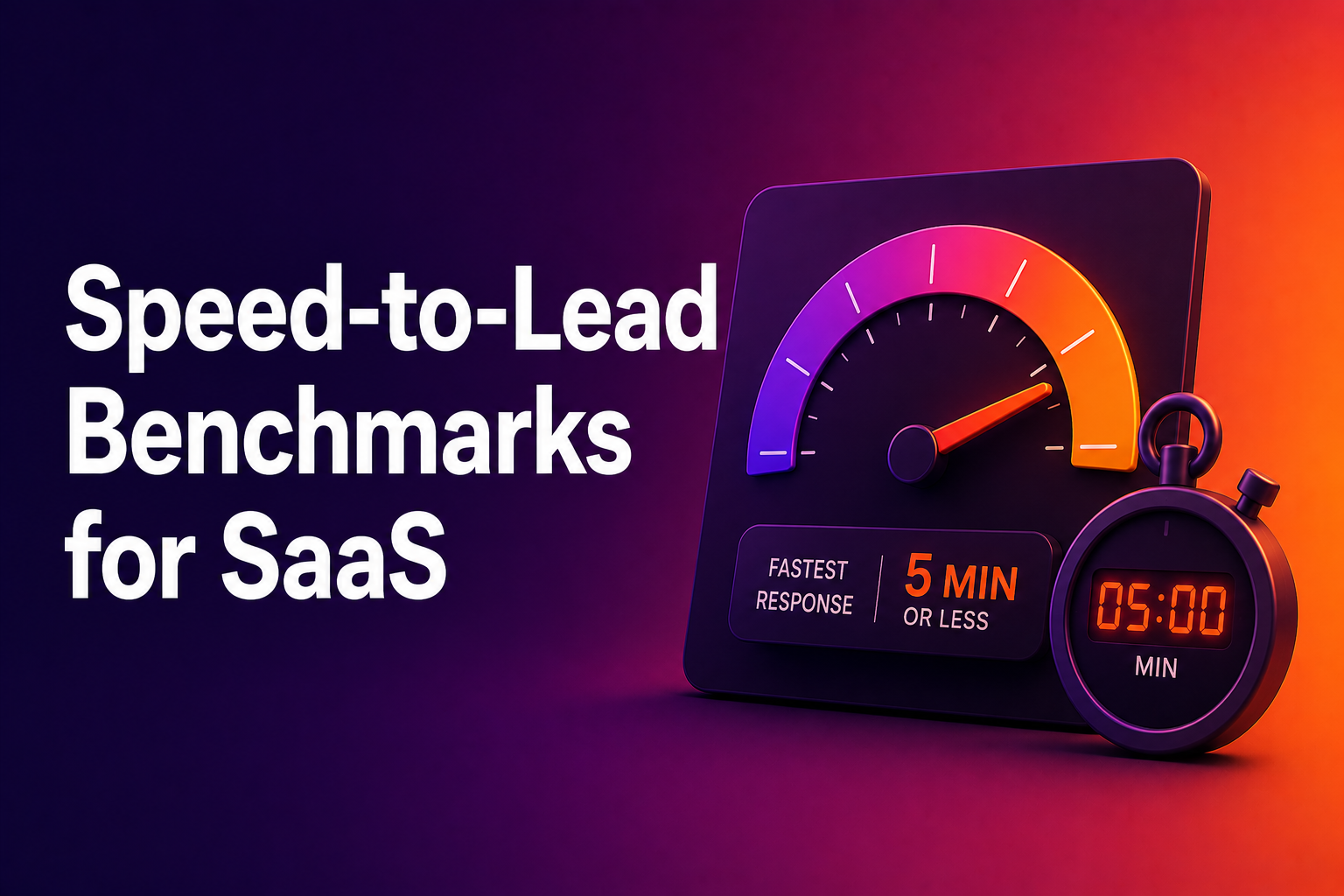
This isn't a people problem. It's a structural one. Most Salesforce routing configurations were built for a world where buyers waited patiently for callbacks. That world doesn't exist anymore. Buyers evaluating multiple solutions simultaneously expect sub-minute engagement, and the old "five-minute rule" is already obsolete.
The Intent Decay Gap: Moving Beyond Manual Review Queues
Intent has a half-life, and it's shorter than most teams realize. Conversion probability sits around 80% in the first minute after a form fill. By the next day, it drops to roughly 40%. Every hour of delay between submission and response is a measurable loss in pipeline.
Manual review queues are the primary culprit. When a lead sits in a Salesforce queue waiting for someone to claim it, you're burning the highest-value window you have. The lead was ready to talk right then, on your page, with your product top of mind. A "we'll be in touch" confirmation page turns that moment into a maybe.
The fix isn't faster SDRs. It's removing the manual step entirely and putting a calendar in front of qualified leads the moment they submit.
How Generic Qualification Kills Inbound Conversion Rates
Broad positioning creates qualification problems downstream. When your landing page says "software for any company that does marketing," visitors aren't sure if they're the right fit. Reps aren't sure how to personalize the demo. Everything gets harder.
The data backs this up. Companies with vertical positioning convert significantly better: Construction Tech at 69.1%, Ecommerce at 68.8%, and Travel Tech at 68.3%, compared to generic Sales Tech at 62.8%. Specificity signals fit, which builds buyer confidence, which drives conversion. If you're running a horizontal product through generic Salesforce routing rules, you're leaving meetings on the table before the routing logic even fires.
Data-Driven Qualification: Tightening the Filter for Better Rep Focus
Qualification and routing are often treated as separate steps. They shouldn't be. The fields on your form determine who gets through, who gets routed where, and how the rep opens the conversation. Every field should serve at least one of those purposes: if it doesn't change who gets the lead or how the rep prepares, it's costing you conversions without delivering value.
Optimizing Form Fields for Routing vs. Data Collection
There's a persistent myth that fewer form fields always mean higher conversion. The data tells a different story. Top performers convert at 77% with 2 fields and at 76% with 13 fields. The number of fields isn't the variable that matters. What matters is whether each field does something useful.
Fields like company size, region, and use case directly enable routing and personalization. They help your Salesforce assignment rules send the lead to the right rep with the right context. Fields like "how did you hear about us," when nobody acts on the answer, create friction without value. Audit your forms quarterly. For every field, ask: does this change the routing decision or the rep's first sentence? If not, cut it.
Leveraging Vertical Positioning and Industry-Specific Fields
The conversion advantage of vertical positioning extends to form design. When you sell to contractors, "are you a contractor?" is an easy qualification question with a clear routing implication. When you sell to "any company," qualification gets fuzzy and routing gets generic.
Consider building dedicated landing pages for your best-performing verticals. Use industry-specific headlines, customer logos from that segment, and form fields that make sense for that buyer. A medical software buyer expects detailed intake. An SMB e-commerce buyer expects speed. Match the form to the audience, and your Salesforce routing rules can use those industry-specific responses to assign leads with real precision.
Automating the Handoff: From Lead Capture to Instant Booking
The gap between "qualified" and "booked" is where most pipeline leaks. A lead qualifies based on your criteria, and then... nothing happens instantly. They get a thank-you page. An SDR gets a notification. Emails go back and forth. The meeting that should have happened doesn't.
The companies booking 78% or more of their qualified leads made a specific choice: they stopped treating scheduling as a follow-up task and started treating it as a conversion event that happens on the page, in real time.
Replacing 'Request' with Commitment Language for Higher Meeting Rates
This is a five-minute fix with measurable impact. Among top-performing companies, 29% use "Book a Demo," 21% use "Get a Demo," and 12% use "Schedule a Demo." Only 12% use "Request a Demo."
The difference is psychological. "Request" implies you're asking permission. "Book" implies you're taking action. The visitor mentally crosses from "considering" to "doing" while they're still on your page. Search your site for every instance of "Request," "Submit," "Contact Sales," or "Get in Touch." Replace them with commitment language like "Book Your Demo" or "Pick a Time." Track your numbers for 30 days. The lift is real and it costs nothing.
Using Real-Time Enrichment and CRM Ownership to Route Instantly
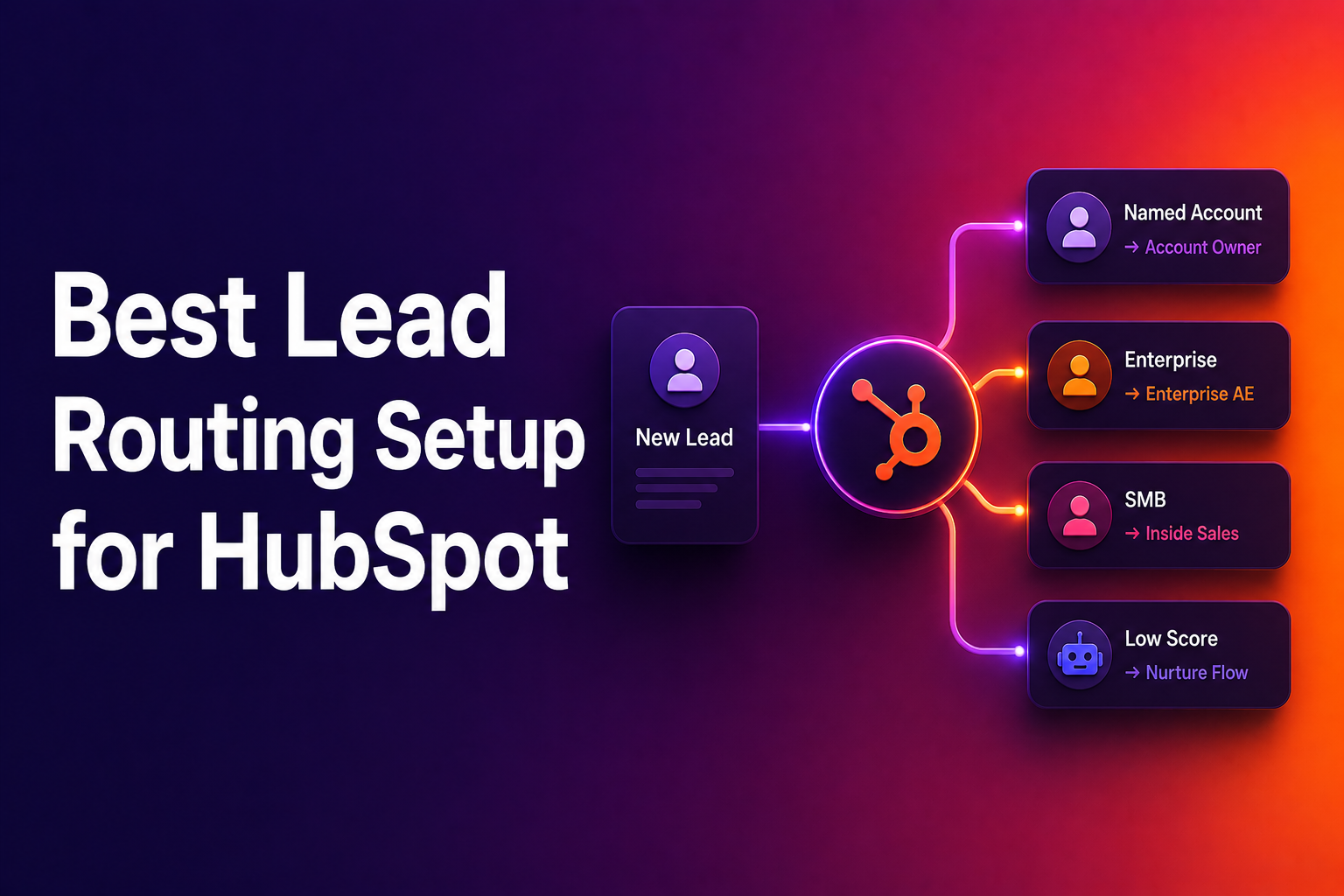
The best routing setups don't wait for a human to look up account ownership in Salesforce. They check CRM ownership, firmographic data, and enrichment signals the moment a form is submitted, then present the right rep's calendar immediately.
This means respecting existing account relationships. If a lead comes in from a company that already has an assigned AE in Salesforce, the meeting should route to that AE, not to a random SDR in a round-robin. Tools like RevenueHero handle this by using form responses, enrichment data, and CRM ownership together to route every lead to the right rep instantly, with no manual assignment and no delays. The result is that the lead sees a calendar within seconds of qualifying, and the rep who takes the meeting already has context.
Salesforce Configuration Best Practices for High-Performance Routing
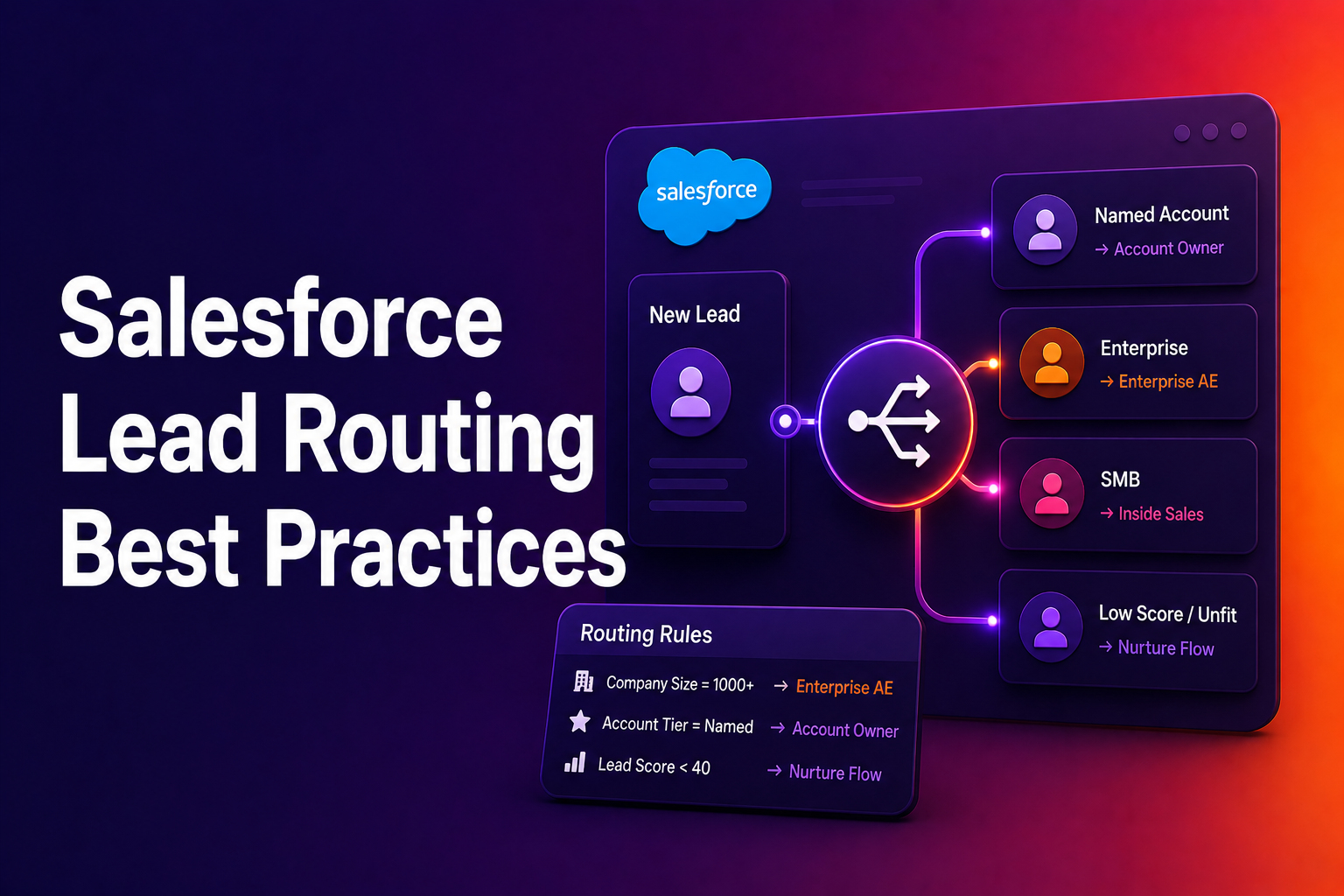
Your Salesforce configuration is only as good as the infrastructure around it. Assignment rules, lead queues, and territory management are table stakes. The real question is whether your setup can move a lead from form fill to booked meeting without a human touching it.
Eliminating the 48-Hour Lag with Automated Scheduling Infrastructure
The median response time most companies report is misleading because it uses averages. A few fast responses mask the fact that many leads sit untouched for 24 to 48 hours. Use median values instead of averages to get an honest picture of your speed to lead. If your median is above 30 minutes, you have a structural problem.
Enterprise teams need nested routing rules that account for territory, product interest, account match, and rep availability, including PTO coverage. SMBs need pre-built templates with low administrative overhead that still respect basic routing logic. Regardless of company size, the goal is the same: eliminate every manual step between form submission and calendar display. That means automated scheduling infrastructure that syncs bidirectionally with Salesforce, so meetings, statuses, and ownership updates flow back to the CRM without anyone copying data between systems.
Build SLA compliance checks into your routing. If a lead isn't claimed or booked within your target window, it should automatically escalate or re-route. Don't rely on reps to self-police response times.
Benchmarking Success: Measuring Your Qualified-to-Booked Ratio
Your qualified-to-booked ratio is the single most important metric for evaluating routing performance. Not lead volume. Not MQL counts. The percentage of leads who qualify and actually end up in a meeting with your team.
The Difference Between Median Performers (62%) and the Elite (78%+)
The median qualified-to-booked rate across B2B companies sits at 62%. The top 10% book 78% or more. The best performer in available data books 88%. If you're below 58%, you're in the bottom quartile.
The gap between 62% and 78% represents 16 additional meetings for every 100 qualified leads. That's pure pipeline, generated from traffic you already have, without spending another dollar on acquisition. The companies closing that gap share a few traits: they use commitment language on their CTAs, they cut form fields that don't inform routing or personalization, they're pickier about who qualifies, and they put a calendar in front of qualified leads immediately.
Seasonal patterns matter too. Q2 is the strongest quarter for inbound conversion, with April through June all exceeding 60%. August and September drag Q3 down to 55.9%. Plan your biggest inbound pushes for Q2, and don't panic if late-summer numbers dip: the pattern is consistent across the market.
Track this ratio monthly. Segment it by channel, by landing page, and by rep. The variation will tell you exactly where your routing and qualification process is leaking, and where to focus your next round of improvements. You already have the leads. The only question is how many of them actually end up talking to your team.
Let RevenueHero help your team turn high-intent users into booked meeting without slowing down your funnel.