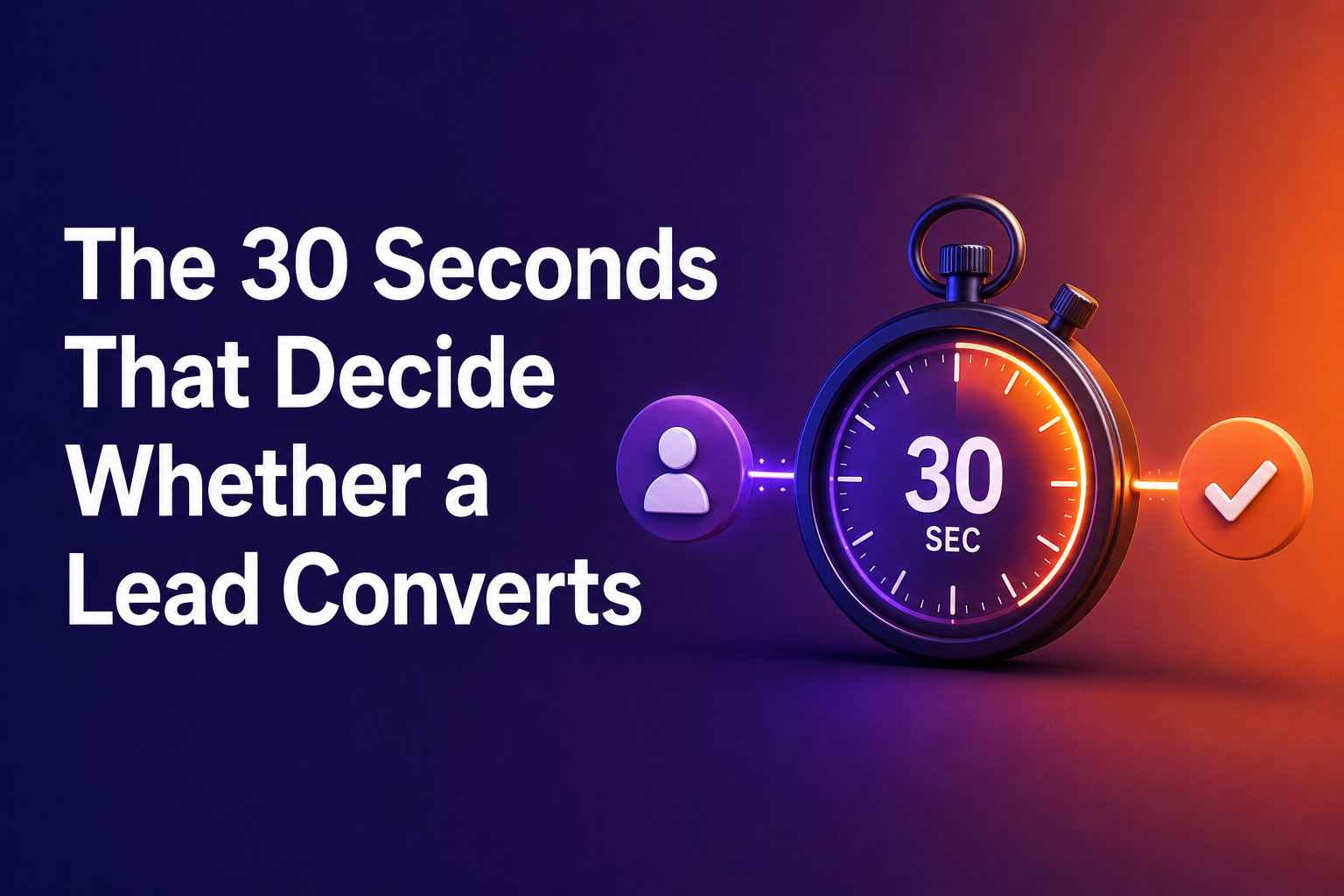
A lead fills out your form. They're interested, engaged, and ready to talk. What happens next determines whether that intent becomes a meeting or evaporates into a follow-up queue. The 30 seconds that decide whether a lead converts aren't about your product, your pricing, or your brand reputation. They're about process: specifically, what sits between the form submission and a confirmed calendar invite.
Most go-to-market teams lose more pipeline to operational friction than they do to competitors. The old benchmark of 35% qualified-to-booked came from an era of manual review queues and delayed follow-up. Data from 2025 and 2026 tells a different story: companies that treat the post-form experience as a conversion event are hitting 62% at the median and 78% or higher in the top decile. The gap isn't about lead quality. It's about what your funnel does in those critical seconds after someone raises their hand.
This isn't a theoretical problem. It's a measurable one, and the solutions are already proven. Here's what separates teams booking 4 out of 10 qualified leads from those booking 8.
The 30-Second Window: Why Speed and Instant Scheduling Define Success
The concept of "speed to lead" isn't new, but the standard has shifted dramatically. The five-minute rule that sales teams used to cite as best practice is now functionally obsolete. Buyers in 2026 are evaluating multiple vendors simultaneously, often with competing demo pages open in adjacent tabs. If your response is a "thanks, we'll be in touch" confirmation email, you've already lost ground to whoever showed a calendar.
Intent decay follows a steep curve. The probability of converting a qualified lead sits around 80% in the first minute after form submission. By the next day, it drops to roughly 40%. Every hour of delay compounds the problem, because the buyer's attention has moved on, their urgency has cooled, and a competitor may have already booked the slot.
The Decay of Intent: Moving Beyond Manual SDR Review Queues
The traditional inbound workflow has a structural flaw baked into it. A lead submits a form. That form enters a queue. An SDR reviews it, maybe routes it, maybe sends an email. The lead might respond. Days pass. The meeting that should have happened doesn't.
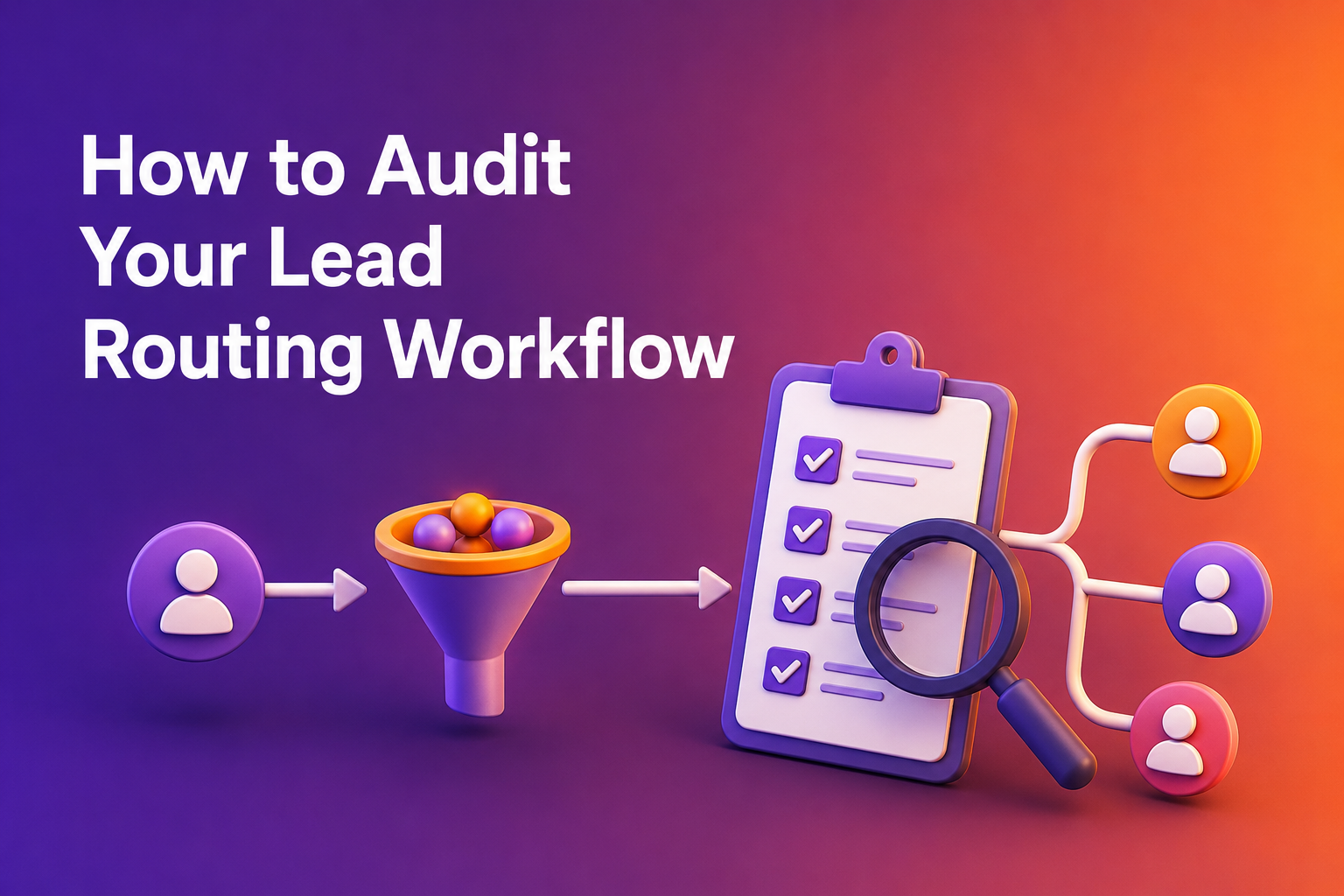
This isn't an SDR performance problem. It's an architecture problem. Manual review queues introduce latency that no amount of rep hustle can fully overcome. Even if your SDR responds in 10 minutes, that's 10 minutes of decaying intent. The top-performing companies in recent benchmarking data have eliminated this step entirely. Leads are qualified in real time using form responses, enrichment data, and CRM history. No queue. No delay.
Treating Inbound Scheduling as a Conversion Event, Not an Afterthought
The companies hitting 78%+ meeting rates made a specific decision: they stopped treating scheduling as a downstream activity and started treating it as the conversion event itself. The form fill isn't the goal. The booked meeting is.
That distinction changes everything about how you design your inbound flow. The calendar appears the moment someone qualifies. Routing happens instantly based on territory, account ownership, or product interest. The lead picks a time while they're still on your page, still in buying mode. RevenueHero customers, for example, collapse the gap between "qualified" and "booked" to seconds by automating qualification and scheduling in a single step.
Optimizing Form Fields for Action Rather Than Friction
Form length is one of the most debated topics in demand gen. The conventional wisdom says fewer fields equal higher conversion. The data tells a more nuanced story.
The 13-Field Paradox: When Detail Outperforms Minimalism
Top performers convert at 77% with 2 fields and at 76% with 13 fields. The number of fields doesn't determine conversion. What each field does is what matters. A 13-field form works brilliantly when every field serves a clear purpose and the audience expects that level of detail. Medical software buyers, for instance, are accustomed to credentialing and detailed intake. A 2-field form works when your ICP is broad and any additional friction would cost more than the data is worth.
The question you should be asking about your form isn't "how many fields?" but "what does each field enable?" If a field changes who gets the lead or how the rep opens the call, it earns its place. If it doesn't, it's costing you conversions without delivering value.
Eliminating Fields That Don't Enable Routing or Personalization
Every form field should fall into one of two categories: routing fields and personalization fields. Routing fields (company size, region, use case) get the lead to the right rep instantly. Personalization fields (current tool stack, primary pain point) help the rep tailor the demo. Fields that don't serve either purpose create friction without value.
The classic offender is "How did you hear about us?" when no one on your team actually actions the response. Job title is another common culprit if it doesn't influence routing logic. Audit every field against a simple test: does this data change what happens next? If the answer is no, remove it.
Bridging the Gap Between Median and Elite Conversion Rates
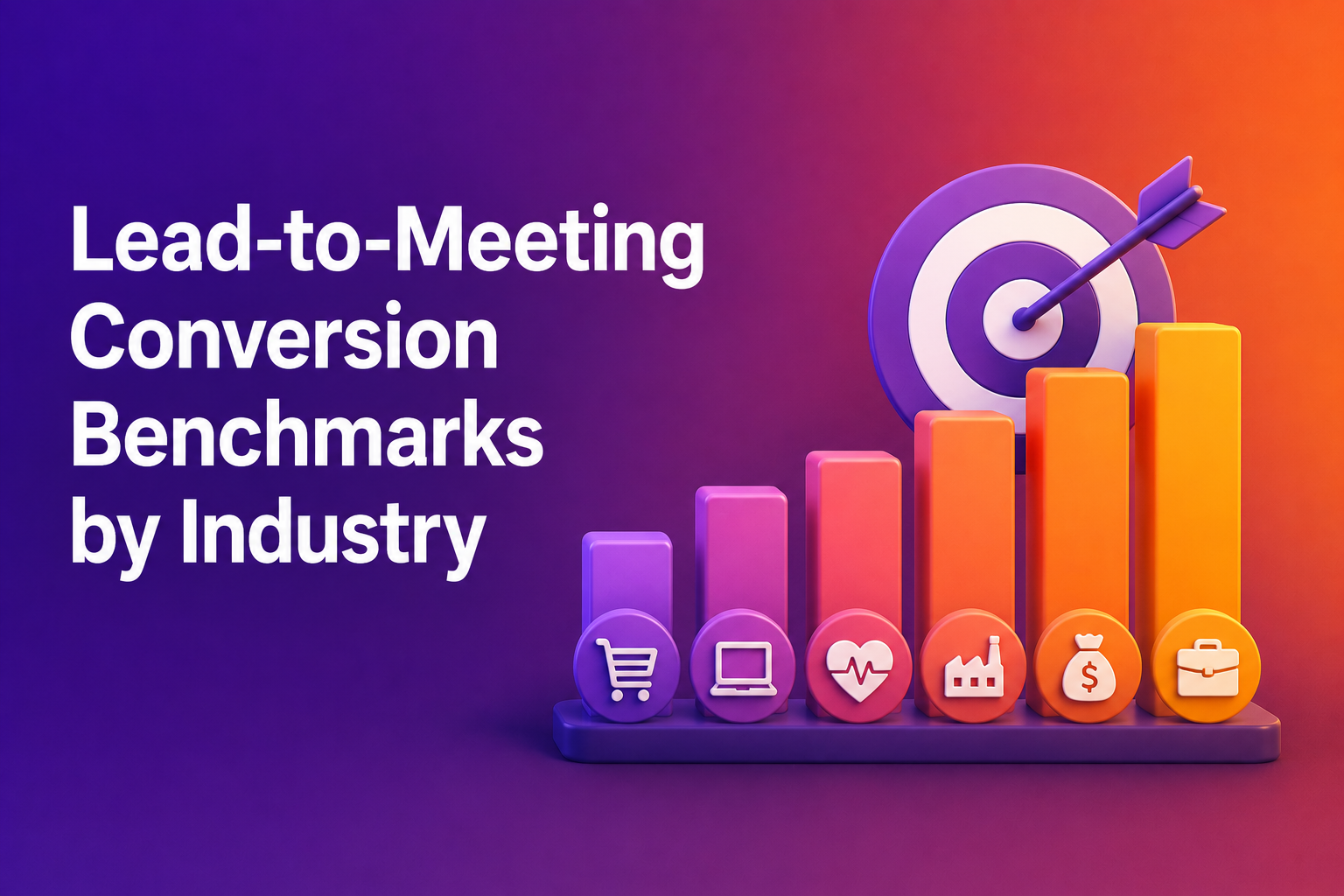
The median qualified-to-booked rate sits at 62%. The top 10% hit 78% or higher. The best single performer in recent data hit 88%. That 16-point gap between median and elite represents a massive pipeline difference.
How Top 10% Performers Achieve a 78%+ Meeting Rate
The patterns explaining this gap aren't complex. Top performers do a handful of things consistently. They present a calendar immediately upon qualification. They use commitment language in their CTAs. They're selective about who qualifies, which means reps spend time on higher-fit leads. And they run tight routing logic that respects CRM ownership and territory rules.
None of this requires a bigger budget or better leads. If you're at 40% today and you reach 62%, that's 22 more meetings for every 100 qualified leads. Get to 78%, and you've nearly doubled your output from the same traffic. The math is straightforward, and the changes are operational, not strategic.
The Impact of Replacing 'Request' with Commitment Language
Among top performers, 29% use "Book a Demo," 21% use "Get a Demo," and 12% use "Schedule a Demo." Only 12% use "Request a Demo." The pattern is clear: commitment language outperforms permission language.
"Request" implies uncertainty. The visitor is asking for something that may or may not happen. "Book" implies action. The visitor mentally crosses the threshold from considering to doing while they're still on your page. This is a five-minute fix with measurable impact. Search your site for every instance of "Request," "Submit," "Contact Sales," or "Get in Touch." Replace them with "Book," "Schedule," or "Reserve." Watch what happens to your numbers.
Vertical Positioning: Signaling Fit to Drive Confidence
Horizontal messaging dilutes conversion. The data shows it consistently: companies with vertical positioning on their landing pages outperform generic alternatives. Construction Tech converts at 69.1%. Ecommerce at 68.8%. Travel Tech at 68.3%. Generic Sales Tech sits at 62.8%.
Industry-Specific Landing Pages vs. Generic Horizontal Messaging
Specificity signals fit. When a visitor lands on a page that says "Marketing software for e-commerce" instead of "Marketing software," they immediately understand that this product was built for someone like them. That confidence drives conversion. The page should feature industry-specific headlines, relevant customer logos and testimonials, and form fields tailored to the segment ("How many locations?" for multi-site businesses, "Current ATS?" for HR buyers).
Even if your product is identical across verticals, the landing page experience shouldn't be. Run traffic to a vertical-specific page for 30 days and compare against your generic page. The conversion lift is typically significant enough to justify the effort of building dedicated pages for your top three or four segments.
Tightening DQ Criteria to Protect Sales Rep Capacity
Disqualification criteria deserve as much attention as qualification criteria. If your DQ rate is under 20% and your meeting rate is struggling, you might be letting through leads that waste rep time. Consider tightening criteria on company size, industry, or use case fit. Review and update these rules quarterly.
The goal isn't to disqualify more people for its own sake. It's to protect rep capacity so that every meeting has a higher probability of progressing. Teams that are pickier about who gets through to sales tend to see higher downstream conversion rates, shorter sales cycles, and better rep morale. The tradeoff is worth it.
The Tech Stack of Top Performers: Real-Time Qualification and Routing
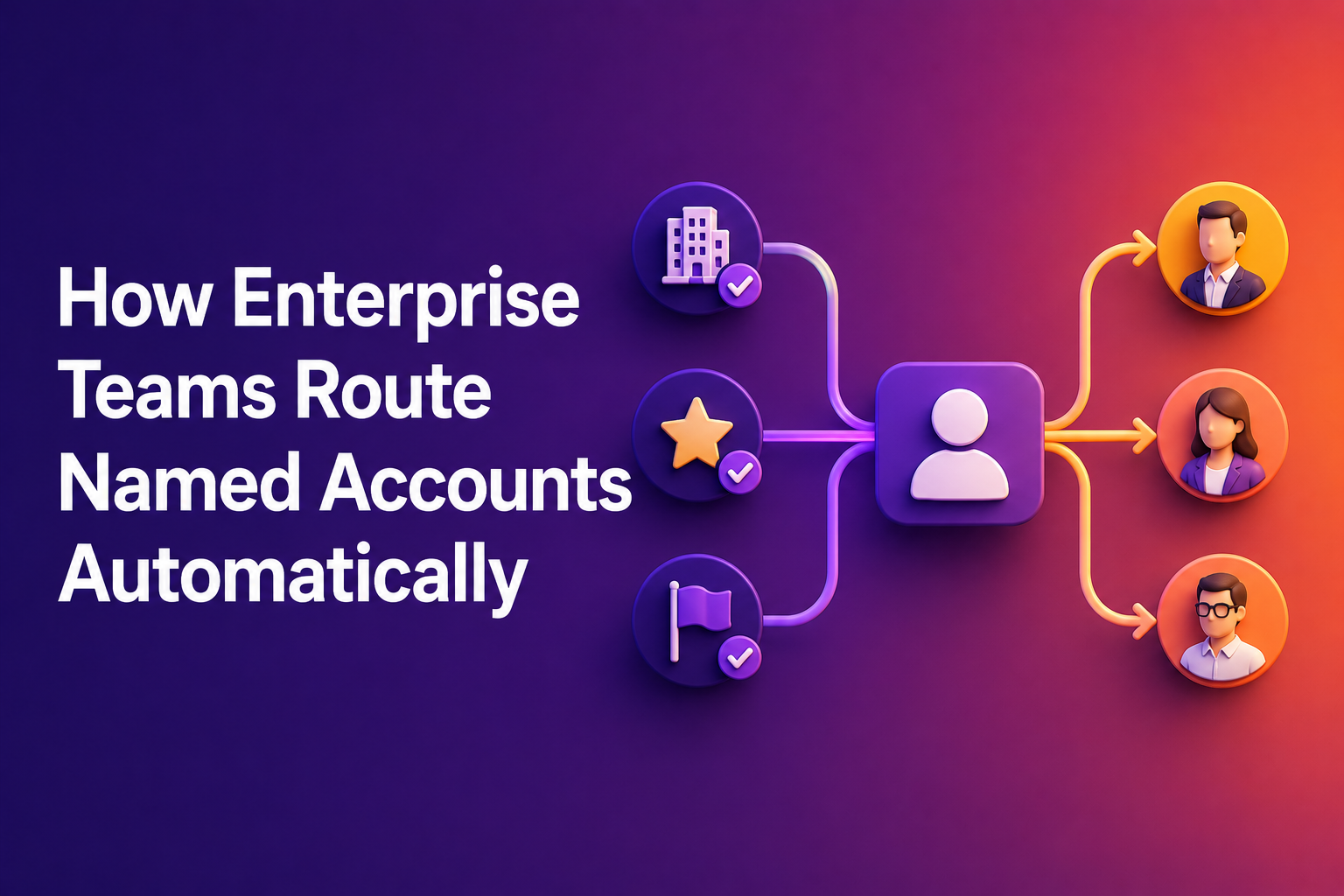
The infrastructure behind these results isn't complicated, but it is specific. Top-performing teams use real-time qualification that evaluates form responses, firmographic data from enrichment providers, and CRM history the moment a lead submits. Routing logic respects existing account ownership, territory assignments, and product-line specialization, not just simple round-robin distribution.
For enterprise teams, this means nested routing rules and complex approval workflows that handle edge cases like rep PTO or territory mismatches. For SMBs, it means pre-built templates and low administrative overhead that don't require a dedicated RevOps hire to maintain. In both cases, the output is the same: the right lead reaches the right rep in seconds, not hours.
Automatic CRM logging closes the loop. Every meeting, every status change, every routing decision syncs back to Salesforce or HubSpot instantly. RevOps gets real-time pipeline visibility without chasing reps for updates. Sales leaders see exactly where conversion breaks down. And demand gen can finally measure true cost-per-meeting instead of cost-per-form-fill.
The 30 seconds after a form submission aren't a minor operational detail. They're the highest-leverage moment in your entire funnel. The companies winning in 2026 have recognized this and rebuilt their inbound process around it. You already have the traffic. You already have people raising their hands. The only question is how many of them actually end up talking to your team, and that answer lives in the seconds between "submit" and "booked."
Let RevenueHero help your team turn high-intent users into booked meeting without slowing down your funnel.