Most B2B SaaS teams spend heavily on demand generation but rarely examine what happens in the 30 seconds after a form fill. That gap between submission and meeting is where pipeline quietly dies. A lead clicks "Book a Demo," fills out your form, and then... waits. Maybe they get a thank-you page. Maybe an SDR reviews the submission hours later. Maybe the lead has already moved on to a competitor's calendar by then. Auditing your lead routing workflow isn't glamorous work, but it's the highest-ROI project most RevOps teams aren't doing. Data from over one million B2B SaaS form fills shows the top 10% of companies book 78% or more of their qualified leads into meetings. The median sits at 62%. If you're converting at 30-40% and assuming that's normal, it isn't. The difference between those tiers has almost nothing to do with traffic quality or ad spend. It's determined by routing logic, qualification criteria, scheduling speed, and handoff design. Here's how to run a proper audit.
The Lead Routing Friction Problem: Why Good Leads Die in the Queue
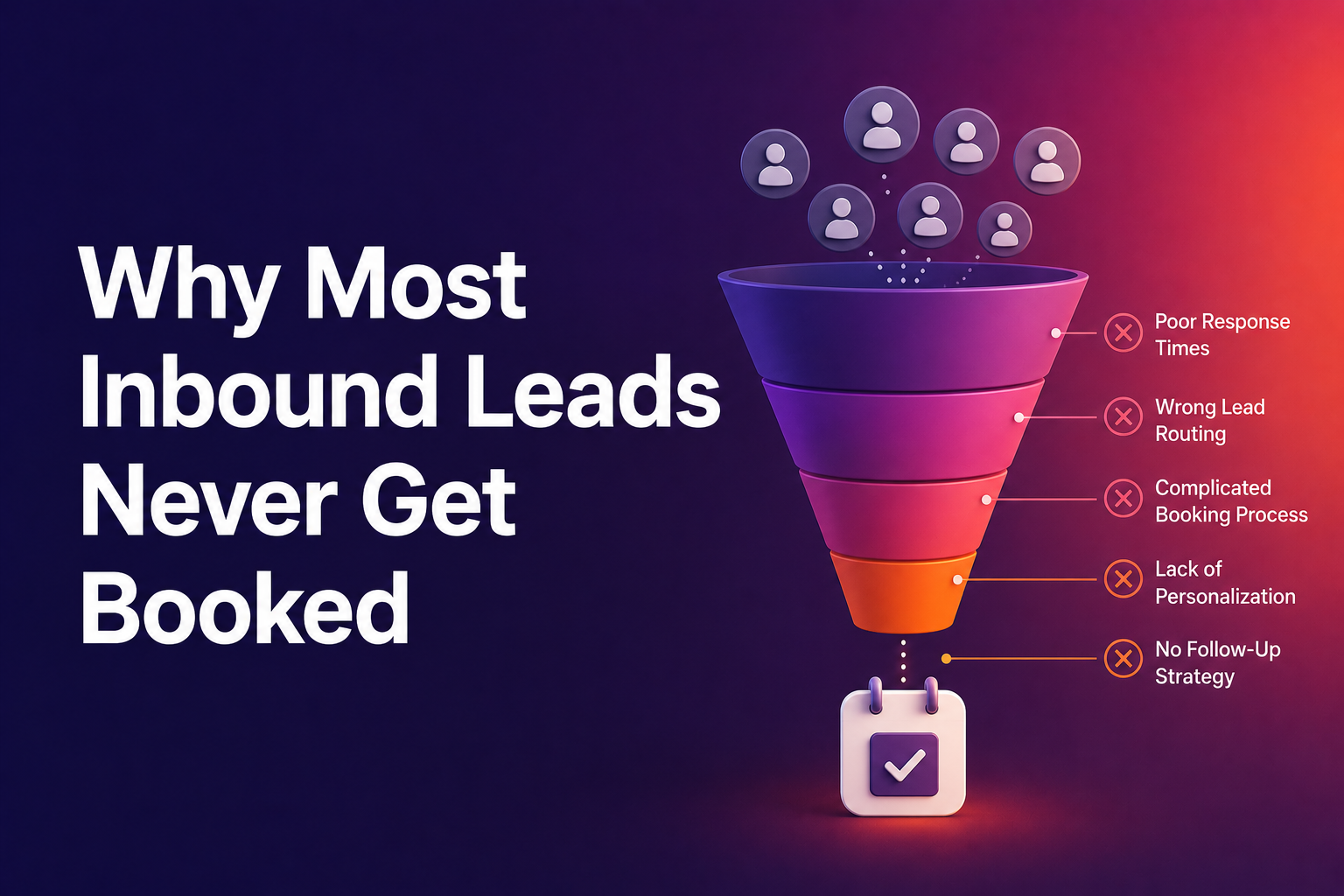
The default inbound workflow at most companies has friction baked into every step. A lead fills out a form. The submission lands in a queue. Someone manually reviews it, maybe routes it, maybe emails the lead back. Days pass. Intent decays. The meeting that should have happened doesn't.
This isn't a people problem. It's a process problem. The architecture of most inbound funnels was designed for a world where buyers waited patiently. In 2026, your prospects are evaluating three to five vendors simultaneously. The old five-minute response rule is already obsolete: buyers now expect sub-minute or instant engagement.
The Cost of Manual Review and Delayed Handoffs
Every manual step in your routing workflow introduces delay, and delay kills conversion probability. Research consistently shows that the likelihood of booking a meeting drops from roughly 80% in the first minute to around 40% by the next business day. That's not a gradual decline. It's a cliff.
Manual review queues are the biggest offender. When an SDR has to eyeball every submission, check the CRM for ownership, and then draft a personalized email, you're adding hours to a process that should take seconds. Multiply that by every lead, every day, and you're watching pipeline evaporate in real time.
Deciphering the Inbound Conversion Gap
The gap between 35% and 78% qualified-to-booked rates isn't explained by lead quality or product-market fit. It's explained by what happens post-form-fill. Companies in the top decile made a specific choice: they stopped treating inbound scheduling as an afterthought and started treating it as a conversion event.
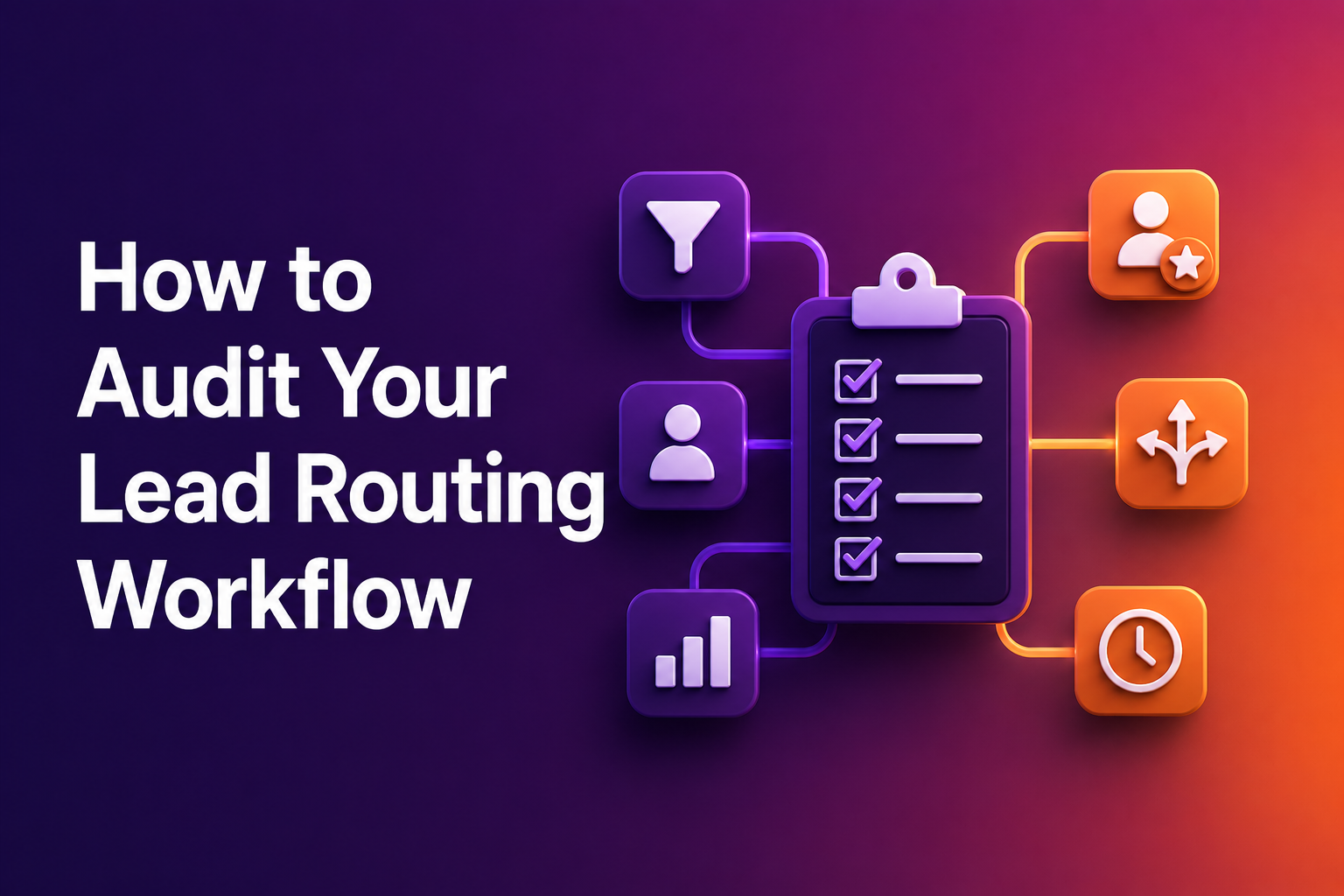
Your audit should start by mapping every step between form submission and calendar invite. Count the handoffs. Measure the median time at each stage. If any step involves a human reviewing a queue before routing happens, flag it. That's where your leads are dying.
Benchmarking Your Qualified-to-Booked Rates
You can't improve what you haven't measured against a real standard. Most teams operate on gut feel or anecdotal benchmarks passed around with no methodology attached. Someone heard 50% is good. Someone else heard 70% is achievable. Nobody knows where those numbers came from.
Here's a concrete baseline from 12 months of aggregate data across B2B SaaS companies: the median qualified-to-booked rate is 62%. The 90th percentile hits 78% or higher. The best performers reach 88%. If you're below 58%, you're in the bottom quartile.
Identifying Underperformance vs. Industry Standards
Performance varies significantly by vertical. Construction Tech companies convert at 69.1%. Ecommerce hits 68.8%. Travel Tech lands at 68.3%. Generic Sales Tech sits at 62.8%. The pattern is clear: vertical positioning and segment-specific workflows outperform generic approaches.
Pull your own numbers for the last 90 days. Use median values, not averages, because averages let outliers hide systemic problems. Compare your median qualified-to-booked rate against these benchmarks. If there's a gap, that gap represents meetings you're already paying for but not getting.
Seasonality and the Impact of Timing on Conversion
Your audit should account for seasonal patterns. Q2 is consistently the strongest quarter, with April, May, and June all exceeding 60% conversion rates. Q3 drags, driven almost entirely by August at 53.4% and September at 53.7%. July actually performs well at 61.1%.
If you ran your audit during a Q3 dip and assumed those numbers were your baseline, you'd be working from a distorted picture. Compare quarter over quarter, and plan your biggest inbound campaigns for Q2 when buyer intent peaks.
Auditing Your Qualification and Disqualification Criteria
Qualification logic is the gatekeeper of your entire funnel. Get it wrong in either direction and you're either wasting rep time on bad fits or blocking good leads from ever reaching a calendar.
Start by pulling your disqualification rate. If it's under 20% and your meeting rate is struggling, you're probably letting through leads that waste rep time. If it's above 50%, you may be filtering out viable opportunities and adding unnecessary friction.
Optimizing DQ Rates to Protect Rep Productivity
The data reveals a counterintuitive pattern: companies with higher DQ rates often have better overall conversion metrics. Companies that are selective about who gets through to sales end up with higher-quality conversations. Reps aren't burning time on poor fits. The leads who do make it through are more engaged and more likely to show up.
Your motion matters here. If you're selling enterprise deals where a single bad meeting costs hours of expensive rep time, a higher DQ rate makes sense. If you're running a high-velocity SMB motion where demos are fast and low-cost, you can afford to be more inclusive. Match your qualification criteria to your sales motion, and review those criteria quarterly.
Leveraging Enrichment Data and CRM History for Real-Time Routing
Static form data alone isn't enough for accurate routing. The strongest qualification workflows combine form responses with firmographic enrichment and CRM ownership history. This means checking company size, industry, tech stack, and whether the account already has an assigned owner, all in real time before the lead ever sees a calendar.
RevenueHero's approach to this is instructive: qualifying leads using form data, enrichment, and CRM history simultaneously so that routing decisions happen instantly without manual review. The goal is getting every lead to the right rep based on territory, product interest, or account match, not just simple round-robin assignment. If your current setup can't do this in under 10 seconds, that's an audit finding worth acting on.
Optimizing Form Fields and Commitment Language
Your form is the first conversion event, and small changes here compound across your entire funnel. Two areas deserve specific attention during an audit: the language on your CTAs and the fields you're asking leads to fill out.
Replacing Permission Language with Commitment CTA
Among top-performing companies, 29% use "Book a Demo," 21% use "Get a Demo," and 12% use "Schedule a Demo." Only 12% use "Request a Demo." The difference matters. "Request" implies waiting for approval. "Book" implies action and commitment. The visitor mentally crosses the threshold from considering to doing while they're still on your page.
This is a five-minute fix with measurable impact. Search your site for every instance of "Request," "Submit," "Contact Sales," or "Get in Touch." Replace them with commitment language like "Book Your Demo" or "Pick a Time." Check your buttons, headers, meta descriptions, and email templates. Track the change in your qualified-to-booked rate over 30 days.
Strategic Field Selection: Friction vs. Personalization
The number of form fields matters less than whether each field earns its place. Data shows top performers converting at 77% with 2 fields and at 76% with 13 fields. The count isn't the variable. What matters is whether each field does something useful.
Every field on your form should serve one of three purposes: routing the lead to the right rep, qualifying or disqualifying the lead, or helping the rep personalize the conversation. Fields like company size, region, and use case earn their keep. Fields like "How did you hear about us?" that nobody acts on just add friction. During your audit, tag each field with its purpose. If you can't justify it, remove it.
Implementing Instant Scheduling Workflows
The single biggest conversion lever in your routing workflow is what happens immediately after qualification. Do qualified leads see a calendar, or do they see a "thanks, we'll be in touch" page? That distinction alone explains most of the gap between median and top-decile performance.
Replacing 'Thank You' Pages with Instant Calendars
A thank-you page is where intent goes to die. The lead just told you they want a demo. They're ready now. Sending them to a static confirmation page and promising a follow-up email introduces delay at the worst possible moment.
The fix is straightforward: replace your thank-you page with an instant scheduling experience. The moment a lead qualifies, show them available time slots on the right rep's calendar. No queue. No manual review. No email chain to find a mutual time. Companies that made this single change account for the majority of top-10% performers in the benchmark data.
Automating Reschedules and No-Show Follow-ups
Booking the meeting is only half the battle. No-shows and last-minute cancellations erode your booked-to-held rate, and most teams handle them manually or not at all.
Your audit should examine what happens when a meeting is canceled or a lead doesn't show up. Is there an automated reschedule link sent within minutes? Is there a follow-up sequence that fires without an SDR having to remember? Automating these workflows recovers meetings that would otherwise be lost. One GTM operations leader reported booking 75% or more of qualified inbounds the same day, up from around 40%, largely by automating reschedule and no-show workflows alongside instant scheduling.
Continuous Optimization: The Quarterly Audit Checklist
A single audit gives you a snapshot. Quarterly audits give you a trend line. The companies that maintain strong funnels at scale are the ones that review their routing logic, qualification criteria, and scheduling workflows every 90 days.
Each quarter, measure your median qualified-to-booked rate and compare it against the 62% median benchmark. Review your DQ criteria to confirm they're filtering poor fits, not adding friction. Audit every form field for purpose. Check that commitment language is consistent across all CTAs. Verify that instant scheduling is live on every inbound touchpoint. And examine your no-show recovery workflows for gaps.
The gap between where you are and where the top 10% operates isn't about budget, headcount, or better leads. It's about what happens in the seconds after someone raises their hand. Run this audit once, and you'll find quick wins. Run it quarterly, and you'll build a funnel that compounds those gains over time. If your team is converting at 40% today and you get to 62%, that's 22 more meetings for every 100 qualified leads on the same spend. Get to 78%, and you've nearly doubled your pipeline without touching your demand gen budget.
Let RevenueHero help your team turn high-intent users into booked meeting without slowing down your funnel.