Sales teams lose deals in the gap between form submission and first conversation. A prospect fills out your demo request, intent high, ready to talk. Then they wait. Hours pass. Sometimes days. By the time your rep reaches out, that prospect has already booked calls with three competitors. This is the problem automated lead distribution software solves, and it's why getting your 2026 buying decision right matters more than ever.
The stakes are clear from the data. Companies using instant qualification and routing book 78% of their qualified leads into meetings. The median sits at 62%. Teams still running manual review queues often convert below 40%. That gap represents real pipeline, real revenue, and real competitive advantage. If you're evaluating distribution tools this year, understanding what separates top performers from everyone else will shape your selection criteria.
This buyer's guide breaks down the features, integrations, and compliance considerations that matter most when choosing lead distribution software. The goal isn't to list every vendor on the market. It's to help you ask better questions and recognize which capabilities actually drive the outcomes your team cares about.
The Evolution of Lead Distribution in 2026
The Shift from Manual Routing to AI-Driven Logic
Manual lead routing was never designed for modern inbound volume. A lead comes in, sits in a queue, gets reviewed by someone, maybe gets assigned, maybe gets emailed back. The process assumes you have time. You don't.
AI-driven routing changes the fundamental logic. Instead of sequential steps requiring human review, modern systems evaluate leads instantly using form responses, enrichment data, and CRM history. The decision about who should own a lead happens in milliseconds, not hours. This shift isn't about replacing human judgment entirely. It's about reserving human attention for conversations that matter rather than administrative triage.
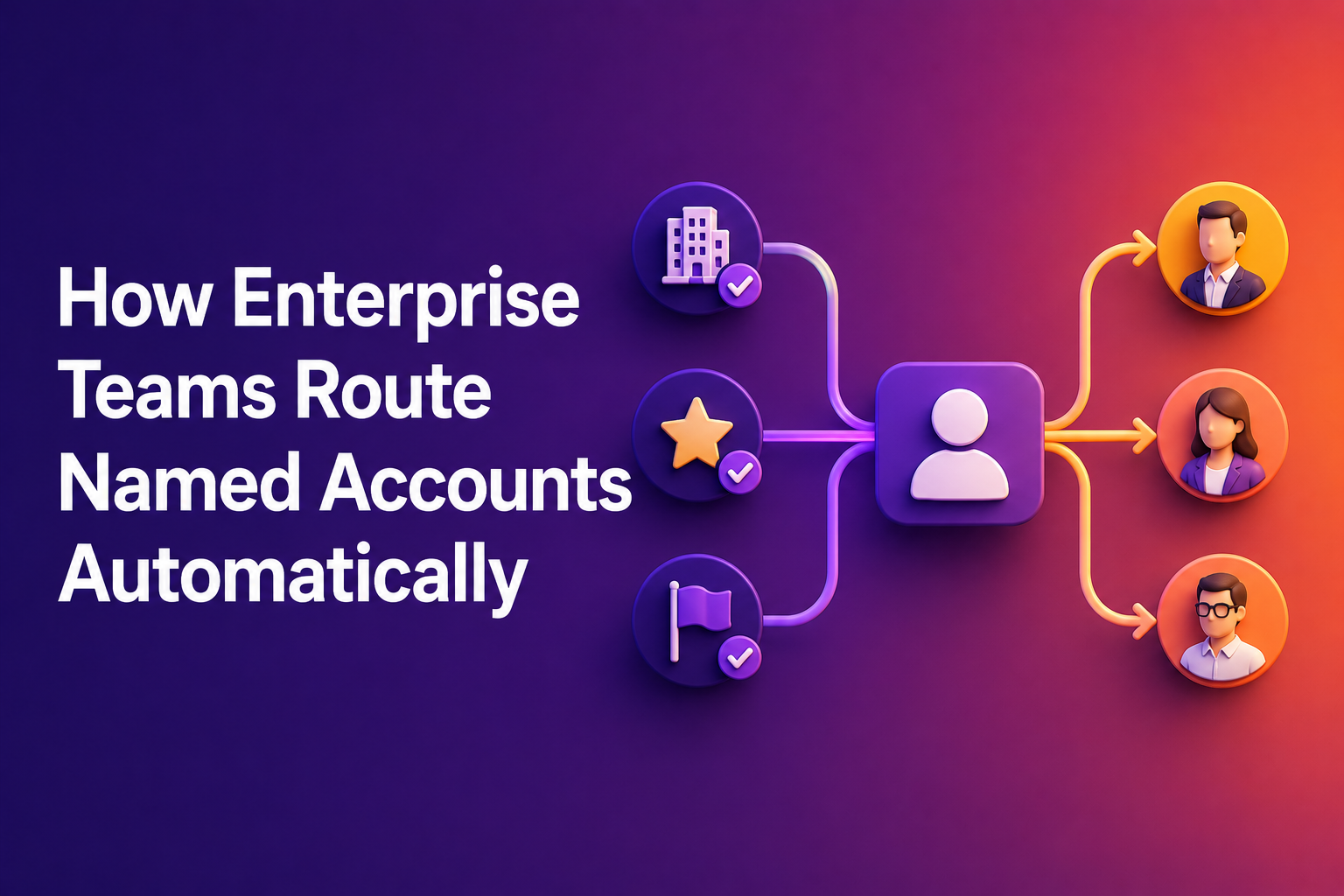
The best distribution tools now combine real-time enrichment with configurable qualification rules. They can recognize when an inbound lead matches an existing account, respect territory assignments, and route based on product interest or deal size. This complexity would be impossible to manage manually at scale.
Why Speed-to-Lead is the Ultimate Competitive Advantage
The data on speed is unambiguous. Companies booking meetings immediately after form submission dramatically outperform those who delay. The 30 seconds after someone clicks "Book a Demo" determine whether they see a calendar or a "thanks, we'll be in touch" message. One path converts. The other leaks.
Speed compounds in ways that aren't immediately obvious. Fast response signals competence to prospects. It catches buyers while context is fresh. It prevents the comparison shopping that happens when prospects wait. Teams converting at 78% aren't working harder than teams at 40%. They've simply eliminated the delays between intent and conversation.
Core Features to Prioritize in Modern Distribution Tools
Advanced Lead Scoring and Qualification Engines
Qualification should happen in real time, not in a review queue. The best distribution software scores leads using multiple data sources: form responses, firmographic enrichment, behavioral signals, and CRM history. This scoring determines both whether a lead qualifies and how they should be routed.
Effective qualification engines let you define rules that match your specific motion. Enterprise teams selling six-figure deals need different criteria than SMB teams running high-velocity demos. The system should support both without requiring custom development. Look for tools that let you adjust thresholds quickly as you learn what actually predicts conversion.
Dynamic Round-Robin and Weighted Capping
Simple round-robin assignment breaks down fast. Reps have different capacities, territories, and specializations. Some leads deserve your best closers. Others can go to newer team members for development.
Modern distribution tools support weighted assignment, capacity limits, and skill-based routing. You can ensure high-value enterprise leads go to senior reps while maintaining fair distribution across the team. The system should also handle edge cases: what happens when a lead's assigned rep is out? What if the lead matches an existing account with a different owner? These scenarios need clear rules, not manual intervention.
Omnichannel Routing: Integrating Social, Web, and Phone
Leads don't arrive only through your website form. They come from LinkedIn ads, chatbots, phone calls, event registrations, and partner referrals. Your distribution logic needs to work consistently across all these channels.
Evaluate whether potential tools can ingest leads from your actual sources. The routing rules you build should apply regardless of entry point. A qualified lead from a LinkedIn campaign deserves the same instant scheduling experience as someone who filled out your homepage form. Fragmented routing across channels creates inconsistent experiences and makes conversion tracking nearly impossible.
Evaluating Integration Capabilities and Ecosystem Fit
Native CRM Connectivity and Bi-Directional Syncing
Your distribution tool must write data back to your CRM accurately and immediately. This isn't optional. RevOps teams need real-time visibility into what's happening with inbound leads. Sales managers need to see meetings on rep calendars. Marketing needs attribution data to optimize spend.
Bi-directional sync means the system both reads from and writes to your CRM. It should pull account ownership and contact history to inform routing decisions. It should push meeting details, status updates, and conversion data back without manual entry. Look for native integrations with your specific CRM rather than relying entirely on generic connectors.
API Flexibility for Custom MarTech Stacks
No two go-to-market tech stacks look identical. Your distribution tool needs to play well with your enrichment providers, marketing automation platform, conversation intelligence tools, and whatever else you've assembled.
Strong API documentation and webhook support matter more than a long list of native integrations. You'll inevitably need to connect something the vendor didn't anticipate. Ask about rate limits, authentication methods, and whether the API exposes the functionality you actually need. Request references from customers with similar stack complexity.
Compliance, Security, and Data Privacy Standards
Navigating Global Privacy Laws (GDPR, CCPA, and Beyond)
Lead distribution involves processing personal data, which means privacy regulations apply. GDPR, CCPA, and emerging state-level laws create obligations around consent, data retention, and individual rights. Your distribution tool needs to support compliance, not create liability.
Key questions for vendors: Where is data stored? How long is it retained? Can you honor deletion requests across all systems? Does the tool support consent management? These aren't theoretical concerns. Regulatory enforcement is increasing, and your prospects increasingly expect their data handled responsibly. Tools like RevenueHero that sync meeting and lead data back to your CRM automatically can actually simplify compliance by maintaining a single source of truth rather than fragmenting data across disconnected systems.
Measuring Success: Analytics and ROI Tracking
Performance Benchmarking for Sales Teams
You can't improve what you don't measure. Your distribution tool should provide clear visibility into qualified-to-booked rates, response times, and conversion by rep. These metrics reveal whether your routing logic is working and where bottlenecks exist.
Benchmark data helps contextualize your performance. Knowing that top performers book 78% of qualified leads while the median sits at 62% gives you a realistic target. If you're at 40%, you're leaving significant pipeline on the table. The gap between 40% and 78% on the same traffic represents meetings your current process is losing.
Attribution Mapping from Lead Source to Conversion
Marketing needs to know which channels produce pipeline, not just leads. Your distribution tool should preserve source data through the entire journey from form fill to closed deal. This attribution enables smarter budget allocation and campaign optimization.
Look for tools that maintain clean data handoffs rather than breaking attribution chains. The meeting that resulted from a LinkedIn campaign should trace back to that campaign in your CRM reporting. Without this visibility, you're optimizing in the dark.
Finalizing Your Purchase: Vendor Selection and Implementation
Vendor selection should prioritize implementation speed and ongoing maintainability. The most feature-rich tool means nothing if it takes six months to deploy and requires dedicated headcount to manage. Ask vendors directly: how long until we're live? What does configuration look like? Who handles changes after launch?
Request references from companies similar to yours in size, sales motion, and tech stack. Generic case studies tell you less than a conversation with someone who's actually implemented the tool. Ask about surprises, workarounds, and what they'd do differently.
Your buying decision shapes conversion rates for years. Teams that treat inbound scheduling as a conversion event rather than an afterthought consistently outperform. The difference between 40% and 78% qualified-to-booked isn't better leads or bigger budgets. It's what happens in the 30 seconds after someone raises their hand. Choose software that eliminates that gap, and you'll capture pipeline your competitors are still leaving on the table.
Let RevenueHero help your team turn high-intent users into booked meeting without slowing down your funnel.