Enterprise sales organizations generate thousands of leads monthly, yet many watch potential revenue evaporate before a single conversation happens. The problem isn't lead quality or marketing spend. It's the dead time between form submission and first contact. When a qualified prospect fills out a demo request at 2:47 PM, they're ready to talk now. If your system routes that lead to a queue for manual review, then assigns it to a rep who's in back-to-back meetings, then waits for an email response that may never come, you've already lost. Data from B2B SaaS companies shows the gap between top performers and everyone else is staggering: the best teams book 78% of qualified leads into meetings, while the median sits at 62%. That difference, on the same traffic and the same spend, comes down to what happens in the 30 seconds after someone clicks submit. For enterprise teams with complex territories, multiple product lines, and hundreds of reps across regions, getting lead distribution software right isn't a nice-to-have. It's the infrastructure that determines whether your pipeline grows or stalls.
The Strategic Role of Automated Lead Distribution in Enterprise Sales
Overcoming Manual Routing Inefficiencies
Manual lead routing worked fine when your sales team had twelve people and one product. At enterprise scale, it becomes a bottleneck that compounds daily. A lead comes in, lands in a shared inbox or queue, and waits for someone to figure out who should own it. That someone checks the CRM for existing account relationships, cross-references territory maps, considers product interest, and makes a judgment call. The process takes minutes on a good day, hours on a busy one.
Meanwhile, the prospect has moved on. They've submitted forms to three of your competitors. They've gotten distracted by actual work. The intent that drove them to your site has cooled. Every hour of delay reduces your chance of connecting by a measurable percentage. Manual routing doesn't just slow things down; it introduces inconsistency. Different people make different decisions about the same lead, creating fairness issues among reps and coverage gaps across territories.
Impact on Lead Response Time and Conversion Rates
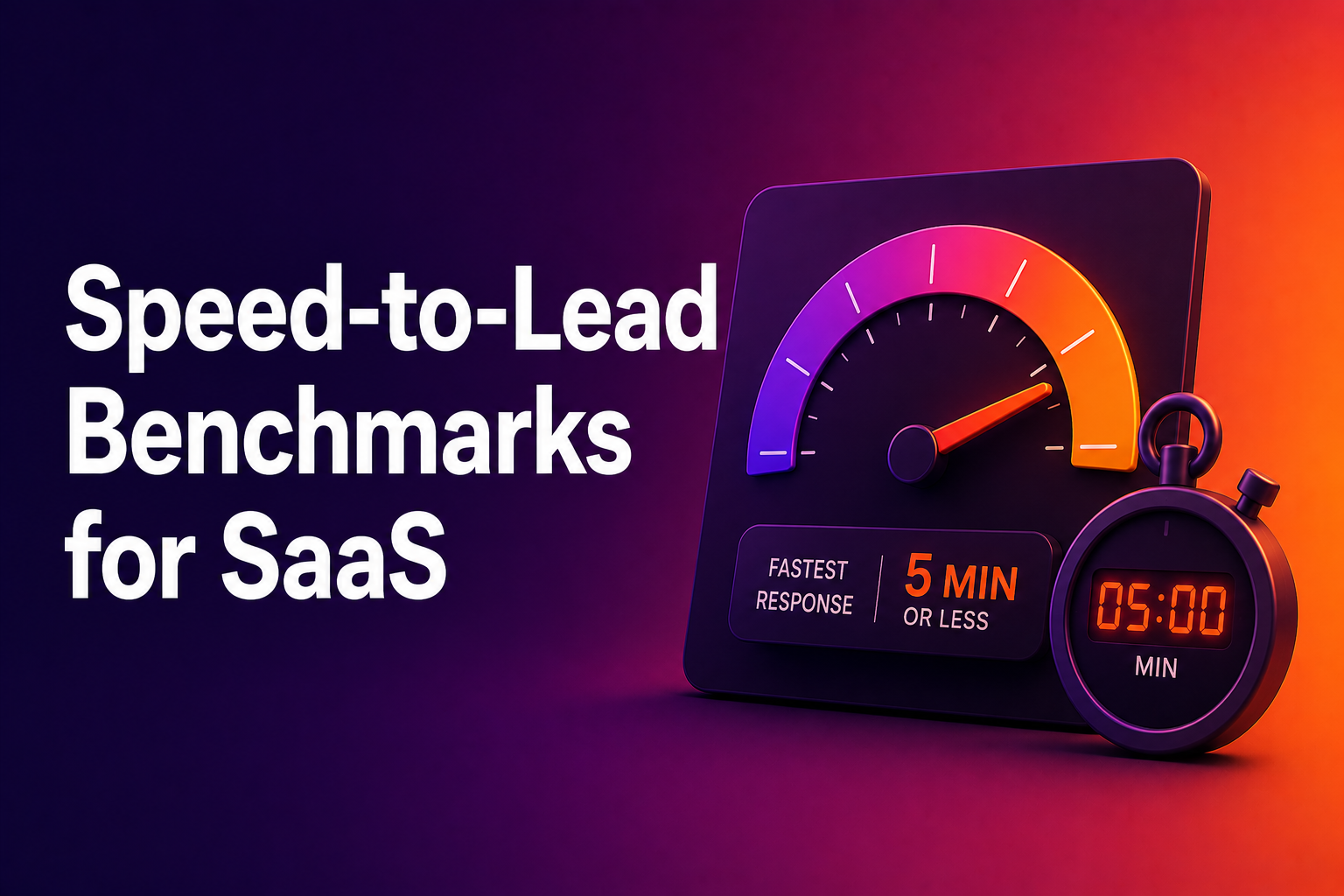
Speed to lead isn't a vanity metric. It's directly tied to conversion rates and pipeline quality. When enterprise teams reduce response time from hours to minutes, they see immediate improvement in meeting rates. The math is straightforward: a prospect who books a meeting while still on your website shows up at a dramatically higher rate than one who receives a scheduling link via email two days later.
Top-performing companies treat the moment after form submission as a conversion event, not an administrative task. They put a calendar in front of qualified leads immediately. No manual review queue. No delays. The companies hitting 78%+ qualified-to-booked rates aren't doing anything complicated. They've simply removed the friction between intent and action.
Advanced Routing Logic for Complex Organizations
Round Robin and Weighted Distribution Models
Basic round robin assigns leads sequentially across a team. Rep A gets one, then Rep B, then Rep C, and the cycle repeats. It's fair in the simplest sense, but it ignores reality. Your reps have different capacities, different close rates, and different availability. Weighted distribution addresses this by assigning leads based on configurable factors: rep performance, current pipeline load, or quota attainment.
A senior rep crushing their number might receive fewer leads to prevent burnout, while a ramping rep gets more opportunities to build pipeline. The weights can adjust dynamically based on real-time data, ensuring distribution stays balanced even as circumstances change throughout the quarter.
Territory-Based and Skill-Based Routing
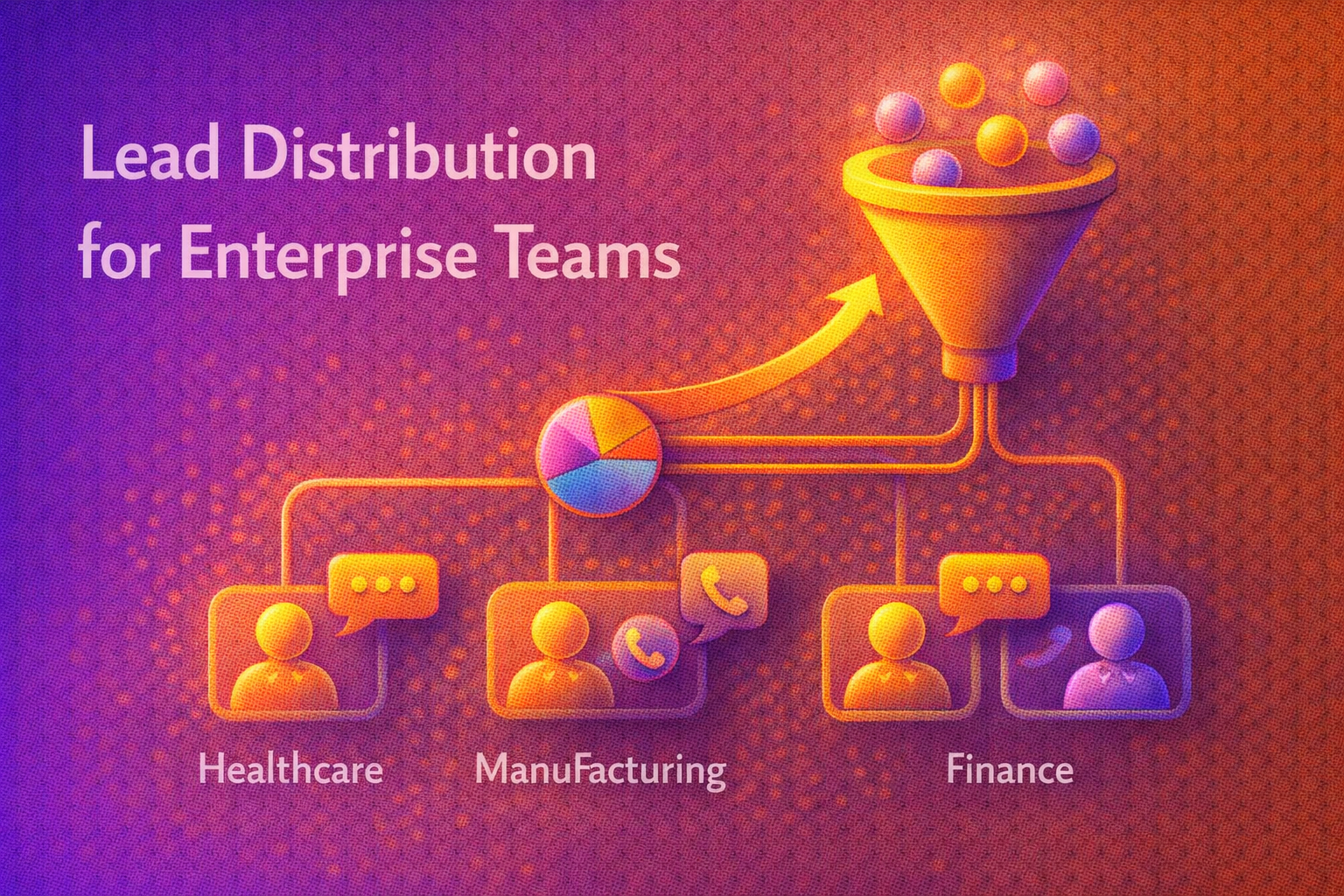
Enterprise organizations rarely have simple structures. You might have geographic territories, named accounts, industry verticals, and product specialists all operating simultaneously. A lead from a Fortune 500 healthcare company interested in your enterprise platform shouldn't go to a mid-market rep who specializes in financial services.
Territory-based routing uses firmographic data to match leads with the right regional team. Skill-based routing layers on additional criteria: product expertise, deal size experience, or industry knowledge. The best systems combine both, respecting CRM ownership while applying custom logic based on territory, product interest, or account match. This keeps existing relationships intact and ensures leads reach reps equipped to handle them.
Account-Based Marketing (ABM) Lead Matching
When target accounts finally engage, you need that lead routed to the account owner instantly. ABM lead matching identifies incoming leads that belong to existing accounts in your CRM and routes them accordingly. This prevents the awkward situation where a prospect from a named account gets a cold outreach from a random SDR while their dedicated account executive remains unaware.
Matching logic can extend beyond exact company name to include parent-child relationships, domain matching, and enrichment data. A lead from a subsidiary should reach the rep who owns the parent company. These connections happen automatically when your distribution system integrates deeply with your CRM.
Core Features Required for Enterprise-Grade Solutions
Real-Time Lead Scoring and Prioritization
Not every lead deserves the same urgency. A VP from a target account requesting a demo takes priority over an individual contributor from an unknown company downloading a whitepaper. Real-time scoring evaluates leads the moment they arrive using form responses, enrichment data, and CRM history.
High-value leads get routed to your best reps with immediate calendar access. Lower-priority leads might enter a nurture sequence or receive a different experience. This prioritization happens without manual review, ensuring hot leads never sit in a queue while someone decides what to do with them.
CRM Integration and Data Synchronization
Your CRM is the system of record. Any lead distribution platform that doesn't sync bidirectionally with it creates data silos and operational headaches. Meetings and statuses need to flow back to the CRM instantly, eliminating manual logging and giving RevOps real-time visibility into what's happening.
Integration means more than pushing data in one direction. It means pulling account ownership, checking for existing opportunities, and respecting the relationships already established in your database. RevenueHero, for example, uses CRM history as part of its qualification and routing logic, ensuring leads reach the right rep based on actual account relationships rather than arbitrary assignment rules.
SLA Tracking and Automated Reassignment
Leads assigned to reps who don't respond within a defined window need to move. SLA tracking monitors response times and triggers reassignment when thresholds are exceeded. A lead assigned at 9 AM that hasn't been contacted by noon might automatically route to the next available rep.
This prevents leads from dying in the inbox of a rep who's on PTO, overwhelmed, or simply missed the notification. Automated reassignment protects both the prospect experience and pipeline health.
Security, Compliance, and Data Governance
GDPR and CCPA Lead Processing Compliance
Enterprise lead distribution involves processing personal data across regions with different regulatory requirements. Your system needs to handle consent management, data retention policies, and right-to-deletion requests appropriately. Leads from EU countries require GDPR-compliant processing. California residents have CCPA protections.
Compliance isn't optional, and it's not something you can bolt on after the fact. The platform you choose must have these capabilities built into its architecture, with clear audit trails showing how data was processed and why.
Role-Based Access Control (RBAC) and Audit Logs
Not everyone needs access to everything. RBAC ensures reps see only the leads assigned to them, managers see their team's activity, and admins have full visibility. This protects sensitive data and prevents accidental or intentional interference with routing logic.
Audit logs provide a complete history of every lead: when it arrived, how it was scored, where it was routed, and what happened next. When questions arise about why a specific lead went to a specific rep, you need answers.
Measuring Success Through Analytics and Reporting
Tracking Distribution Accuracy and Fairness
Distribution accuracy measures whether leads actually reach the intended recipient based on your routing rules. Fairness tracks whether the distribution is balanced across your team over time. Both metrics matter.
Inaccurate routing means your rules aren't working as intended. Unfair distribution creates morale problems and performance disparities that have nothing to do with rep skill. Regular reporting on both dimensions helps you tune your system and maintain trust with your sales organization.
Analyzing Representative Performance and Capacity
Distribution software generates valuable data about rep performance: response times, meeting rates, and conversion outcomes. This data helps you identify coaching opportunities, adjust capacity assumptions, and make better decisions about territory design.
Reps who consistently convert at higher rates might warrant more leads. Reps struggling with response time might need process support. The analytics should surface these patterns without requiring manual analysis.
Future-Proofing Your Lead Distribution Strategy
The companies winning at inbound conversion aren't using magic. They've made a structural decision to treat the post-form-fill moment as critical infrastructure rather than an administrative afterthought. They qualify leads in real-time, route them intelligently, and put calendars in front of qualified prospects immediately.
Building this capability requires choosing software that matches your organizational complexity. Enterprise teams need routing logic sophisticated enough to handle territories, account relationships, product lines, and rep specializations simultaneously. They need CRM integration deep enough to respect existing ownership and sync data bidirectionally. They need compliance and security features appropriate for regulated industries and global operations.
The gap between 40% and 78% qualified-to-booked rates represents real pipeline you're either capturing or losing. Same traffic. Same leads. Same budget. The difference is what happens in those crucial seconds after someone raises their hand. Get the distribution infrastructure right, and you stop leaving revenue on the table.
Let RevenueHero help your team turn high-intent users into booked meeting without slowing down your funnel.