Every SaaS company spends money driving traffic to demo pages. Paid campaigns, organic content, webinars, partner referrals: all of it funnels toward one moment where a prospect raises their hand. What happens in the 30 seconds after that hand goes up determines whether you get a meeting or lose the lead to a competitor. The difference between a 40% qualified-to-booked rate and a 78% rate isn't better leads or a bigger budget. It's infrastructure. The right lead routing software for SaaS companies eliminates the dead space between form fill and calendar invite, turning intent into pipeline before it decays. Most teams already have the traffic they need. The question is how many of those prospects actually end up talking to a rep.
Why Speed-to-Lead is the Critical Metric for B2B SaaS
Speed-to-lead has been a talking point for years, but the old "five-minute rule" is now completely obsolete. B2B buyers in 2026 are evaluating three to five vendors simultaneously. They fill out your form, then immediately fill out a competitor's. If your response is a "thanks, we'll be in touch" confirmation page while the other vendor shows a calendar, you've already lost.
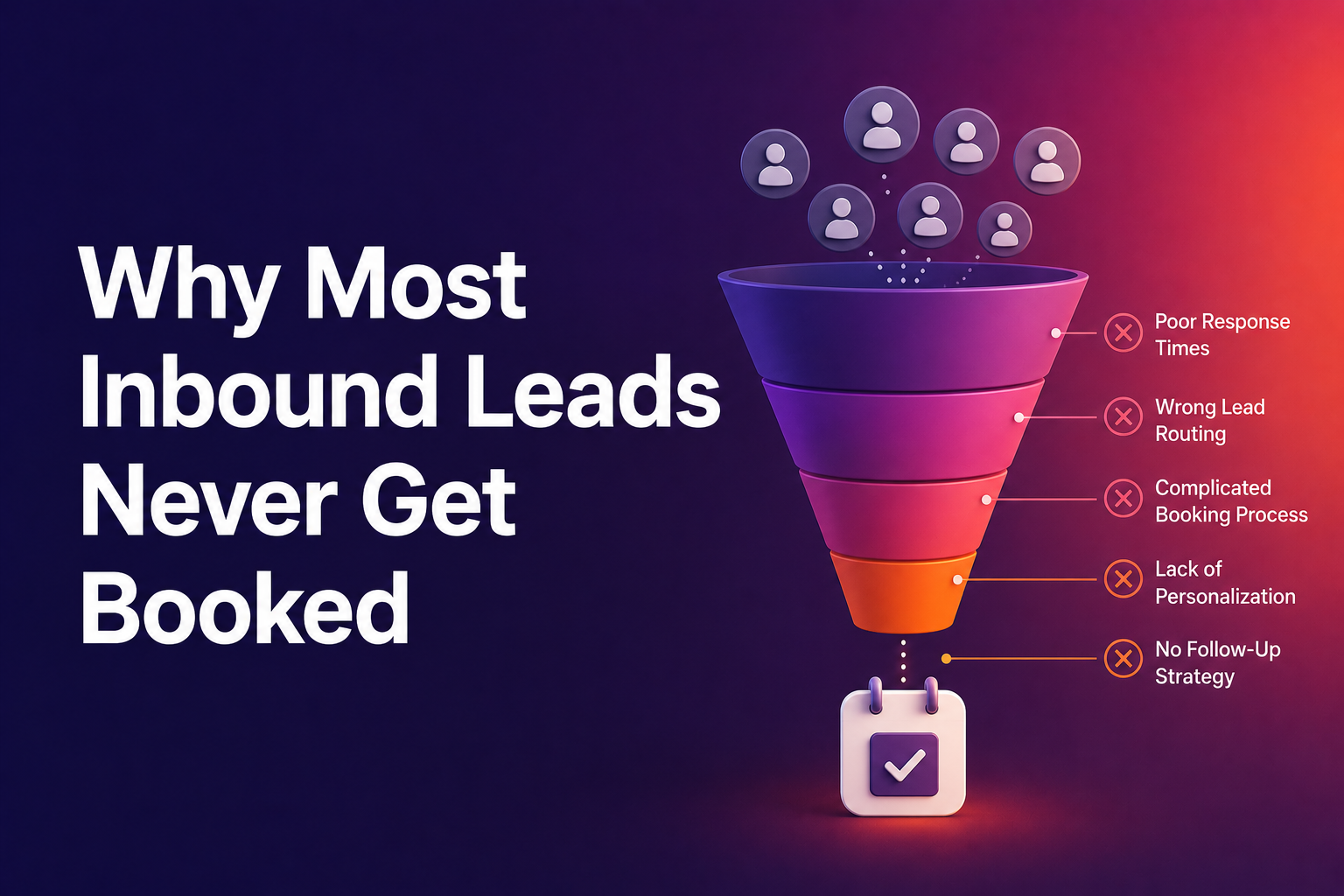
The gap isn't about effort. It's structural. Most SaaS companies still run a workflow where a lead fills out a form, enters a queue, gets manually reviewed by an SDR, and eventually receives an email. Days pass. Intent decays. The meeting that should have happened doesn't.
The 30-Second Window: Closing the Gap Between Intent and Conversion
Data from over one million inbound form submissions across B2B SaaS companies shows that the conversion event happens in the first 30 seconds after a form fill. The probability of booking a meeting sits around 80% within the first minute of submission. By the next day, that drops to roughly 40%. This isn't a gradual decline: it's a cliff.
The companies that win this window don't rely on human speed. They automate qualification and scheduling so that the moment someone submits a form, they either see a calendar or receive a clear disqualification. No queue. No delay. No manual review step sitting between the prospect's intent and a booked meeting.
Benchmarking Success: From the 62% Median to 78%+ Top Performers
Across the full dataset, the median qualified-to-booked conversion rate sits at 62%. The top 10% of companies hit 78% or higher. The very best reach 88%. If your team is converting at 30-40% and assuming that's normal, the data says otherwise: you're leaving significant pipeline on the table.
The gap between 40% and 78% on the same traffic and the same spend comes down to what happens after the form fill. Top performers use commitment-oriented CTAs like "Book Your Demo" instead of "Request a Demo." They present a calendar immediately. They qualify using enrichment data and CRM history in real time, not through manual review.
Top Lead Routing Software Solutions for 2025
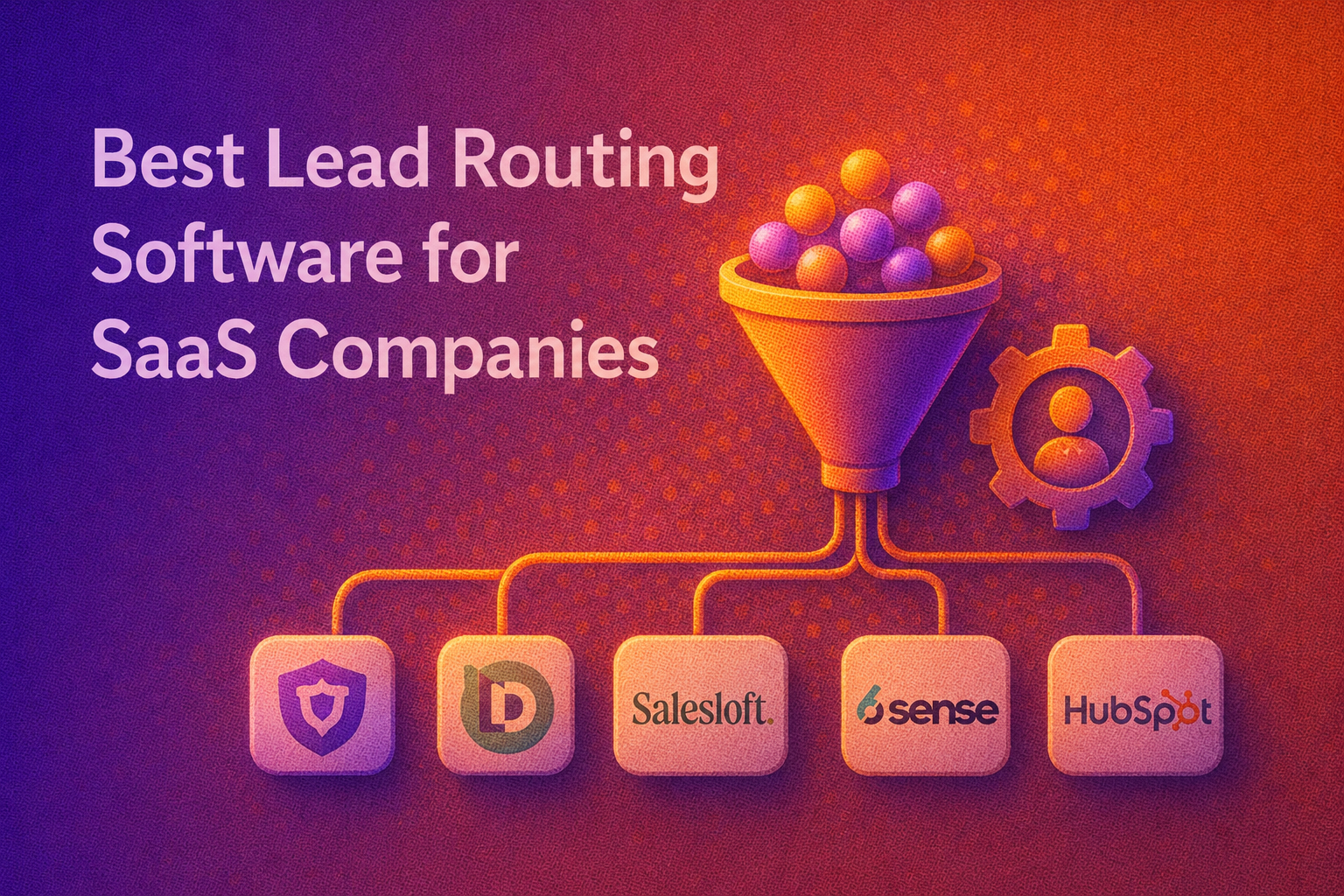
Choosing the best lead routing software for SaaS companies depends on your team's size, deal complexity, and CRM architecture. Three platforms stand out in 2026, each solving a different slice of the routing problem.
RevenueHero: The Infrastructure for Instant Inbound Scheduling
RevenueHero treats every form fill as a conversion event, not a lead capture event. When a prospect submits, the platform qualifies them in real time using form responses, firmographic enrichment, and CRM ownership data. Qualified leads see a calendar immediately. Disqualified leads get routed to a nurture path. There's no SDR review queue sitting in between.
Routing logic respects existing CRM relationships, so if an account already has an assigned owner, the meeting goes to that rep. Territory rules, product interest, and account matching all factor in. Every meeting syncs back to the CRM with a bidirectional sync, giving RevOps teams real-time pipeline visibility without manual logging. Setup is straightforward, and the platform is designed for teams that want fast time-to-value without heavy implementation overhead.
Chili Piper: Advanced Routing for Enterprise Revenue Teams
Chili Piper has built a strong reputation among larger revenue teams that need granular control over routing rules. The platform handles complex scenarios like nested routing for enterprise accounts, approval workflows, and multi-step qualification paths. If your org has dozens of reps across regions and product lines, Chili Piper's rule engine can accommodate that complexity.
The trade-off is implementation time. Enterprise-grade configuration requires more upfront work and ongoing maintenance. For teams with dedicated RevOps resources, this isn't a problem. For lean teams, it can slow down time-to-value.
LeanData: Complex Account-Based Routing and Orchestration
LeanData is purpose-built for account-based motions running on Salesforce. Its visual routing canvas lets RevOps teams design complex lead-to-account matching logic, handling scenarios like territory mismatches, rep PTO, and ownership conflicts. If your GTM strategy is deeply account-based and your CRM is Salesforce, LeanData offers the most granular orchestration layer.
The platform is less focused on instant scheduling and more focused on ensuring the right lead reaches the right account owner. This makes it a strong fit for companies where routing accuracy matters more than speed-to-calendar, though many teams pair it with a scheduling tool to cover both needs.
Essential Features for SaaS Lead Routing Engines
Not every feature matters equally. The features that actually move conversion rates are the ones that eliminate manual steps between form fill and booked meeting.
Real-Time Qualification via CRM History and Enrichment Data
The best routing engines qualify leads the moment a form is submitted. They pull firmographic data from enrichment providers, check CRM history for existing accounts or open opportunities, and apply your qualification rules instantly. This means a lead from a known target account gets routed to the account owner, while a lead from a two-person company outside your ICP gets filtered out before it wastes rep time.
Companies with higher disqualification rates actually convert better. The data shows a positive correlation between selectivity and meeting quality. Enterprise segments, for example, carry a 71.2% DQ rate but convert qualified leads at 70.1%. Being picky pays off, as long as your criteria are intentional and reviewed quarterly.
Automated Handoffs: Replacing 'Request a Demo' with 'Book Now'
Replacing "Request a Demo" with "Book Your Demo" is a five-minute fix with measurable impact. The language shift changes the visitor's mental model from "I'm asking permission" to "I'm taking action." Top-performing companies pair this CTA language with an instant calendar presentation, so the commitment happens while the prospect is still on the page.
Search your site for every instance of "Request" and "Submit." Replace them with commitment language: "Book," "Schedule," "Reserve," "Pick a Time." Then make sure a calendar actually appears after qualification. The combination of commitment language and instant scheduling is what separates median performers from the top 10%.
Optimizing Your Routing Strategy for Maximum Pipeline
Routing software is only as good as the strategy behind it. Two areas consistently separate high-performing teams from the rest: vertical positioning and form design.
Leveraging Vertical Positioning to Increase Meeting Rates
Vertical SaaS consistently outperforms horizontal SaaS in conversion rates. Construction Tech converts at 69.1%. Ecommerce at 68.8%. Travel Tech at 68.3%. Generic Sales Tech sits at 62.8%. The pattern holds across the entire dataset.
The advantage comes from clarity. When you sell to a specific vertical, qualification is simple. "Are you a contractor?" is an easy yes-or-no question. When you sell to "any company that does marketing," qualification gets fuzzy, visitors aren't sure if they're the right fit, and reps don't know how to personalize the demo. If you're a horizontal product, build dedicated landing pages with vertical positioning. A "Marketing software for e-commerce" page will convert better than a generic page, even if the product is identical. The specificity signals fit, builds confidence, and drives conversion.
Balancing Friction and Intent: When to Use Multi-Field Forms
Conventional wisdom says fewer form fields mean higher conversion. The data tells a different story. Top performers convert at 77% with 2 fields and at 76% with 13 fields. The number of fields doesn't matter. What matters is whether each field does something useful.
Fields that route the lead to the right rep or help the rep tailor the demo are worth keeping. Fields that create friction without value, like "How did you hear about us?" when you never act on the answer, should be cut. Audit every field on your forms and ask one question: does this field improve routing, qualification, or personalization? If the answer is no, remove it.
Measuring the ROI of Automated Lead Routing
The math on lead routing ROI is straightforward. If you're converting 40% of qualified leads into meetings today and you move to 62%, that's 22 more meetings for every 100 qualified leads on the same traffic and the same ad spend. Get to 78%, and you've nearly doubled your meeting output without touching your demand gen budget.
Track three metrics to measure impact: qualified-to-booked rate (using median values, not averages, to prevent outliers from hiding systemic delays), speed-to-calendar (the time between form submission and calendar presentation), and SLA compliance (how often leads are routed to the correct rep on the first try). These three numbers tell you whether your routing engine is working or whether pipeline is leaking between form fill and meeting.
The companies that treat inbound scheduling as a conversion event, not an operational afterthought, consistently outperform their peers. You already have the traffic. You already have people raising their hands. The only variable left is whether those people end up on a calendar or in a follow-up queue. If you're ready to close that gap, start by auditing your current qualified-to-booked rate and measuring it against the 62% median. That single number will tell you exactly how much pipeline you're leaving behind.
Let RevenueHero help your team turn high-intent users into booked meeting without slowing down your funnel.